Sundance Standouts 2026
A look at five striking features that screened at this year's Sundance Film Festival, highlighted for their distinctive camerawork.
Chasing Summer
Cinematographer: Eric Branco, ASC
Director: Josephine Decker
At the beginning of Josephine Decker’s Chasing Summer, Jamie (writer and star Iliza Shlesinger), a trained relief worker, is firmly in her element. To make this clear, cinematographer Eric Branco, ASC, captures a long, unbroken shot in which Jamie rallies an entire camp of aid workers, learns she’s just bagged a prestigious gig abroad, and rapidly, if a little clumsily, executes a number of significant tasks — all while on the phone with her overbearing mother (Megan Mullally). But almost immediately, Jamie’s life falls apart, and she finds herself back in the Texas town she grew up in, facing her strained family relationships and a hurtful rumor from her teenage years.
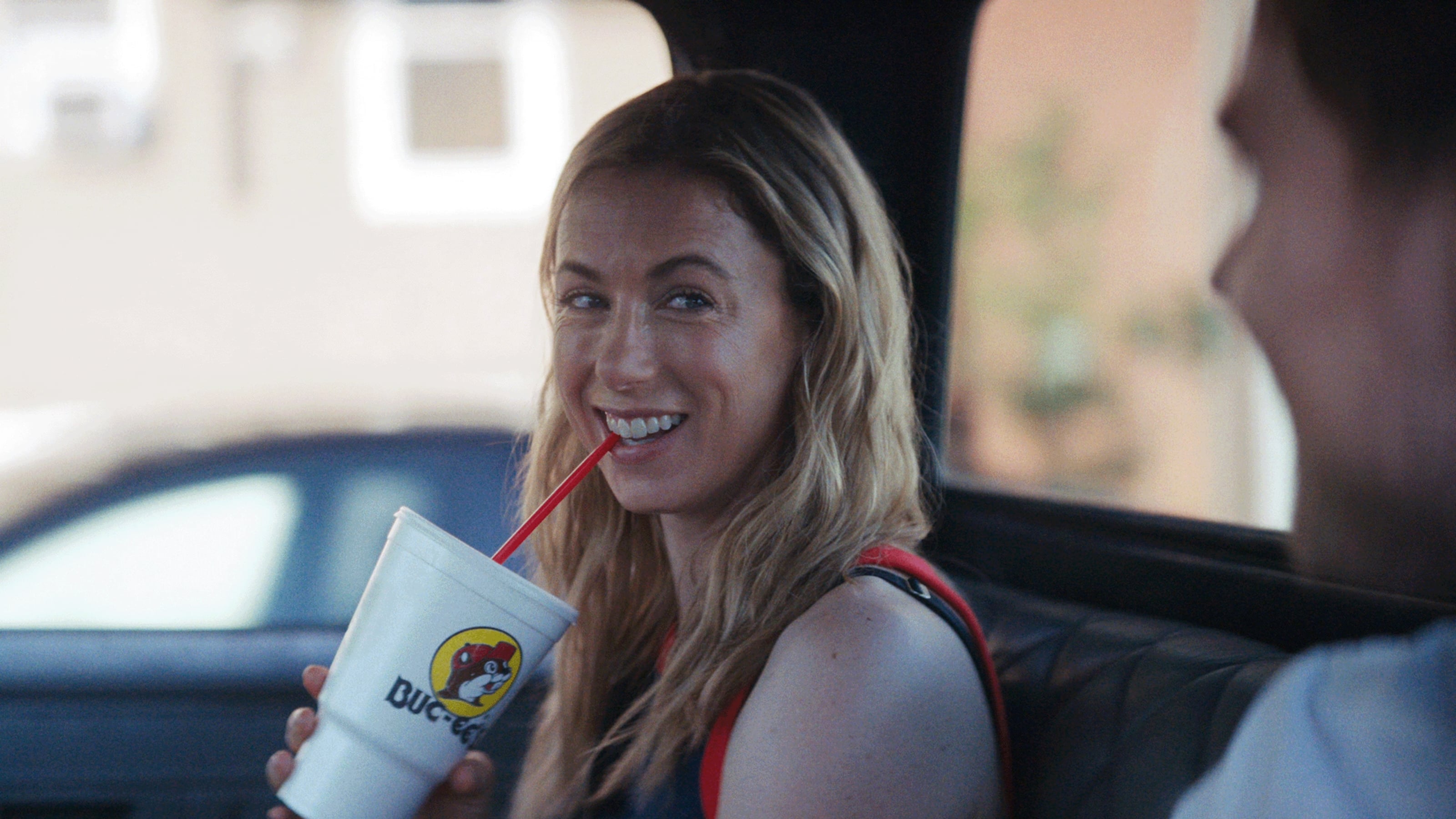
Yet, even when down on her luck, Jamie is a force of nature, and Branco’s energetic camera language nimbly reflects that. The cinematographer uses whip pans and a manic handheld camera to punctuate many of the comedic moments that arise from Jamie’s embarrassment and clumsiness. Elsewhere, as romance enters Jamie’s life, the cinematographic style becomes intimate, the lighting sunny and golden; Branco employs a oner once more when Jaime first talks to her love interest, a 20-something whom she meets at a house party that she's taken to by a much younger co-worker. As they follow each other around the pool, its lounge chairs, and a number of passed-out party guests, the winding shot makes clear what the characters don’t seem to know yet: They’re about to become entangled with one another.
Josephine
Cinematographer: Greta Zozula
Director: Beth de Araújo
Josephine grounds itself in the perspective of its titular protagonist (Mason Reeves), an eight-year-old girl who lives with her father (Channing Tatum) and mother (Gemma Chan) in San Francisco. In the drama’s opening sequence, the camera takes on the girl’s POV for a prolonged oner. The shot tentatively observes Josephine’s father as he encourages the girl to hit the garage-wall button and run under the heavy door as it closes — a mission Josephine is at first reluctant to complete. The camera shakes “No” and “Yes,” before running through one failed attempt and then finally making it out of the garage. After Josephine succeeds and begins celebrating with her father, there’s finally a cut, and the POV shifts to observe the duo, watching them from a distance as they go for a morning jog in Golden Gate Park.
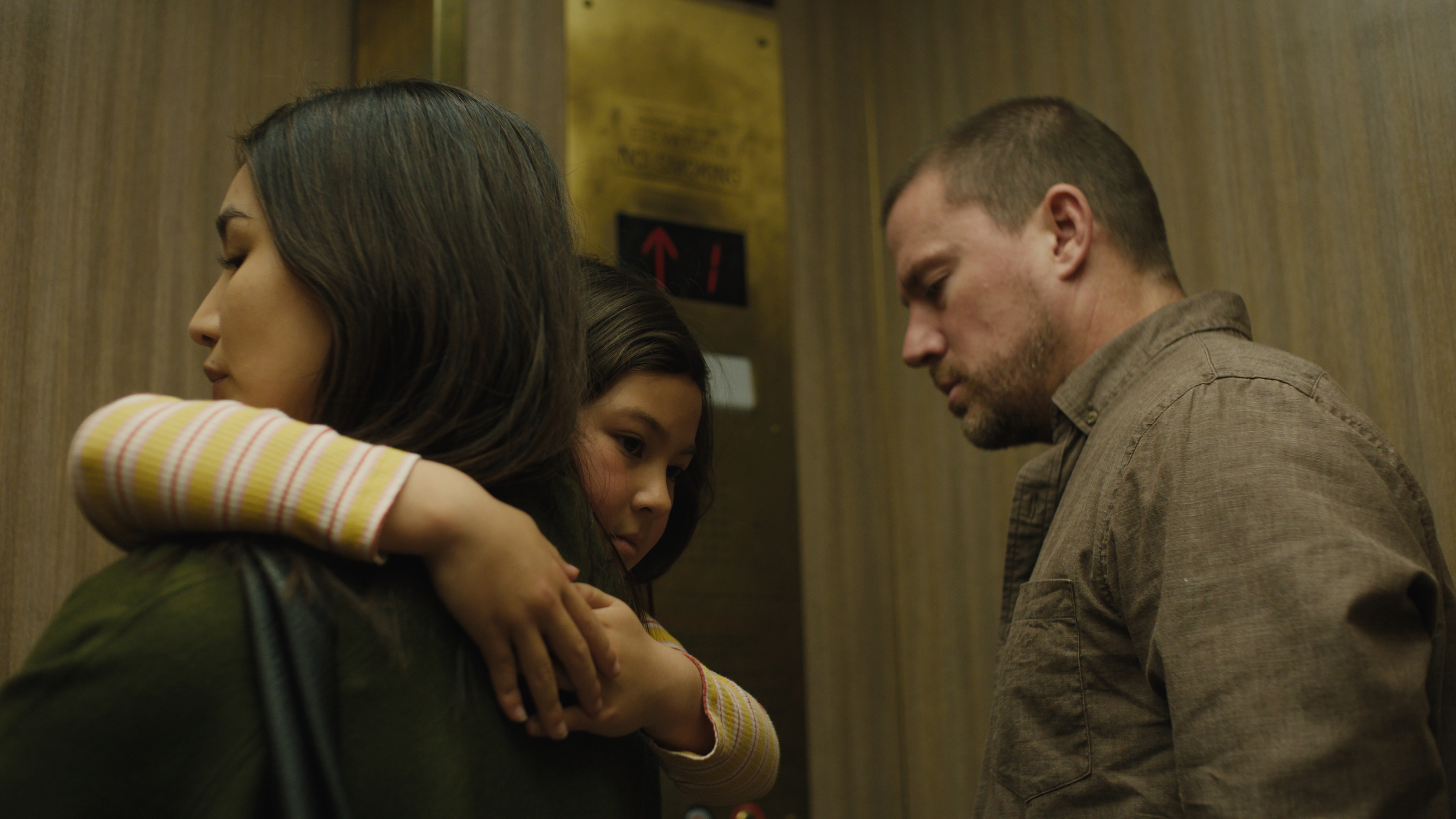
There, Josephine sees a brutal sexual assault between two strangers — an event that she and her family grapple with for the rest of the film. Cinematographer Greta Zozula captures the tribulations the family endures with dynamic precision. In one particularly arresting sequence, the camera makes nearly 10 360-degree moves around the family’s kitchen table, as a detective tries to convince Josephine to make an official statement about what she saw. As the camera pans, it intermittently picks up speed and slows down, creating a dizzying tension that underscores the difficulty of what the girl is going through. At other crucial moments, the camera returns to Josephine’s POV — always reminding the viewer to look through her eyes.
Winner of the U.S. Grand Jury Prize: Drama and Audience Award: U.S. Dramatic.
Rock Springs
Cinematographer: Heyjin Jun
Director: Vera Miao
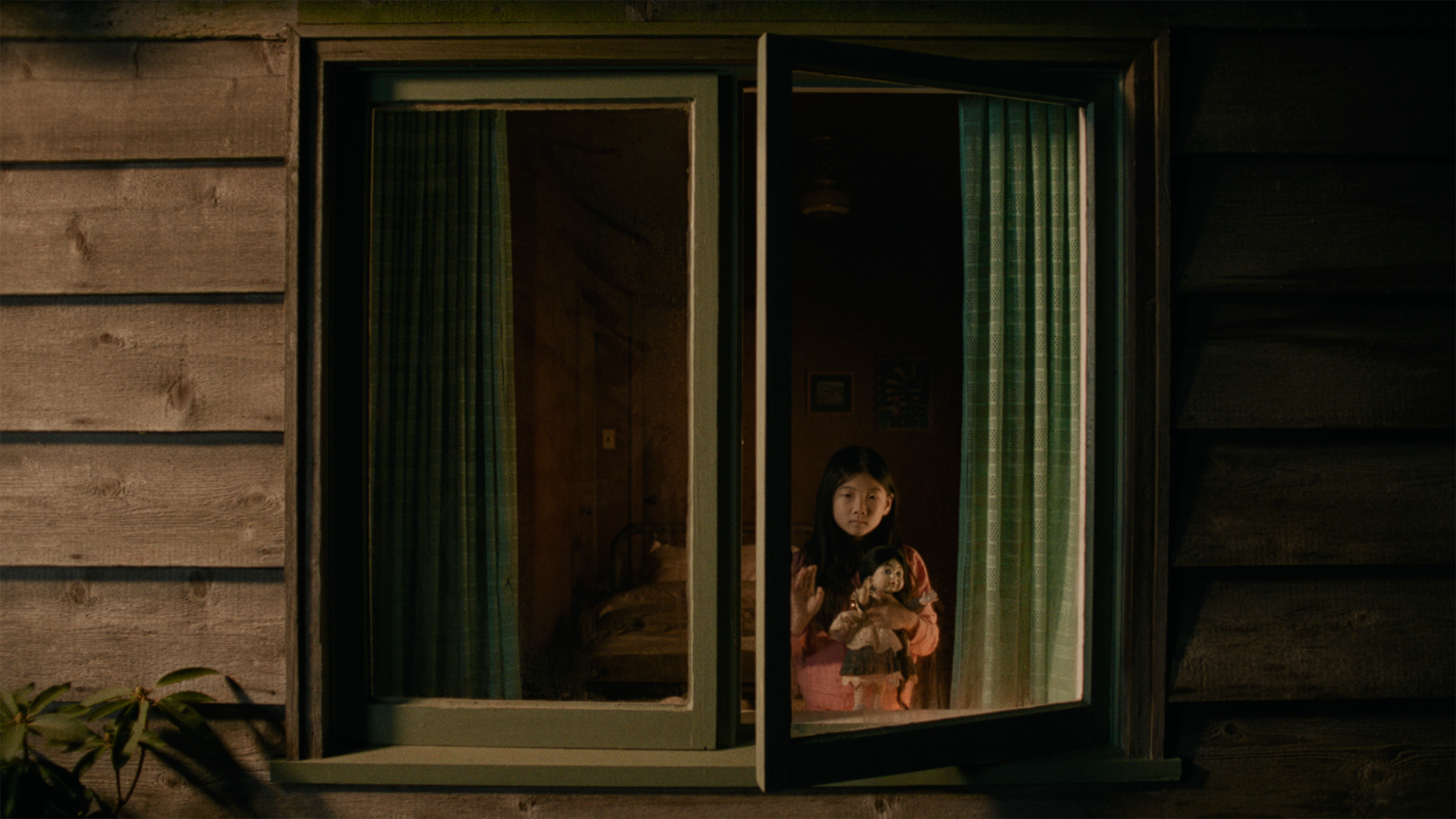
In the supernatural horror feature Rock Springs, a young Asian-American girl (Aria Kim) moves to a new home with her mother (Kelly Marie Tran) and Nai Nai (Fiona Fu) in the wake of her father’s death. The home is on the edge of the dense woods in Rock Springs, Wyoming — the site of a gruesome 1885 massacre of Chinese mine workers. Broken into three chapters, writer-director Vera Miao's film explores the family’s grief, while bringing in elements of Chinese mysticism, and staging the real-life, racially-motivated attack in a brutal action sequence anchored by actors Benedict Wong and Jimmy O. Yang.
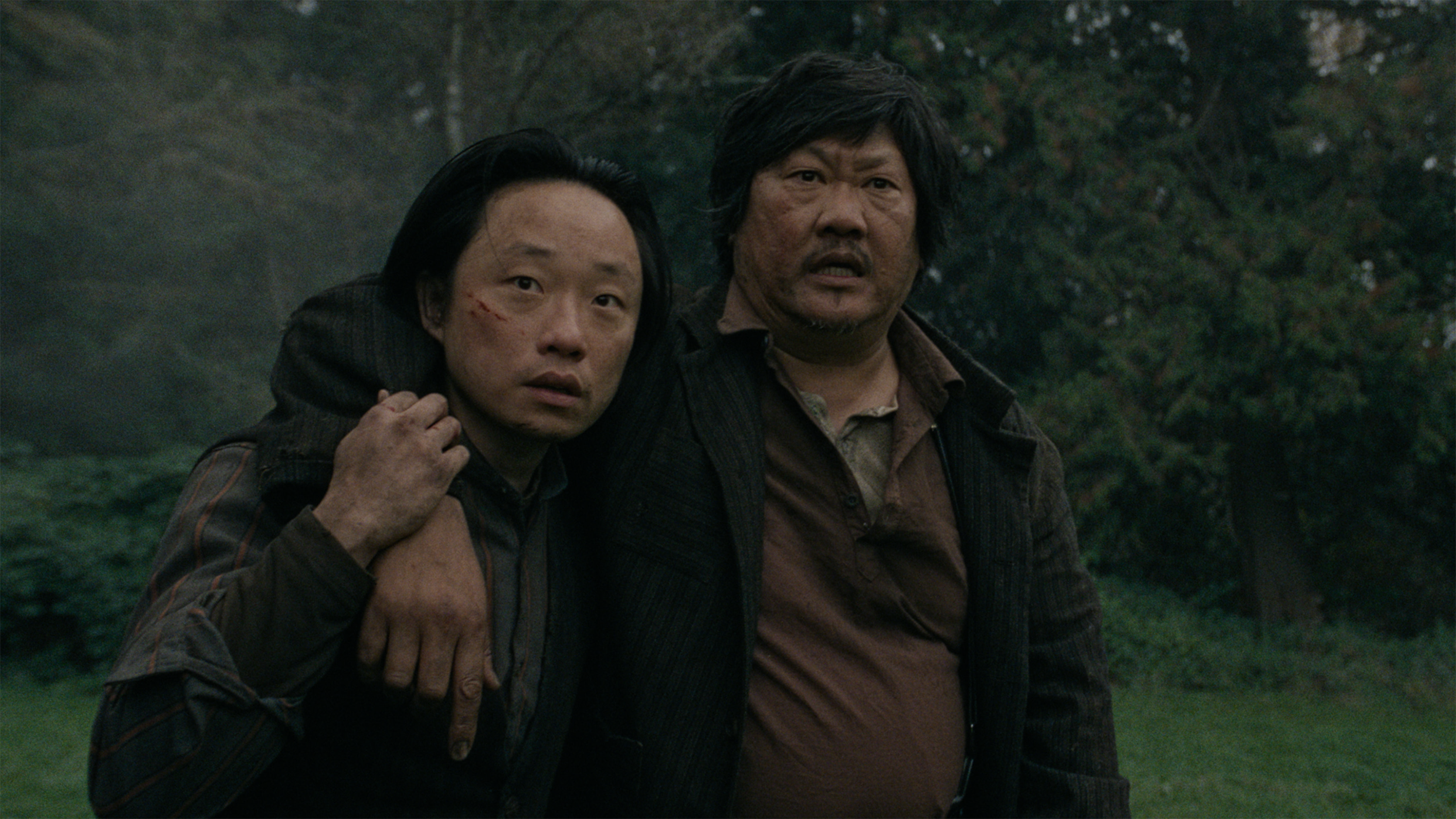
Cinematographer Heyjin Jun (known for Park Chan-wook’s Hitchcockian thriller Decision to Leave) establishes a camera language of intense juxtaposition. Jun frequently returns to shots that either look up at the film’s characters and settings from very low angles, or look down from directly overhead — hinting at a paranormal presence. Frequently playing with distortion, Jun includes dizzying upside-down driving shots reminiscent of those seen in Ari Aster’s Hereditary, and ghost POV shots with a fish-eye look. Much of the film takes place in the forest at night, and Jun’s nocturnal photography maintains clarity and nuance, even in extremely low-light conditions.
Night Nurse
Cinematographer: Lidia Nikonova
Director: Georgia Bernstein
Writer-director Georgia Bernstein’s Night Nurse delights in the visual tropes of the erotic thriller. Shot by Lidia Nikonova, the film is replete with shadowy reflections in windows and mirrors, moody nocturnes, intimate close-ups of touching limbs, and slow zooms that seem to probe the frame for secrets. That Night Nurse is set in an eerily quiet luxury retirement community renders the visceral and mysterious qualities of the genre more disorienting and bizarre, and helps imbue the story with a sense of drugged wooziness. By turns atmospheric and psychosexual, the film plays as if Brian De Palma or Catherine Breillat helmed Sarah Friedland’s nursing-home drama Familiar Touch.
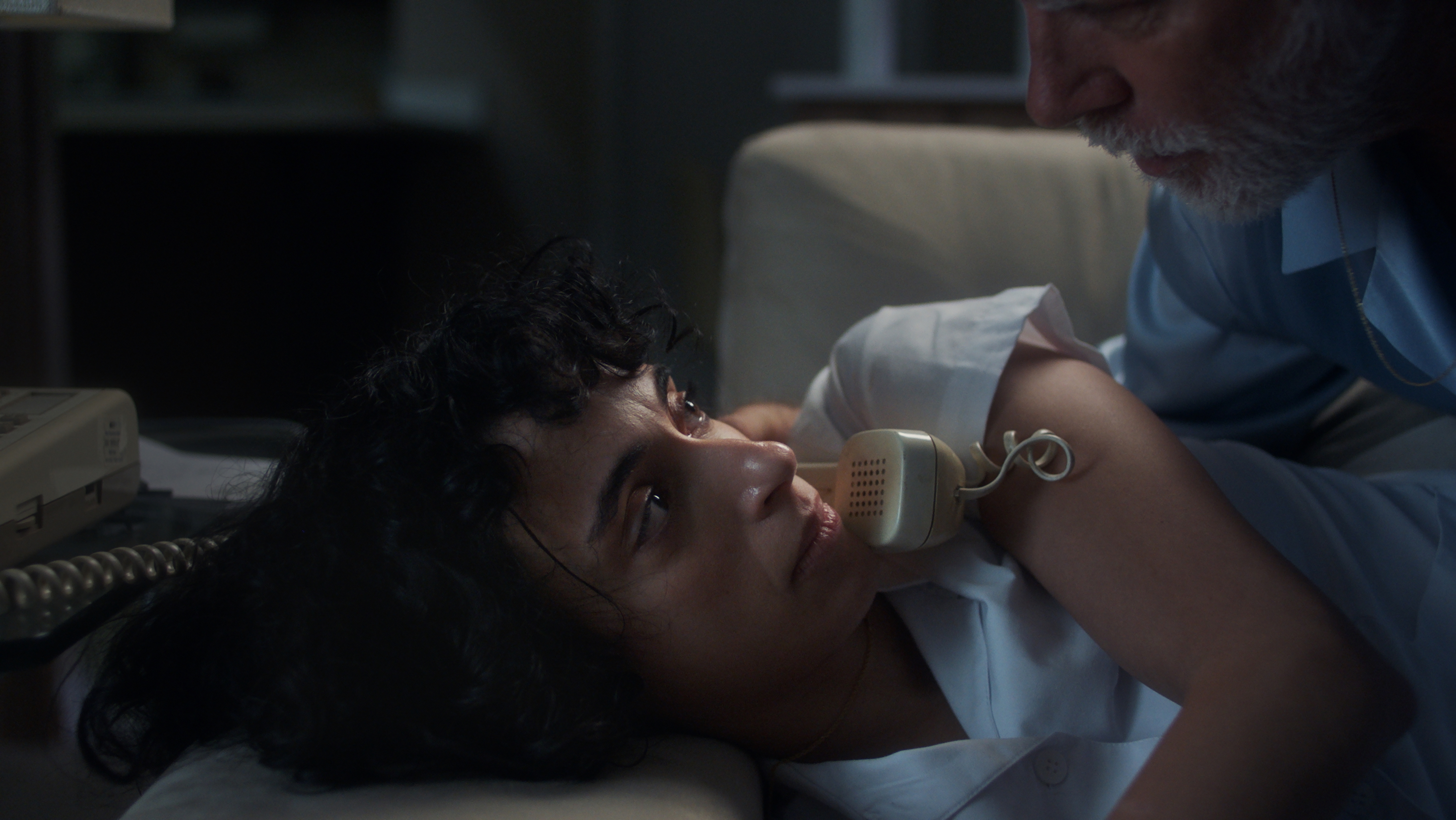
Night Nurse follows Elani (Cemre Paksoy) as she trains to be the night attendant for Douglas (Bruce McKenzie), the community’s resident rake. Quickly caught in the web of her new patient and his day nurse (Eleonore Hendricks), Elani begins to participate in the duo’s lucrative telephone scam. Nikonova captures the call sequences like love scenes — closely following lips whispering in ears and hands wrapping around torsos and shoulders. But between the calls, Elani often feels a sense of alienation and uncertainty, which Nikonova renders with an uncanny stillness that can feel unnatural, even creepy. This sort of unnerving isolation is established in the film’s opening credits, for which Nikonova used a robotic arm to capture a macro shot of a phone cord wrapped around Elani’s nurse uniform-clad body.
TheyDream
Cinematographers: William David Caballero, Antonio Cisneros, Brad Jones, Ben Premeaux
Director: William David Caballero
TheyDream is a multilayered, mixed-media documentary that serves as a tribute to director William David Caballero’s Puerto Rican-American family. The culmination of two decades of filmmaking, the innovative doc — shot by Caballero and co-cinematographers Antonio Cisneros, Brad Jones and Ben Premeaux — stitches together vérité footage, archival materials and original 2D and 3D animations, all the while chronicling the process of its own making.
Centering the story around Caballero’s mother, Milly, and her longtime home in Fayetteville, North Carolina, the filmmaker delves deeply into both joyous and difficult family relationships. As a means to heal his sometimes-strained relationship with his father, Caballero shows himself reenacting home-video footage that features his dad. The filmmaker films himself in front of a greenscreen, using motion-capture technology to transform the archival video into an animation. Caballero teaches his mom the same process, having Milly reenact scenes as her own late mother.
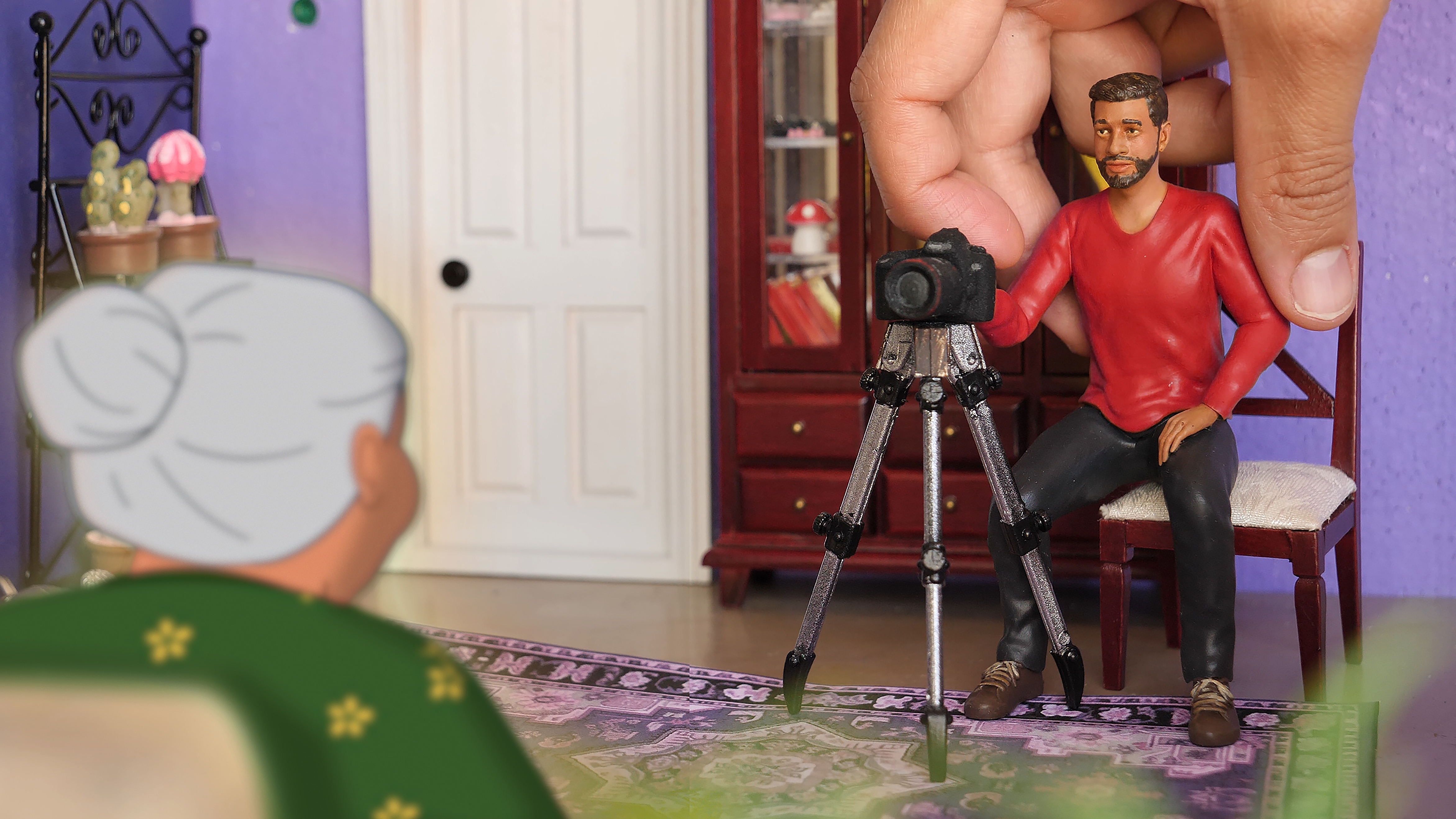
For the production, Caballero created highly detailed models of his family’s homes and settings that factored into their lives. While the director uses them for animation, he also frequently pulls the camera back, showing his set-up as he films. In one instance, we see him tinkering with a DSLR on a tripod and two GVM-560AS covered with yellow and purple gels — the methods to his magic.
Winner of the NEXT Special Jury Award for Creative Expression.
For more on Sundance 2026, read here to discover the visual strategies behind seven features that premiered at the festival.
Images courtesy of Sundance Institute.