How to Get to Heaven From Belfast: Setting the Series' Tone From Frame One
A cinematographer on the comedic-thriller series shares how she designed Episode 1's first sequence "to serve as the viewer's invitation to the mystery."
“We move through the trees, the light from a torch darts about quickly, urgently. Eventually it discovers a narrow path blanketed in fallen leaves. The sound of feet crunching down on them — more than one person, two? Maybe three? The path winds round a bend and the feet stop; they arrive, as we do, at a little cottage. The sign above its red wooden doors reads ‘Caretaker’. The footsteps move inside, the torch flashing around wildly now… The light darts across a wall catching something as it passes, graffiti perhaps? Slowly, purposeful, the torchlight returns. We see it properly now — a strange symbol…”
Those were the words that opened the script for How to Get to Heaven From Belfast. I remember reading and thinking, "Crikey." I’d never shot in a forest at night before — and having to run from forest into cottage in one! And as a number of key settings resurfaced throughout the script, it became clear that this was not simply an opening scene. This forest location was the fulcrum of the mystery, the image that would haunt the series as much as the past haunts its characters. I could feel my comfort zone skirm.
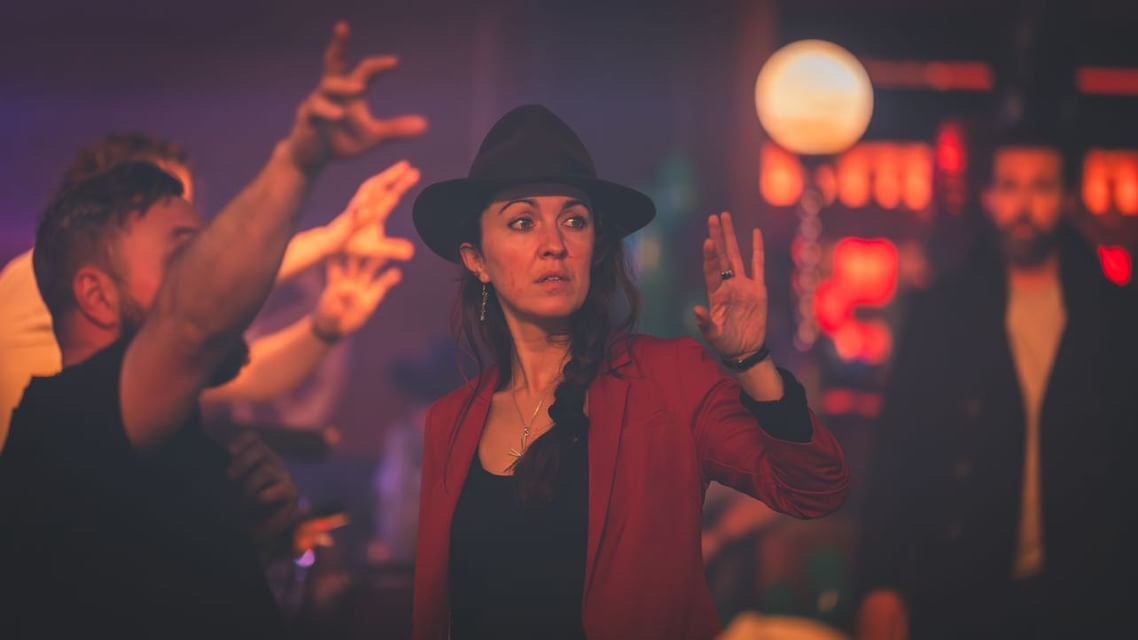
Location Scouting
Although the opening sequence — which encompassed two primary locations stitched together over multiple nights — was to be shot toward the end of our block to preserve darkness, the locations had to be chosen during preproduction months prior. The location of the forest had to operate as a versatile canvas — supporting multiple episodes, cinematographers, times of day and the diverse terrain demanded by the story. Consistency was crucial to maintaining the visual language established in the first episode, so our lighting approach had to be carried throughout the series.
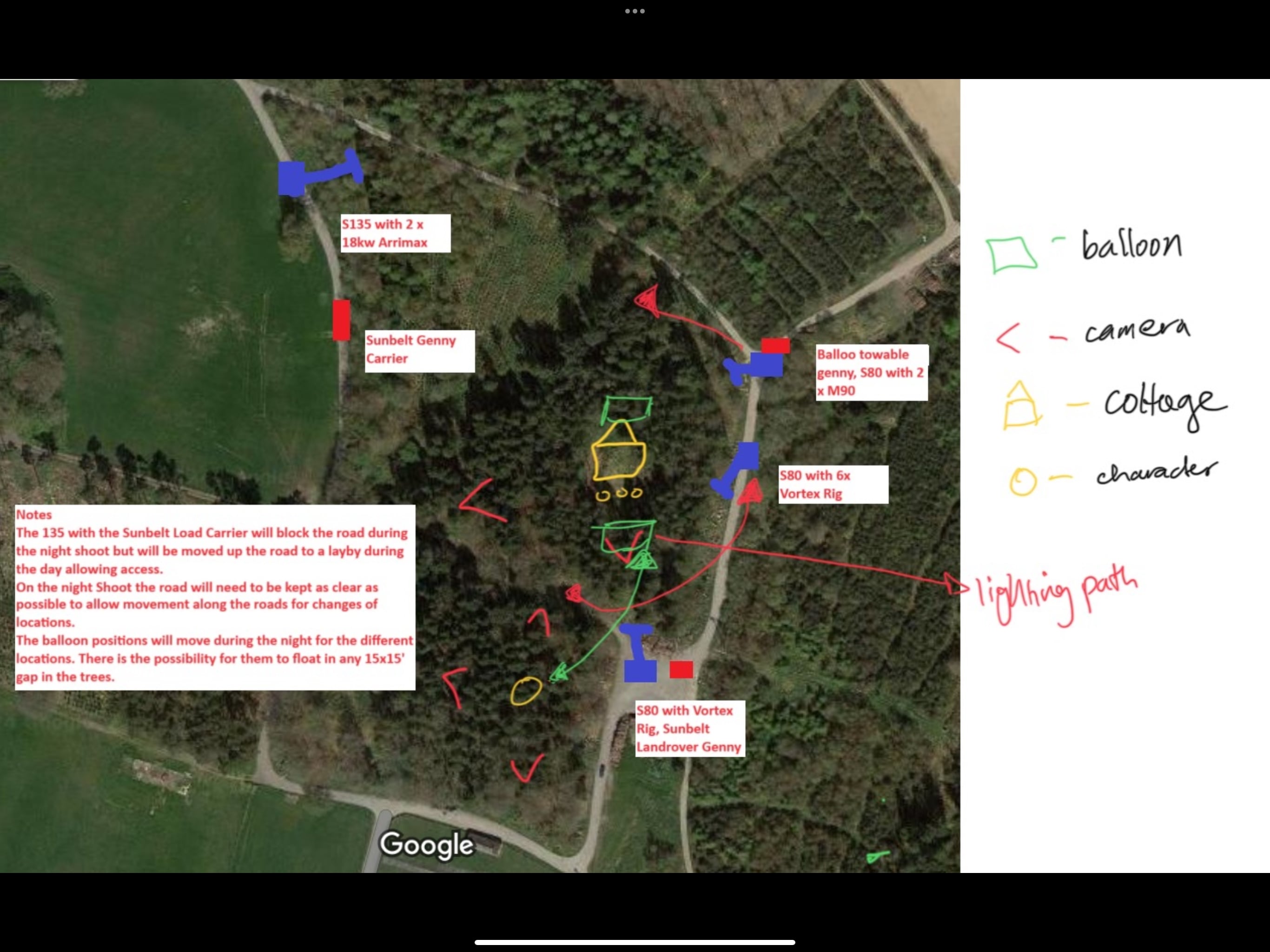
Gaffer Adam Slater and I studied locations carefully, taking into account tree and canopy types, density, color, and how the location may look months later. Logistically, the site had to allow for access for machines, and for multi-directional shooting with minimal relighting. We considered adjoining fields and tracks, as well as terrain behind which we could hide lighting. Key grip Donovan Gallagher, A-camera operator Declan O’Grianna and I scrutinized the forest floor and trees, bearing in mind that both our actors and the camera had to run at pace.
Tools, Tests and Techniques to Craft an Enigmatic Opening
The opening sequence had to function as both a prologue and a promise. It needed to define the grammar of what follows — an interplay between the enigmatic, the uncanny and the vivid. Light would serve as the viewer's invitation to the mystery — a controlled revelation. The scene called for nondescript city lights; silhouettes that created presence, rather than character; and for the world to fall off to shadow beyond the torch beams, which would then morph into moonlight.
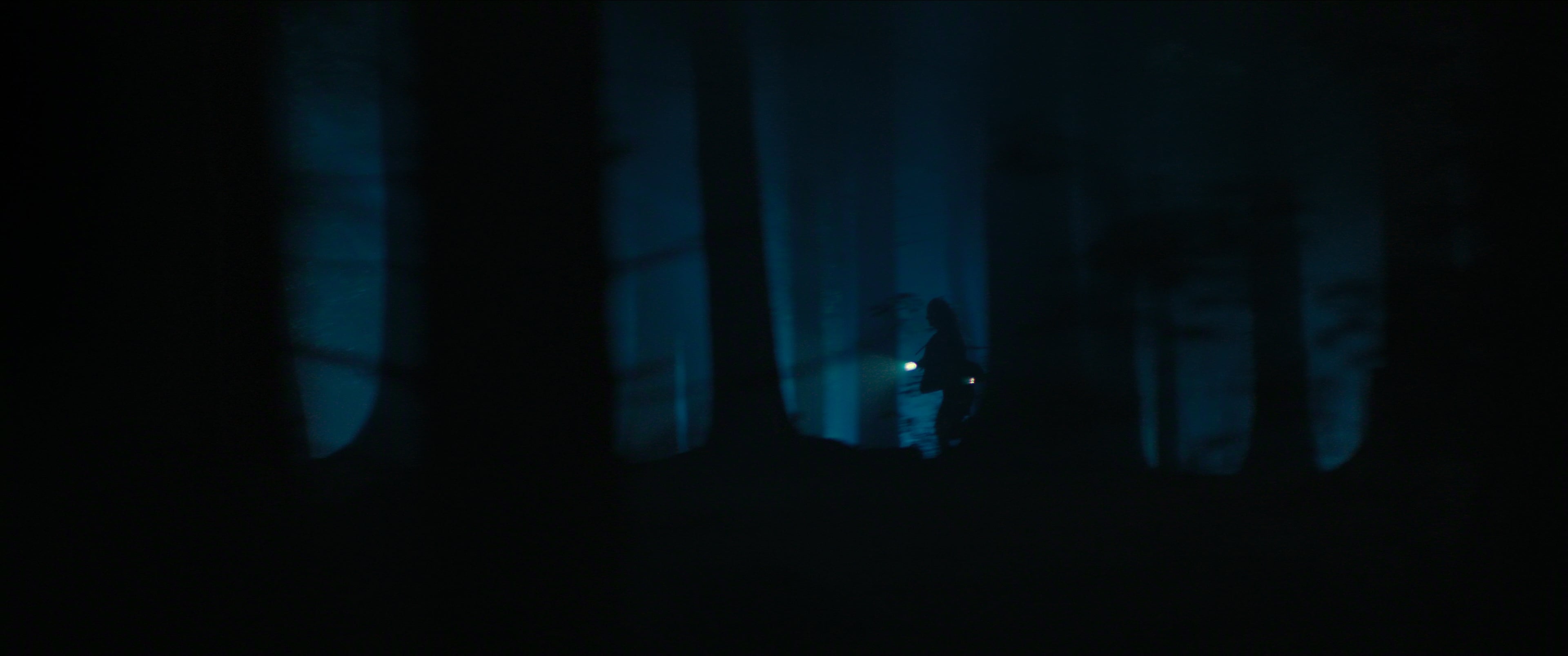
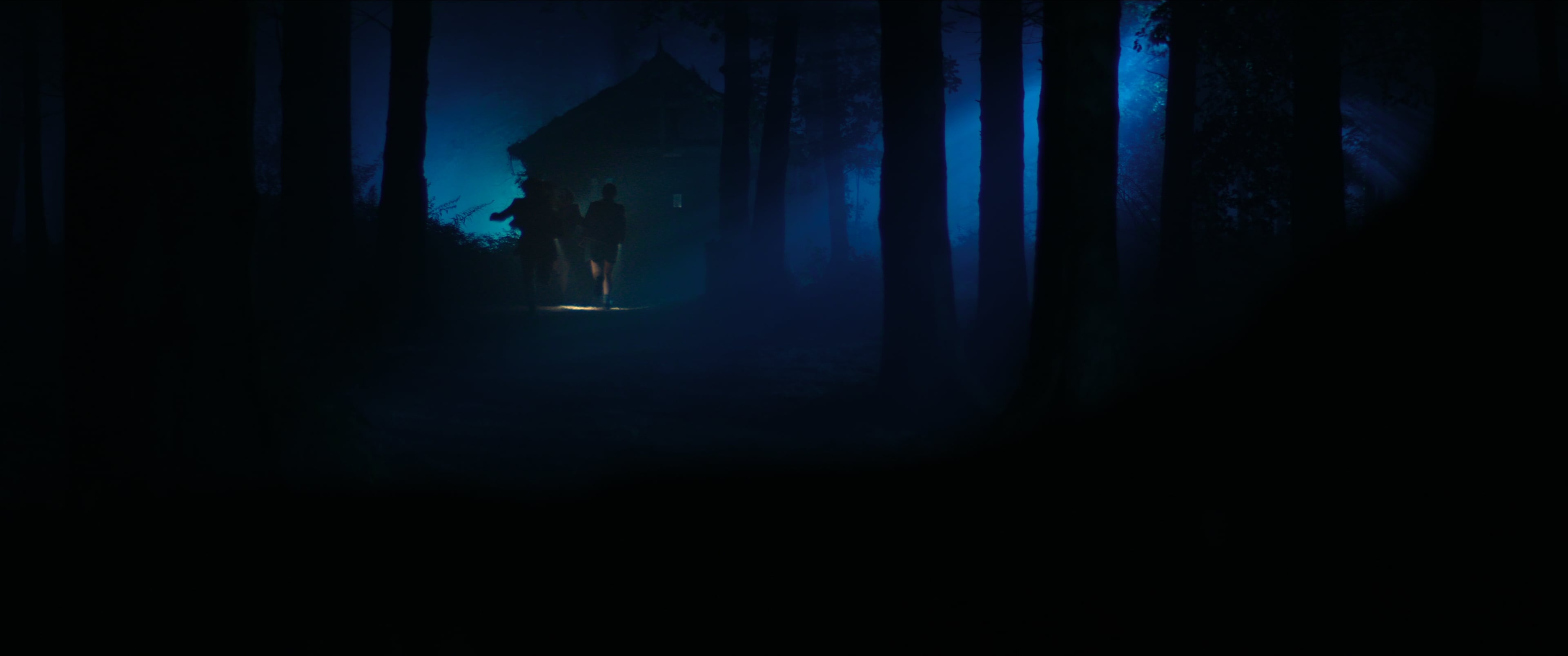
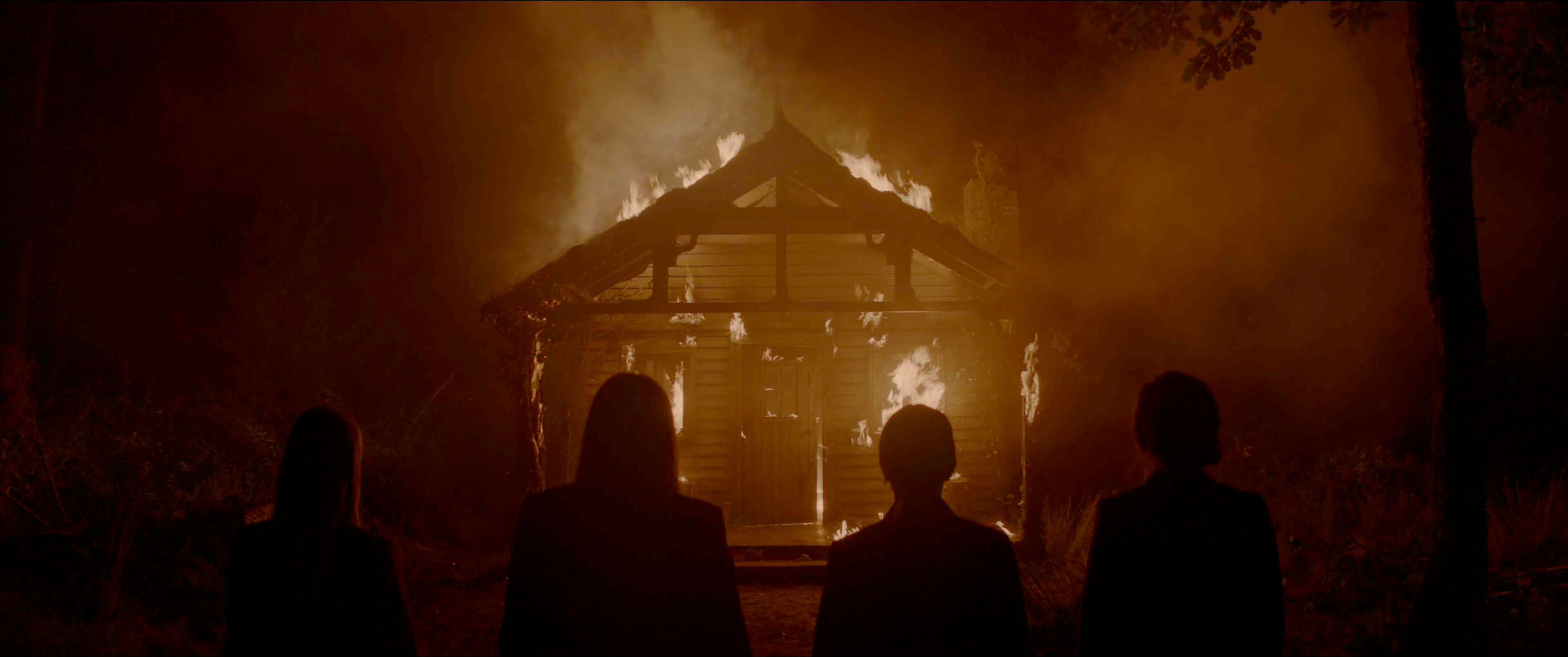
We tested various torch units to address flicker and output limitations — not only for this scene, but for subsequent scenes, and especially on faces. Our special-effects team, led by Eden Ralph, lined the floor of each location with lay-flat to generate haze, which helped amplify the torch beams. In the grade, we worked with colorist Gary Curran to preserve beam shape, while introducing subtle warmth into the torchlight — allowing it to sit against cooler tones of the moonlight that our apparitions journey through.
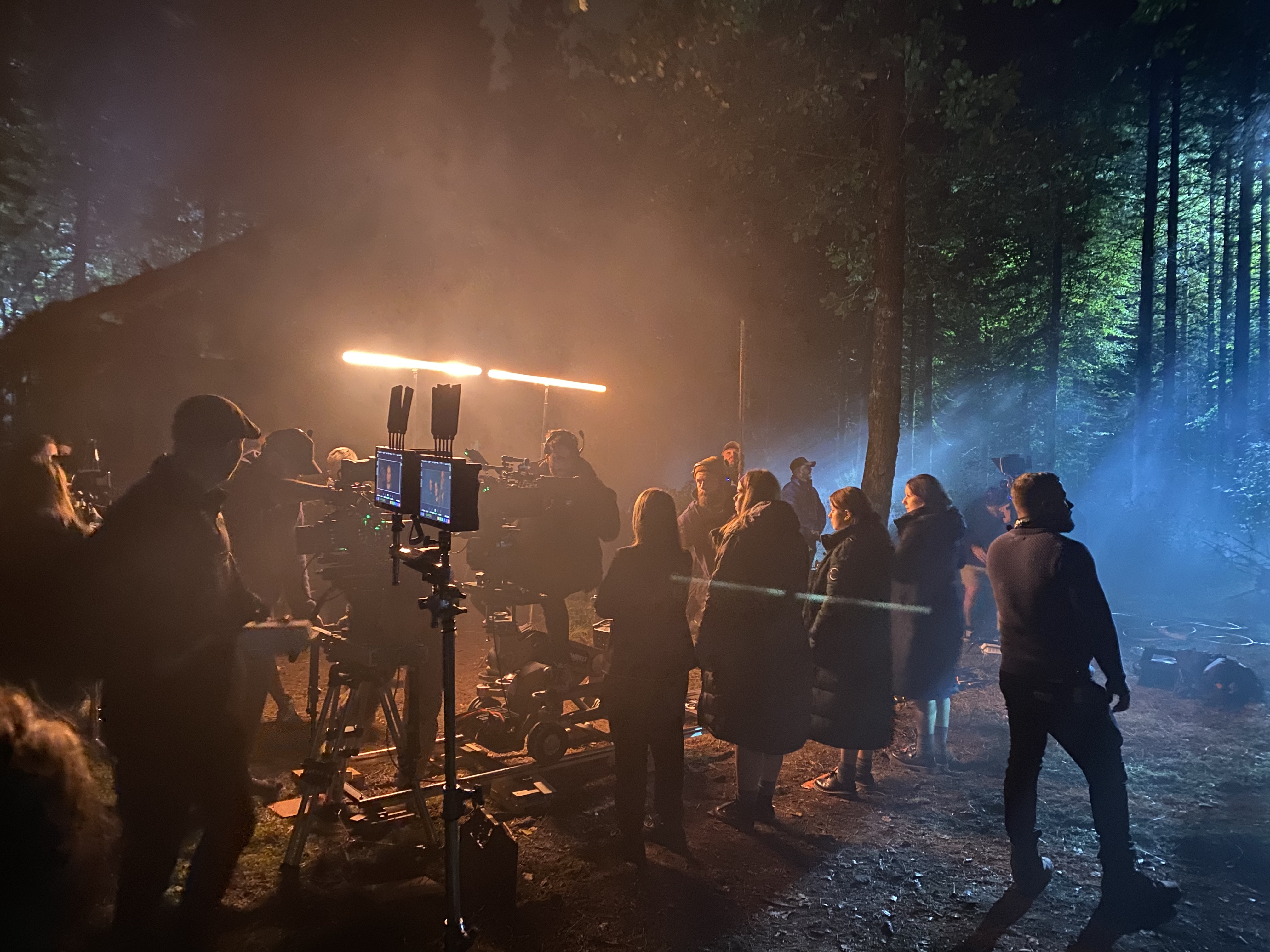
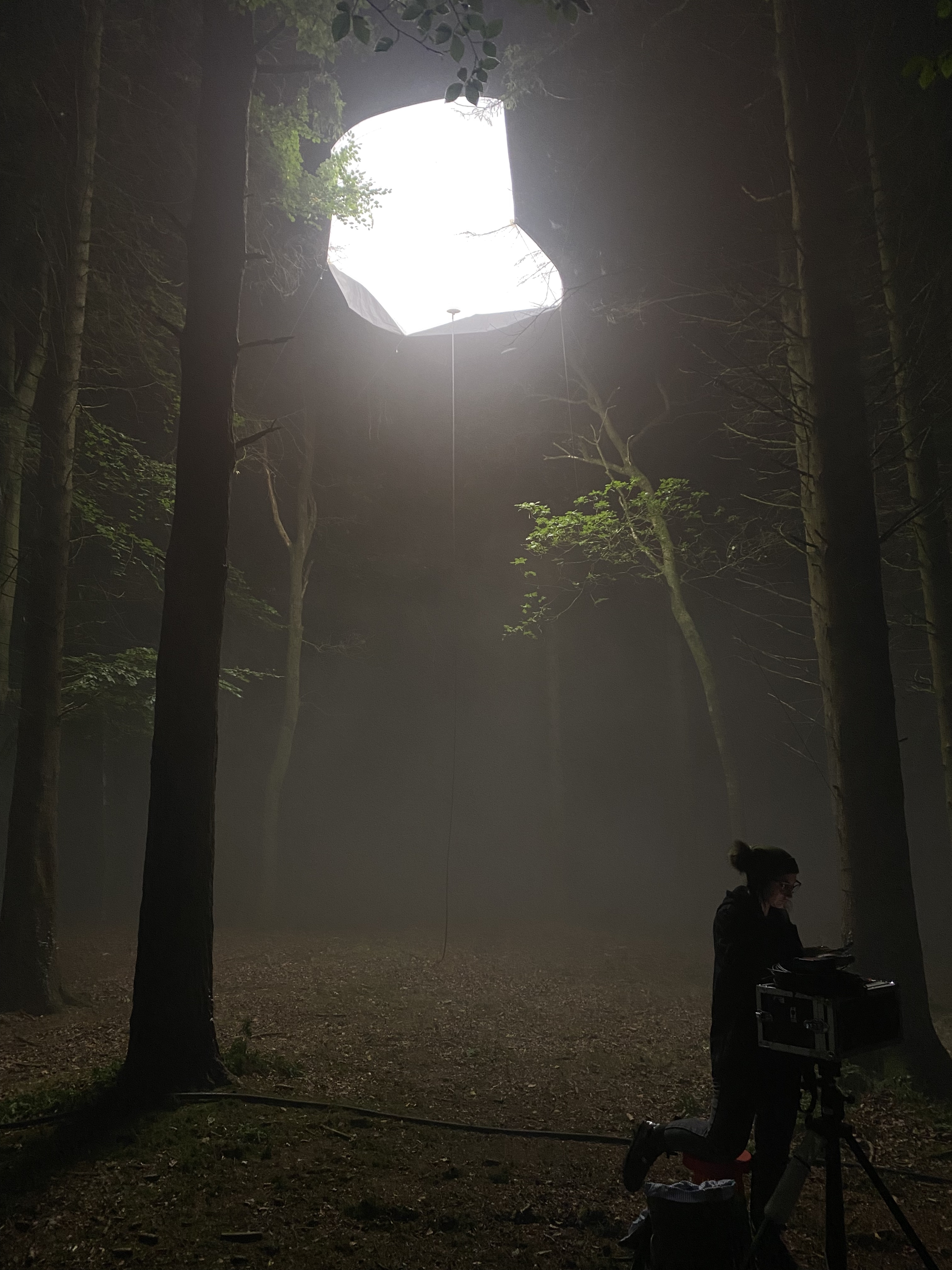
We sought an otherworldly atmosphere inspired by E.T. and Stranger Things, with a directional moon. We selected a location with perimeter tracks and accessible fields, along which we pepped two Arrimax 18Ks, two Arri M90s and two Creamsource Vortex8 rigs on machines to create our moon. Two Skylite LED balloons were maneuvered within the forest to provide ambient texture and separation. The Arrimax units also gave us the reach required for wider shots, while the Vortex rigs offered depth. The scene also marked my first foray into implementing the Alexa 35’s Extended ISO setting; I was struck by how much depth it could deliver, even in those demanding conditions.
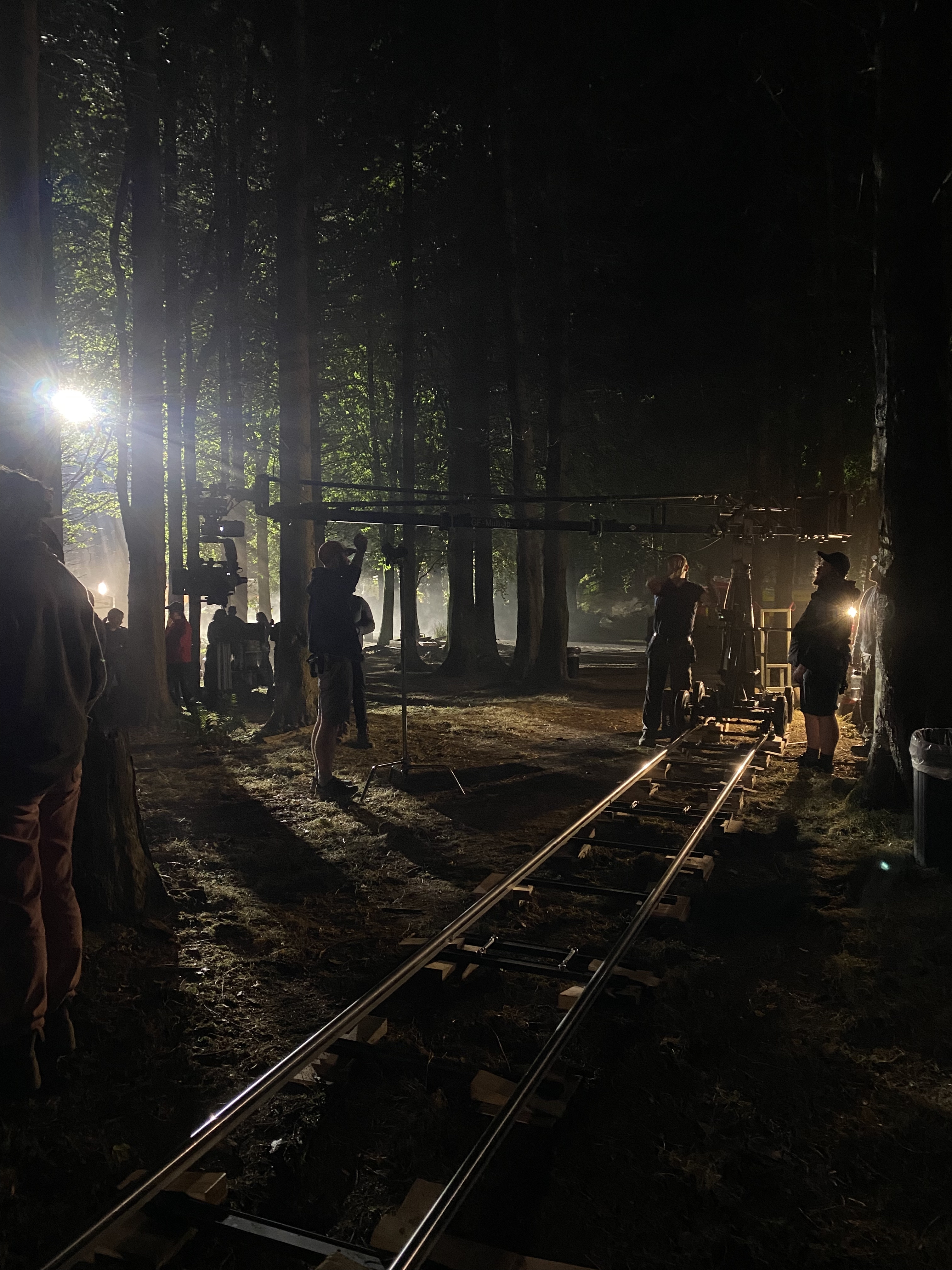
We wanted the sequence to unfold as a pursuit of questions, rather than answers — urgent, elusive and suspenseful. A DJI Inspire 3 drone, flown by Pivotal Films, acted almost like an omniscient observer, while the Alexa 35, on a lateral track, captured the staccato rhythm of the trees, continuing the sequence’s kinetic energy; Declan’s handheld moves completed the trifecta.
Establishing the Show's Lighting Philosophy
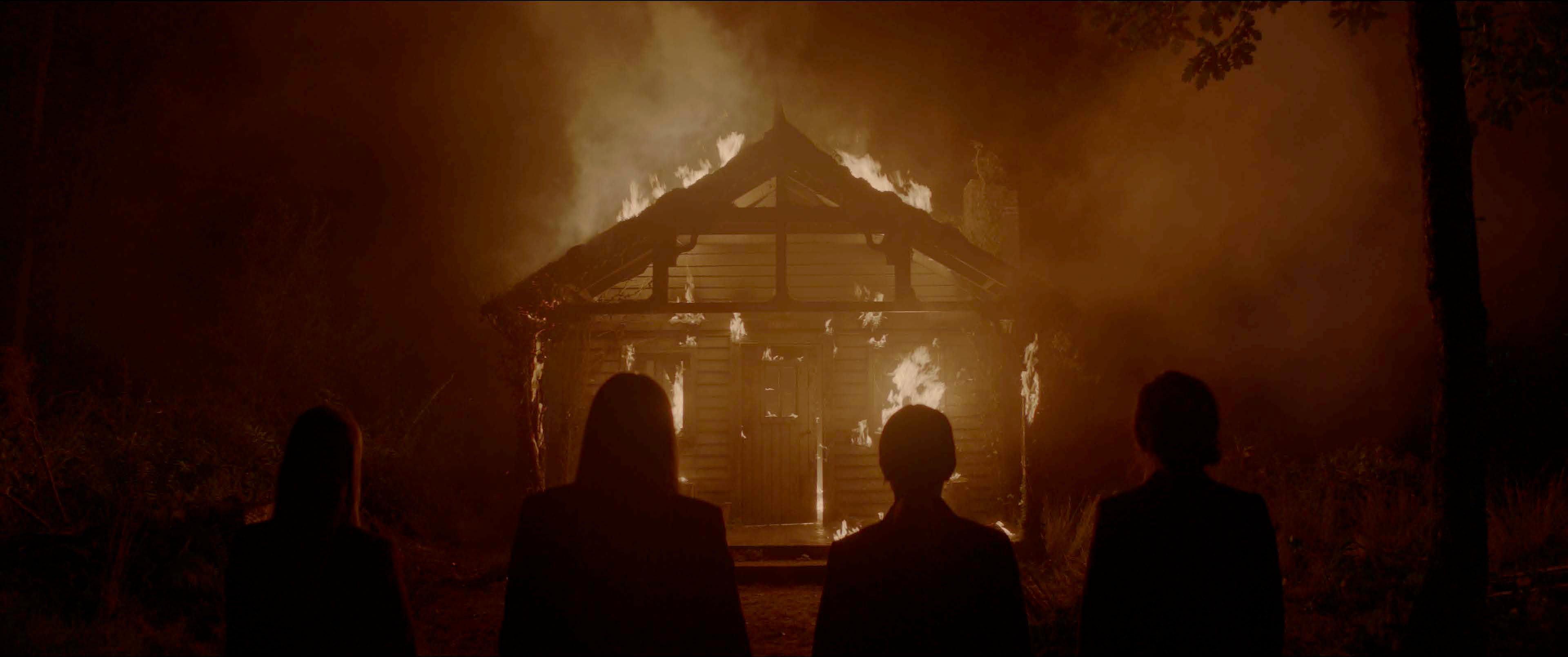
That led us to our cottage — the Hansel and Gretel-esque epicenter of the series, and a significant collaboration between lighting and production designer Tom Conroy and his team. The cottage was to be built about a month prior to the shoot, while we were in production, often shooting remotely. Much of the collaboration took place via messages, calls and photographs. Adam and I would map out proposed measurements with sticks on location. I’d exchange notes with the other cinematographers for input, bearing in mind what might affect their episodes.
Windows became a focal point of discussion. Large apertures would have felt inauthentic, yet we needed to allow controllable moonlight in. Since the scene was set in an abandoned cottage, our windows also had to be covered in vegetation. So, Tom proposed the pivotal idea to add skylights. (See our skylight mockups for the cottage interior below.) We also asked for the roof overhang to be removable so it wouldn’t cast unwanted shadows across the side windows. Tom and the team provided us with beams both inside the cottage and along the perimeter so we could secure Astera tube lights in snapbags.
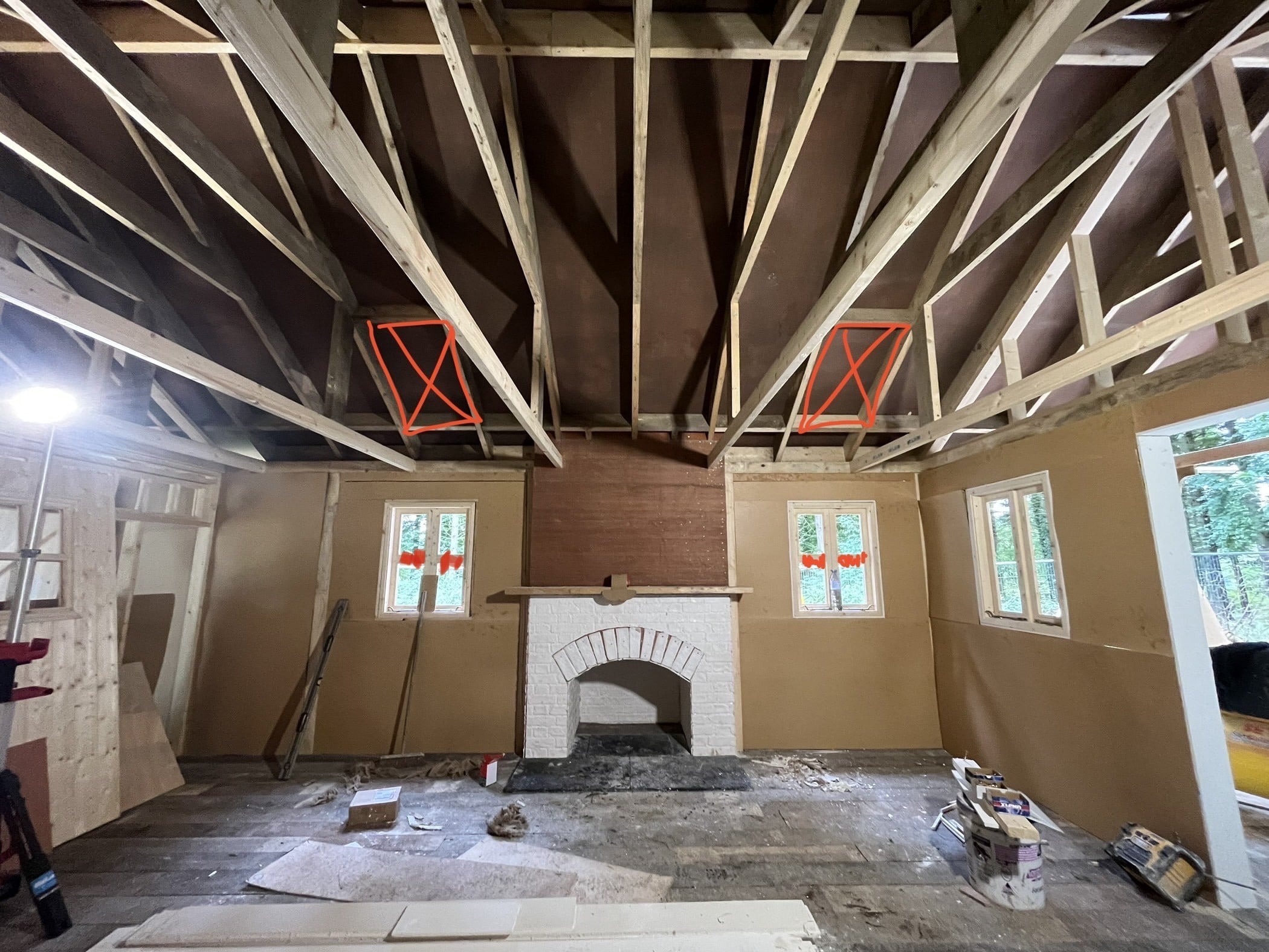
Next was glass — its color, which was so integral to our visual language — and its quality. Due to access limitations, we had to employ fixtures closer to the windows to extend and control the moonlight coming through the windows. The inverse-square law of course rendered this approach a challenge with the strength of the beam, so care had to be taken regarding the type of glass with which the strong beams of light could interact. Slater had suggested Nanlux for the show, due to their adaptability and quality of hard light, whereas I’d successfully used their tubes on a miniseries in Australia. So, the Nanlux 2400 and 1200s were employed for their control, while Gary Curran shaped the rest. Then it was an ongoing battle between haze and wind.
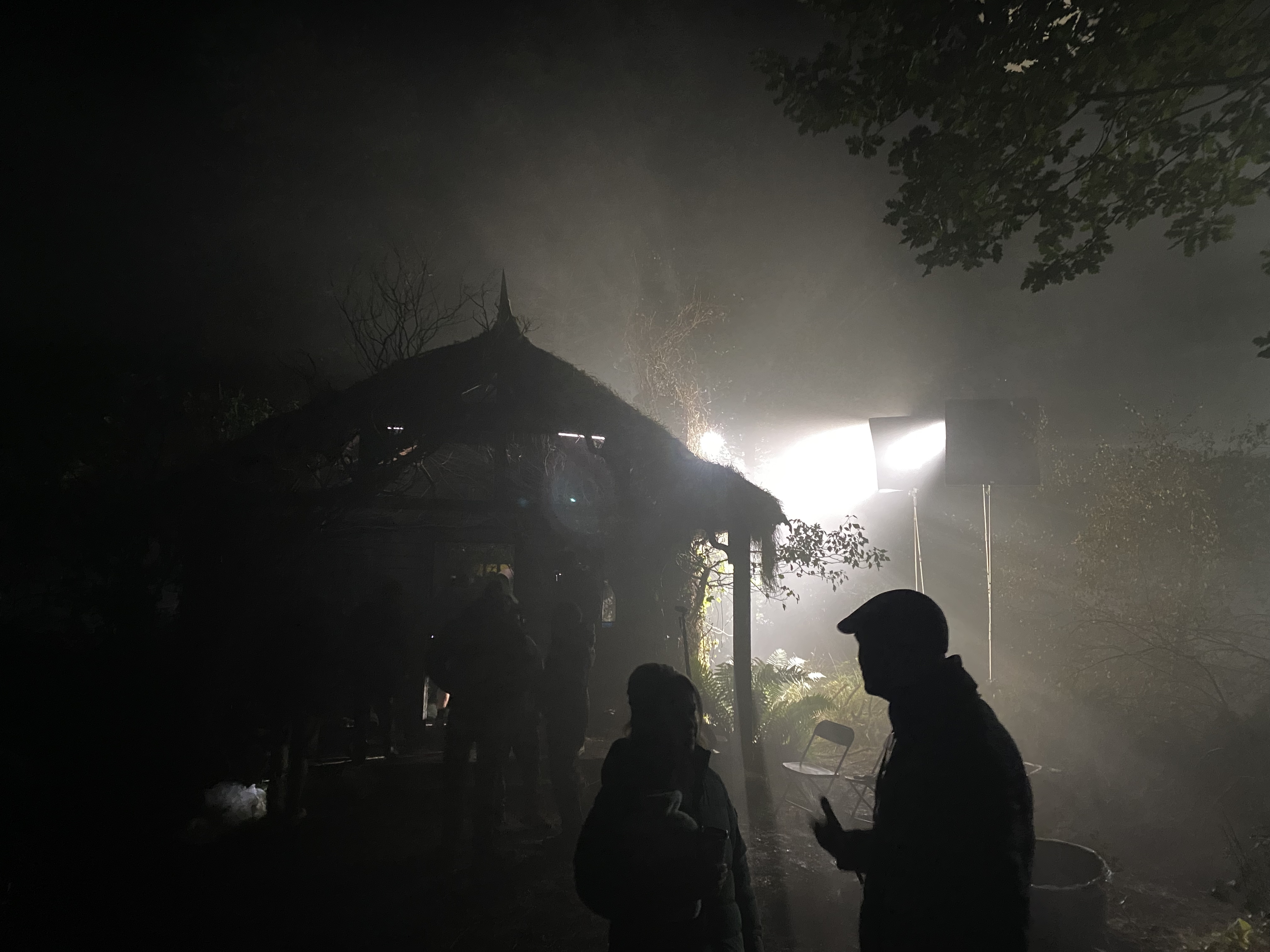
There were extensive discussions about whether to shoot the cottage interiors on a stage rather than within the forest. Ultimately, we knew that doing so would compromise the quality of the moonlight, but more importantly, we wanted layers beyond the pane — a constant sense of the forest pressing in. That presence added not just depth, but mystery — the feeling that someone might emerge from the darkness at any moment. This meant extending our forest-lighting philosophy into every interior scene.
What began as unfamiliar territory became the visual anchor of the series — forged by a village, and a key ingredient in building a world that someone later described to me as a “Coen Brothers–meets–acid-house céilí”. Sláinte!