The State of Shooting on Film — Part II
How can we make motion-picture film more accessible?
The first part of this story asked an intentionally provocative question: “Is shooting on film an art about to die?” Certainly, more motion-picture film is being shot now than 10 or 15 years ago, but the shape of the industry has changed. If there are two takeaways from this investigation, the first is something that Vincent Terlizzi, executive director of Colorlab, said in Part I: “The future of film is whatever people make of it.”
Speaking as a filmmaker who learned to shoot on film, and still loves to shoot film, I’ve watched a lot of corporate support shift away from independent filmmakers and film artists toward major studios, making way for a robust boutique industry that puts the craft lightyears ahead of its lowest point in the 2010s, if not back to the “good old days.” New labs and small-scale independent camera repair shops keep shooting on film within reach for many of the independent filmmakers who want to, analog filmmaking collectives encourage creative self-reliance, and many artists themselves continue to uphold film as the gold standard of imagemaking, even in the 21st century.
The other point is that filmmaking isn’t just an art, it’s a business — and the money always comes first, no matter what your budget level is. Despite commitments made by major studios in 2015 and 2020 to shoot a share of their theatrical features on film, which helped to stabilize costs, and the subsequent resurgence of large-format cinematography, the price of motion-picture film stock is significantly higher today than it was in 2015. This has widened the gap in access between professional and independent film productions — the rising prices of silver and cellulose triacetate (aka ESTAR film base) have a lot to do with this — which begs the question: How do we bridge the gap?
JULIAN ANTOS
Executive Director
The Chicago Film Society
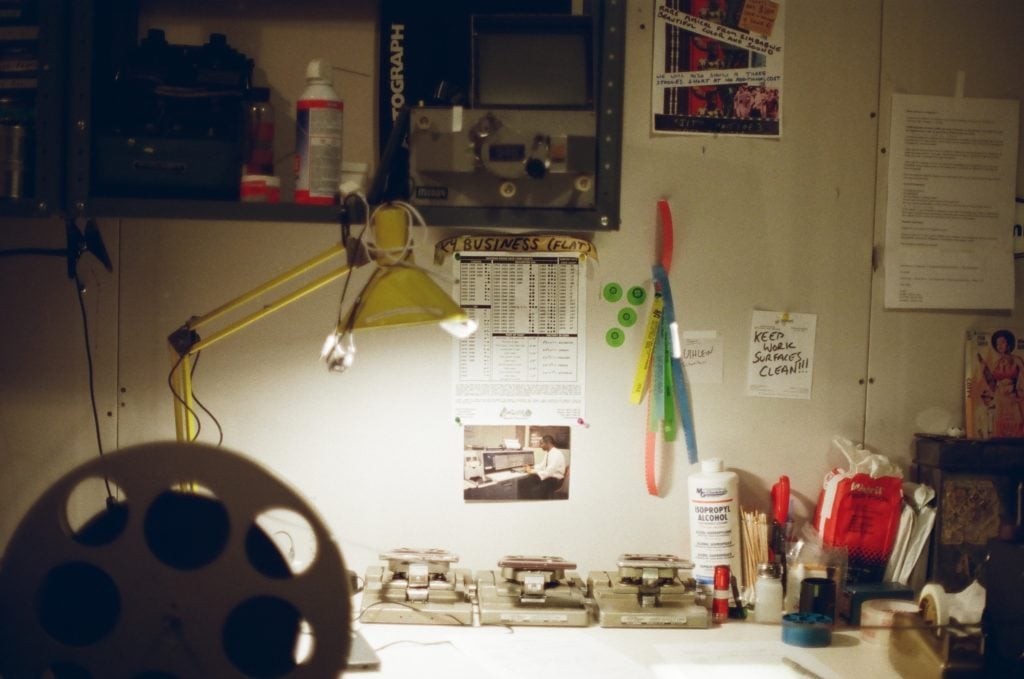
Founded in 2011, the Chicago Film Society promotes the exhibition and preservation of motion-picture film “in context” through writing, film preservation projects, workshops. Regular film-print screenings provide access to the restoration efforts of archives, studios, and private collectors, the work of artists exploring the film medium today, and the experience of seeing film projected live in a theater, with an audience.
“The thing we love is only manufactured by this huge corporation, but it’s the grassroots effort of everyone in the ecosystem, developing their own support systems for the medium, that makes it work for us.”
How did your background as a projectionist inform the creation of the Chicago Film Society?
The Chicago Film Society was started by three people — Rebecca Hall, Kyle Westphal, and myself. We were all working as projectionists at the time digital projection started to replace film projection, to preserve the art of film projection and the experience of seeing movies on film. The timing was such that we saw film projection possibly going away, and wanted to preserve it, at least in Chicago. We wanted there to always be a place that was screening on film. It started out as just a film series, but the thing that happens when you’re working with film is that we kind of become addicted, and we also realized that there’s a whole ecosystem around film that needed to be supported. We started doing film preservation. We started educational programs, like film projection workshops and 16mm cinematography. No one else in the city was doing that, so we picked up the slack and we’ve really grown over the years.
What’s the relationship between film projection and film archiving?
It’s both a technical skill and a cultural skill. The thing we at the Film Society focus on when we’re doing workshops and training people is really the archival film side of things. If you’re a film projectionist, you’re expected to have technical knowledge and aptitude, as well as a knowledge of film history, because you may be screening movies from any point in the history of cinema, with particular sound formats, aspect ratios, etc. The prints are either irreplaceable or cost several thousands of dollars to remake, and you’re running them through a machine, so you also have to be incredibly detail-oriented and have a delicate touch.
What’s the state of film projection right now?
There are a lot of skilled projectionists out there, but for the most part there isn’t enough work for them to just be a projectionist. We were just talking about this the other day: how a lot of projectionists working now have one or two shifts per week at some venue, and then they’ll do something else on the side. In Chicago and other cities, there used to be projectionist unions and lots of projection jobs, and you might get sent to one venue or another around town. The pay was good and it was full-time work; now, the people who are doing it really want to do it, and they’re really skilled at it, but the amount of work available is not the same as it used to be. You have to be really skilled, know film history, and be okay with having other jobs, or just piecing together enough work to to make a living. It’s hard sometimes. I imagine it’s kind of the same on the film-production side.
It certainly is. Let’s talk about the CFS' educational initiatives, like “Sprocket School.”
That’s something Becca developed in 2013, a few years before our first projection workshops. There’s so much information about film projection that’s in people’s heads, or notebooks in a booth somewhere, and we really wanted to make a place for that information to go. It’s a work in progress, but we were getting all these phone calls about different problems and just being able to point to an article about adjusting tension, or something like that, has been really useful.
And it’s great that it’s set up like a Wiki, which makes it a community project. Can you speak to the collective aspects of the CFS' work?
We’ve been in business as a non profit for 15 years, and over time CFS has evolved from a collective to more of a traditional non-profit or small-business structure. It’s an experiment in how to structure a non-profit, just as much as it is an organization devoted to analog film. We’re still figuring it out! Ideally, the best parts of collective work — sharing ideas, talents, and passions to support a shared mission — and an effective structure with clear roles and responsibilities, and a focus on sustainability rather than endless growth, can come together.
Right now, I serve as a part-time executive director and we have five additional staff members who work on film programming, publicity, preservation, film-advocacy projects, and workshops. We're essentially running the same volume of programs as a museum or other larger institution, with only a fraction of the staff, funding, and bandwidth. This is only possible because our staff is dedicated and creative enough to make it happen. Most people in CFS have a background working in movie theaters, non-profits, museums, and customer service, and we try to create a work environment that avoids the typical pitfalls of those places.
I didn’t want to exclude film exhibition from a conversation about shooting film because I thought, from a technical standpoint, those areas of the industry are facing some similar challenges, particularly in the hardware department.
That’s a thing we are acutely aware of. Several years ago, one of the main manufacturers of projector parts, LaVezzi Precision [now Paragon Medical], closed their film division. So we got their entire film inventory: all the little gears and sprockets, and we make make those available to the technicians and venues that need them. But even in that huge stockpile, there are parts that we don’t have and are becoming harder to get. It almost feels like a future project for us or a group of us together, focusing on projector parts that need to be manufactured, and figuring out how to do that.
When you think about the future of film projection, what does it look like?
I think there’s a really great future for film projection. The concern that I have sometimes is that the amount of enthusiasm for it is not necessarily met with enthusiasm or knowledge of the behind the scenes work that needs to happen in order for film projection to to continue successfully: the training, the parts availability, and the financial resources. Threading that needle is tough — we don’t want to see a bunch of enthusiasm for film, and then all of a sudden, we don’t have the parts we need, or we don’t have the skilled people to do the training. But certainly the enthusiasm from both the public and filmmakers is a step in the right direction. And we’re taking the time to do it right.
You've mentioned the word “enthusiasm” several times. Where does yours come from?
It just makes my heart go pitter-pat to see a film print and in an auditorium with other people [laughs]. It remains one of the great things that you can do with your time. In Chicago, the film going communities are so strong, and being able to share 100 years of filmmakers making films and labs making film prints, and the whole history of projection — I don’t know what else I’d do if I wasn’t doing that.
TYLER PURCELL
Cinematographer / Camera Technician / Restoration Expert
Narrow Gauge Films
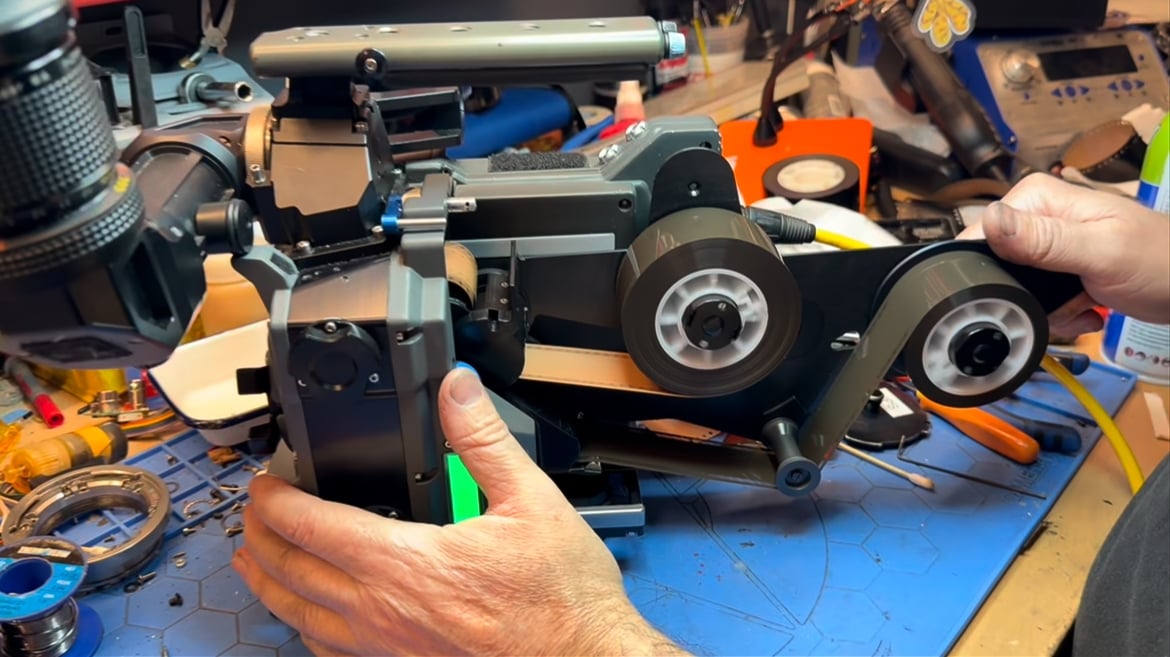
Based in Los Angeles, Narrow Gauge Films provides a “one-stop shop” for motion picture camera repair, camera parts, engineering and film restoration services.
“We need innovation to save film for the next generation, and people are finally starting to wake up and innovate.”
What’s your background? Did you have any kind of formal training in electrical or mechanical engineering before you started working on cameras?
My interest in cameras and electronics came from my dad. I started in broadcasting when I was 13 at a community access station in Wellesley, Massachusetts. I did that through college, putting together news packages and directing live news programming before I got my film BA at Emerson. I left the masters program early to move to Los Angeles in 2002. I shot two features back to back and did some commercial work, but money was too sporadic, and I had no choice but to take a job as a technician and broadcast engineer.
It was during his time, I saw people start to move away from film and into digital, so I went on a mission to not only get back into the industry I moved to Los Angeles for, but also to save film in whatever capacity I could. Access to cameras was an issue, so I got a loan, bought an old, broken Aaton LTR and quickly learned how to service it. I marketed my services on Craigslist and then ShareGrid, and the camera was frequently out for rental, mostly with me.
What appeals to you about shooting on film?
I’ve always been attracted to film, even as a kid processing and printing my own 35mm black and white stills. Even when analog video and digital came around, I gravitated towards film as the superior process, even if I couldn’t afford it for every production. I did all of my college work on film and then nothing for years.
When Kodak filed bankruptcy in 2013, the prices of film cameras bottomed out and I was finally able to acquire professional 16mm and 35mm cameras for the first time in my life. Using low-cost stock and short-ends, I was able to finally shoot more serious stuff on film for myself. I just love the workflow; the simplicity of the cameras, and the limitations that make you think extra hard about what you shoot. The results look nothing like digital. Plus, make a contact print of that negative and you will blow peoples’ minds. It harkens back to a time when all the masters of cinema learned the photochemical process, and I just wanted to be just like them.
Where did you learn how to service cameras?
My dad was was extremely knowledgeable in the camera world, and when I was a kid, we would sometimes fix cameras together. We never had the right tools, we never had the best work area, but we somehow made it happen. As I got older, I realized I needed a mentor in the film industry and Andree Martin was someone I had met and talked to on a more regular basis, so when I was between jobs, I asked him if I could work with him and he agreed. By that time, I had already serviced my own cameras, so I had the knowledge and experience, but Andree really helped me fine-tune it.
Soon after, I was offered an incredible opportunity at another engineering firm and in fall of 2022, I started taking service requests at home and started Narrow Gauge Films, a name based on my love affair for the smaller “narrow gauge” film formats and narrow gauge railroading in Colorado.
One idea I've considered while covering the motion-picture film space is that we may now have all the film cameras and parts that have ever been made, and possibly ever will be made.
Take the Arri 416. That foundry doesn’t exist anymore. And even if Arri had the drawings to give to someone, they probably wouldn’t do it. The last time I spoke with Arri in Georgia, they had seven working 65mm cameras and two broken ones to cannibalize for parts. And they know that once those parts are gone, that’s it.
Arri recently closed their office in Blauvelt, New Jersey too, which did a lot of their parts and accessories machining.
That’s the scariest thing for people getting into shooting on film, or rental houses owning film cameras. Say you’re going to rent 416s and Arricam LTs with HD video taps. The 416 is basically an SR3, so the mechanics are bulletproof. Optics are easy to deal with. You could go to Edmund Optics and say, “make a new prism, here are the drawings,” and they’ll do it, even if it costs five grand.
The problems are with the electronics and the motors. This is why I focus on Aaton cameras. On their newer cameras, Arri wipes all the labels off their chips, so you can’t replace them; if the electronics go bad, the camera is done. Aaton electronics are very basic. The 416 and SR motors are integrated, making them hard to get at. With Aatons and some models of Éclair cameras, the motor sticks off the side, so you can easily pull it out and put a different motor and electronics in.
It’s like the way modern cars are just big computers. The more computerized your vehicle is, the harder it for just anyone to work on. Where do you get your new motors and electronics?
I spent years buying old new stock on eBay and have all the special chips, resistors, capacitors, and diodes for the Aaton LTRs and XTR Prods in stock. Unfortunately, I have to charge customers for these impossible-to-get parts.
What about making your own parts?
XTR Prod electronics are rock solid, and I can fix them about 99 percent of the time. When the electronics fail on the older LTR cameras, you’re screwed, so I’m working with someone on an Arduino motor solution for that. We want a prototype out in the next year.
And then I work with a gentleman named Aapo Lettinen, in Finland. About five years ago he started making electronics to drive off-the-shelf motors and non-commercial cameras, like CP-16s, Éclairs, Camflexes, and some Russian cameras.
What’s the state of shooting film?
Most commercial production is shooting digital today, mainly because there are great tools which create a “film look” in post, so it’s a lot safer than worrying about stock, lab costs and other issues. I see more people in the 16mm world not getting those gigs anymore. Two years ago, most of my customers wanted me to service their cameras for use. Now, maybe 40 percent of my business is servicing cameras for resale.
People want the latest, smallest, quietest cameras — an Arricam LT or Aaton Penelope — they don’t want an old camera from the '80s. I’ll get calls from people about this Arri BL I have for sale, but the moment they realize it’s 30 pounds without a magazine, they decide they don’t want it. So, I do see a precipitous shift in the film-camera world — which I expected, because I saw the commercial industry tanking. Now the big potatoes are starting to feel it, and we're in trouble.
You’re saying the bigger productions are shooting either with digital cameras or on 35mm?
It’s the high end or nothing at all. It used to be that you’d shoot a commercial on half a dozen different rolls of 16mm, as well as digital, and they would cut those shots in when they needed it. Now, you might get two rolls of Super 8. There are exceptions, of course.
Who’s selling their equipment?
Among those selling their equipment, I would say it’s about a 50-50 split between people who are selling their legacy cameras and new owners who can’t afford to live in L.A. anymore. Retiring the legacy cameras makes perfect sense; they’re shooting digital nowadays. But when I talk to younger owners one-on-one, they all realize the amount of film they’re shooting is dwindling. It used to be that they’d shoot on film 60 percent for other people and 40 percent for themselves. Now it seems like it’s 80 to 90 percent personal projects. It’s more pure passion, which is great to see and it keeps us busy, but it’s also sad, because these DPs should be making good money with their kits, not just scraping by.
Do you feel like you’re one of the people holding the line for a certain level of independent filmmaker who wants to shoot on film?
I’m in a special situation, because I’m a fully-trained technician who knows these cameras as well as the people who engineered them, but I’m also a shooter. I did two features this year, and one was a stunningly beautiful movie shot in Texas on 16mm with Baltar lenses. That film was self-funded. The filmmaker used three XTR Prods that I serviced. He put in $85,000 to $90,000 of his own money to do half the production, and now he can’t afford to shoot the rest of it. There’s a lot of “this is the beginning of our shoot, but we can’t afford to finish it” happening in the indie scene.
When a client comes to me to shoot something, they don’t necessarily need it to be on film. Meanwhile, Kodak just raised their prices again. A lot of clients are already on the verge of not shooting film, or they’re debating it. If it goes up any more, there is no debate. I was recently forced to buy a professional digital cinema camera for first time in my career because I was losing too many creative jobs. Since that acquisition, I’ve stayed busy shooting for other people, but I will probably continue to shoot my personal projects on film.
Digital capture is already the default for independent productions. A filmmaker or DP is going to really have to want to shoot on film, and be willing to make sacrifices to make it happen.
It’s not about people not wanting to shoot on film — what’s been propping up indie films on 16mm are the crew on bigger shows spending the cash they made. The trickle down is what’s changing everything. Take Joe Union AC — when he’s not on a job, he uses his own money to make his own projects. But Joe isn’t getting jobs because work has slowed down, so he’s not going to use any money he has to shoot on film. It used to be that filmmakers would get $5,000 for a music video and pitch in $1,000 of their own money for the film stock. Now you’re lucky to get $1,000 for a music video.
To solve this problem, a lot of people need to go back to work. This incentive program happening in California may change things, but I don’t foresee this year being the year things come back to L.A.. Maybe three or five percent, but not a boom. And my concern is that only the really high-end crews are going to get those industry jobs. It won’t be the filmmakers I shoot for, as they don’t shoot 16mm often, or at all.
But doesn’t it also feel like things are turning around for film? There were the studio commitments, and now directors want to shoot Vistavision, Imax, 65mm...
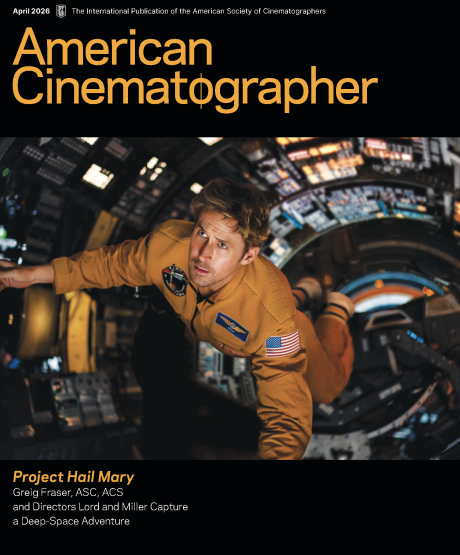
Kodak is in good shape now. This year there are going to be at least three feature films released on 15-perf Imax — Project Hail Mary, The Odyssey, and Dune 3. Imax deployed nine new 15-perf projectors over the last year. However, here’s the thing: Even if someone like me buys 100 rolls of 16mm film, that isn’t 0.01 percent of their profits. We’ve seen quite a few features being shot on 16mm lately because it’s such a different look, but Kodak’s bread and butter is still the 35mm and 65mm formats.
I’m much more worried about the economy than even fixing film cameras. But as far as cameras go, I’m more worried about [film] cameras than anything else, because people use those commercial cameras a lot more, putting more feet of film through them, which wears them more. Because some parts are impossible to get today, in five or 10 years, some of these cameras just aren’t going to work. People are going to have to make new parts. The German company that made 416 and SR motors, for example, doesn’t support that motor design anymore, so you can't service them. Last year alone, I got two Aaton cameras — an older XTR Plus and an LTR — that were abandoned because I couldn’t service them in a reasonable amount of time. I guess if I spent a few months working on them, I’d figure it out, but we have to keep the lights on.
This is the issue with the service business: You want to help everyone, but when roadblocks come up, there is just no time in a given week to put aside 20 or 30 cameras waiting for easier repairs, so things go on the back burner and sometimes it takes years to find the time and parts and get them working. As a technician, how do you amortize all that labor and time into a bill for a camera the client bought for a few thousand dollars? So, this is the real dilemma, and why more and more cameras will sit broken for much longer periods of time.
Where you could send them, those abandoned cameras?
Andrew Zorawski at AZ Spectrum is the only electronics guy I know of who could do it, but he’s focused on video taps and upgrades. He’s like Andree, who picks and chooses what he works on, and might let a camera sit for three months if it’s not a priority. I can get on a camera in a day or two if it’s a straightforward repair. That’s how we stay afloat, by prioritizing the cameras that can be turned around quickly.
I’d be wary about SR I and SR II and LTR ownership in today’s world, because when they fail, you won’t have a camera anymore. I tell people to raise money and buy an SR III or an XTR Prod, which you can kit out with an HD tap, modern battery system, Super 16 gate, and rails. The 416 is the top 16mm camera, and it always will be. What makes it special is that it integrates with all the Arri accessories. I don’t think anyone’s going to be doing all that engineering to make all those accessories work for a future camera.
As someone who loves shooting film because, creatively, it offers me a lot more than the relative economy of shooting digital, I don’t want to lose it.
There are probably going to be at least three new film cameras on the market within the next five years. These cameras will be MOS, they won’t be crystal cameras or quiet enough for sync sound. But when they do hit, I think that it will change things quite a bit for the positive, because we’re going to redefine how people think of motion-picture cameras. I’ve got a design that I’ve been working on for which I think we’re maybe a year and a half away from creating a prototype from scratch. The white papers are already written, the designs are ready. And I know of two other people who are doing the same thing. One of them is already making his prototype now.
How will that change things?
I don’t know how well the Kodak Super 8 camera has been selling — it is expensive — but I think independent technicians and engineers are looking at that and going, “If that can sell for $6,000, then why can’t I sell a new 16mm camera for $15,000?” I think the future is looking up. We need innovation to save film for the next generation, and people are finally starting to wake up and innovate. It’s just going to take some time.
ANDREE MARTIN
Owner / Camera Technician
AM Camera
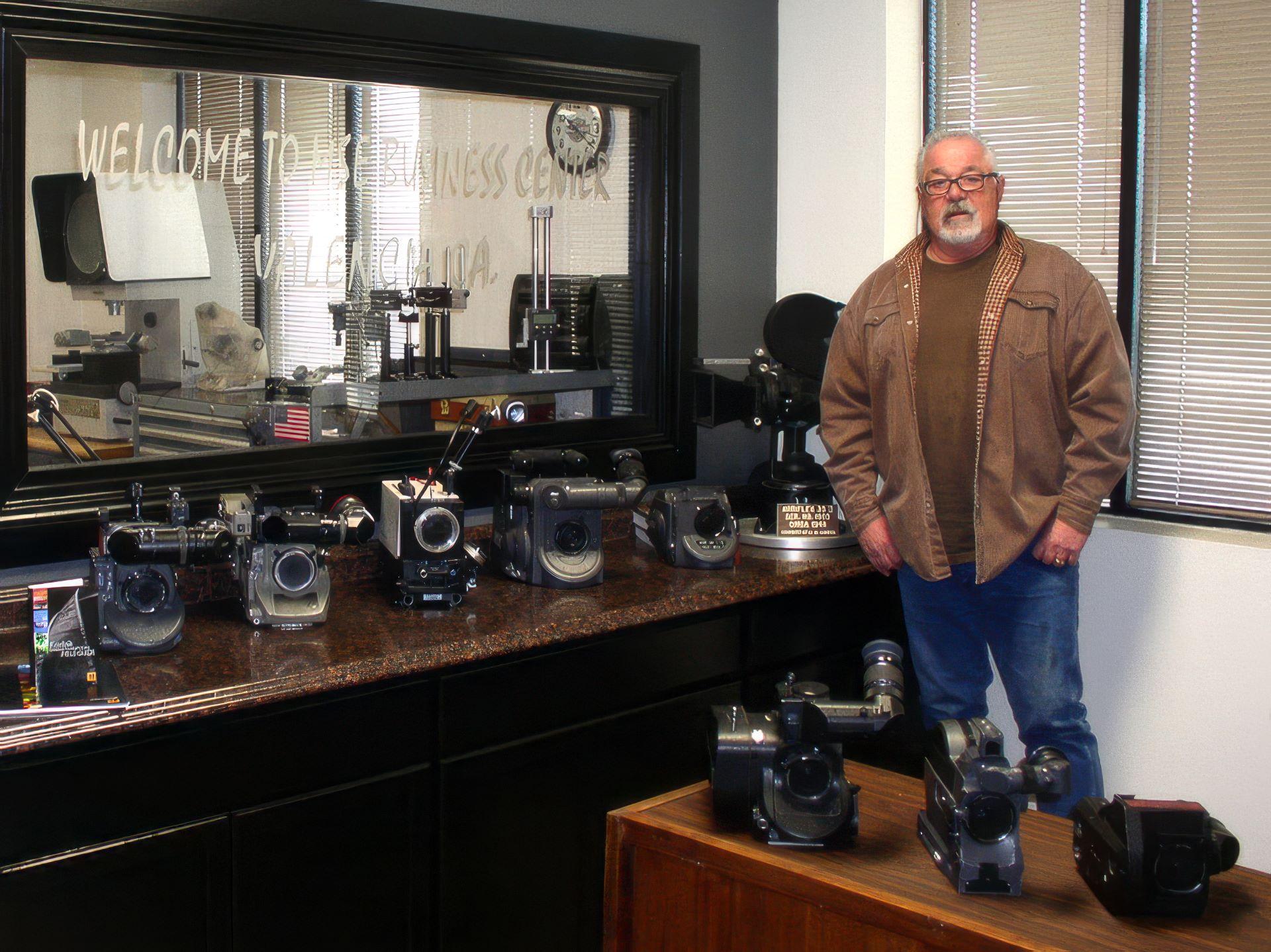
AM Camera started in 1984, when Martin was still a service technician at the legendary Clairmont Camera, offering special repair services for a wide range of motion picture cameras from the United States, Canada, Mexico, China, Italy and Brazil. When Clairmont was purchased by Keslow Camera in 2017, Martin opened AM Camera on a full-time basis.
“We’re a small community, that’s for sure, but we help each other out.”
How did you get started in this line of work?
I started in the military. Enlisted when I was 17, went through the boot camp, went to tech school, and there I was told I was going to be a photographic technician. So, I did that. My first assignment was in South Carolina on a documentation unit working on Arriflex 16 S’s, BLs, in the lab, with still cameras too. When I got out ‘81, I started working for Arriflex. My family was good friends with the head engineer at Panavision, a gentleman named Albert Meyer, and he got me in touch with Arriflex. I worked there for three years, under the mentorship of Wolfgang Reigl, one of the finest camera technicians in the history of the motion picture industry.
In ‘84 I moved to Clairmont Camera, where I ended up becoming the Technical VP. I was there until 2017, then I bought everything in my shop — the tools, the cameras, the parts — from Denny [Clairmont]. Now I’m out here in Valencia, by Santa Clarita Studios. A friend of mine — his name is Kelly Condon, his company is called Venture Quest — had a space in his workshop, where he does a lot of machining for the film industry, so I set up there. And that was in 2017 and film was still alive.
By the time Clairmont closed, my shop was fully set up and ready to go. But, the nerves were there, just thinking the phone’s never gonna ring I’d be twiddling my thumbs in my little shop, but from the minute the shop opened, I am overwhelmed with work, servicing and repairing 35 and 16mm Moviecam, Aaton, and newer Arriflex cameras like the Arricams and 416s, as well as their black body cameras — BLs, II-Cs, Arri IIIs, SR Is, and SR IIs. I am never without at least 10 to 15 cameras in the shop, sometimes more, from all over the world. I recently had someone with a broken SR shutter fly in from Shanghai.
What are you seeing more of — 35mm or 16mm?
I would say it’s almost 50-50.
What kinds of repairs are you doing most often?
Basic maintenance overhauls. I do a lot of pre-sale evaluations. I used to do a lot of R&D engineering type work, and I was hoping to keep doing that, but I am so busy just with the repair work that I do here that I don’t have the time for it. I did two-perf conversions for the 435 and the BL, and I was one of the first people that did the streak filters for the Alexas, but I just don't have time for that anymore.
How specialized is the skill set for doing this kind of work? Can anyone with a technical background jump in?
There are still a lot of good technicians out there, but they’re probably working at the rental houses — Panavision, Keslow, Arri, TCS. There are also some very good ones out there, freelance-wise, but they don’t all have the range.
If it’s not a manpower issue, where do you stand with hardware support?
There are still some parts out there for the 416, though I’m running into some trouble because the production of that camera came right before digital started to take over, so they didn’t make a lot of them. I’m not sure what the number is, but it’s not anywhere near the SR cameras. And because of that, they didn’t order a lot of spare parts. Same with the Arricam, some parts are hard to get a hold of.
I had a 416 with bad impact damage — the whole bottom of the camera fractured. I reverse engineered it and had a machinist make the new base. But if something really bad happened electronics-wise — say, if someone really smokes the circuit board — I don’t know what we can do about that. I don’t even know what the stock on those is, because I’ve never had to order one. I’m starting to rely on what we would call donor cameras, where a camera gets damaged and we start plucking parts out of it.
When you bought the shop from Clairmont, what did that include?
Well, just picture walking into the service department, with all the special tools, the test equipment, the collimators, machine tools, fasteners, parts — I pretty much picked up the whole thing and moved it here. If you want to work on cameras, you need to have the right tools.
Do you see film production ramping up or slowing down in the future?
There will be more people interested in film, I think. Seven years ago, when I first started, I asked a lot of the younger filmmakers, the students, “Why are you getting into film?” They said, “I don’t consider myself a cinematographer unless I know how to light for film.” To be honest, I think a film camera still makes prettier pictures than a digital one.
When film started making a comeback, the whole thing was that the producers are not going to want to pay for it. But I’ve been hearing that it’s gotten to the point now where, at a certain level, shooting film isn’t really that much more expensive than digital. And I have clients shooting with cameras that are 40, 50 years old, and they make very pretty pictures. You’re not going to see a lot of digital cameras that old still being used in another 40 or 50 years.
What can the industry do to improve access to film equipment and film media?
I can’t answer for Kodak, but I do know that access to budget-friendly film equipment can be relatively easy. The motion-picture film equipment rental industry is very competitive. From the large houses to the small niche shops, film cameras are plentiful, and on more than one occasion I’ve been told that we’re in a race to the bottom, in terms of camera-package pricing, so good deals are out there. For the low-budget indie shooter or student wanting to purchase a film camera, there are numerous options out there. You don’t need an Arricam, 435, or 416 to make pretty pictures. The older black-body cameras I mentioned before are still in service, and they can be gotten for a very reasonable price. Moviecams are also an option for 35mm.
I’m very surprised to see so many of the earlier generations of Red and Alexa cameras going for as low as $3,000 because they’re too big, out of warranty, or don’t meet current digital standards. It’s literally the difference between selling a computer and selling a sewing machine.
With digital cameras, the repairs are not done on a component level. You have to swap out the whole circuit board. With film cameras, you can troubleshoot it down to a component, replace a component, and the camera’s running again. I think 10 years, 15 years from now, an Arricam will still be repairable, but you may not be able to fix a Mini LF.
It makes a great case for what you're doing.
For the record, I keep hearing from cinematographers, people that buy cameras, they keep telling me, “You’d better not die,” but there are a lot of people out there that fix cameras. And there are always going to be. We’re a small community, that’s for sure, but we help each other out. I can't predict the future, but I really don't feel like I'm going anywhere for a long time. I would just say to people who want to start shooting film, go in with your eyes open.
The opinions expressed in this article are solely those of the author and interviewees and do not necessarily reflect the views or positions of American Cinematographer, the American Society of Cinematographers, their advertisers, or sponsors.