The Political Theatre of Symbiopsychotaxiplasm: Take One
Pioneering documentarian William Greaves turns the camera on himself and a crew on the edge.
Filmed in the summer of 1968, Symbiopsychotaxiplasm: Take One is an experimental documentary film by African-American director (and producer and actor) William Greaves (1926-2014), who was, at the time, executive producer of the American public affairs television program Black Journal. Black Journal covered issues relevant to African-American communities — such as the civil rights and Black Power movements in the late 1960s — in a monthly hour-long broadcast that earned Greaves an Emmy and helped set the stage for a distinguished career.
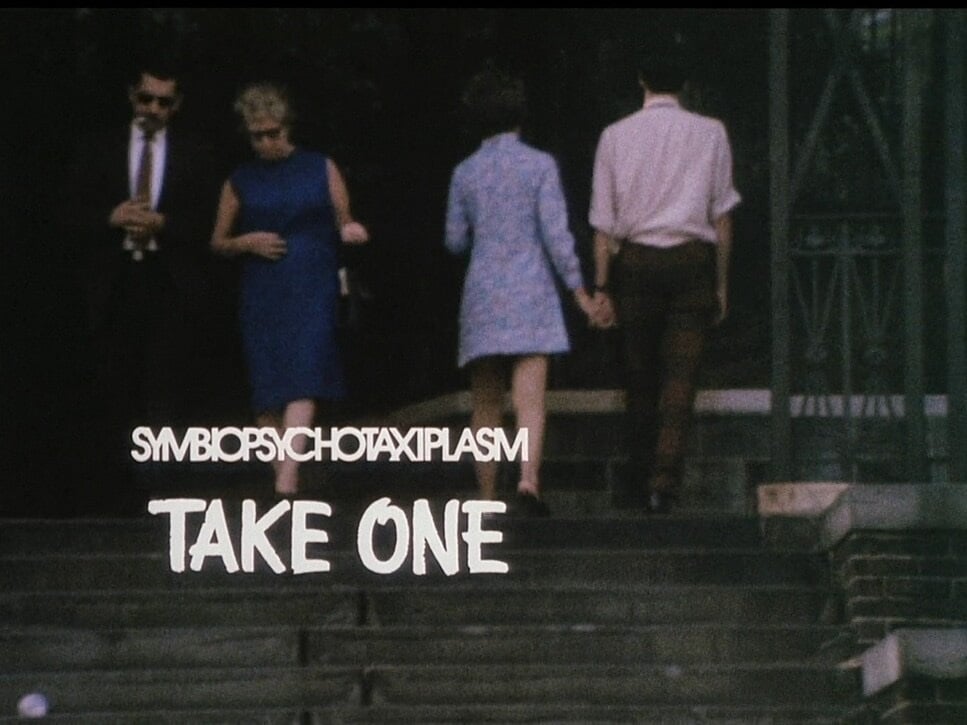
Symbiopsychotaxiplasm: Take One is an avant-garde outlier among Greaves’s more journalistic documentaries. It uniquely demonstrates cinema’s ability to bend time and space into new realities, using a meta-narrative about Greaves and a small professional film crew in New York’s Central Park, as they try to shoot a screen test with two actors.
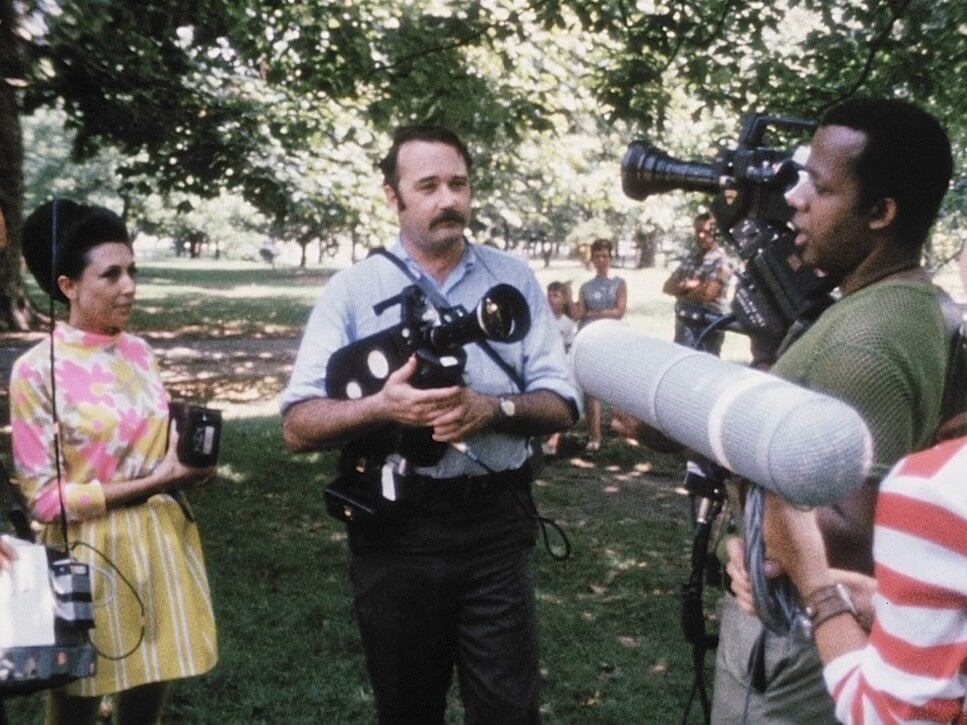
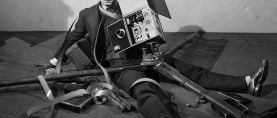
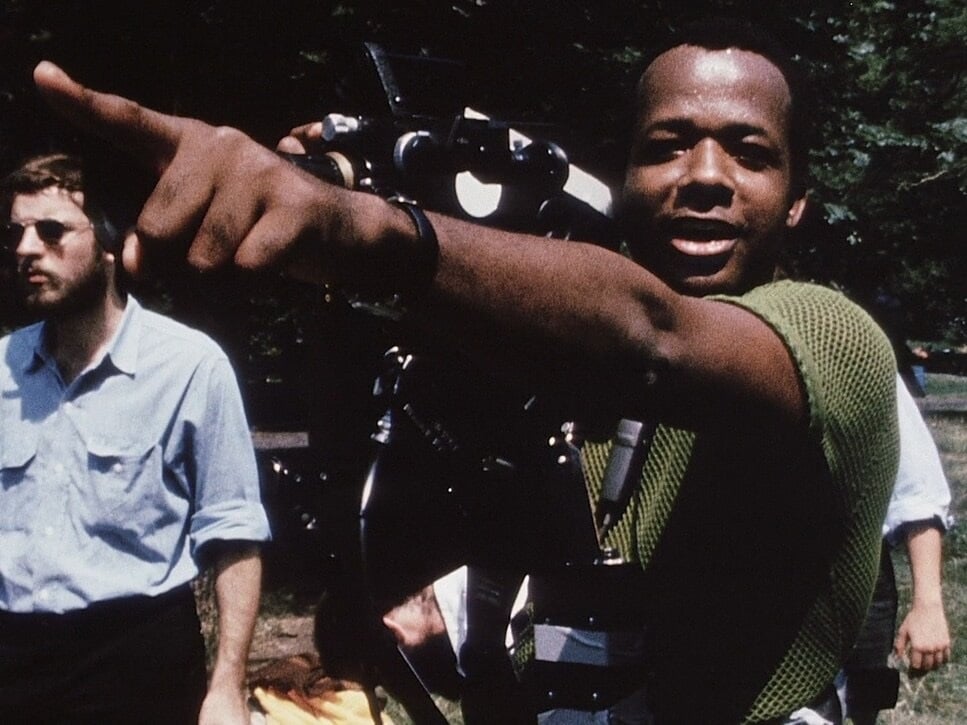
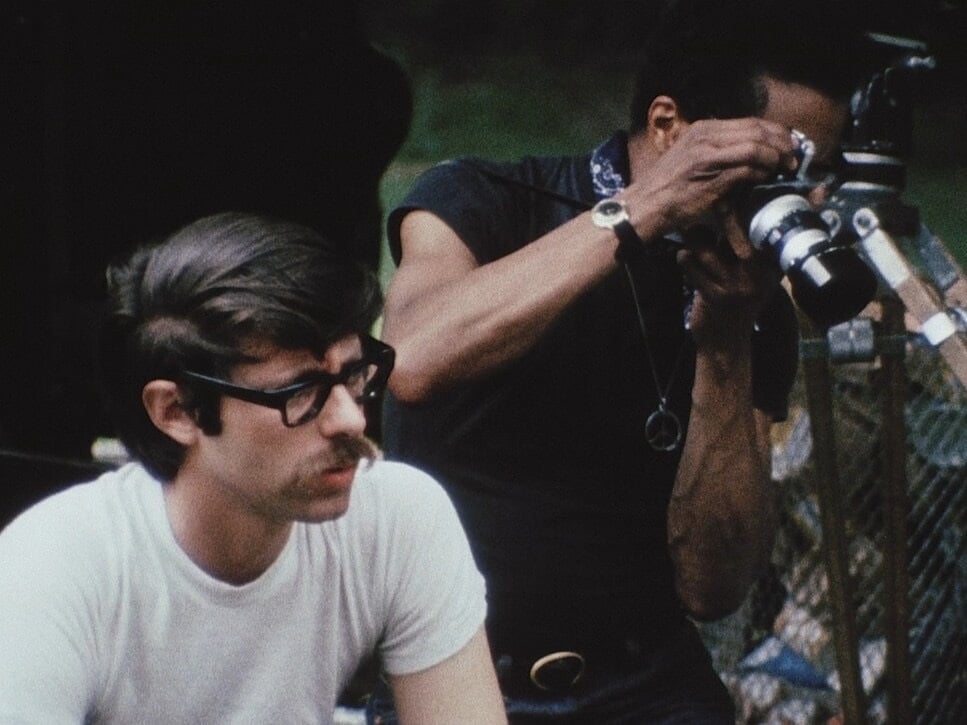
There are three cameramen: Greaves, who films the actors; Stevan Larner, filming Greaves and the actors; and Terence Macartney-Filgate, who films the other two cameramen and the rest of the production, including anyone who cares to wander through the set.
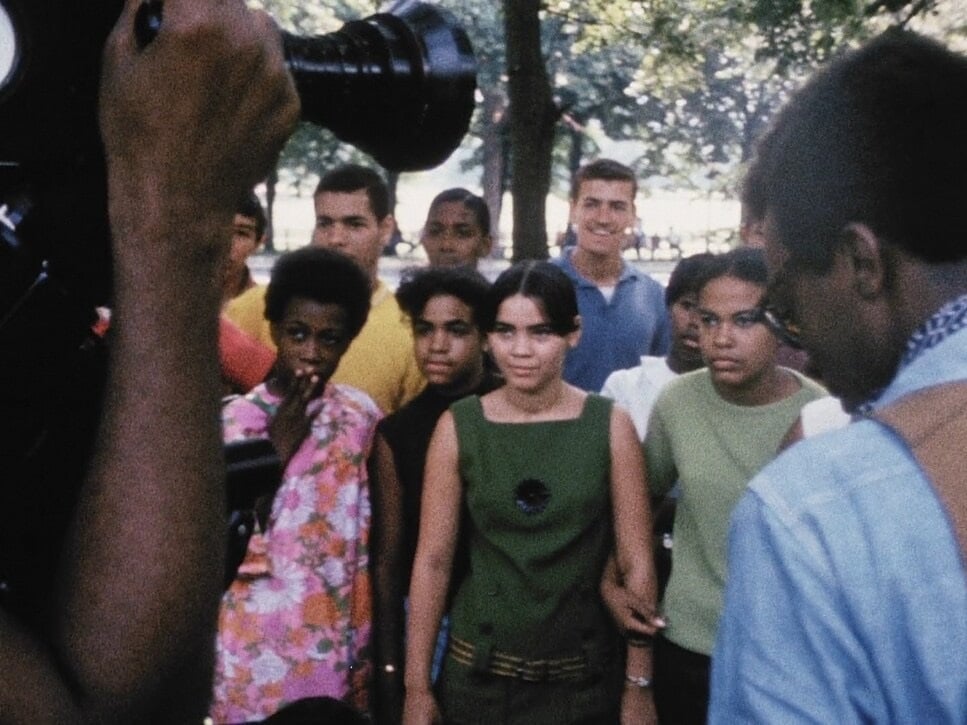
“The name of the picture right now is ‘Over the Cliff,’” Greaves tells a group of curious bystanders. “We’re jumping off a cliff.”
Shoot I

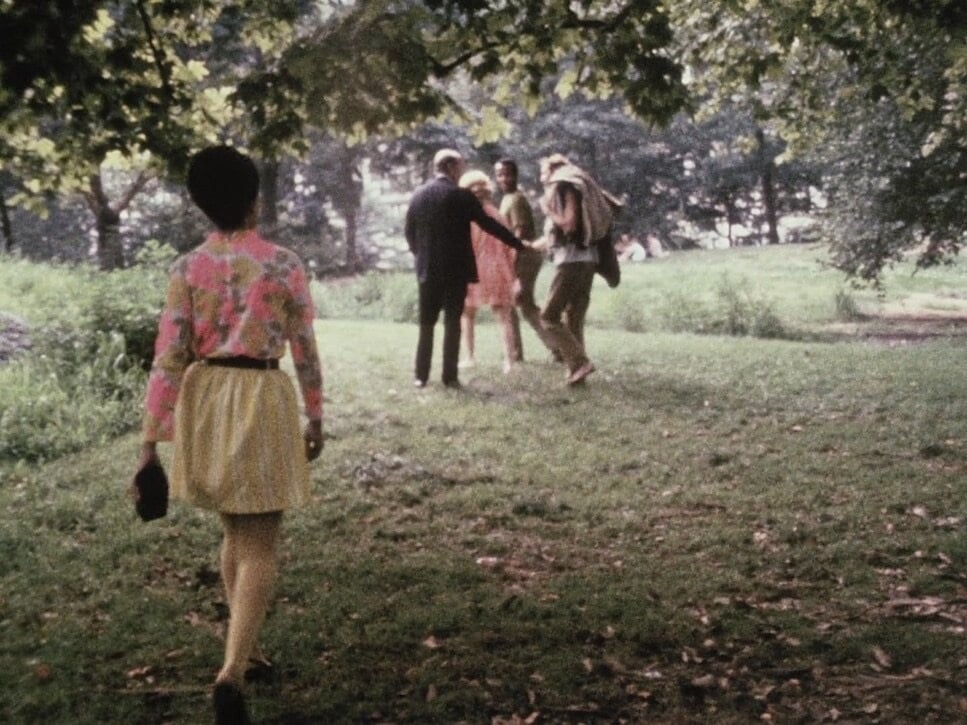
The picture fades up on a high angle shot of a stairway emerging from a stone arch in a quiet corner of New York’s Central Park. Day, exterior. A dark-haired woman in a white and blue floral dress hurriedly descends the stairs, into the shot. “No, no!” She intones. A man in a brown suit chases after her. “Alice, wait a minute!”
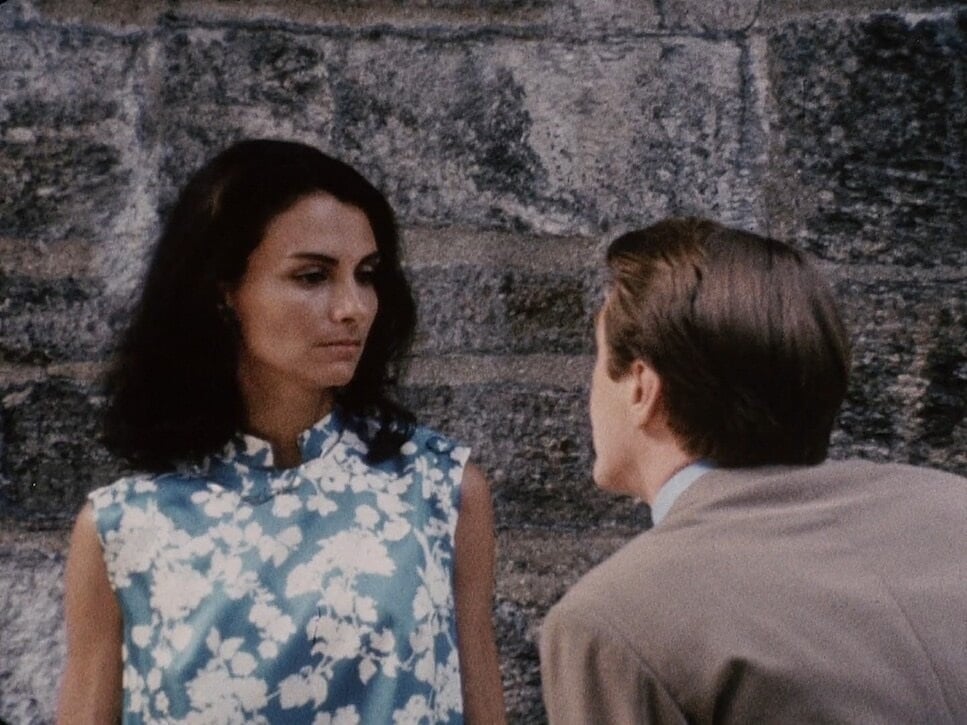
He grabs her by the arm and they come to a stop under a nearby stone bridge. Her back is against the wall. “What’s the matter?” He wants to know, exasperated. “Just how stupid do you think I am?” She retorts. “What are you talking about?” “You know perfectly well what I’m talking about.” “Stop acting, will ya?”
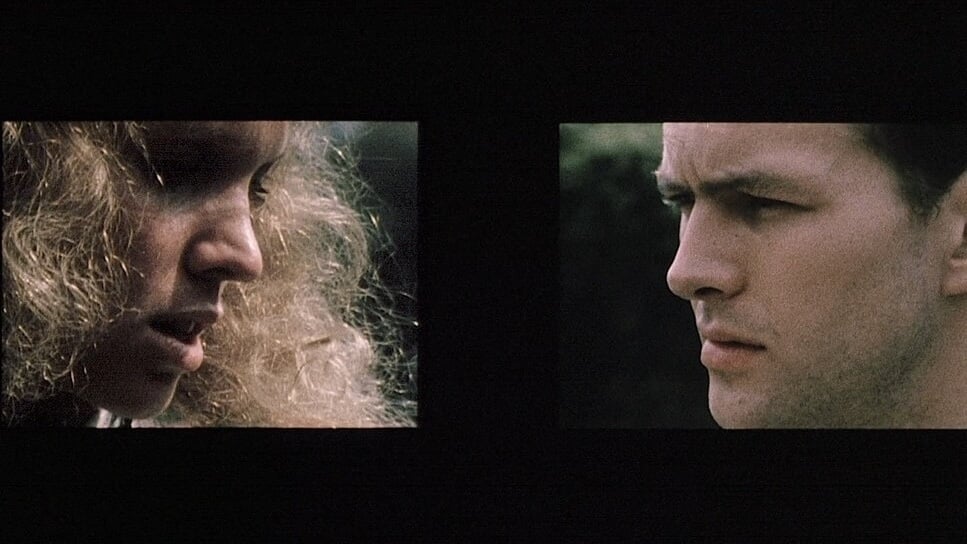
And so on, in a two-shot, until the camera cuts to a close up of a different man, in a different location. “Come Alice, stop acting,” he pleads. “Don’t touch me,” she replies. Then the picture cuts to a split screen, with the new man’s close up on the right side, and the close up of a different “Alice” — with light hair that’s curly instead of straight — on the left. “I said don’t touch me,” she snaps.
Alice angrily accuses Freddy of lying and cheating, and of being a closet homosexual, until the cast is shuffled again, to the actors we’ll spend most of the film with (Patricia Ree Gilbert and Don Fellows), sitting on a grassy hill near 68th St. and Central Park West.
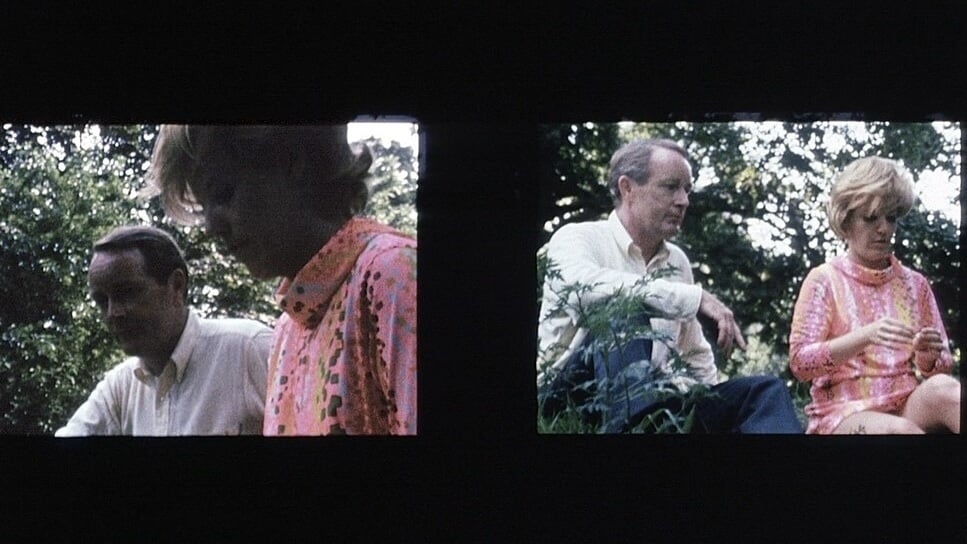
Static crackles on the audio track. The picture cuts to curious passersby before the camera pans to director William Greaves, listening to the interference in the sound recordist’s headphones. “Have you been hearing this the whole time? It’s dreadful,” he says, amazed.
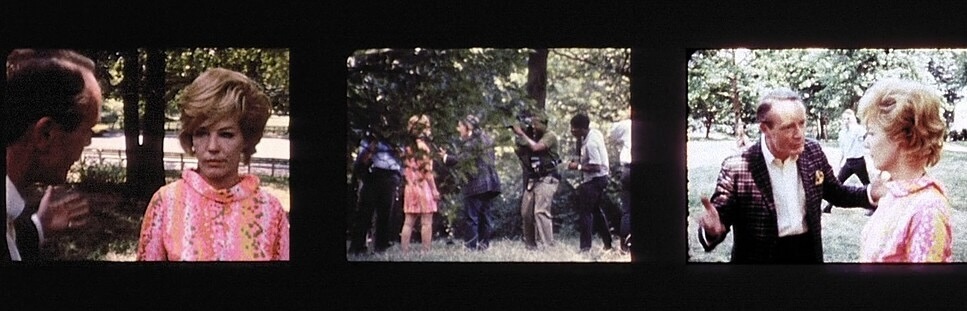
Very quickly it’s obvious that the crew is working with broken equipment, for a director who, despite his reputation, doesn’t seem to know what he wants, or even know what he’s doing. Being professionals, they keep their heads down and do the work.
Chorus I
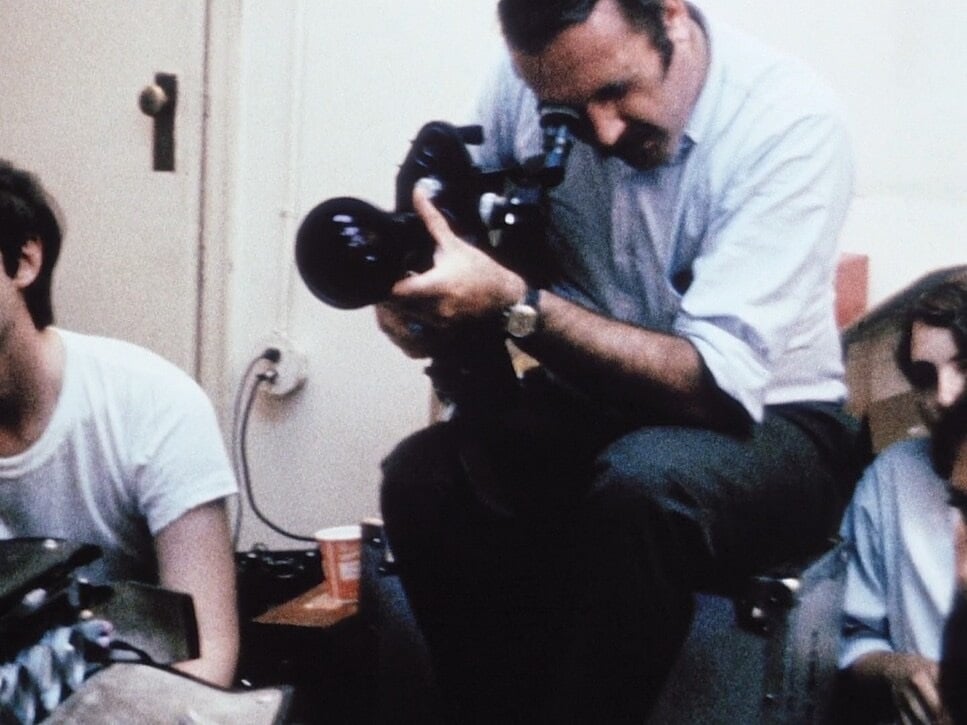
Four days into the shoot, unbeknownst to the director, the whole crew gets together while Larner and Macartney-Filgate film. Some in the room question the director’s vision, while others defend it without even understanding it themselves.
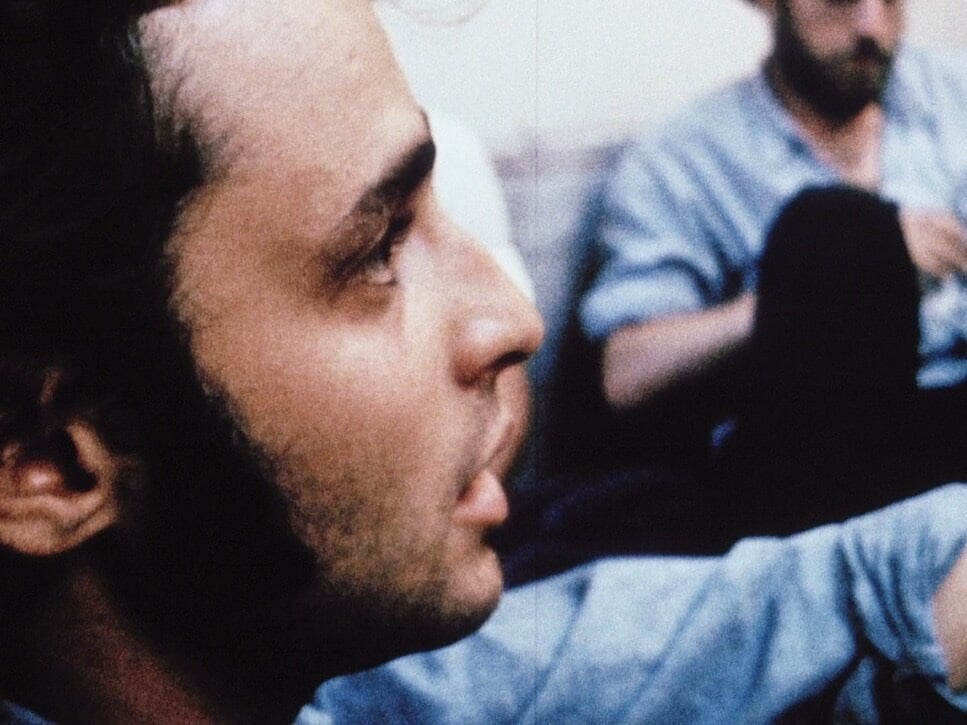
Here we meet one of the film’s main ‘antagonists,’ sound recordist Jonathan Gordon: “We were sitting around the other night, and in talking, a few of us, we realized that here is an open ended film with no plot that we can see, with no end that we can see, and action we can’t follow. We’re all intelligent people. The obvious thing is to fill in the blanks, to create for each of our own selves a film we can understand.”
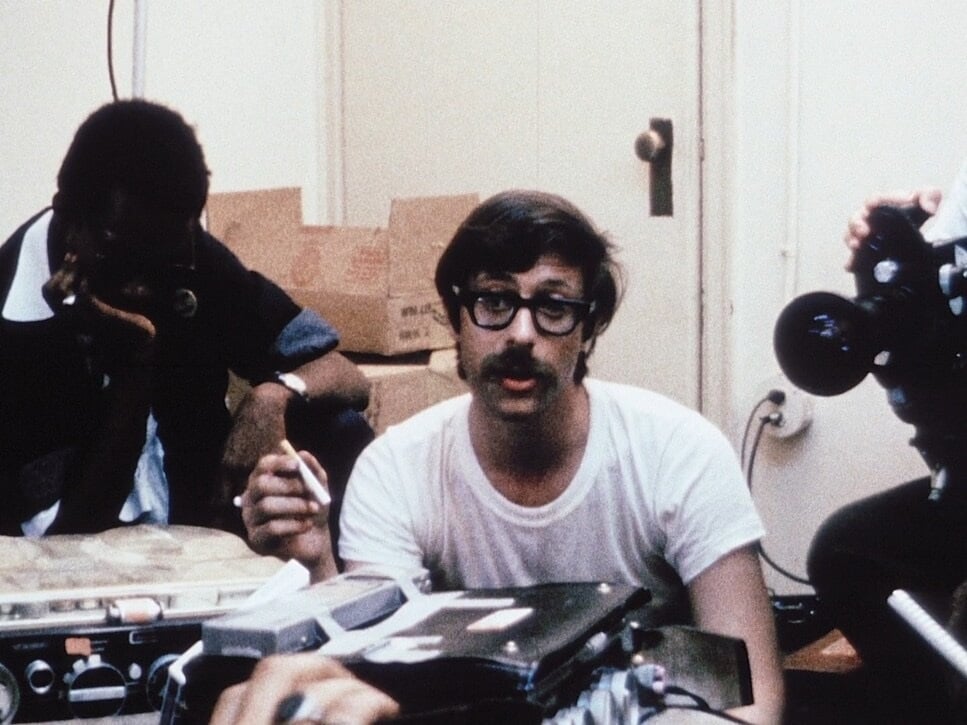
Across the room, the other main antagonist, production manager Robert Rosen, speaks up: “The director, Bill Greaves, he is so far into making the film, he has no perspective. And if you ask him, ‘What is the film about,’ he just gives you some answer that’s vaguer than the question. It’s so vague that it would’ve been better if you hadn’t asked the question in the first place. And if you ask the actors what they think the film is about, all they can tell you is what they thought of the lines they were reading.”
Gordon is animated by the idea that Greaves is playing a game or weaving a mystery for them to solve. “Maybe it would be more useful to talk about how interesting the non-direction is,” he reasons. “Bill’s direction has enabled us to sit here and talk like this, has compelled us even, to be interested this way.”
“Note to Bill,” adds Rosen. “We are not trying to take the film away from Bill Greaves.”
Shoot II
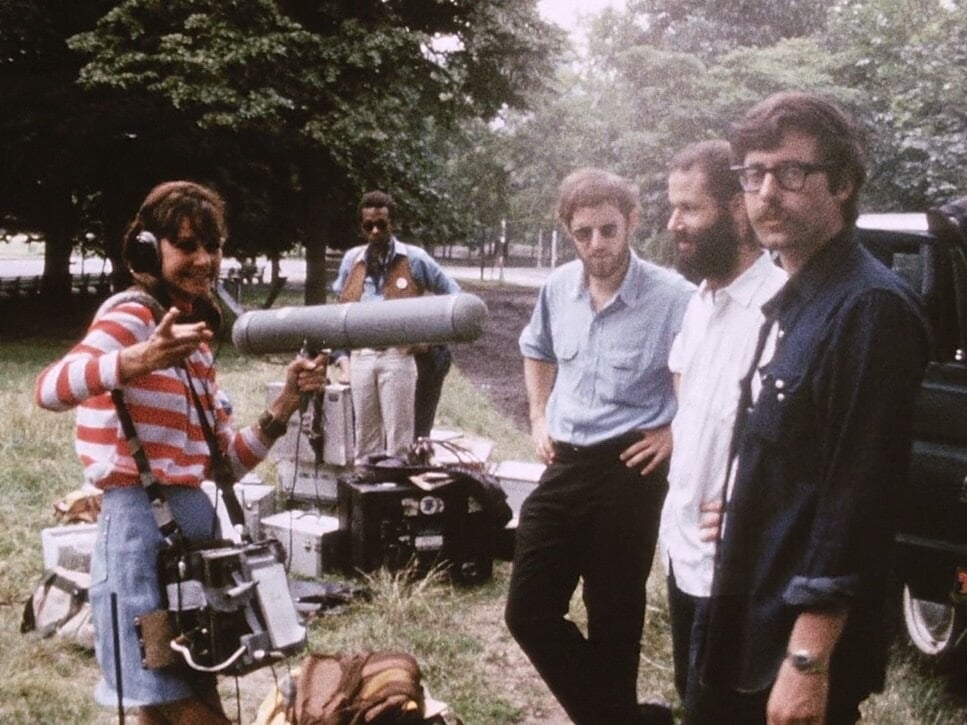
On set, Rosen struggles to bring Greaves and the camera and sound departments into sync. Greaves has the idea to run the scene again in one take, with all the cameras going at once.
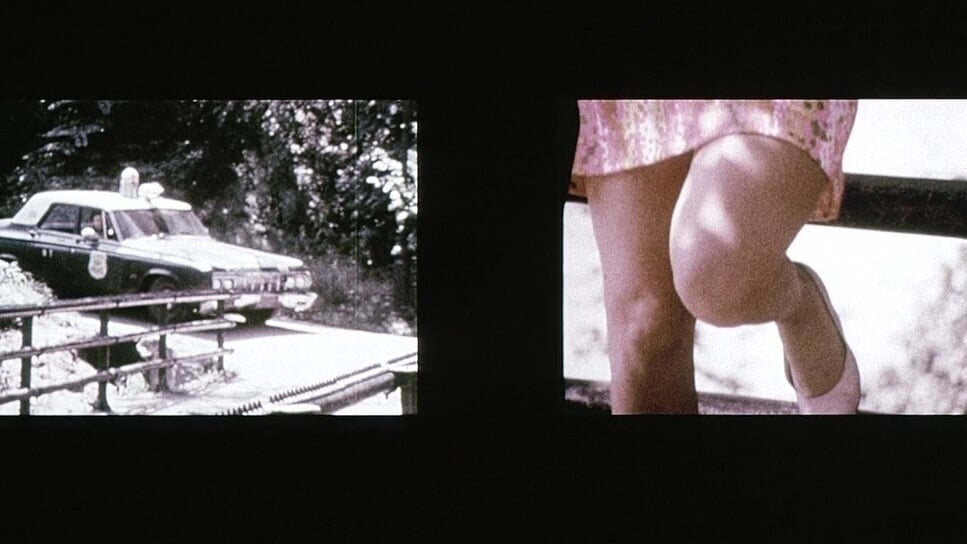
In a new location, Freddie chases Alice into the shot, and stops her on a bridge by the lake. The scene is cross-covered — Greaves doesn’t film after all — and as the fight drags on, a police car cruises into Larner’s frame, then Macartney-Filgate’s camera rolls out.
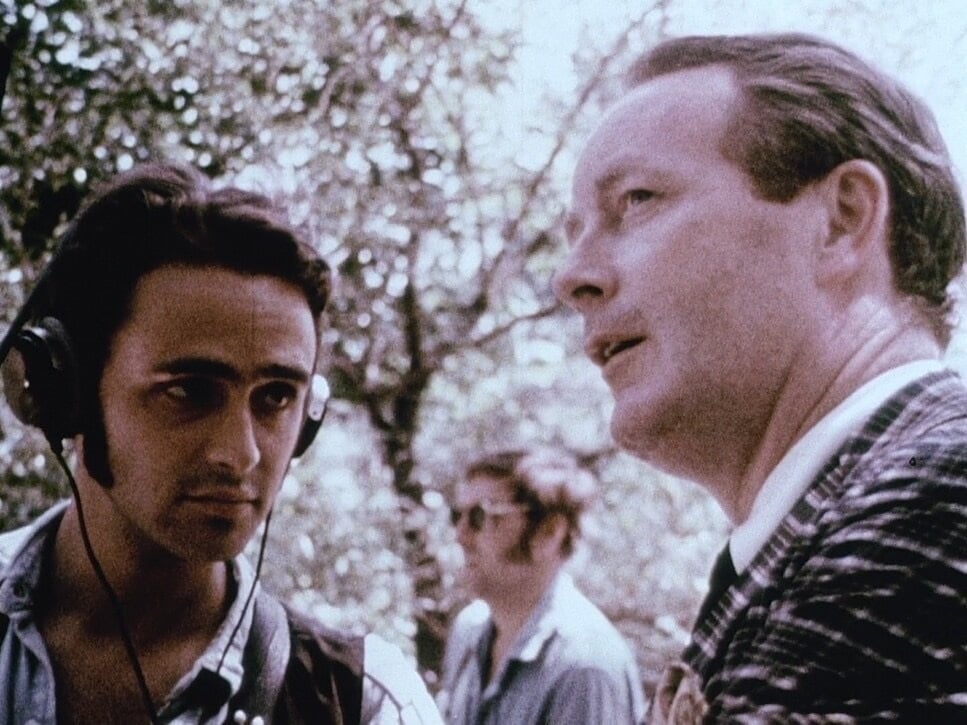
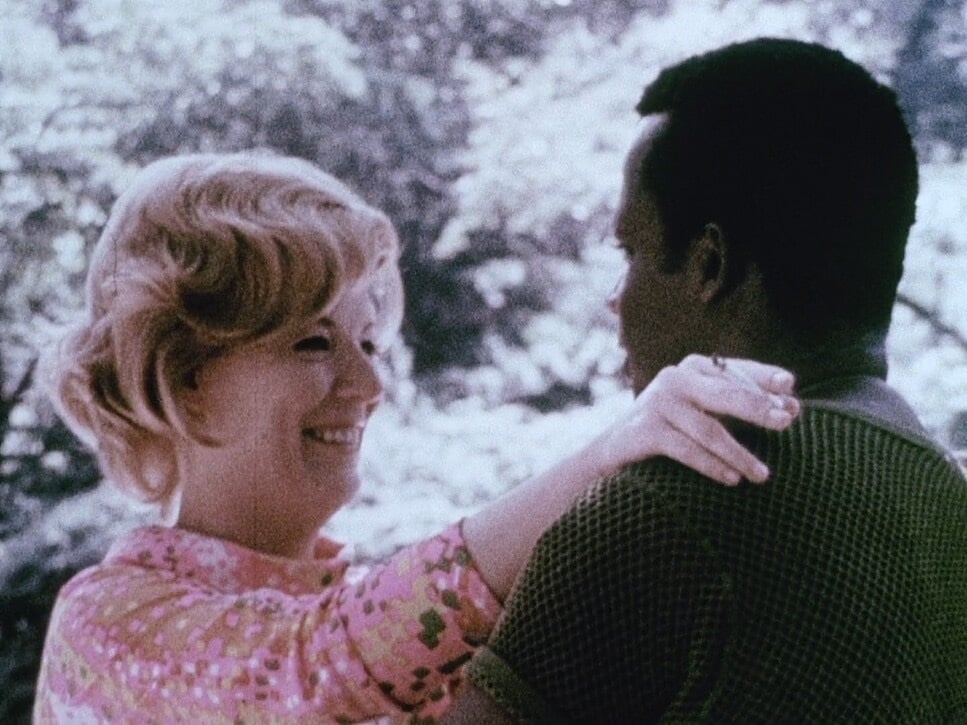
Greaves cuts to confer with the actors while the camera reloads. Fellows is distracted and intimidated by the camera. He makes disparaging remarks about Gilbert on a hot mic. Gilbert feels insecure. They’ll go again.
Chorus II
Everyone agrees the script is not good.
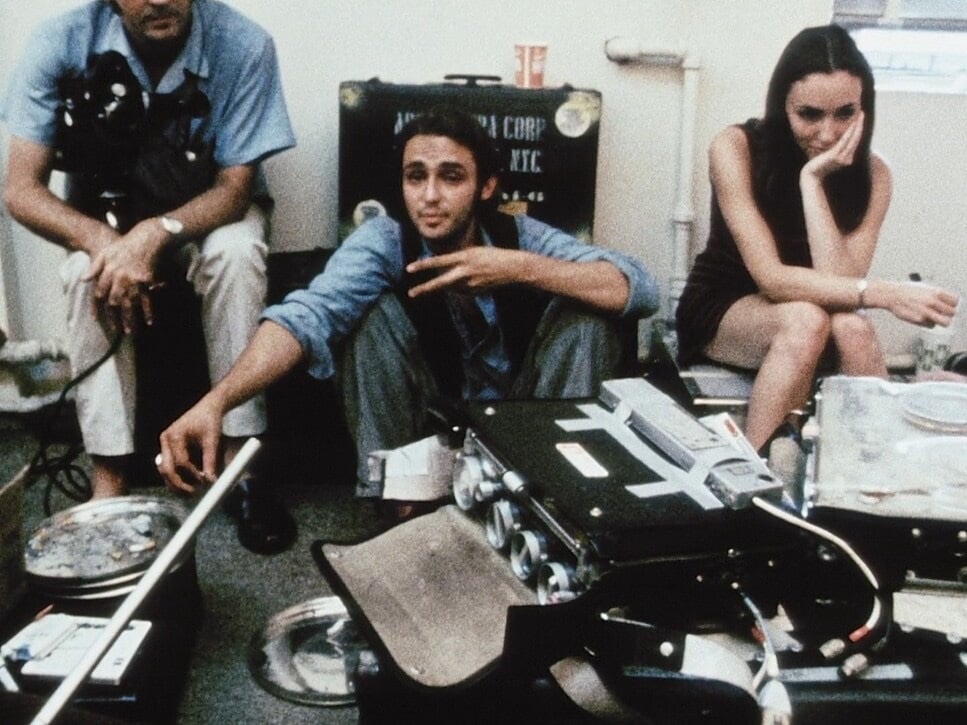
Gordon: “Here we’re confronted with the ultimate banalities of life... I see every American man, at some time in his life, saying these lines to every American woman. Every American woman says them to every American man. And where are we? Nothing changes. Nothing is revealed.”
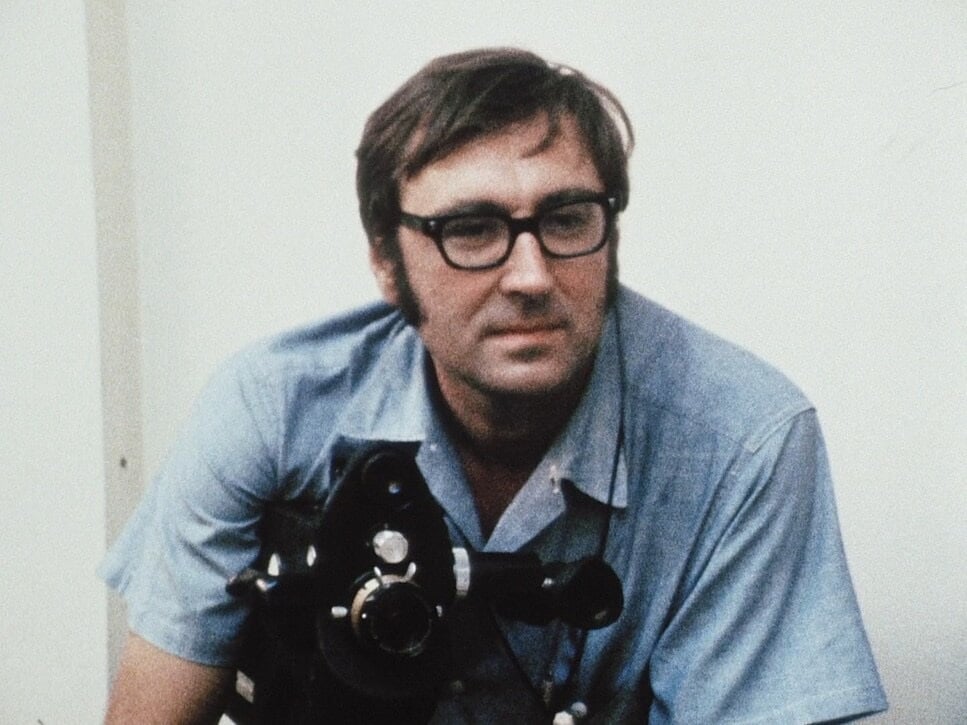
A suspicious Macartney-Filgate — sitting with his camera, but not filming — has noticed that as soon as Greaves knows the cameras are rolling, he “turns on” like “a bad actor, and he doesn’t turn off to his natural self until the camera stops. It throws me every time.”
Shoot III
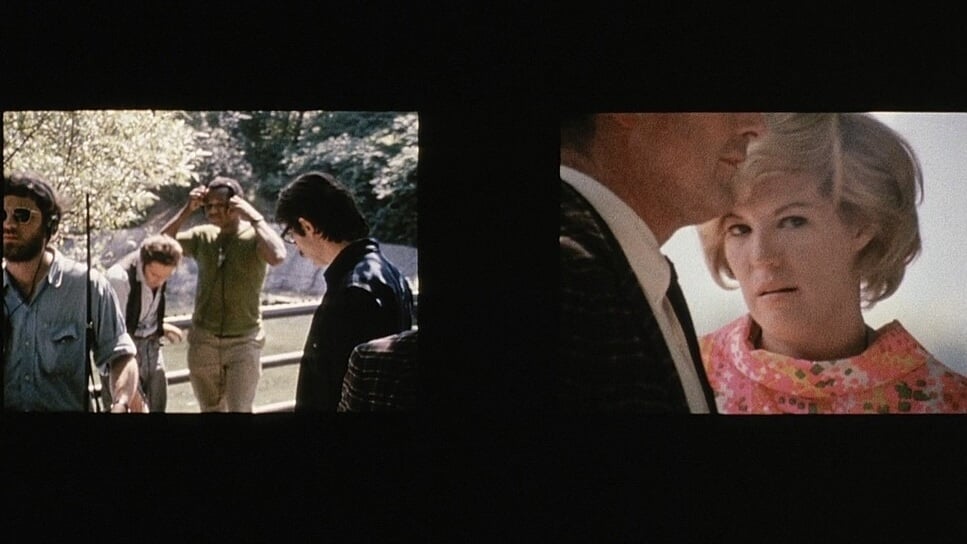
“Are we making a movie or are we not?”
Gilbert and Fellows prepare to go again. Greaves’s advice is either vague — “improvise on the basic situation” — or deeply problematic. When Fellows makes a joke about sexually assaulting Gilbert, the director remarks, “Don’t inhibit yourself in this area.”
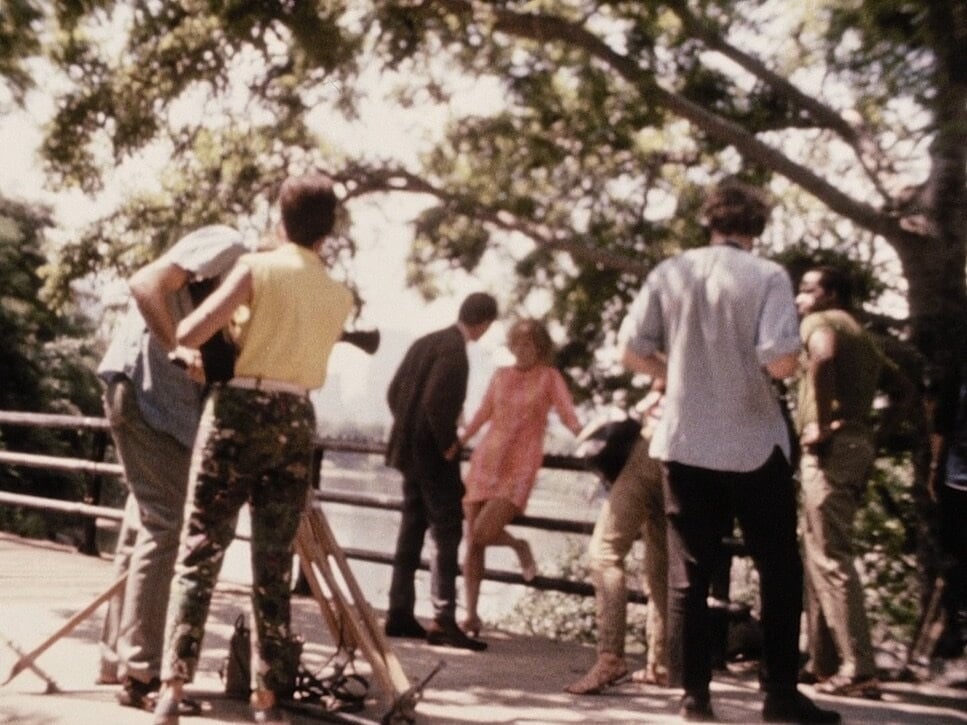
They run the scene, but neither actor can summon enough momentum to keep it going. Exhausted by her anger, the mindless back-and-forth dialogue, and Freddie’s cajoling — on top of Fellows’s tasteless comments — Gilbert finally snaps when Greaves interrupts the take.
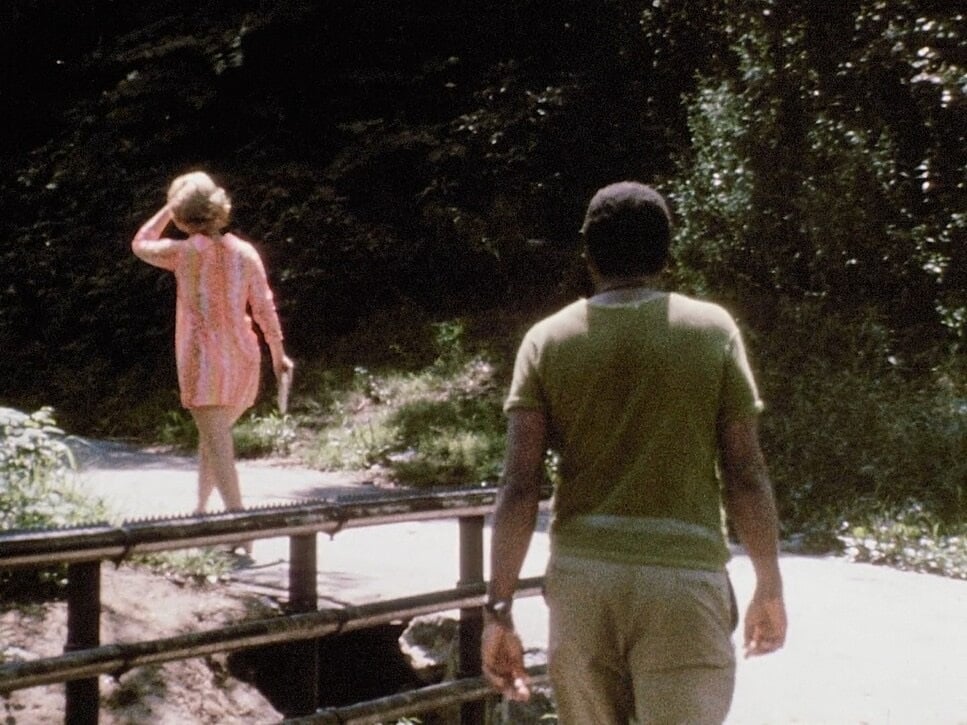
Greaves tries to soothe her. “It’s going well,” he says. Off-camera, she shouts back at him: “It’s not going well, and you know it!”
Chorus III
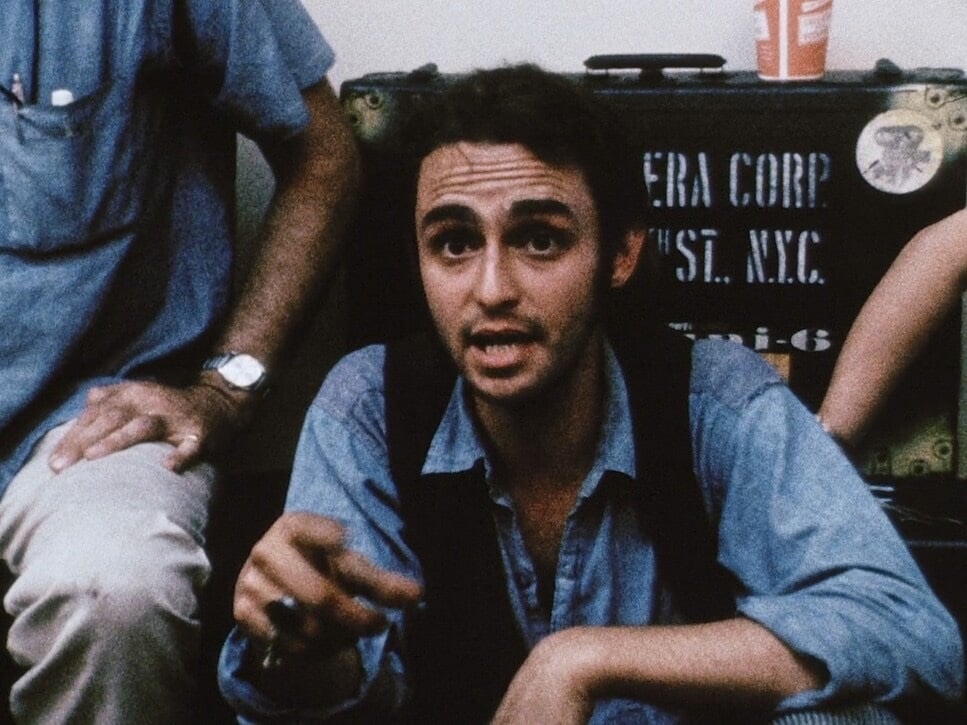
Gordon: “I think this is what he wants, this is what he’s looking for… Experimenting with different ways of shooting the same dialogue. It’s not merely an experiment, it’s an experiment that’s culminating in a film... A film that’s designed to reveal something, to be a work of art.”
Gordon didn’t read Greaves’s concept for the film, but Rosen did, and “the concept doesn’t help you at all, not one bit.” He’s backed up by others in the room. Larner and Macartney-Filgate are vocally frustrated by the inertia of the script and direction.
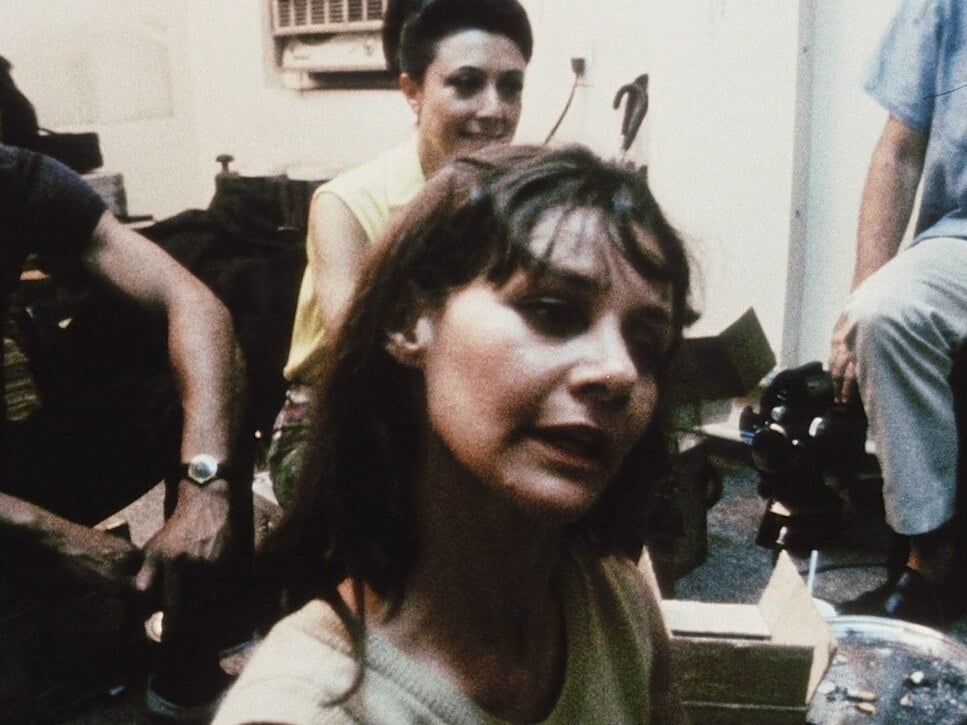
Nicky Kaplan, one of the sound recordists, has an epiphany: “It seems to me that not having read Bill’s concept, there’s some exploration of the levels of reality, and the supra levels of reality. This is even another level of reality that we’re establishing here and maybe the biggest put on of all time.”
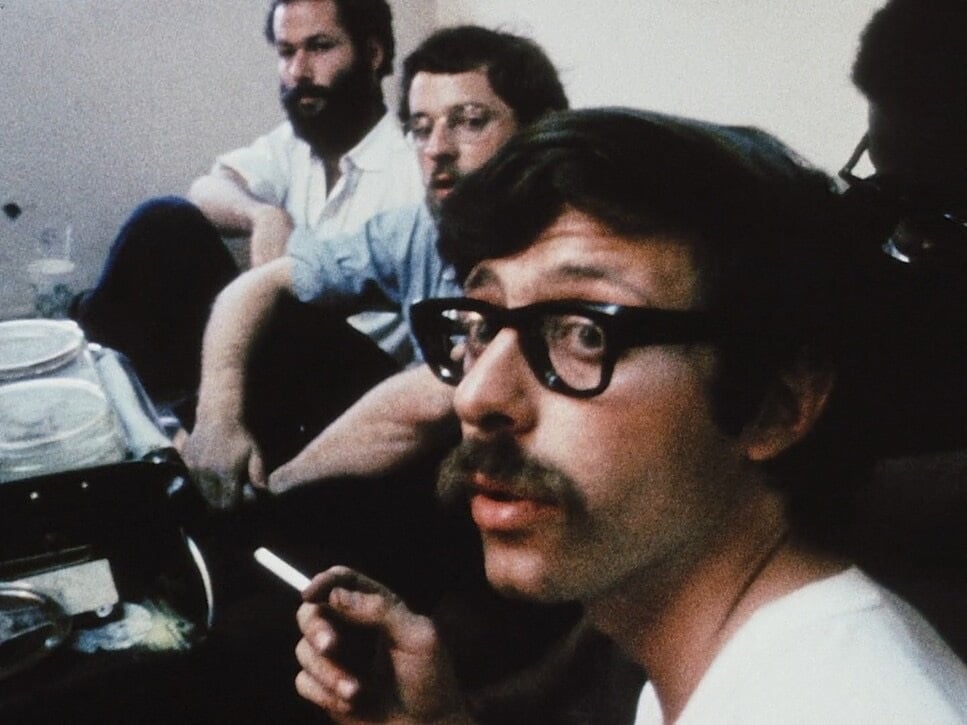
But Rosen shoots her down: “Trying to establish that is useless. For all anybody knows Bill is right outside the door, and Bill is directing this whole scene. Maybe we’re all acting.” He waves to the camera. “Nobody out there knows whether or not we're for real.”
Shoot IV
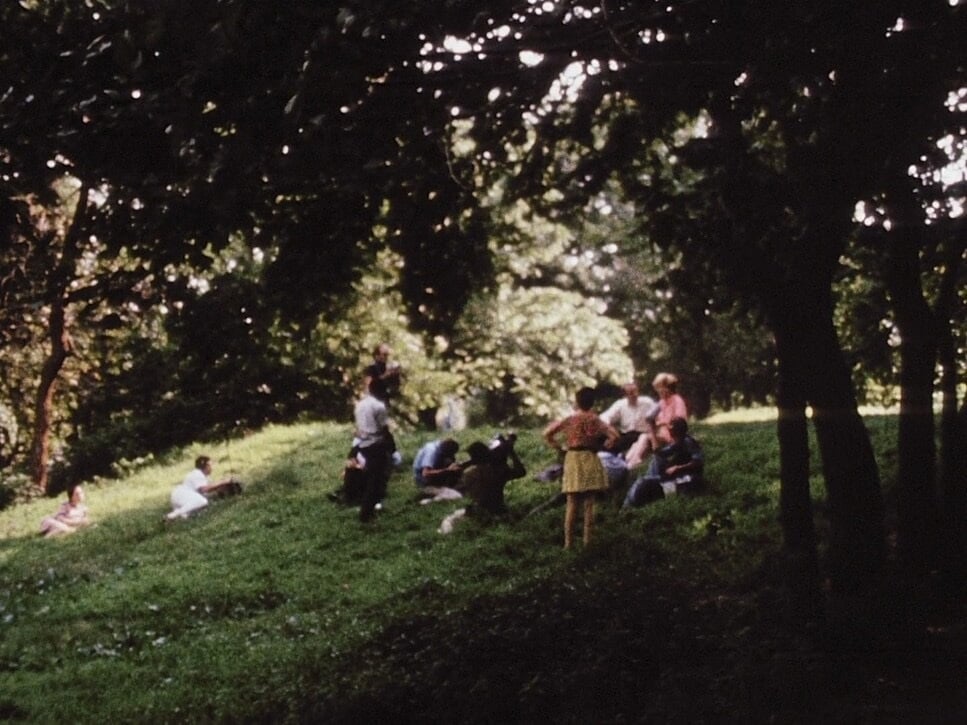
The crew assembles on the grassy hill from the earlier scene, with all three cameras rolling. Gilbert and Fellows sit next to each other on the hill, continuing to fight about Alice’s numerous forced abortions and Freddie’s inability to satisfy her sexually.
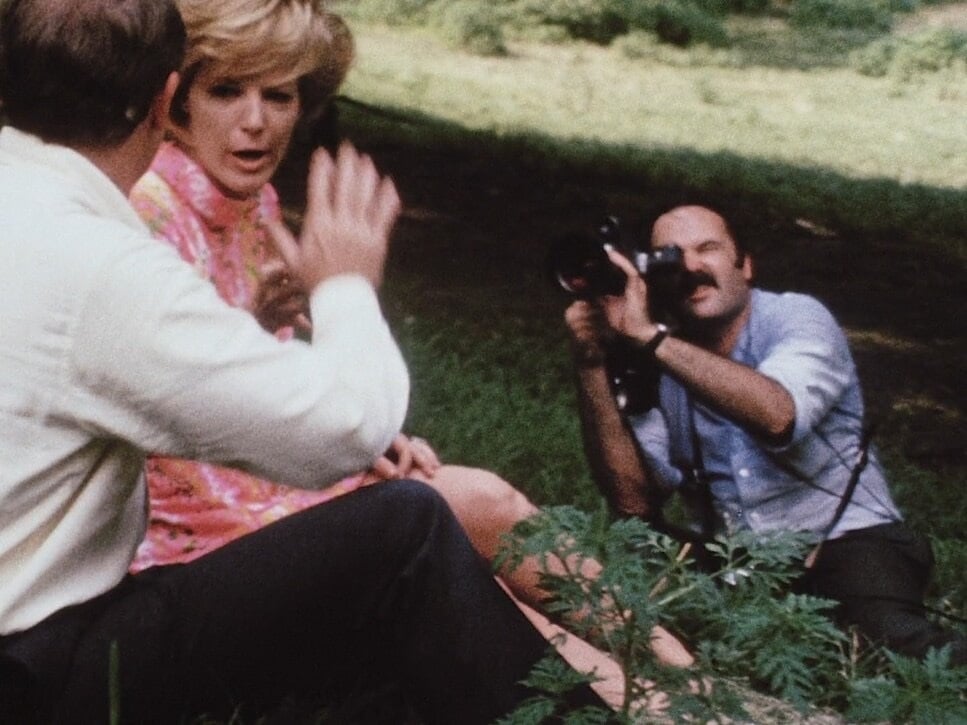
Gilbert tears out grass by the fistful, screaming obscenities at Fellows, until the only thing he can think to do is physically grab her and kiss her.
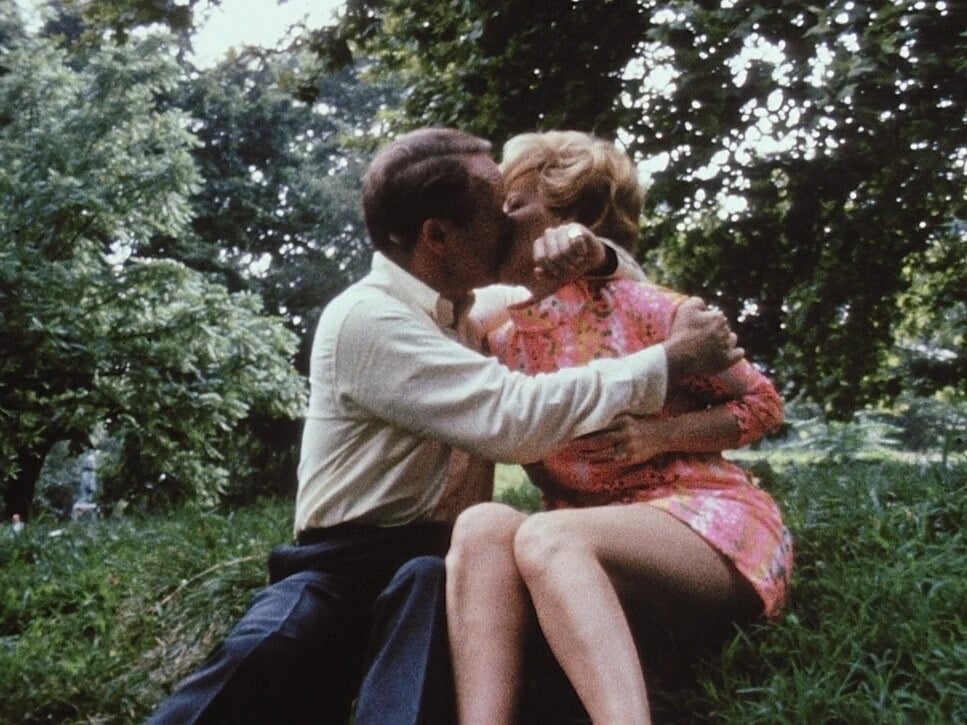
She can’t push him off, but she’s able to pull herself from his grasp, adjust her bangs, and silently wipe the kiss away. The scene is over.
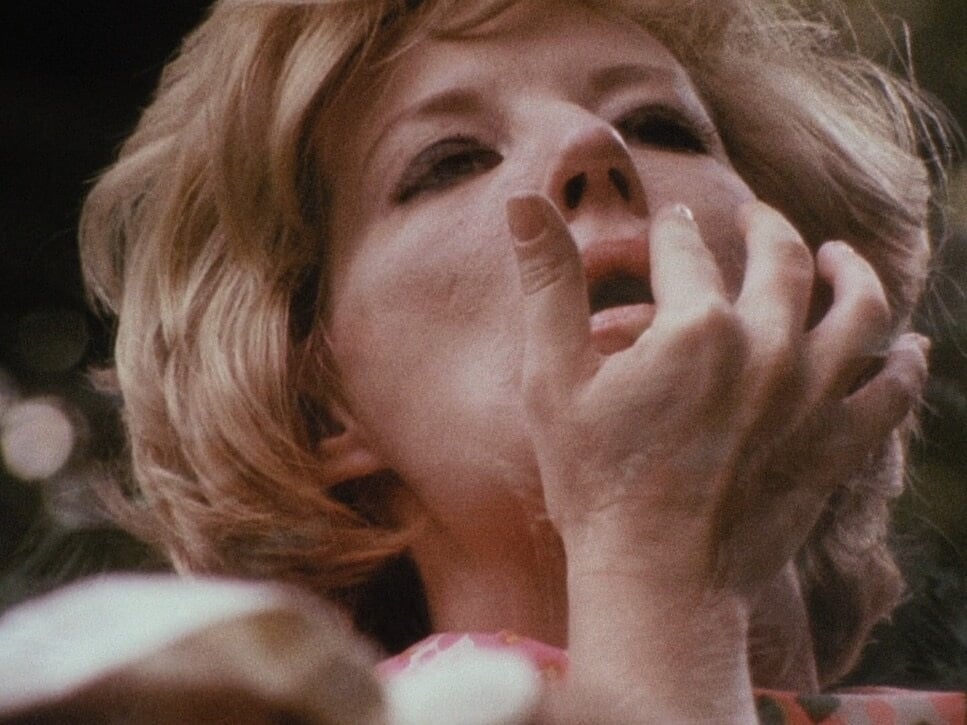
Chorus IV
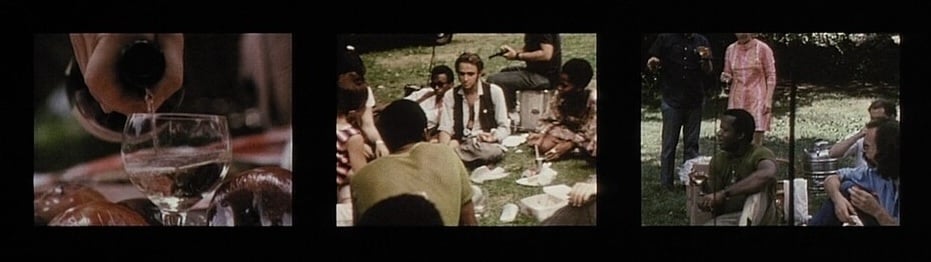
Eight days into the shoot, the crew is spread out on the grass, sipping beer and wine. It seems they’ve talked Greaves into telling them his plan, or he’s decided it’s time to tell them what’s been going on.
Gordon is at the end of his rope. “Being forced to listen to this sordid conversation over and over and over again, with black faces, white faces, tall ones, old ones, young ones, skinny ones, convincing ones, unconvincing ones... it does funny things to you.”
“What else can we do?” Greaves responds. “We’ve got all this equipment lying around here: here’s a tripod, there’s two still cameras, three Eclairs, there’s an Arri-S, we’ve got three Nagras... it would be very interesting to see you surface with a better script.”
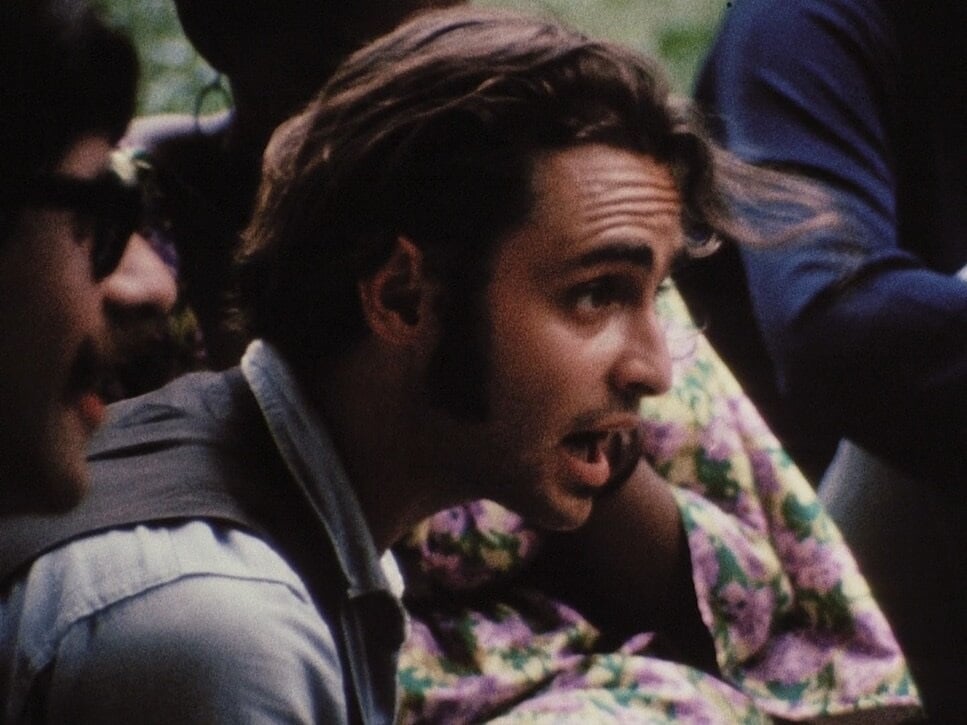
Gordon doesn’t miss a beat: “First of all, drop the euphemisms. You talk real language… That’s the way people can liberate themselves, to talk about themselves and what they really feel… That is the way the script is transformed from... a semi-annual conceit between two people into something that never has to be repeated again.” (In the film, he provides several examples using language we can’t repeat.)
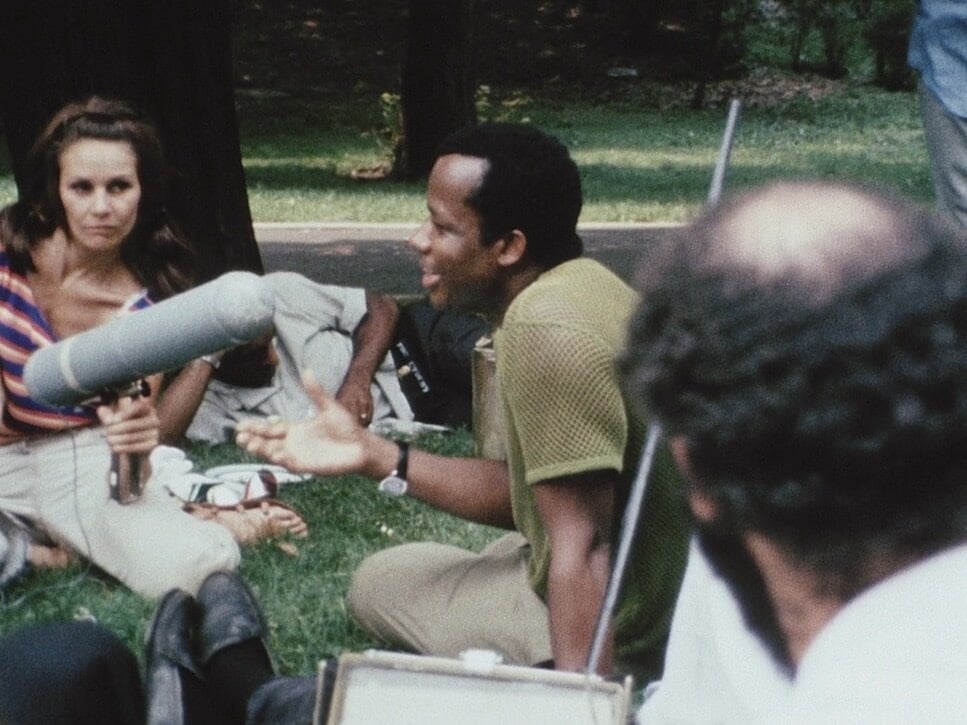
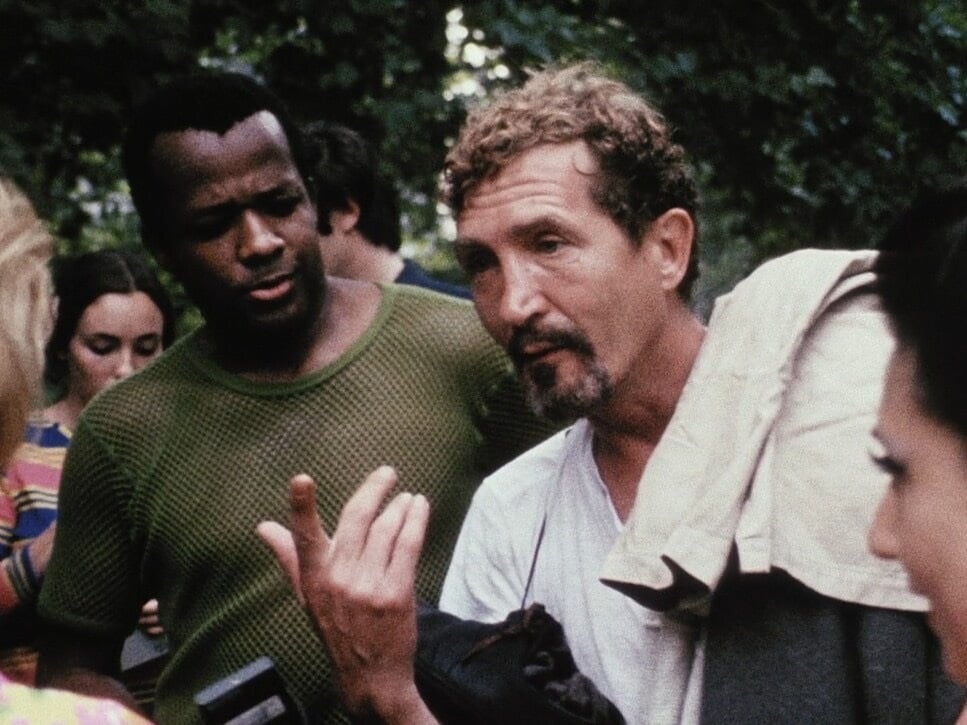
Miles Davis’ “In a Silent Way” floats over the soundtrack as Greaves pulls back the curtain on his plan. He speaks directly: “If you recall in the original concept, the screen test which we are supposed to be shooting is unsatisfactory from the standpoint of the actors and the director. What happens is that the director and the actors are undertaked to improvise something better than what has been written. This callous revolt which is taking place is not dissimilar to the revolution that is taking place in America today. In a sense, I represent the establishment, and I’ve been trying to get you to do certain things which you’ve become, in a sense, disenchanted with. Now your problem is to come up with creative suggestions which would make this into a better production than we now have.”
“I don’t understand that at all,” says Rosen, without a hint of irony.
“It doesn’t matter whether or not you understand it,” say Greaves. “The important thing is that we surface from this production experience with something that is entirely exciting and creative as a result of our collective efforts.”
“Oh, it’s a movie. So, who’s moving whom?”
While Symbiopsychotaxiplasm: Take One may not resemble Greaves’s other work from a structural standpoint, its themes and ideas about collective action and social revolution — particularly from a Black American perspective — are key motifs in all of his films.
“It’s an attempt on my part to play around with the various concepts that are floating around the world of philosophy, mysticism, theatrical filmmaking,” Greaves says in the 2006 documentary film Discovering William Greaves. In developing the project, he also incorporated what he learned from his time studying under Lee Strasberg at the Actors Studio, as well as German physicist Werner Heisenberg’s “uncertainty principle” which states that certain pairs of physical properties — such as velocity and position — can’t be simultaneously recorded, because capturing one influences the condition of the other.
In Take One, Greaves tries to capture several fast-moving targets: the controversial issues — for the time — of homosexuality and reproductive rights in the script are meant to provoke the actors, the crew, and the audience. As Greaves further reveals, pressure was the point of the film. “I thought it would help to achieve what I was looking for, which was conflict,” he muses.
A “symbiotaxiplasm” is a term for any social unit of people and everything they touch. With the addition of the term “psycho”, Greaves factors the unit’s mind — its ideas and beliefs — into the equation.
As a film about filmmaking, Symbiopsychotaxiplasm: Take One makes a comment on the rigid professional hierarchy of “Hollywood” filmmaking, and how even the most free-thinking crewmember might bristle at violating convention, yet remain silent out of respect for the hierarchy, even when those at the top have not earned the respect and trust their position entails.
Greaves wanted to answer the question, “When does a revolt against authority take place?” This actually happened at Black Journal, with its all-white staff of executive producers before Greaves — who was already a director for the show — was promoted. Amidst all the drama, he found himself wondering if he could make an interesting movie out of it.
Collective action was an important element of the civil rights movement, which had its share of triumphs and tragedies throughout the 1950s and 60s, but historically ended in April 1968 with the assassination of Martin Luther King, Jr.. It was a time of widespread social unrest, where a large portion of the American population — not just Black America — felt anxiety, angst, and anger at the inscrutable nature of authority. Greaves knew when a group of people — be it a community or a film crew — aligned themselves to a common goal “you could negotiate yourself to a better world.” It worked before. Could it work again?
Still images courtesy of ShotDeck. The film is currently available to stream on The Criterion Channel.