Smoke: Lighting and Shooting a Forest Fire
The cinematographer of the series' final episode details his experience creating and capturing a fateful forest-fire sequence.
For the last episode of Smoke, I shot something fairly rare for most productions, and definitely a first for me — a forest fire on stage.
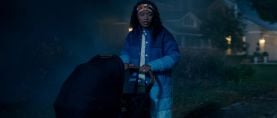
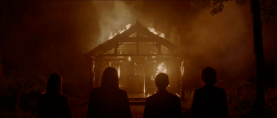
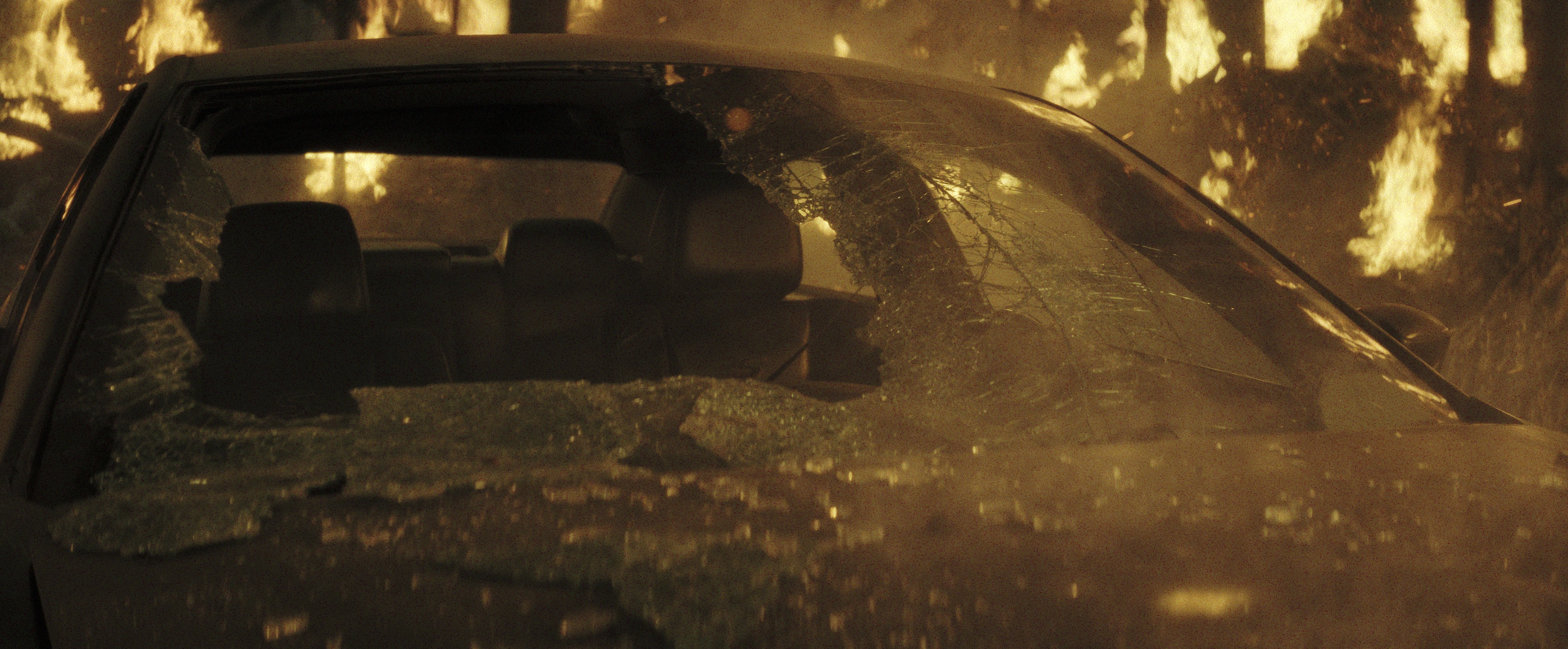
An action sequence unfolds during the pivotal scene in which this fire begins to rage: Detectives Michelle Calderone (Jurnee Smollett) and Dave Gudsen (Taron Egerton) square off in a confrontation when their arson investigation in Cumberland, Washington takes a surprising downturn. With Dave in the driver's seat, the two ride toward the burning forest, but as Dave's behavior becomes increasingly erratic and untrustworthy, Michelle threatens him at gunpoint, causing his reckless speeding through the flames to result in a crash. Once Dave regains consciousness inside of the smoking car, he peers through the windshield and sees Michelle standing before him, peering back; after a tense standoff, the two draw their guns and fire upon one another. Still in the car, Dave slams it in reverse, runs over a rock and is forced to climb out, leading to Michelle's arrest of Dave, who is ultimately revealed to have been hiding an alternate criminal personality.

Prep and Points of Reference
We had a great director for the episode in Joe Chapelle. Joe is very organized and prepared, and so creative. He started to work on storyboarding four months prior to our shoot. Throughout that process, we mapped out numerous versions of the scene, improving upon each one as we progressed. Our storyboards enabled better communication and planning very early on, and also helped us maintain our focus on grounded the show in reality — a creative aim that was extremely important for our showrunner, Dennis Lehane.
Still, I was concerned that shooting a forest fire that takes place during the day on stage might feel unrealistic. In order to for the scene to look as if it's taking place in natural world, we needed to incorporate wind effects and ambient light, and the convey the depth of the forest. With these aims in mind, both our special-effects and production-design departments showed us a fire test, in which the forest's trees and ground looked realistic — and also met our on-set safety and health requirements — and it was this test that got me on board to shoot on stage.

Our primary references for the scene were amateur footage of actual forest fires and works of still photography. In our references, we observed how dark the sky can become from smoke during a fire; it looks almost as if it's nighttime, but with ambient light. I especially studied a series of photos by Magnum photographer Nanna Heitmann, which are realistic, but still evoke a sense of poetry and mood.
Lighting the Fire
Gaffer David Tickel, rigging gaffer Jarrod Tiffin and I began working on our lighting plan about three months before the shoot. (See our lighting plan for the scene in the diagram below.) David and Jarrod's comprehension and suggestions made a huge impact on our lighting-design choices. The base of the lighting came by real fire — all controlled by gas and flame bar — and of course, we also had our own lighting.
We opted for big sources like Mole-Richardson Moleenos and overhead "coop" lights, Maxi Brutes, and 20Ks, which were usually on moveable scissor lifts. For closer work, we also made soft boxes out of Arri SkyPanel S360-Cs, all of which were moveable. For each fixture, board operator Ian Gledhill found the right flicker balance to emulate fire light. We also had rows of SkyPanel S60-Cs to light a blue backdrop for VFX all around the stage. We used Aputure 2400Ds to bounce in sections of the ceiling where we could not rig lights. Otherwise, we had rows of Arri SkyPanels overhead to emulate sky ambience.
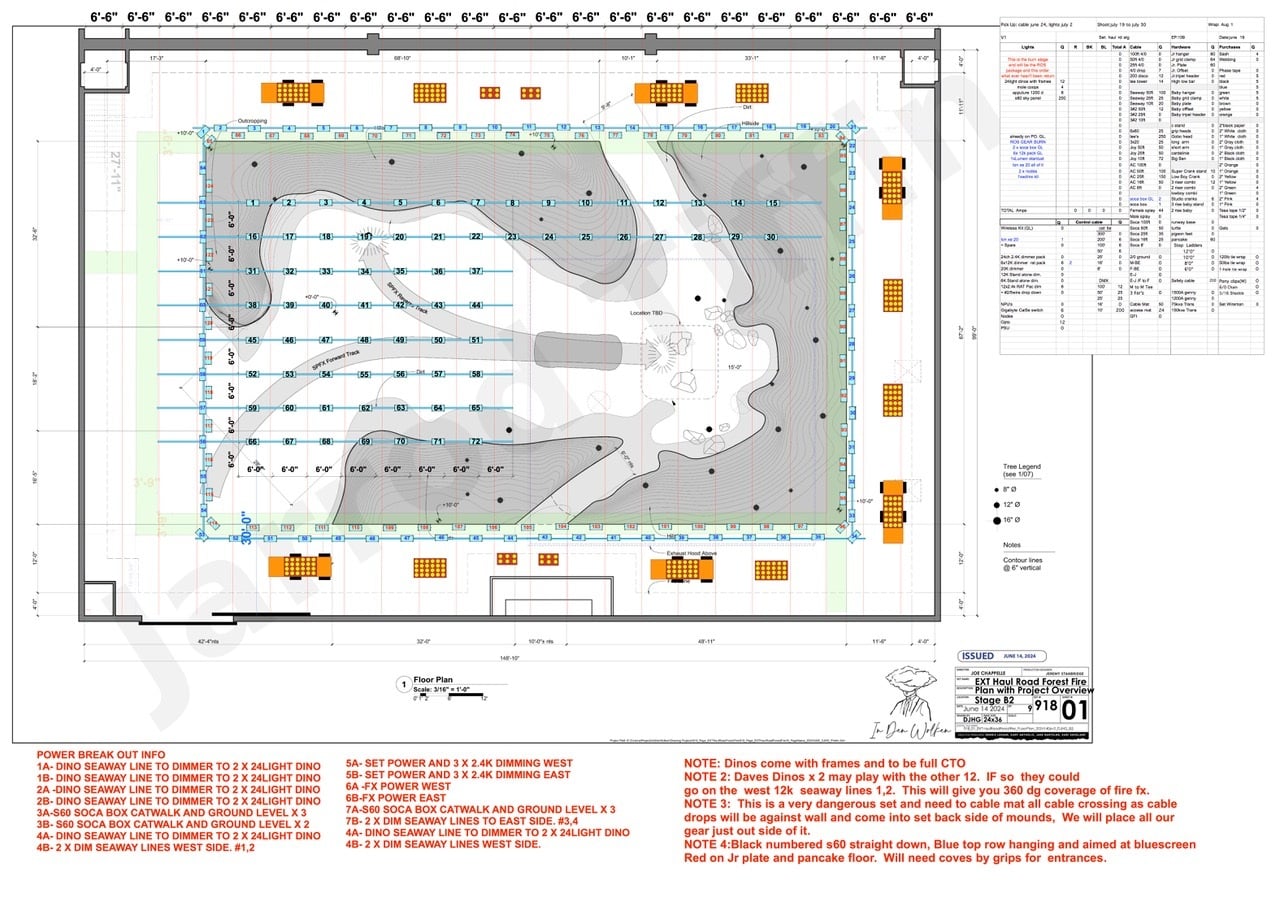
Our amazing key grip, Finn King, explained to me the risk of diffusion materials catching fire; to avoid these risks, we decided against using any diffusion. Still, it was important to that there would be some feeling of daylight in the sky, even if it was dark, to ensure the scene would feel more realistic.
Both David and Jarrod had concerns about the lights in the ceiling — they questioned whether our SkyPanels would become damaged or stop working due to the heat — which led us to monitor the heat level of our fixtures for the duration of the shoot. (All tests conducted before the shoot indicated that there would be no problem, but we monitored nonetheless.)
Stage Work, Safe and Sound
The safety plan and protocols put in place during the shoot — primarily by producer Jane Bartelme, production manager Phil Pacaud, 1st AD James Bitonti and Apple Safety — were thoroughly impressive. Our entire crew was also extremely safety-conscious; we ensured that only essential crewmembers were permitted on stage, and that all of our viewing monitors remained outside. A health-and-safety team monitored our activity during the shoot, and fire trucks and ambulances were on standby outside of the stage. The production had also built a massive vent hood in the stage ceiling for an episode that aired earlier in the season; this allowed carbon monoxide to be removed very quickly, which further enabled us to have a fire on stage for our final-episode shoot.
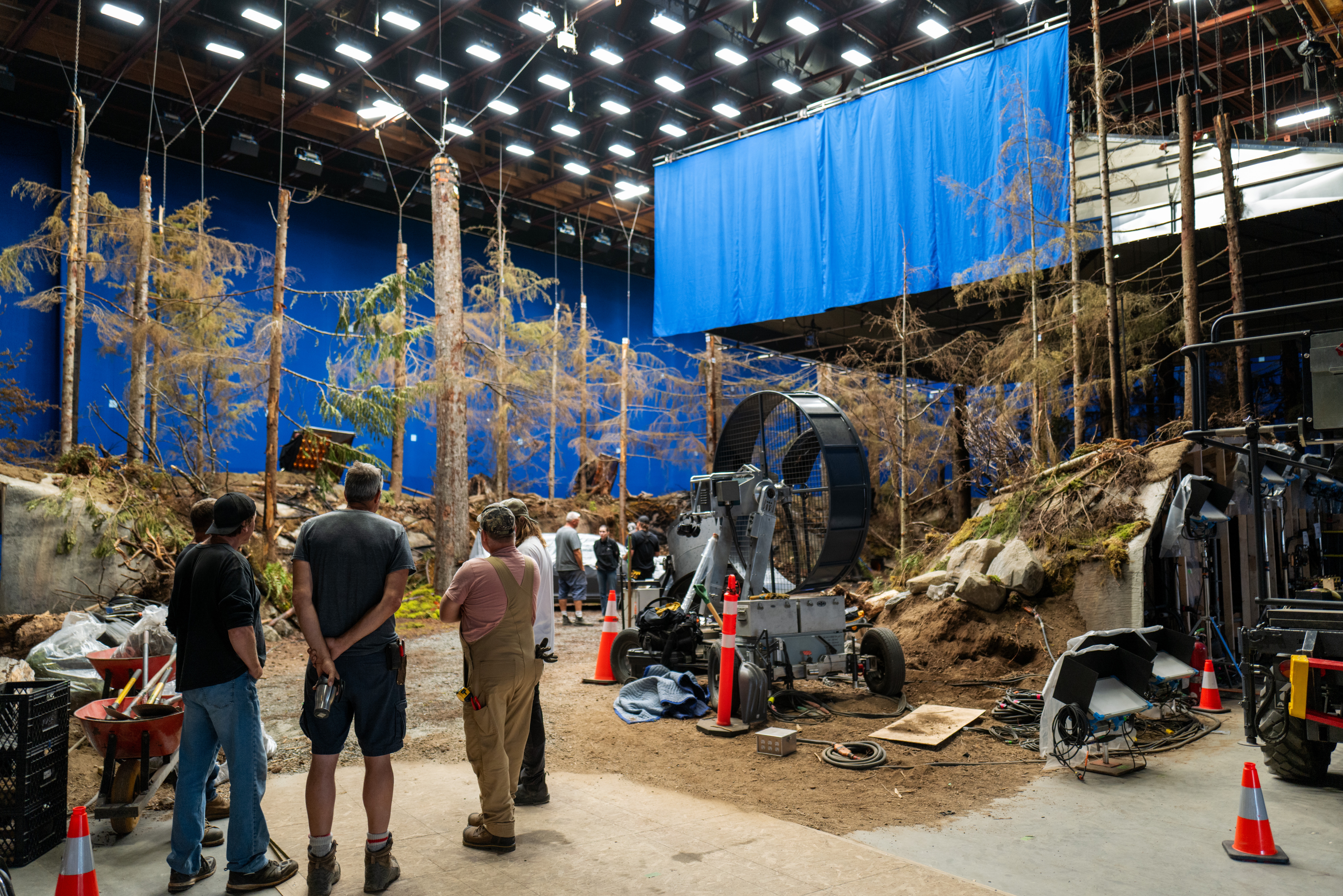
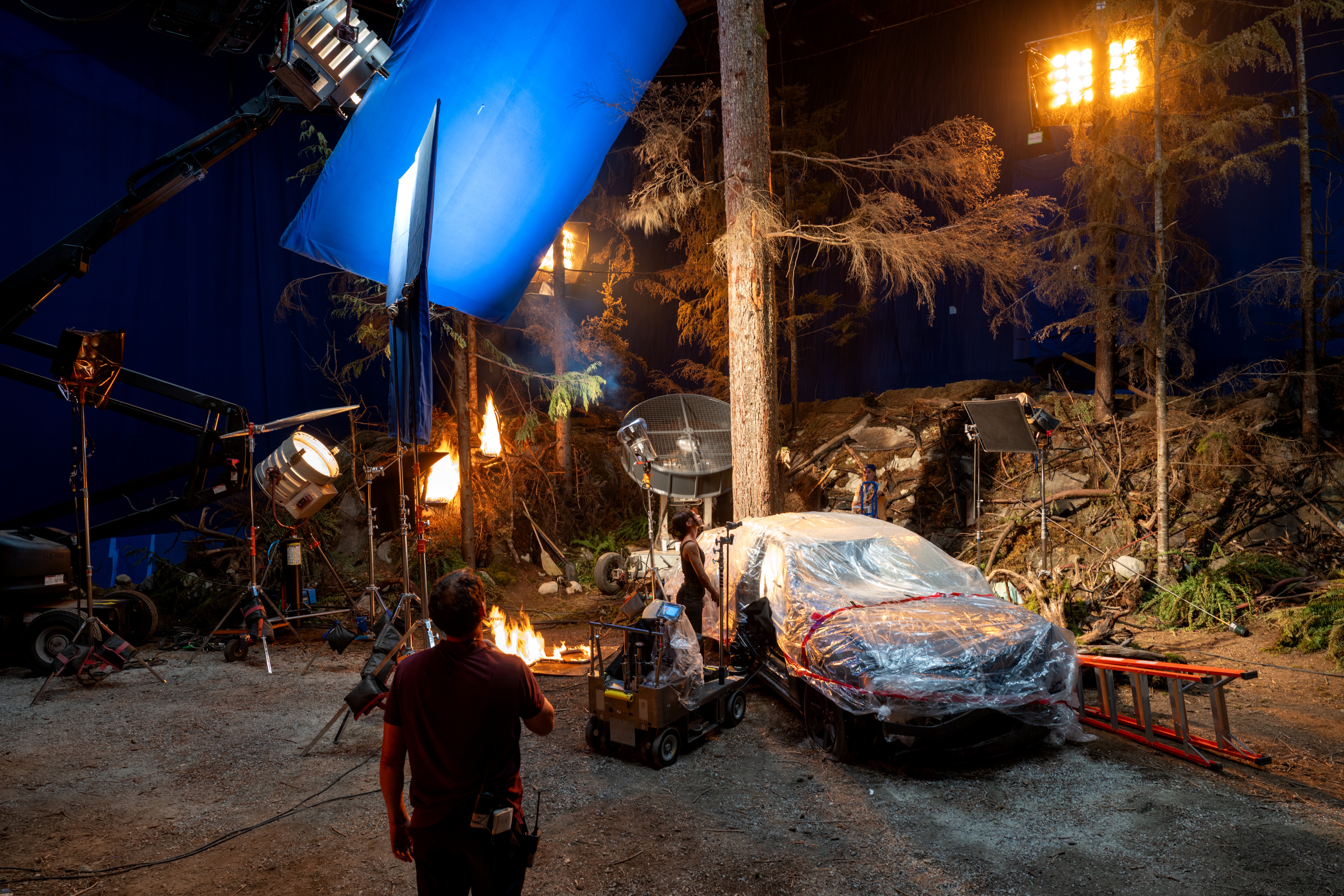
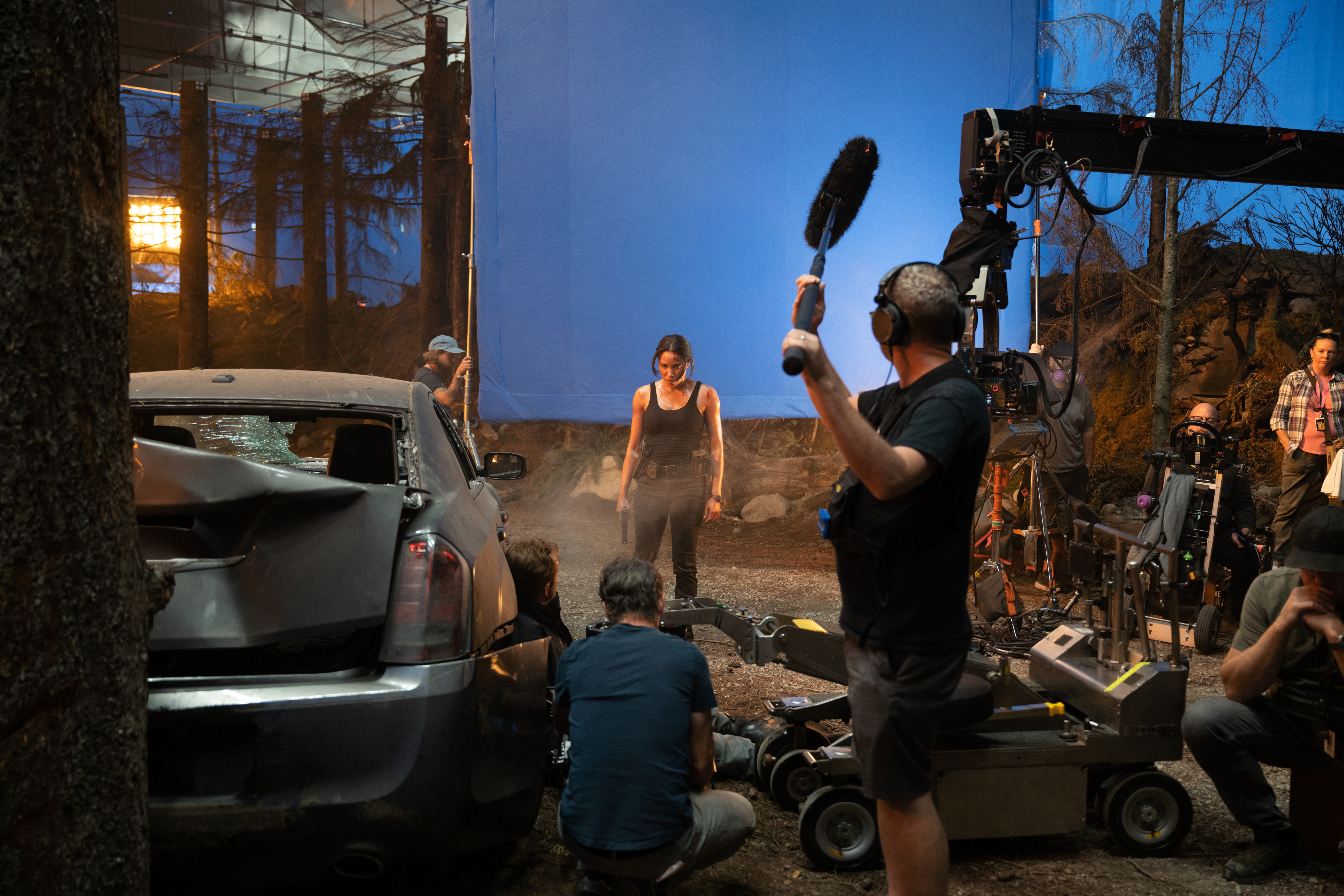
Our set occupied the entire stage. We had to keep the ground on the set pristine for the duration of the shoot — which meant we had to avoid having any equipment on the main part of the set. We decided to use a 50-foot Technocrane on a four-wheel vehicle that could reach from all directions to the middle of the set. Finn King and the construction department ensured that the set allowed for both our Techno and our lifts to move all around the set easily and safely.
Bringing the Image Together
We shot this sequence over the course of a few days, and it required many set ups. Our A-camera crew was usually on the Techno, while our B-camera crew was on longer lenses. We shot with the Sony Venice 2, and I was amazed at how well the camera captured the fire in the highlights. Our wonderful DIT, Chris Bolton, made sure to keep as many details as possible. Gaffer Joe Ballogh and key grip Finn King were always making sure that everything we shot had a sense of realism, drama and strong mood.
I also spent time with 2nd-unit cinematographer and director Joel Ransom and Stephen Campanelli — ensuring that their stage work for the episode would be seamlessly integrated with our main-unit work and our final colorist, Ziggy Ferstl, integrated everything between the main unit, second unit and the VFX. When I finally had the chance during color timing to see all the VFX work integrated into the sequence, I was so impressed with the depth that visual-effects supervisor Ryan Cook and his team gave to the image.
When he reviewed the episode, David Diliberto — our postproduction producer and a longtime Coen brothers collaborator — gave me one of the rewarding compliments: “Watching that sequence, I never felt that it was filmed on stage.”
Images courtesy of Apple TV and the filmmakers.