Maggie Gyllenhaal on the Mad Science of The Bride!
The director of the Gothic romance shares her inspirations for key scenes, and details her collaboration with cinematographer Lawrence Sher, ASC.
Expanded coverage of The Bride! will appear in American Cinematographer's April 2026 issue. For full access to our archive, which includes more than 105 years of essential motion-picture production coverage, become a subscriber today.
American Cinematographer: This film is very different from The Lost Daughter. How did working with Larry Sher on a major studio feature affect your learning curve as a director?
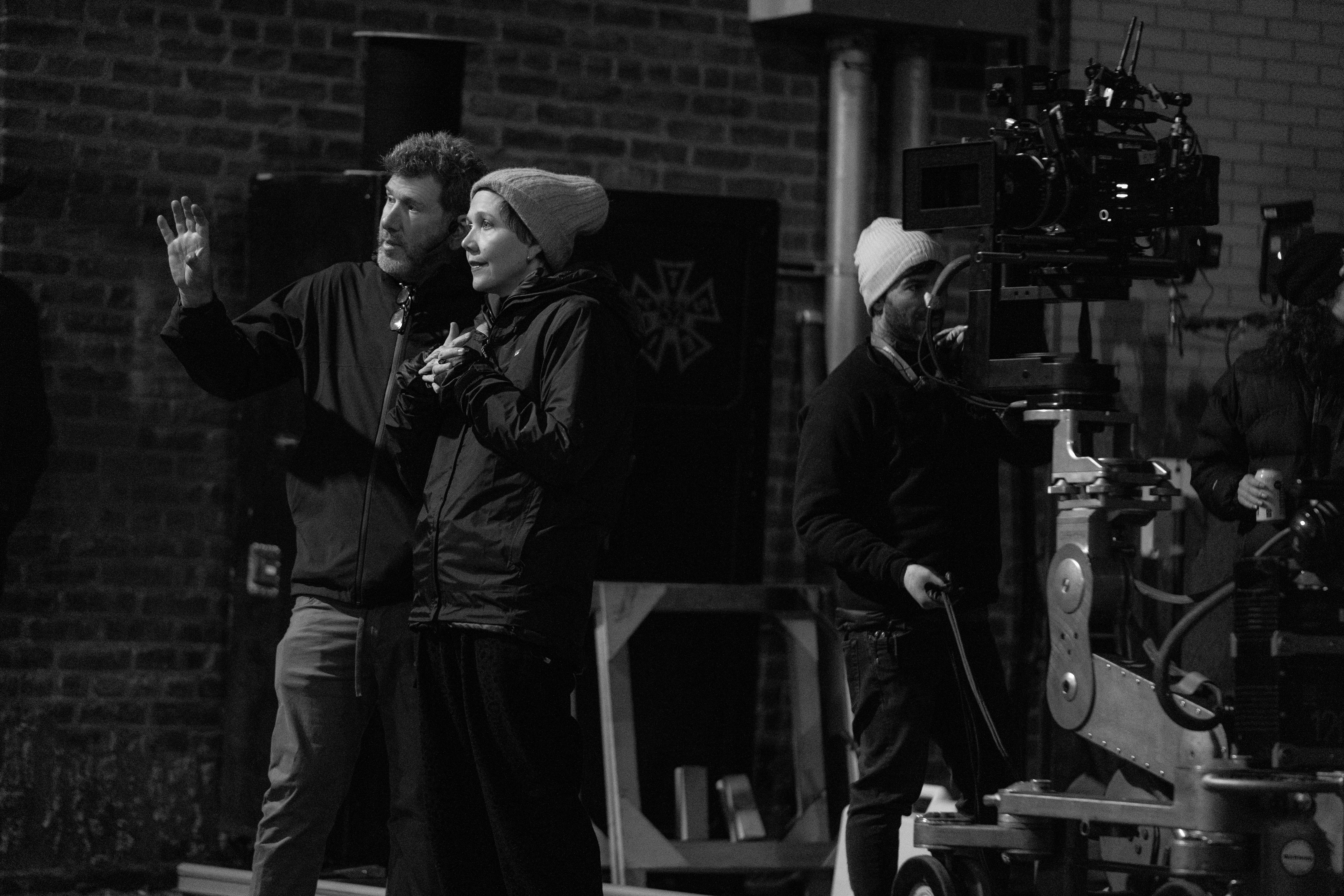
Maggie Gyllenhaal: When I made The Lost Daughter, which is obviously a much simpler film, I think we could afford maybe four lenses. It was very small in scope, certainly compared to [this film]. But when I began that, I thought, “I know about acting, I know about storytelling — I’ve lived around this my entire life — but I don’t know about lenses, aspect ratios or light.” And even though I learned so much from [Lost Daughter cinematographer] Hélène Lovart [AFC], who was an amazing teacher, I knew the minute I met Larry that we understood each other, that we spoke a common language. I felt like I was taking a master class with a teacher who was incredibly respectful of my mind, even though I was a beginner in a lot of ways. It’s wild to me how much I learned making this movie.
Can you discuss an example?
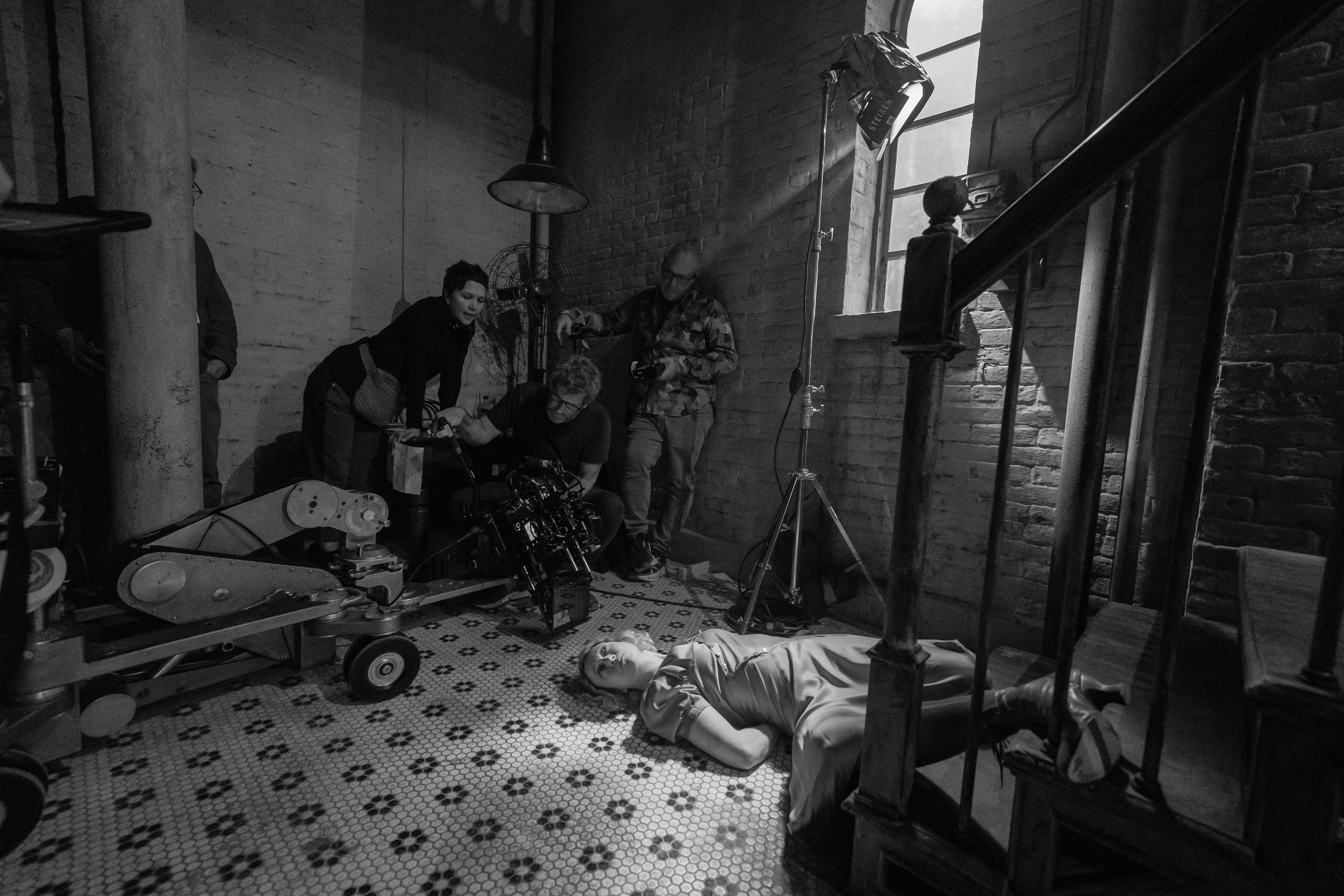
I think one place where we really enjoy each other is in our very different but very compatible way of accessing freedom. He calls it playing jazz. He has this incredible technique on the Technocrane, especially with the Mary Shelley [sequences], which came at the end of our work together. He was basically calling lighting changes — as Jessie was responding to those changes — and operating a Technocrane at the same time. It was me responding to what was working with the lighting and not working, the lensing, the performance, and all of us working together. And then later, of course, [editor] Dylan Tichenor joined in with the way we ultimately cut [the sequence]. It was very interesting: Is that a cut or is that a lighting change, or is that Jessie just shifting? When it worked for me, it almost had a subliminal aspect.
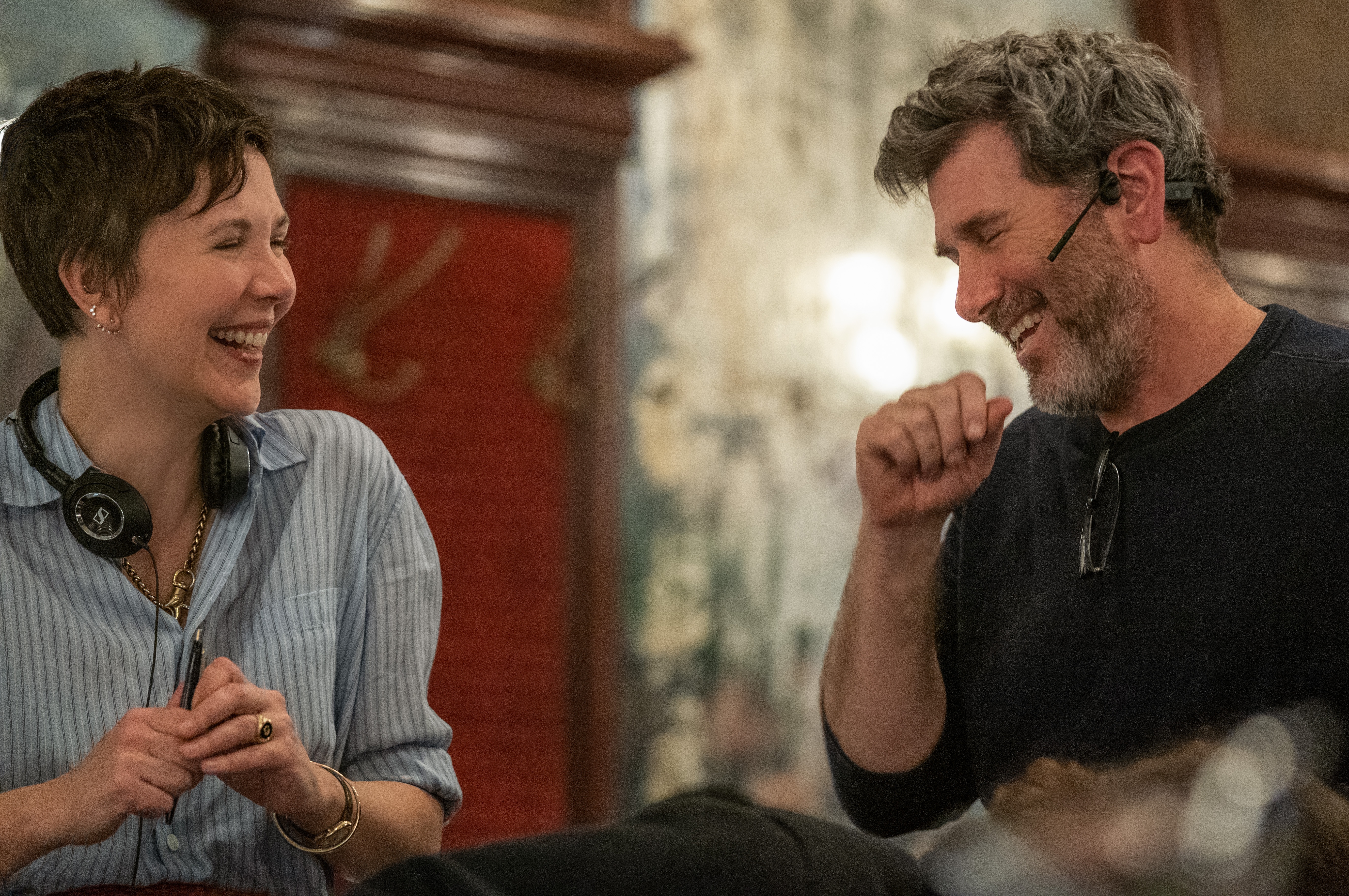
Was the language between you and Larry emotional?
Yes, always. There were things we disagreed on, and sometimes he would come to me three days later and say, “You were right,” or vice versa. But I remember often pushing him toward longer lenses. And he would often say to me, “Is the story being told?” And I would say, “Yes.” Here we have this incredible lighting, these incredible actors, this beautiful set design, and if we’re on a 50, it looks a little bit like TV. Why is that? And yet, when it’s a little bit more obscured, where the magic gets to exist around the edges of the frame, it just lifts off in a way that, at least for me, tells the story.
What’s an example?
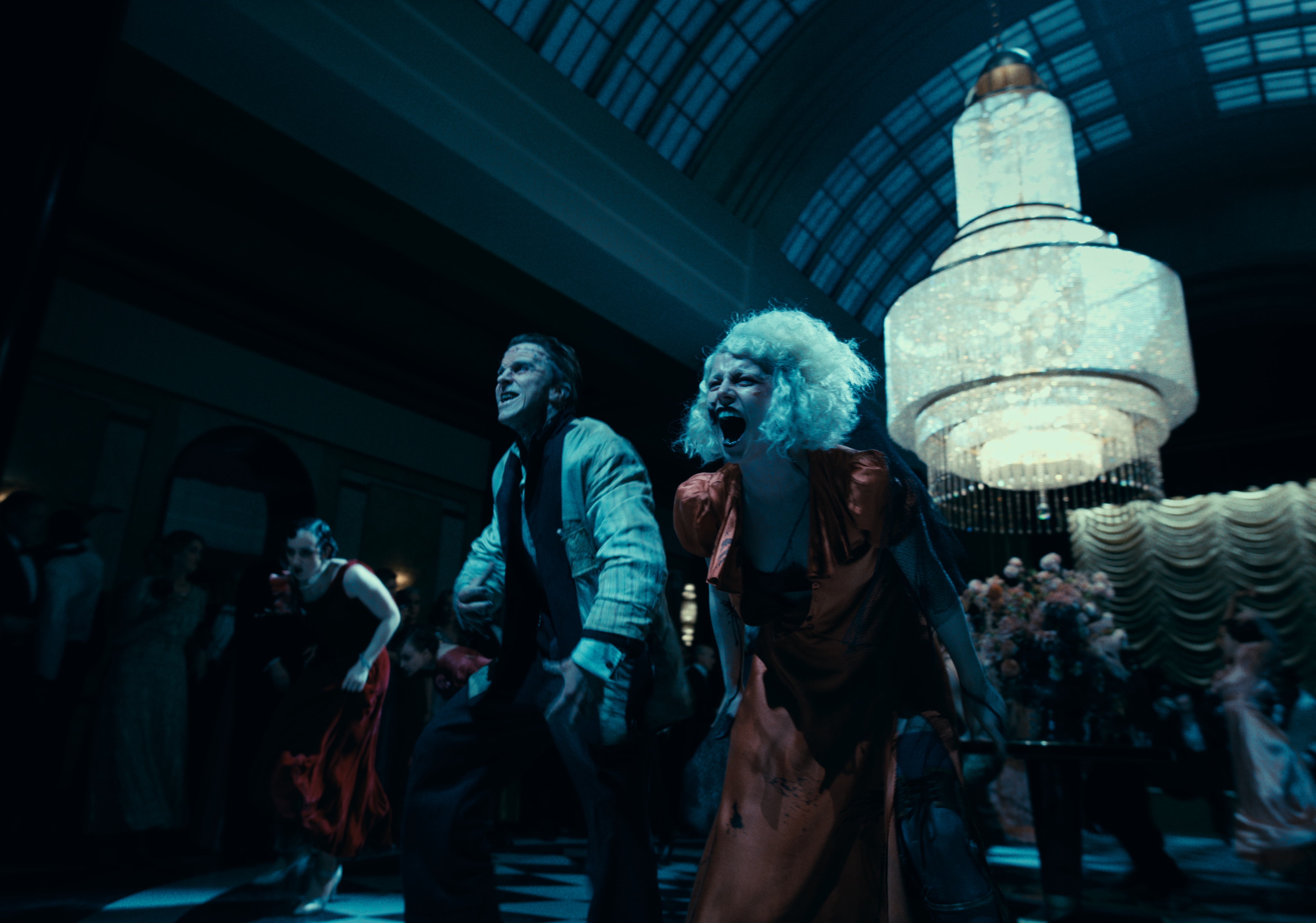
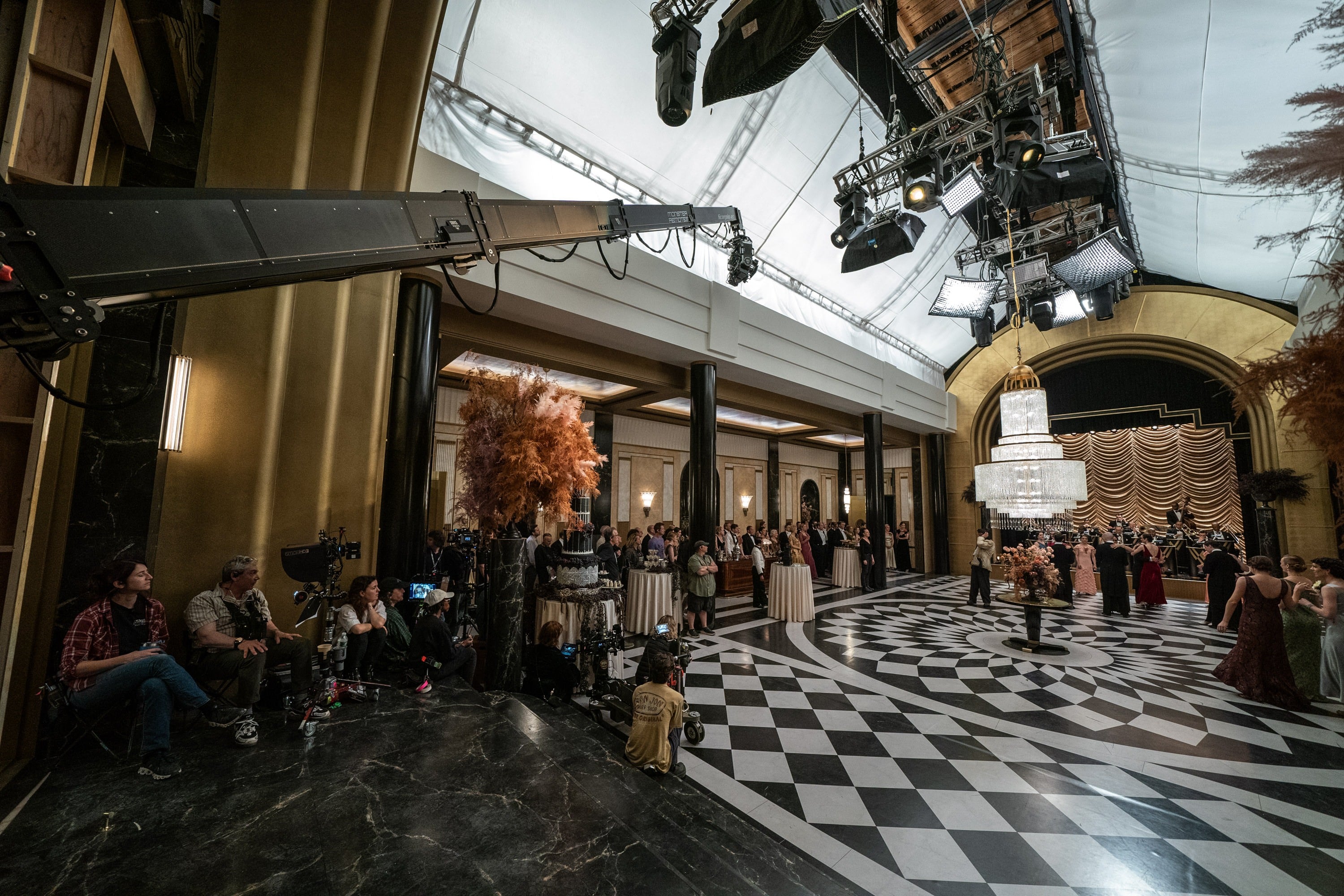
In the wild club. When we were on wider lenses, it didn’t feel like a sick club. Yes, you were seeing more of the space, but it was keeping it from having that magical aspect. One of my favorite sequences is when Frank is walking by the club the first time, before he goes in, and I think we were on a [Nikkor] 600mm lens there, shooting the people outside it. That scene lifted off and came alive.
How did the opening of Persona inspire the reinvigoration scene in the lab?
In order to kick off that unseeable kind of quantum magic [of bringing someone back to life], I thought, let’s go with something that’s the most Newtonian, the most mechanical, which is the arcing light. It’s also so beautiful, and it felt erotic to me. And I think [it was] the aspect of getting closer and closer to explosion, and how you show that cinematically. When I saw [the arc lamp sparking] in Persona, I just took it as a big inspiration. Larry and [production designer] Karen [Murphy] completely understood.
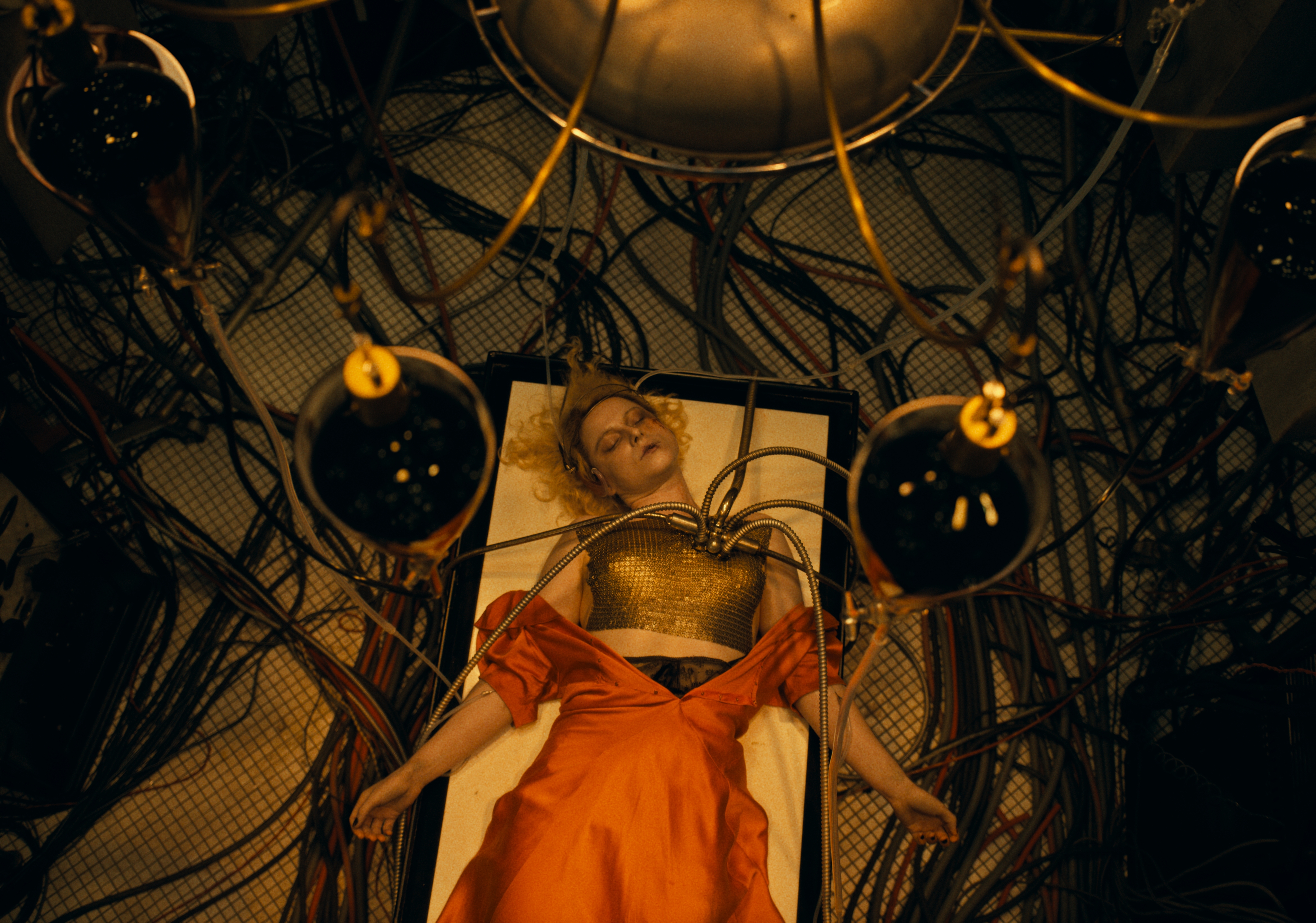
For the moment of rebirth, Larry and I talked about a way in which it could be so bright that if you did it in Imax, you would come out saying, “My corneas were burned.” And could we re-create that somehow with an image? But in the end, we had that beautiful [high-speed] Phantom shot of Jessie arching her back, which I love; that [moment] was actually built by both an image that Jessie sent me a long time ago that I showed to Larry, and something in editorial of her face just emerging out of that white.
How did you like using Imax for select scenes?
The studio asked me before we started, would I consider shooting it for Imax? I just didn’t know about it, and I didn’t consume it. And Larry talked me through it. How we ended up building it, I think, is unusual because I wasn’t using an existing template, exactly. There were times where, because I had barely seen anything in Imax, what I imagined and then tried to create was new. There are places where, over a few cuts, we’re slowly doing an animated expansion, which I don’t think has been done before. [We were] trying to create a feeling of expanding into a character’s mind and into their fantasy life. In all sorts of ways, I was helped so much by the major schooling I was given by Larry.
Unit stills by Niko Tavernise. Images courtesy of Warner Bros. Pictures.