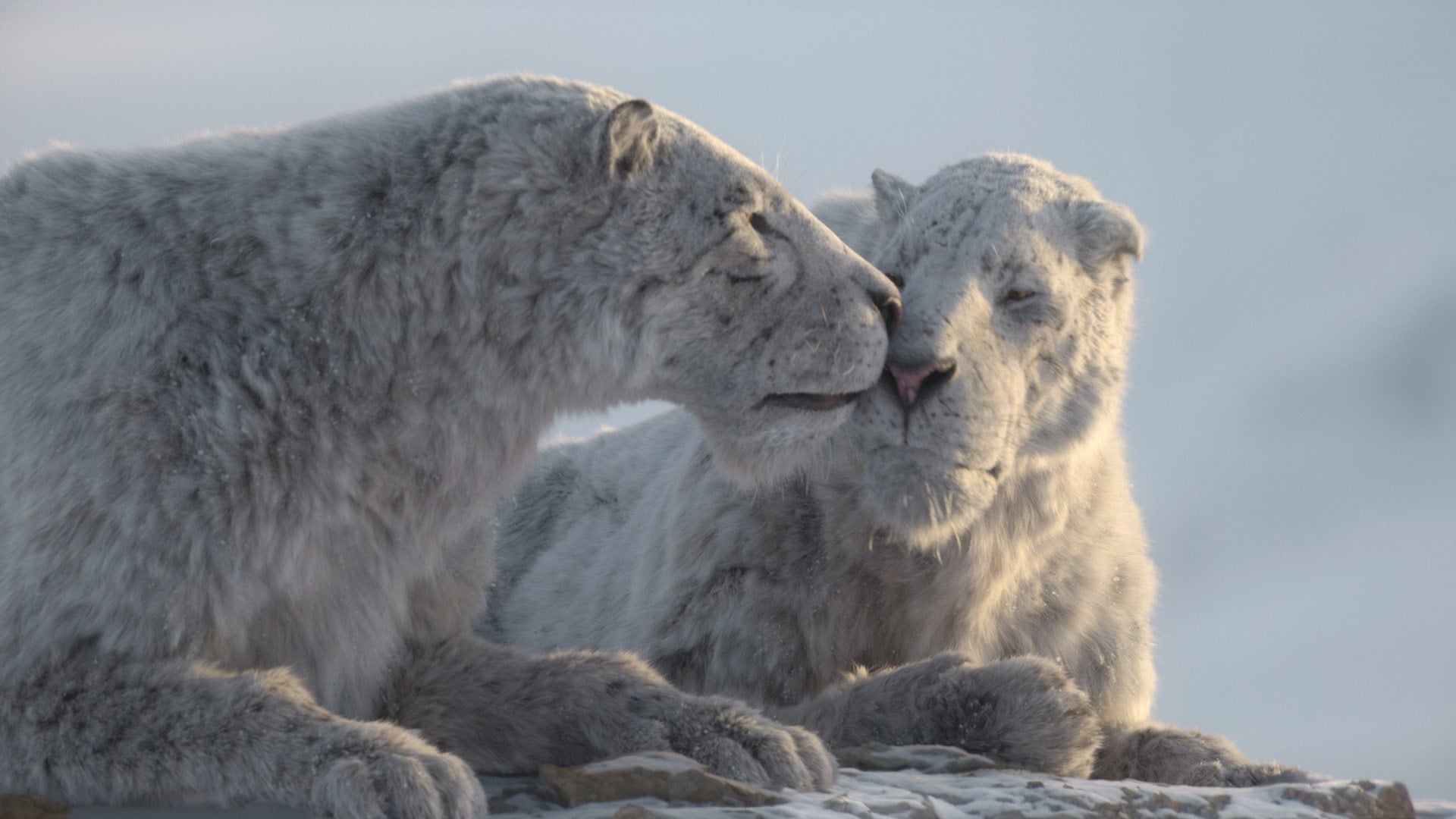
Observing Ancient Creatures in Prehistoric Planet: Ice Age
Cinematographer Jonathan Jones takes a practical approach to documenting the extinct animals of a long-lost Earth.
What do you get when you blend the blue-chip nature documentaries of the BBC’s Natural History Unit (Life on Earth, Blue Planet, Planet Earth) with the cutting-edge digital creature effects of films like The Lion King and The Jungle Book? In the first two seasons of Apple TV’s Prehistoric Planet, narrator and natural historian — and presenter the aforementioned documentaries — Sir David Attenborough teamed up with executive producer Jon Favreau — director of the aforementioned films — for a new breed of wildlife series that gave viewers a realistic glimpse at the environments and inhabitants of Earth’s distant past.
Series cinematographer Jonathan Jones shot Seasons 1 and 2, which featured Tyrannosaurs, Triceratops and other famous dinos of the Late Cretaceous Period (100-66 million years ago) in their desert, forest, mountain and ocean settings. For Season 3, Jones traveled to 15 different countries to capture a frozen world being radically altered by the seismic natural changes of the Late Pleistocene (129,000-12,000 years ago).
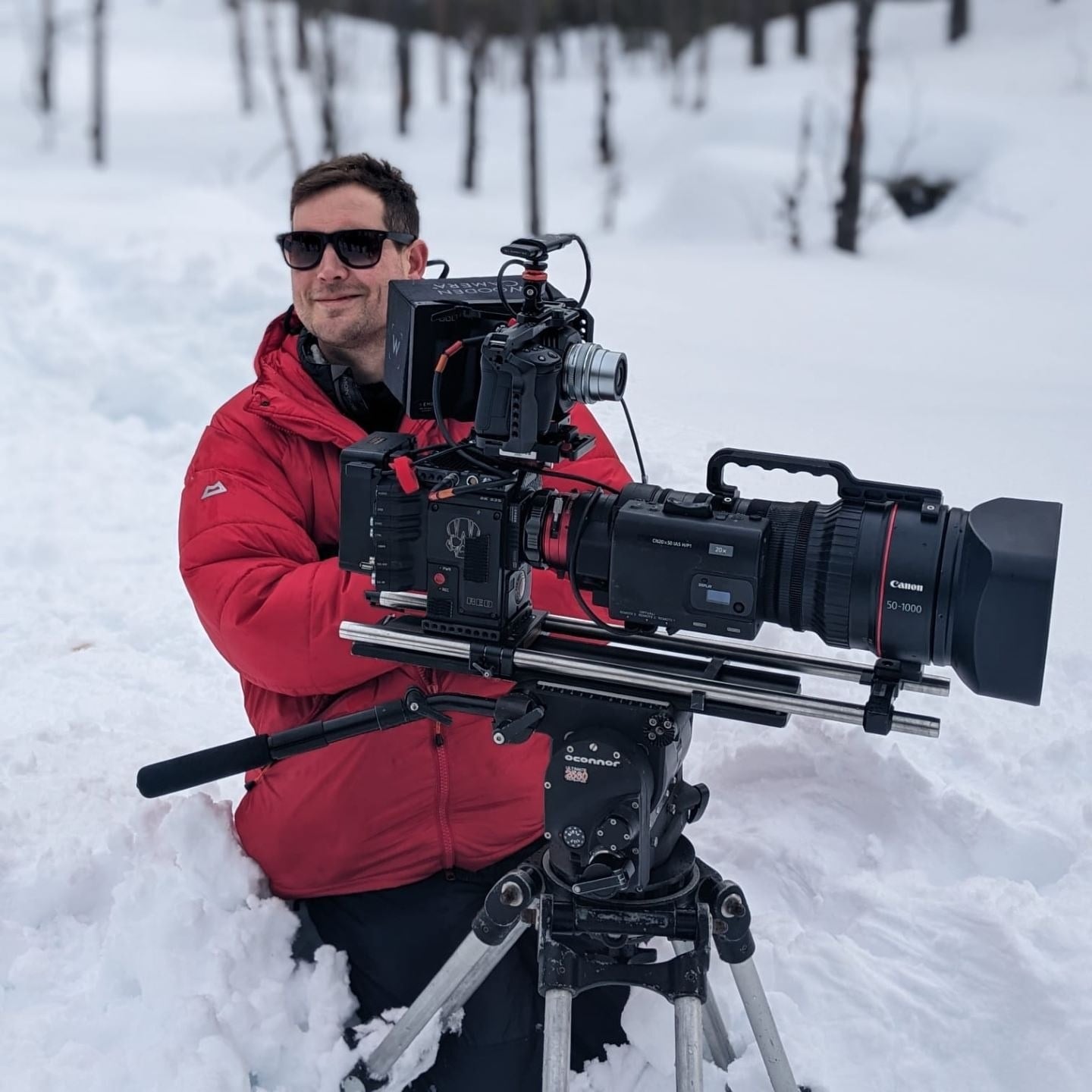
Jones drew from his natural-history experience shooting series like Netflix’s Tiny Creatures and the BBC’s Planet Earth II to inform his approach to Prehistoric Planet. "My job was to work alongside the VFX team to develop the photography parameters that always made us stay true to and honor the natural history filmmaking aesthetic," he says. In this interview with AC, Jones relates how he used tried-and-true wildlife photography techniques to make Ice Age animals — from woolly mammoths to saber-tooth cats to dwarf elephants — feel more real than ever before.
Let’s talk about the breakdown between the visual effects and practical photography.
The premise of Prehistoric Planet is: "Can we re-create a Planet Earth series, but set in the past?" For Season 3, we asked ourselves, "How can we make these animals feel more real than ever before?" They're of a scale more akin to today’s animals, so in addition to visual effects, we used puppets on location. The puppeteers and performers blocked the scene from our previs, so we roughly knew where the animals were going to be, but we didn’t know exactly how they were going to move. So, we approached everything like we would on a real wildlife shoot. When the puppeteer moves the puppet’s head, the operator has to respond and pull focus. Those nuances, interactions and adjustments are what made the characters and environment feel real.
What kinds of puppets did you have on set?
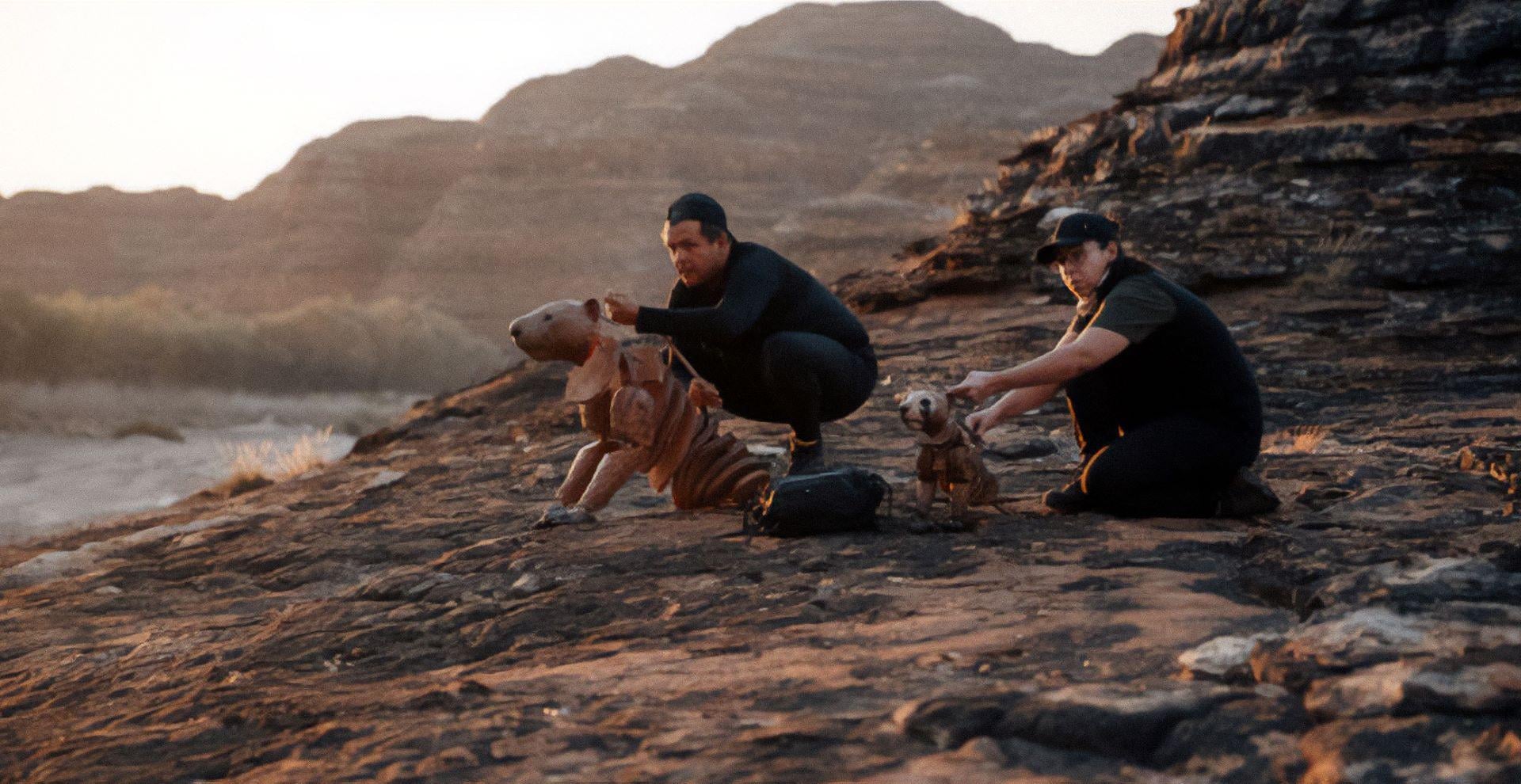
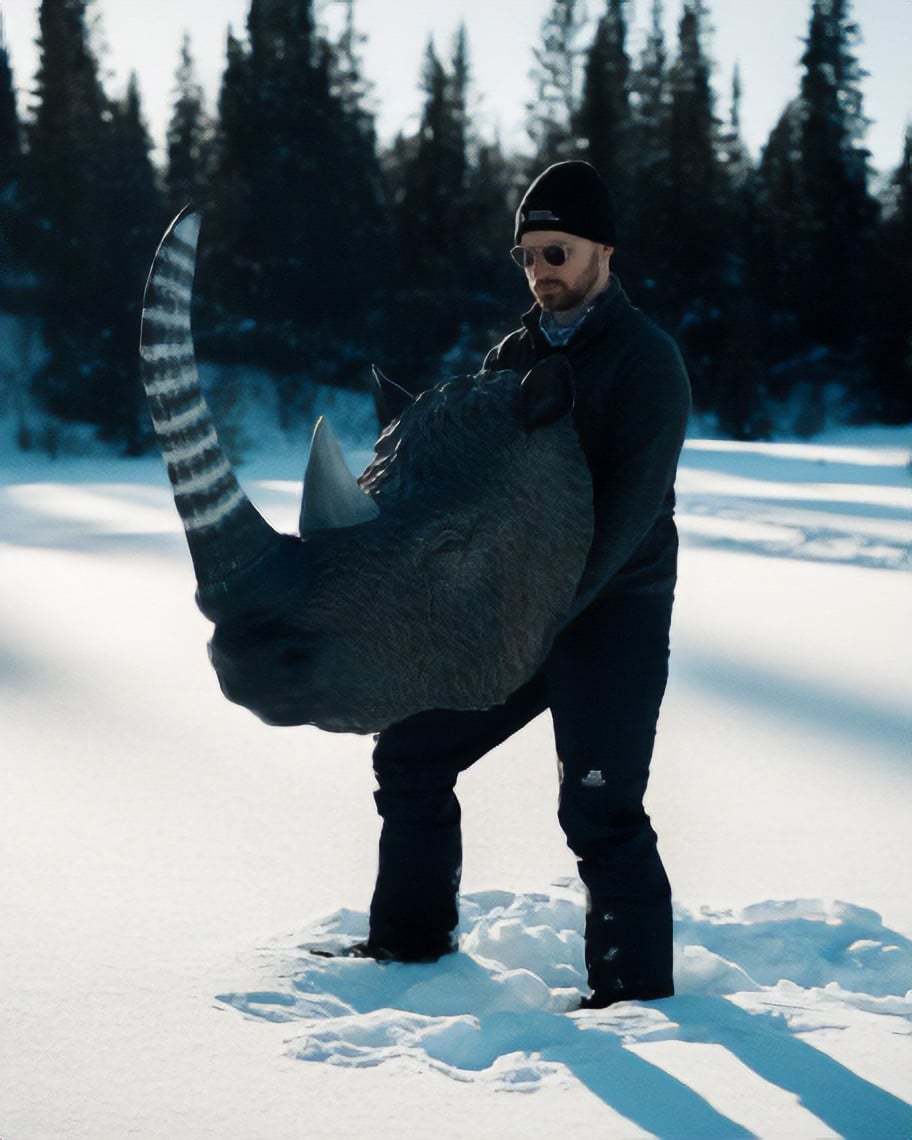
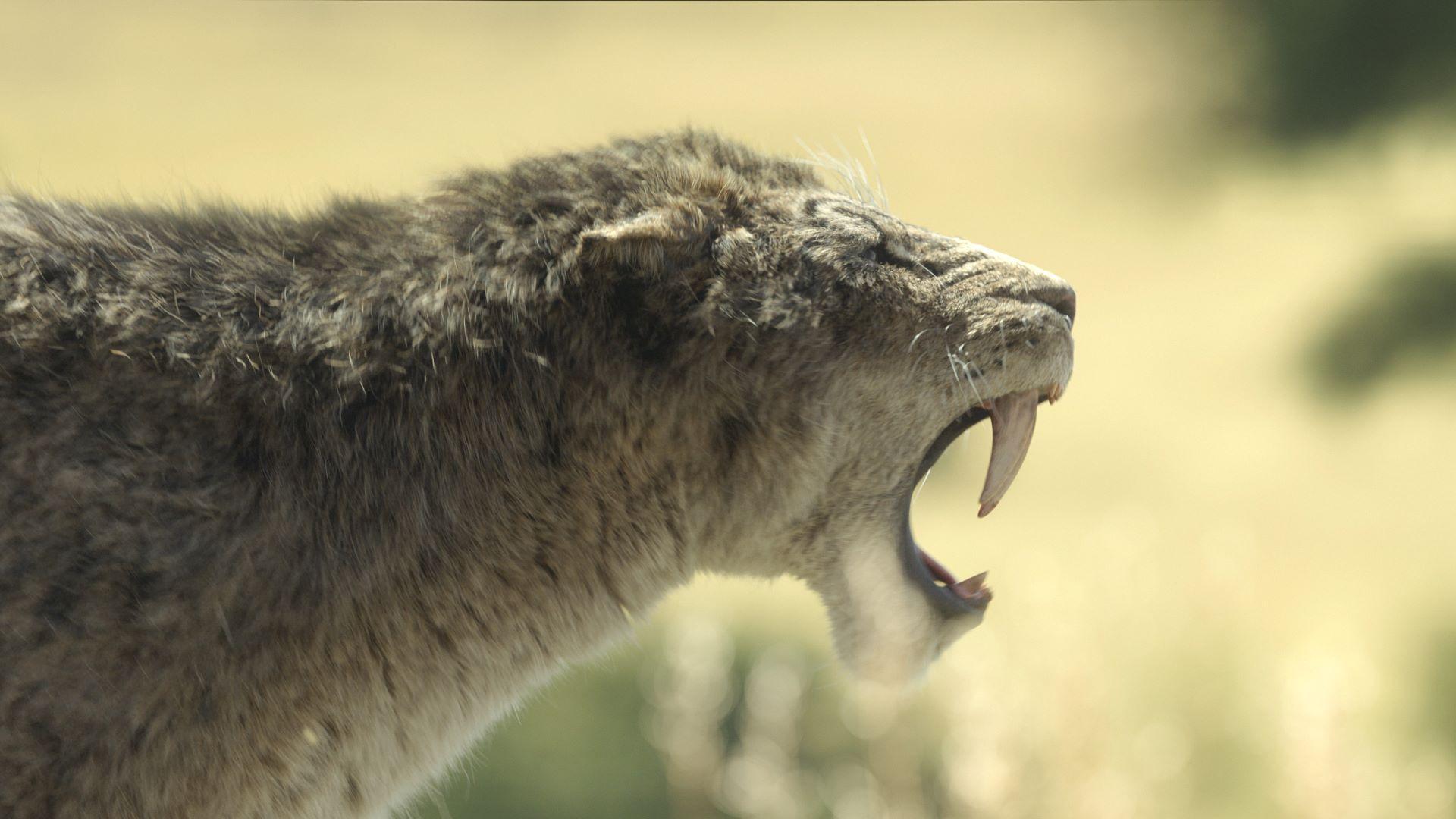
It varied depending on the physiology of the animal and how it moved. Some were controlled with rods and some were the puppeteers in costume. We had big Smilodon [saber-toothed] cats made in sections that could be moved with great detail and accuracy. Others were model heads made to scale, which were positioned within the scene.
Were the puppets detailed with texture and color, or were they just general forms?
The puppets were slightly smaller than their true scale so CGI could go on top, but they always had texture, color and absolute accuracy in eye positioning, shape and form, so if they touched an object within the landscape, the CG interacted with it exactly, or when the head turned, the focus pull would be completely accurate when the CGI character was added.
Cinematographically, how did you keep the shots from feeling staged?
Because these animals could be dangerous, we established some rules — one being that we can’t get close to them. So, most of the animal shots were captured on a 600mm lens and up, just like in a real wildlife show. Focus pulling yourself is easier on a wider lens, but when you get into that 800, 900, 1000mm lens range, the tiny amounts of focus adjustment are based on whether you are moving the camera left or right by a centimeter. That's why you don't have a focus puller on a natural-history show: The operating and the focus pulling need to be harmonious.
How closely did you follow the previs?
I worked with VFX supervisor Russell Dodgeson at Framestore London to capture the ambition of Jon Favreau’s story in these amazing previs sequences. But then we'd go to shoot the true environments — whether that was Bolivia, Iceland or Chile — where the topography might be completely different than what we expected. For example, if the story involved a predation on rocks, but there were no decent rocks to film, we had to change our story, or adjust how certain scene elements unfolded. It was definitely a full collaboration that I encouraged across all of the teams.
What was in your camera kit?
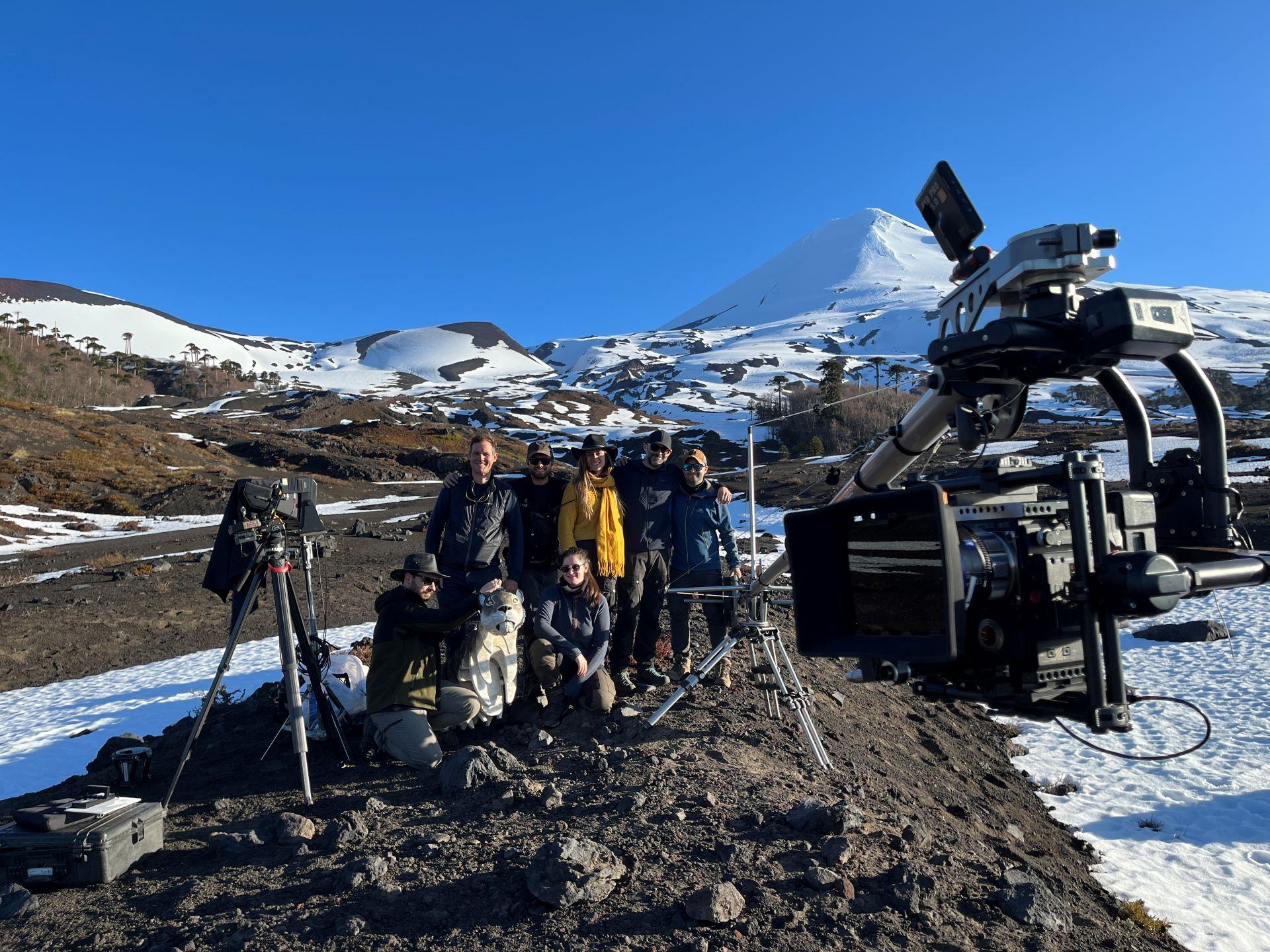
The kit included whatever could be physically carried by a small crew. For Episode 1, “The Big Freeze”, I was responsible for everything — the operating, the grip, and the focus pulling — but I also had a great camera team, which included DIT Laurence Jones, who also operated the crane arm, and camera assistant Henry Bloomquest, who did the loading and maintained the equipment.
For establishing shots, I had a six-meter crane on heavy-duty tall Ronford-Baker legs, with a Red Monstro 8K camera and lightweight Zeiss CP.3 primes on a Freefly Mōvi Pro gimbal, and Tango Pro sliders. We also had the one lens that’s most often used for wildlife filmmaking: the Canon CN20 50-1000mm zoom. Sometimes we used a 1.5x expander to increase the focal length. We also carried a S35 Red 8K camera and a set of Canon EF primes.
Why Red cameras?
Red cameras are true workhorses in the most extreme conditions. I've shot with them everywhere, from super high altitudes of Mt. Everest to the hottest jungles, and I love them because they just work. We also needed a lightweight codec, because everything was captured in 8K to give the VFX team the most resolution possible, unless we shot at higher frame rates.
Another reason Red cameras are often used in natural-history filmmaking is because you might only get one opportunity to capture the key shot, but you still have to capture wide, mid, close and establishing shots. Red cameras allow you to adjust the capture resolution to get different frame sizes. You can double the focal length on any lens by dropping your resolution to 4K, which crops the sensor, so now your 1000mm lens is 2000mm, with much higher frame rates. It can be incredibly quick and versatile for sequence work.
When you say “lightweight codec,” are you talking about the compression ratio?
Yeah, we wanted as little compression as possible, subject to frame rates. The higher the frame rate, the more compression creeps in. But even at 8K, Redcode RAW is the most manageable codec I’ve worked with, meaning we could start editing on location.
MPC provided the VFX for Seasons 1 and 2. How would you characterize your collaboration with Framestore on Season 3?
It felt to me like a “cinematography first, VFX second” approach, because it wasn’t about us shooting for VFX. The VFX artists were so into the nature photography that they wanted to ensure the authenticity of the animals and make them feel real. It was a collaboration of ideas and merging of different skillsets, all pushing in the same direction to create something groundbreaking, and I think that really comes through in the show.
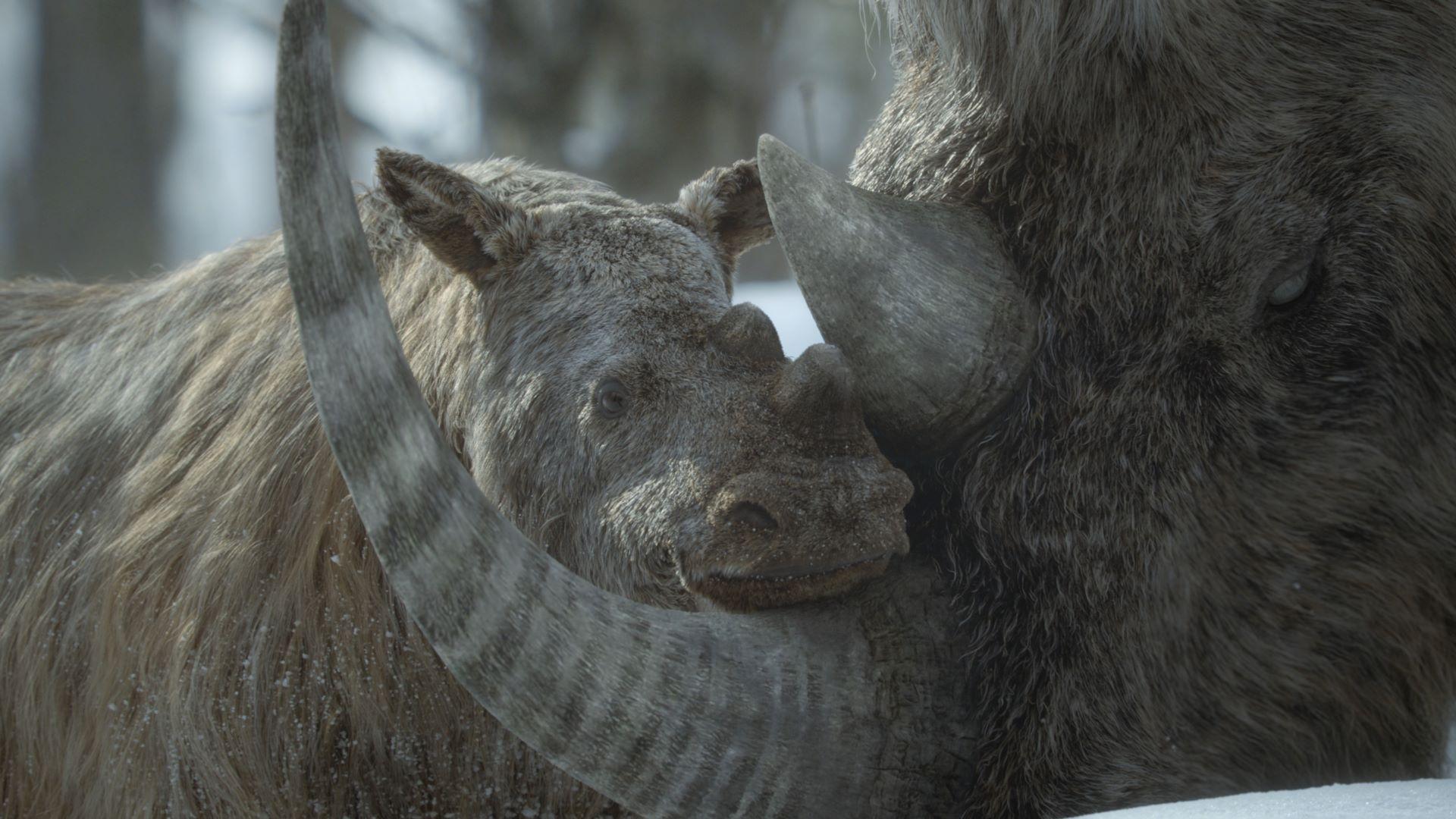
The effects are absolutely seamless in some scenes.
This season is all about interaction. When a CG character touches the ground, we wanted to focus closely on how it interacts. In snow, we had puppets that would push the snow out from under their feet; all of that is in-camera. All of the metadata from the camera was recorded, including focus information. The puppeteer is then replaced with the CG character. It has to be meticulously planned, especially in snow or sand. You have to be methodical about which shots you do first and how you block them out. We also wove in scenes with small animals, like modern reptiles that were present during the time period, as “B” characters that segue between stories or introduce a character in a classic way.
The woolly mammoths in the snow in Episode 1 are particularly effective as digital characters. How did you shoot that scene?
It was a marrying of real assets, advanced computer graphics, and an understanding of how the story would unfold if we were there. There’s a lot in the choreography of the framing and how the characters are introduced. One of the rules of natural history filmmaking is “let the animal leave the frame,” because that gives you edit points. We worked with François Dumoulin at Framestore Montréal to apply that natural history knowledge. He was really excited about our process. He would say “shoot it as close to real as possible,” and I think that's what has really helped the output feel organic and totally believable.
Were the mammoths puppets or creatures in costume?
It’s a practical environment with full scale mammoth heads on three-dimensional wireframe bodies operated by a person inside to ensure the correct head height. This gave us true scale and allowed us to frame accurately, especially when there were several of them in a shot. Later in that episode, we had five mammoths in front of an ice wall, and we’re tracking with them on a crude rig made out of a safety sledge with Laurence holding the Mōvi with a 135mm prime, as our expedition leader pulled it along the ice. It was a simple setup, but the results were highly effective. This is exactly the kind of technique we would use on the ice in real life.
What are some of the other challenges or techniques specific to shooting in the snow?
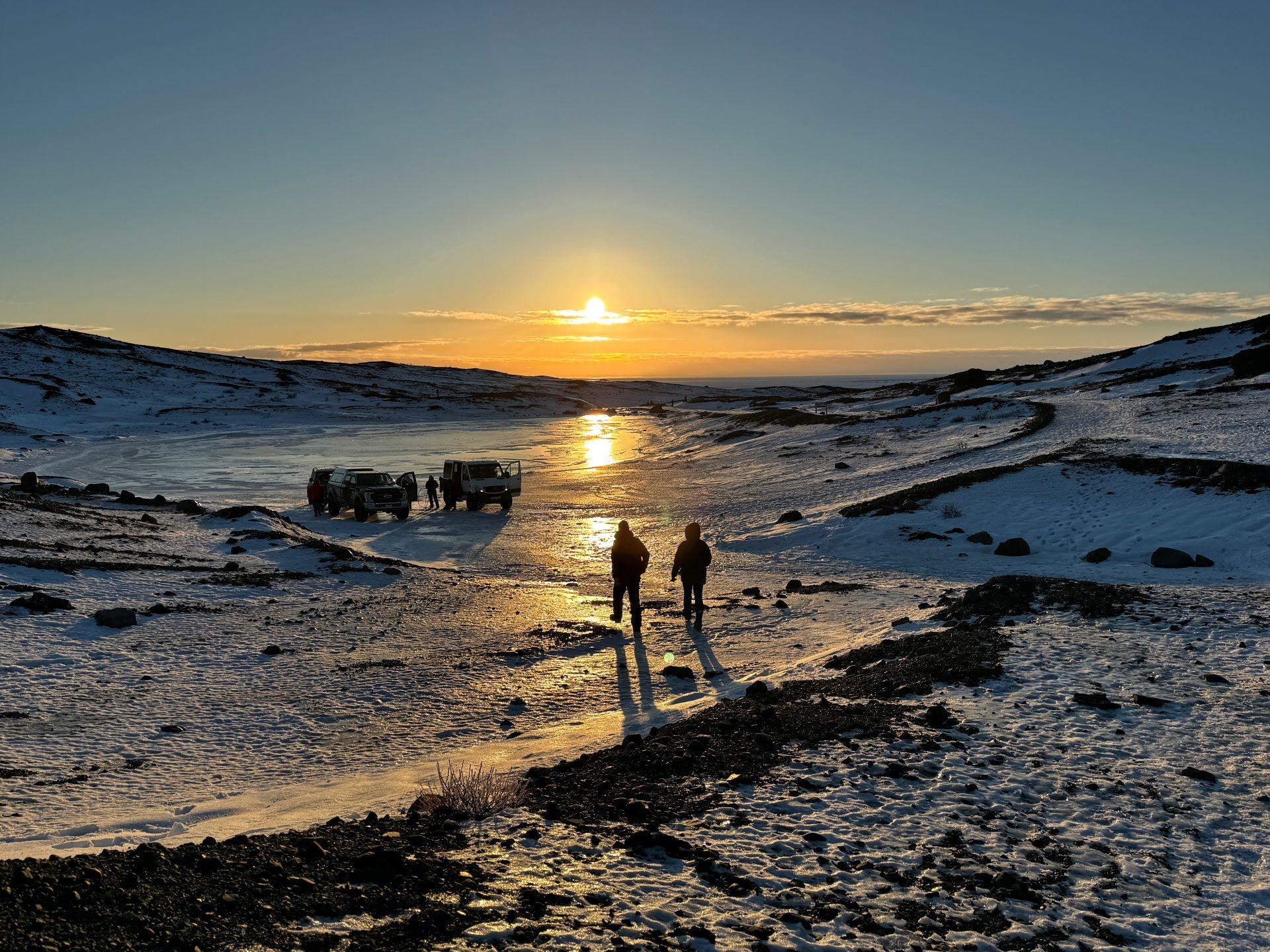
You have to use the right tools for the job. We were going into temperatures where your hair snapped if you didn’t protect yourself. You’re out there for weeks with long days and no craft services. Everyone on our team has a huge amount of field experience, having worked all over the world in the harshest conditions, but there’s still a challenge to being in the right place and right light, while staying safe and physically fit and technically operational. You have to ensure the cameras can handle the temperatures and the lenses are fully acclimatized and don't get frozen or wet. You have to fly drones at those temperatures and ensure the rotors aren’t freezing.
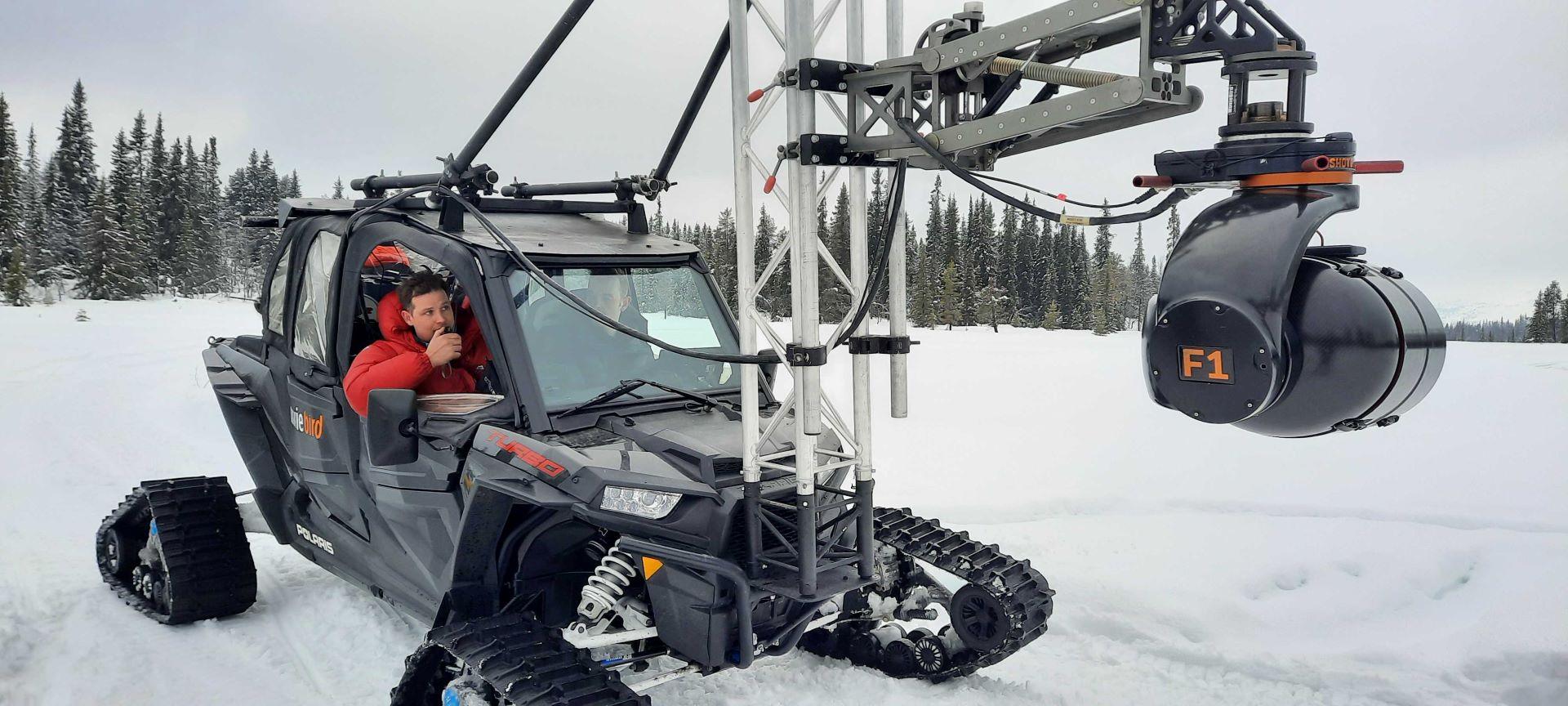
We had to use our field skills to check if weather fronts were coming in and work quickly when the light was going to ensure that we could safely exit the location, which was often a mini expedition. We filmed in -28°C conditions with cold weather gear, Polaris snowmobiles from MovieBird, and sledges. We kept our batteries and media inside our snowsuits to keep them warm. In a blizzard, we had to wrap cling film around the camera to keep snow out of the fans — but covering the fans makes the camera goes crazy. We positioned ourselves where we could physically film, next to a snow bank or an outcrop to shield the long lens from shaking in the wind.
Because you’re an observer of nature, you don’t always capture everything under perfect conditions, but you can still get the shot. We applied this logic to our CGI animals: if one of them was supposed to be to your left, but the light was perfect to your right, in the real world we couldn’t move them, so we would reposition ourselves to where we think the animals will be. It might not mean the most perfect lighting, but it feels more real.
How did you film the chase sequence in the first episode?
We used a helicopter-based system called the Shotover F1. It's a gyro-stabilized gimbal that allows us to house the complete camera package inside, including the camera and the CN20 lens. We attached it to the Polaris and were able to move across the snow at amazing speed. The key advantage to this setup is that even at 1000mm we can maintain complete stability while moving and traveling at the animal's speed. This is the same system used when filming real animals, and that means long-distance animal behavior, such as chases, can be captured in extreme detail while on the move, with a consistent and naturalistic aesthetic.
What’s your approach to filming the desert and jungle environments?
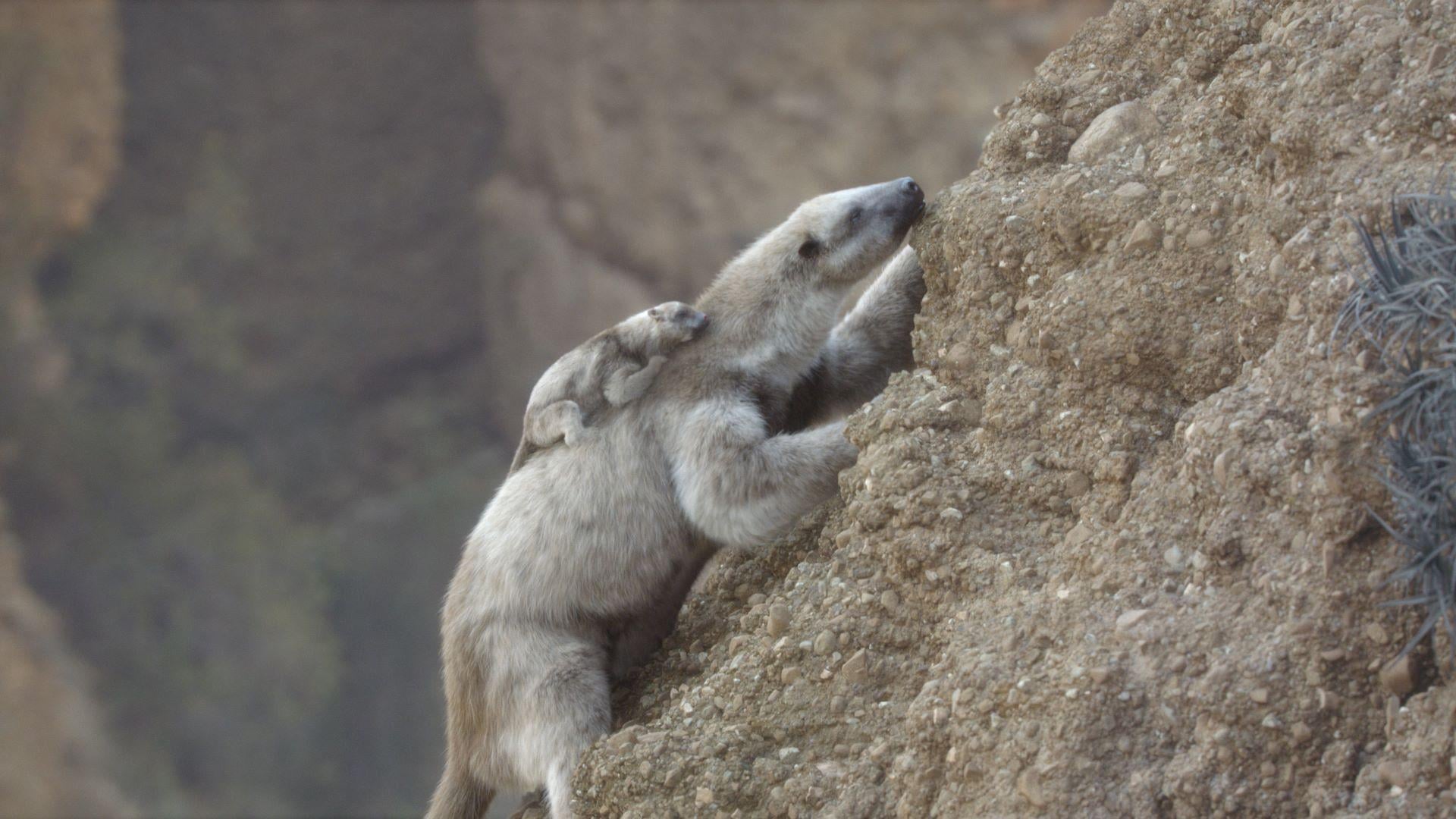
You take the same principal tools, but in the deserts, you contend with heat and carrying water because you can’t always get a car to the location. You’re up hills and cliffs, looking for advantages. Sometimes the best way to scout a location is to shoot establishing shots with the drone, and pick out the best spots from that. Jungles are different because critters want to bite you and everything is humid, so lenses need to acclimatize to the environment before you can shoot, otherwise it's a waiting game and you might miss the light. Setting up equipment is difficult because the ground is uneven. I enjoy using the lightweight crane in these types of environments because I can sweep over any topography. I can do high shots, low shots, and little push-ins, which adds the maximum level of production value, especially when you have to walk long distances with the kit.
The scene with the bears and lions in the cave was shot to look like “night vision.” Was that also practical photography?
The cave entrance and certain shots as the lions entered were practical. Much of it was full CG based on detailed references from trap cameras to see where they could be placed and how the exposure and focus adjusted when something came close. Realism is about the imperfections — a bear goes up to the camera, it goes out of focus, and its eyes go weird — so we had to include those imperfections because that is what the audience is used to seeing.
Did you shoot less footage on this series than you would on a real wildlife shoot?
Not necessarily. We still tried lots of things and ran long takes to look for the best moments. We didn’t just have the animal walk from A to B; we wanted moments where it stopped and looked so we could get interesting performances. We broke away from the fact that we were doing a take; we were capturing an animal, and I decided when it was time to record and cut, and tried to preempt the animal so I didn’t miss the shot.
With modern CGI everything seems possible, but having restrictions forces you into more creative ways of doing things.
That reminds me of when we were in Chile filming Smilodon cats taking down Macrauchenia, these big horse-like animals. Brian Fisher was our puppeteer master, and he was running full pelt with this big cat puppet. He has to put his puppet onto a big Macrauchenia puppet, like he’s trying to bite it. I was on a 900mm lens, filming at 120 frames per second, where focus had to be super precise. During the take, Brian tripped and fell. I didn’t know he was going to trip, but I followed him down as he hit the ground, and he never stopped performing with the puppet. I came around, rectified the focus to the face, and he spun the cat’s head and stood up. I followed it all in one shot, and that’s exactly what’s in the show. The VFX artists were even able to use the dust he kicked up!
Images courtesy of Apple TV.
“It’s a testament to everyone involved that we were all trying to push what’s possible to the max. The whole series has been a real privilege to be part of.”