Sinners: Big, Bold Blues and Blood
Autumn Durald Arkapaw, ASC and writer-director Ryan Coogler blend genres and formats for a fresh Southern-Gothic vision.
This in-depth look at the making of Sinners appears in American Cinematographer's June 2025 issue. For full access to our archive, which includes more than 105 years of essential motion-picture production coverage, become a subscriber today.
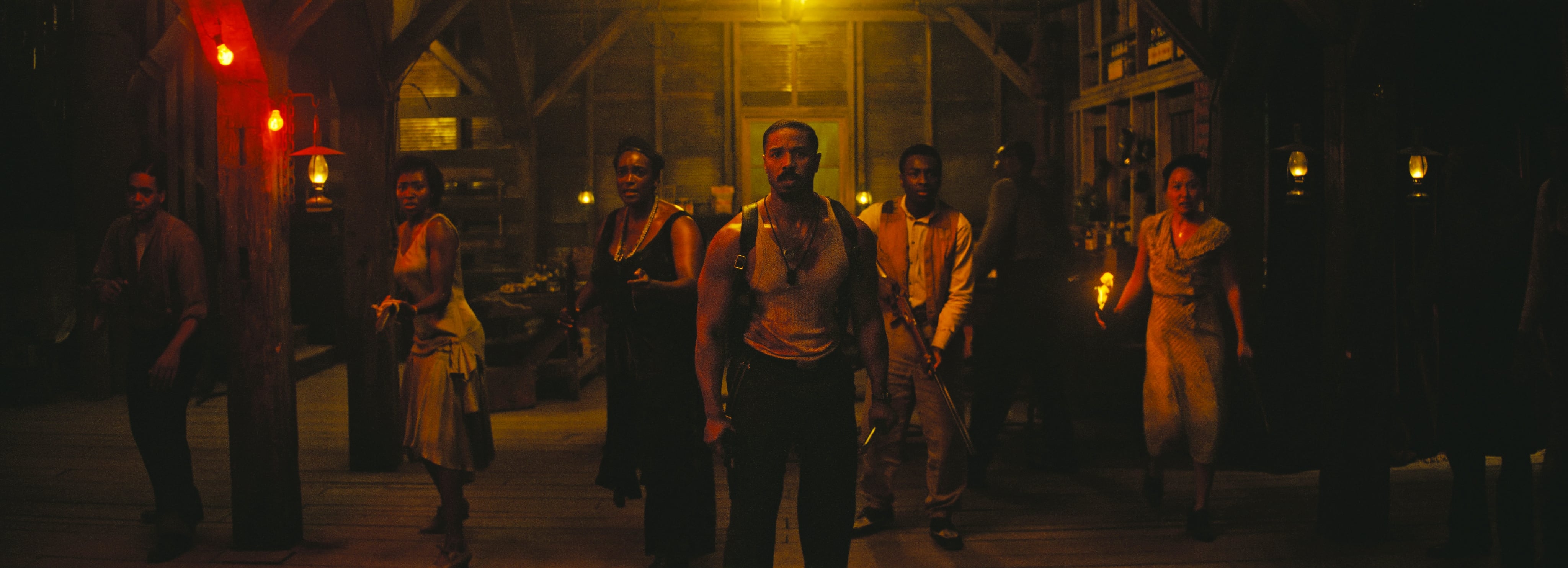
Demons, gangsters and the blues are unlikely but compelling bedfellows in Ryan Coogler’s Sinners, and he and director of photography Autumn Durald Arkapaw, ASC made an unconventional choice to render the tale: combining 5-perf 65mm Ultra Panavision and 15-perf 65mm Imax. “Ryan wants to push the boundaries when figuring out how to best tell a story,” says Durald, “and this combination asks the viewer to really use their eyes and scan the image, going from this very wide landscape to the taller Imax frame. You wouldn’t think these formats would work together, but they do. It immerses you in the characters’ mindsets.” Their decided approach also made history: Not only was this the first time these two formats had ever been combined on a feature, it was the first time a woman cinematographer had shot a feature in Imax 65mm — or on any 65mm film format.
Set in 1932, Sinners tells the story of twins Smoke and Stack (both played by Michael B. Jordan), who return to their hometown of Clarksdale, Mississippi, to disentangle from the Chicago Mob. They purchase an old lumber mill, intending to create a juke joint to showcase the talents of their cousin Sammie (Miles Caton), but soon discover that racists and supernatural creatures stand in their way. The film’s narrative transpires over 24 hours.
Durald, who first teamed with Coogler on Black Panther: Wakanda Forever (AC Dec. ’22), recalls that when she read his original script for Sinners, “I couldn’t put it down. It was one of the most exciting reads I’ve had. It was straight from his brain and had so much weight to it. I sent him a long email with my thoughts and said, ‘Big imagination visuals here.’ We email a lot back and forth, which is nice because we can always refer back to it.”
They soon got to talking, and she homed in on what he wanted to communicate to the audience: “mood and tone, and what the heart and soul of the film is,” she says, adding, “Those initial talks are what inspire me the most.”
Creative Inspirations
Coogler recommended Durald get the book Photographs by Eudora Welty, a Mississippi writer who took pictures of local residents during the Depression. “She captured moments in time,” Durald observes. “There is so much emotion in those one-off photos that tell a story; you see in people’s faces what they went through.”
They also discussed films, including There Will Be Blood (shot by Robert Elswit, ASC; AC Jan. ’08), for its depiction of early 20th-century California; John Carpenter’s The Thing (Dean Cundey, ASC), for characters terrorized by an alien force in a contained environment; and The Last Emperor (Vittorio Storaro, ASC, AIC), notably for “the beautiful train sequence that opens it,” the cinematographer says. “That was one reference [for our train sequence], especially because we were shooting in this historic [Ultra Panavision 70] format. It was important to make that scene feel nostalgic.”
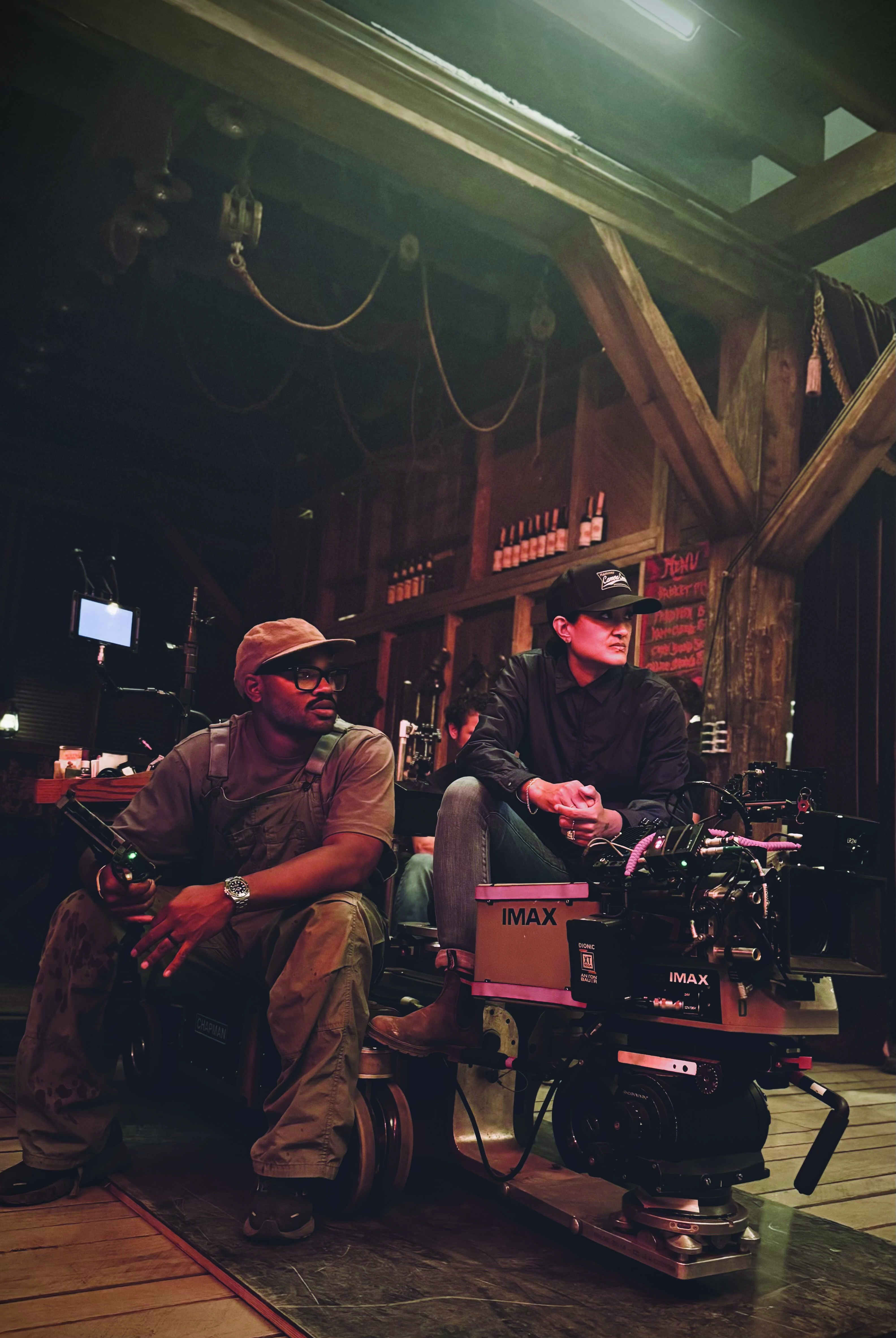
When Warner Bros. approached Coogler about shooting at least some of Sinners in a larger format (see interview with Coogler at the bottom of this page), specifically Imax, he and Durald became interested in originating on film to achieve the full 1.43:1 Imax frame. They had shot portions of the digitally originated Wakanda Forever in 1.90:1 for digital Imax exhibition. Durald notes, “When I think of Imax, I think of Christopher Nolan and The Dark Knight [Wally Pfister, ASC; AC July ’08]. That’s the first Imax picture I saw in a theater on a film print. It blew me away.”
Coogler was also interested in exploring other 65mm formats. “He was thinking about what would most beautifully tell the story with our flat landscapes, where you could see someone coming from a mile away, or vampires who were hidden and suddenly appear,” Durald says. She asked Andrew Oran at FotoKem to arrange a screening. He put together a menu of 70mm film clips from The Hateful Eight (Robert Richardson, ASC; AC Dec. ’15), 2001: A Space Odyssey (Geoffrey Unsworth, BSC; AC June ’68), Licorice Pizza (Paul Thomas Anderson and Michael Bauman) and Tenet (Hoyte van Hoytema, ASC, FSF, NSC). “Ryan stood up, walked over to the screen and said, ‘This is what I’ve been missing!’ recalls Durald. “When he gives me a directive like that, I hit the ground running.”
After shooting tests in the flatlands of Lancaster, California, the filmmakers decided to shoot most of the picture in Ultra Panavision 70, which was used on a handful of epics in the ’50s and ’60s and revived for The Hateful Eight. Durald chose Panavision System 65 Studio and System 65 High Speed cameras with Ultra Panatar lenses for her main package. Of her long-standing preference for anamorphic, she notes, “It feels more cinematic to me — bigger and bolder than we are.”
She adds that on Sinners, she favored the 50mm Ultra Panatar “because it is a beautiful, wide-close-up lens that gives more context on either side and is also great for a three-shot.”
She shot most of the Imax footage — about 20 percent of the movie — with Imax MSM 9802 cameras and 50mm and 80mm Panavision lenses that had been custom-built for Nolan and Van Hoytema on Oppenheimer (AC Oct. ’23). “I liked their softness, and Ryan had confidence in the simplicity of using these two focal lengths to tell the Imax part of our story.”
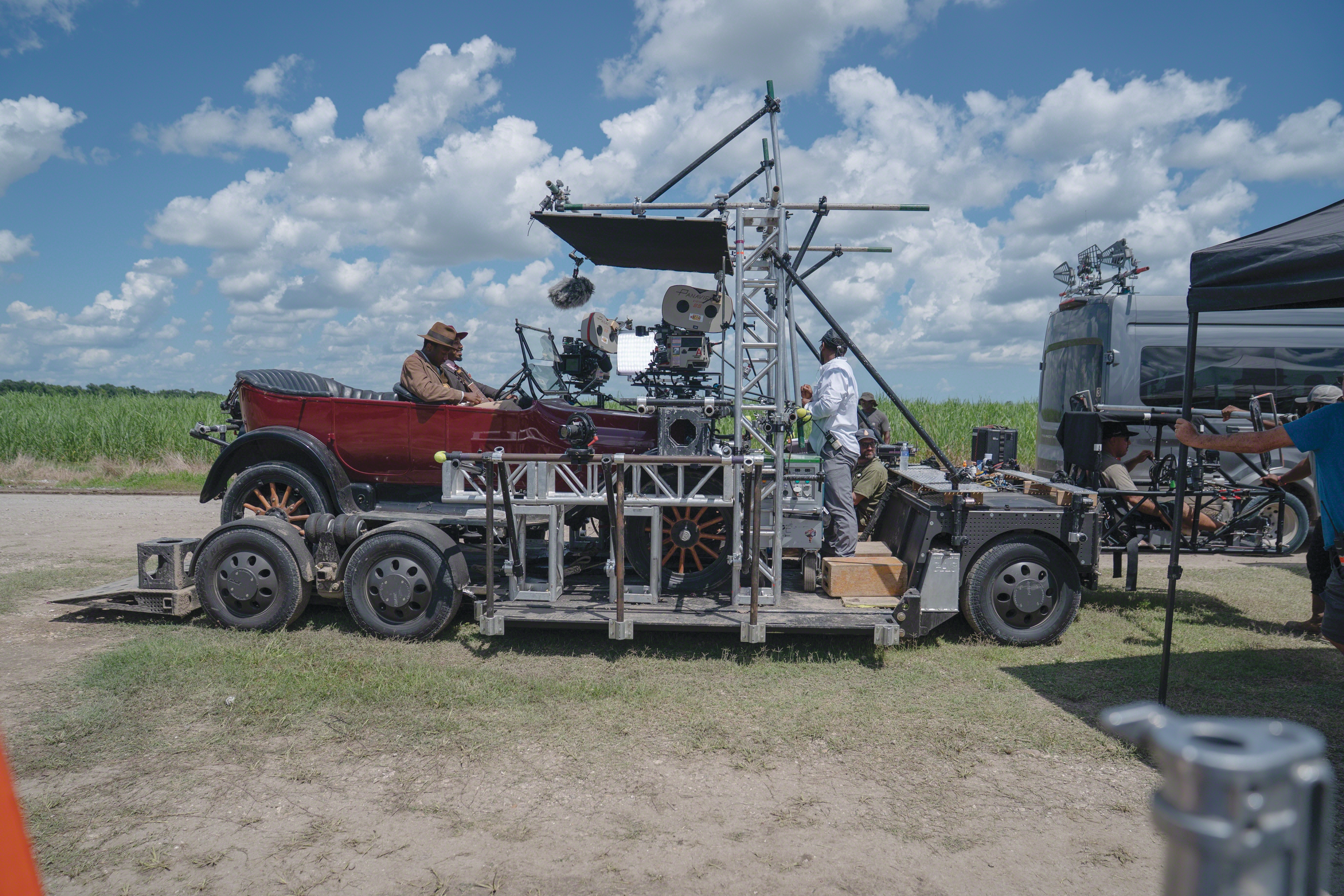
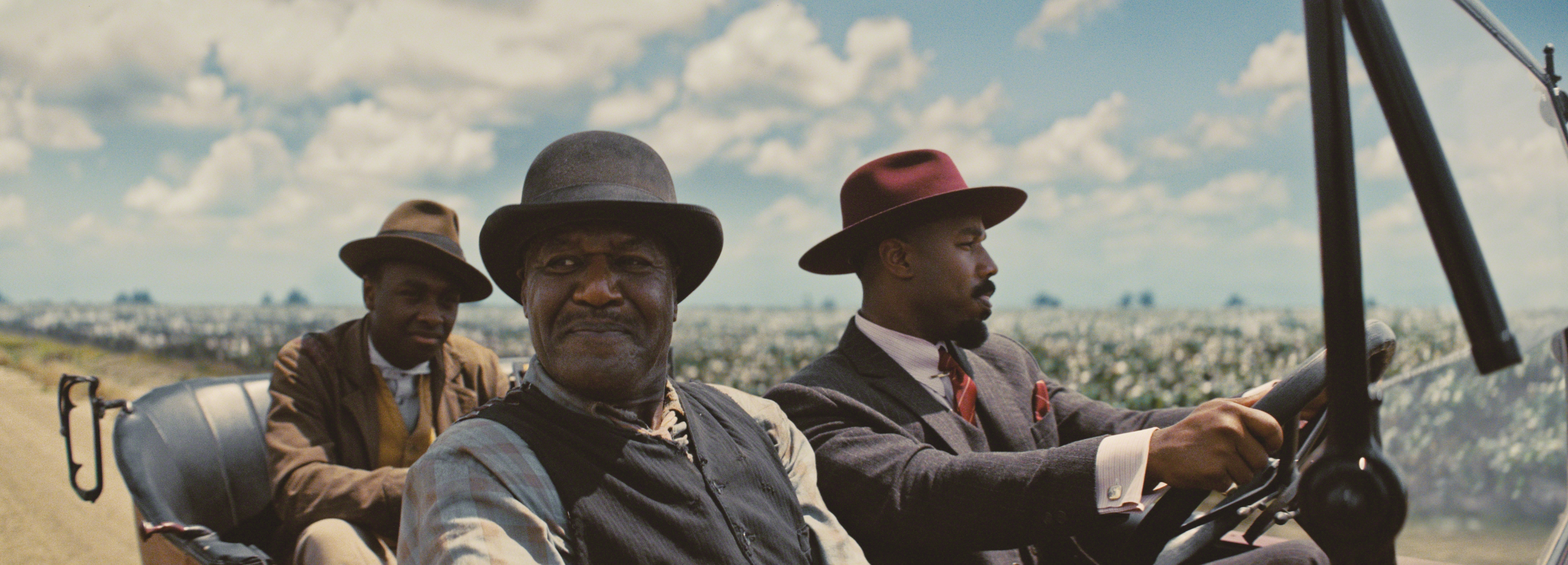
Durald notes that theaters equipped for digital Imax exhibition, but unable to screen 70mm prints, will display Sinners’ Imax sequences in 1.90:1, and standard theaters will exhibit the entire movie in Ultra Panavision’s 2.76:1 aspect ratio. “We were very aware of that on set,” she adds. “I like to frame actors and what’s most important in the center, which worked to my benefit in post, when we reframed the Imax image for 2.76:1. Most moviegoers will see it that way, but I will shout from the rooftops to as many people as I can to try to see it in Imax and, if they can, on film!”
Durald asked Dan Sasaki, Panavision’s senior vice president of optical engineering and lens strategy, to create another custom lens for Sinners: a Petzval 80mm for the Imax camera. It comes into play for a dreamlike moment with Smoke and Annie at the end of the film. Durald describes its effect as “heavy aberration, blurred edges with some clarity in the center. I always detune lenses to have aggressive field curvature. I love character in my lenses.”
She also used a Canon EF 1200mm USM super-telephoto lens on the Imax camera to capture a full moon, which is often a harbinger of unwelcome guests.
Imax Considerations
In determining which material would be shot in Imax, the amount of dialogue in a scene was a key consideration, as Imax cameras are too noisy to use for sync sound. Additionally, takes are limited to approximately 2½ minutes (for a 1,000' roll of 15-perf 65mm). “Aware of those restrictions, Ryan and I made a list of what jumped off the page as being for Imax,” Durald recalls. “But when we got on set, we fell in love with the format, and it became a question of how much we could shoot without getting in the way of performances. So, we had more Imax than planned, which was beautiful for our story.”
The Imax and Ultra Panavision formats were nearly all captured on 65mm Kodak Vision3 500T 5219, regardless of the shooting hour or location. “Seeing our nights and days on the same film stock worked to keep a consistent grain structure throughout the film,” Durald says of her decision. Kodak also manufactured a few rolls of Ektachrome 100D Color Reversal film in 65mm that Durald used for some handheld shots of workers jumping out of a truck and walking to the juke. “Ryan and I are fond of portraiture shots,” she says. “Vanessa Bendetti at Kodak was able to work it out and make some [reversal stock] for us, and the footage is gorgeous in an Imax print.”
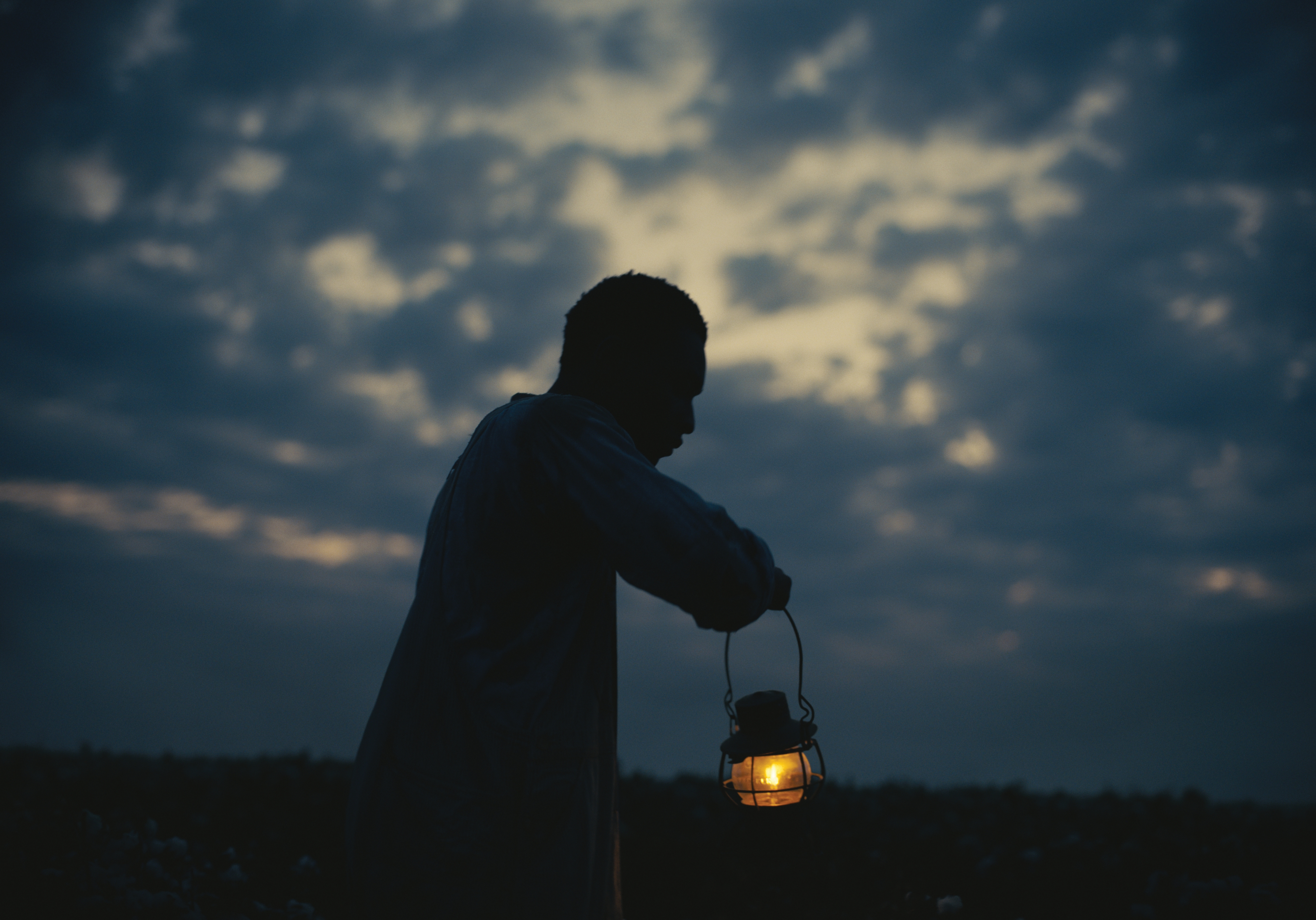
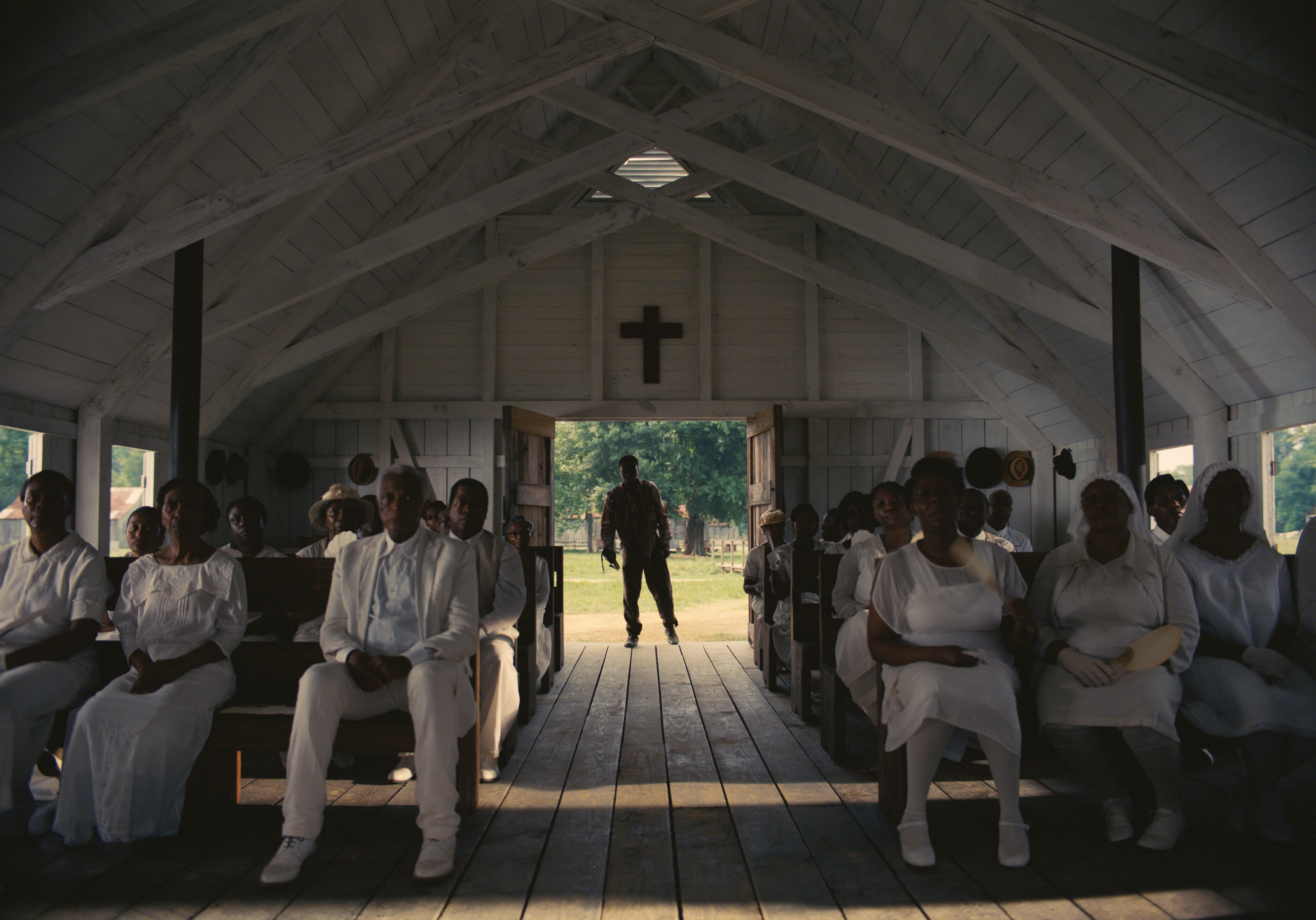
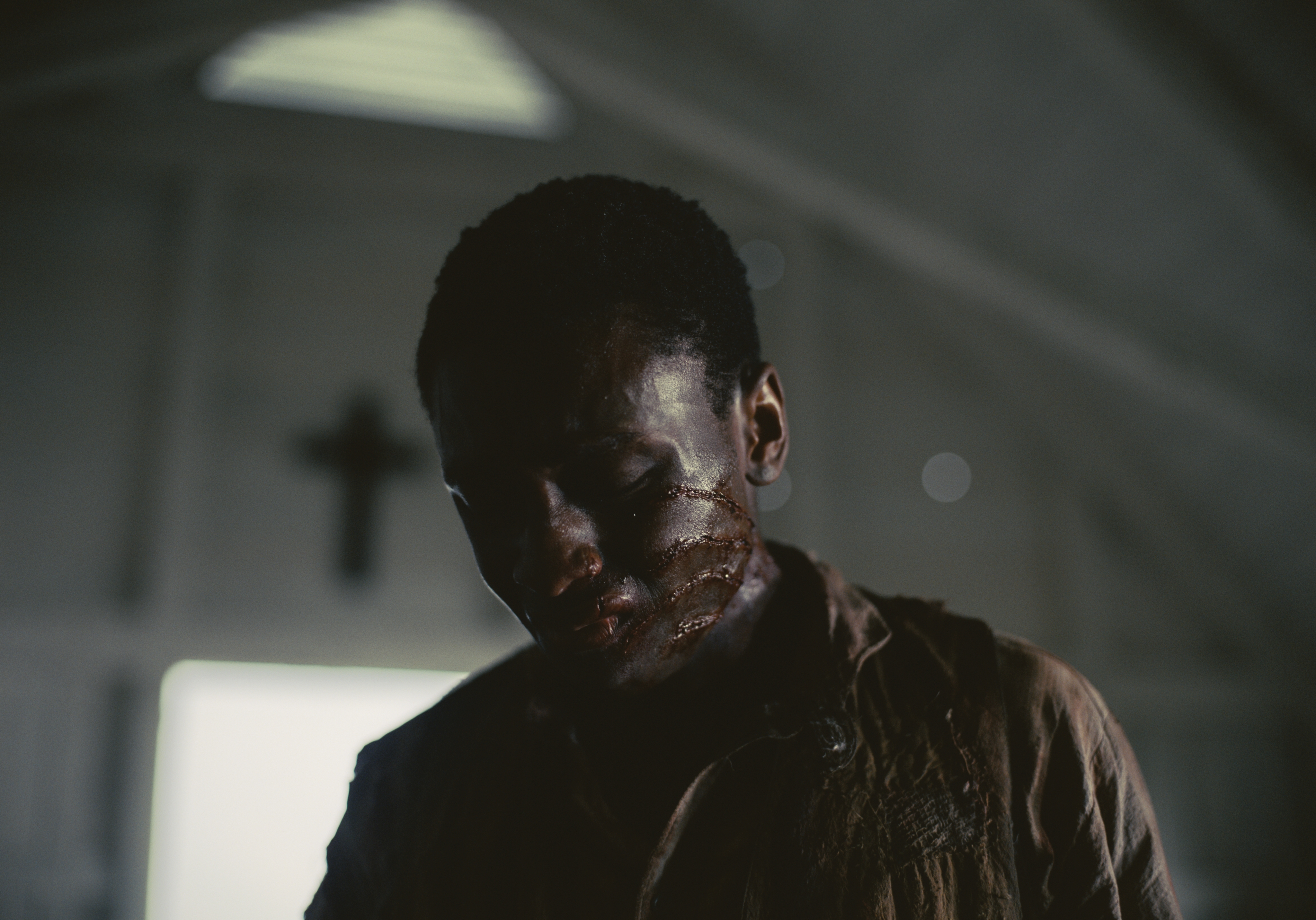
Durald wanted the images to have a similar depth to an online collection of Kodachrome photographs, shot on slide film, of rural life produced by the Farm Security Administration/OWI in the 1940s. “They have so much clarity and layers to them. It’s important for me that the image has weight to it and feels heavy and textured. It was great to work with a bigger negative and keep my shadows dense.”
She spot metered her subjects at 2 stops under her shooting stop, and rated the film at 500 ISO. “We were brave with darkness and underexposure. The quality of the black level is important to me, as are the various skin tones of our diverse cast, which I wanted to look radiant and have depth. Our colorist, Kostas [Theodosiou at FotoKem], was amazing in the DI at protecting our dusty black level and our filmic look throughout.”
The Big Easy
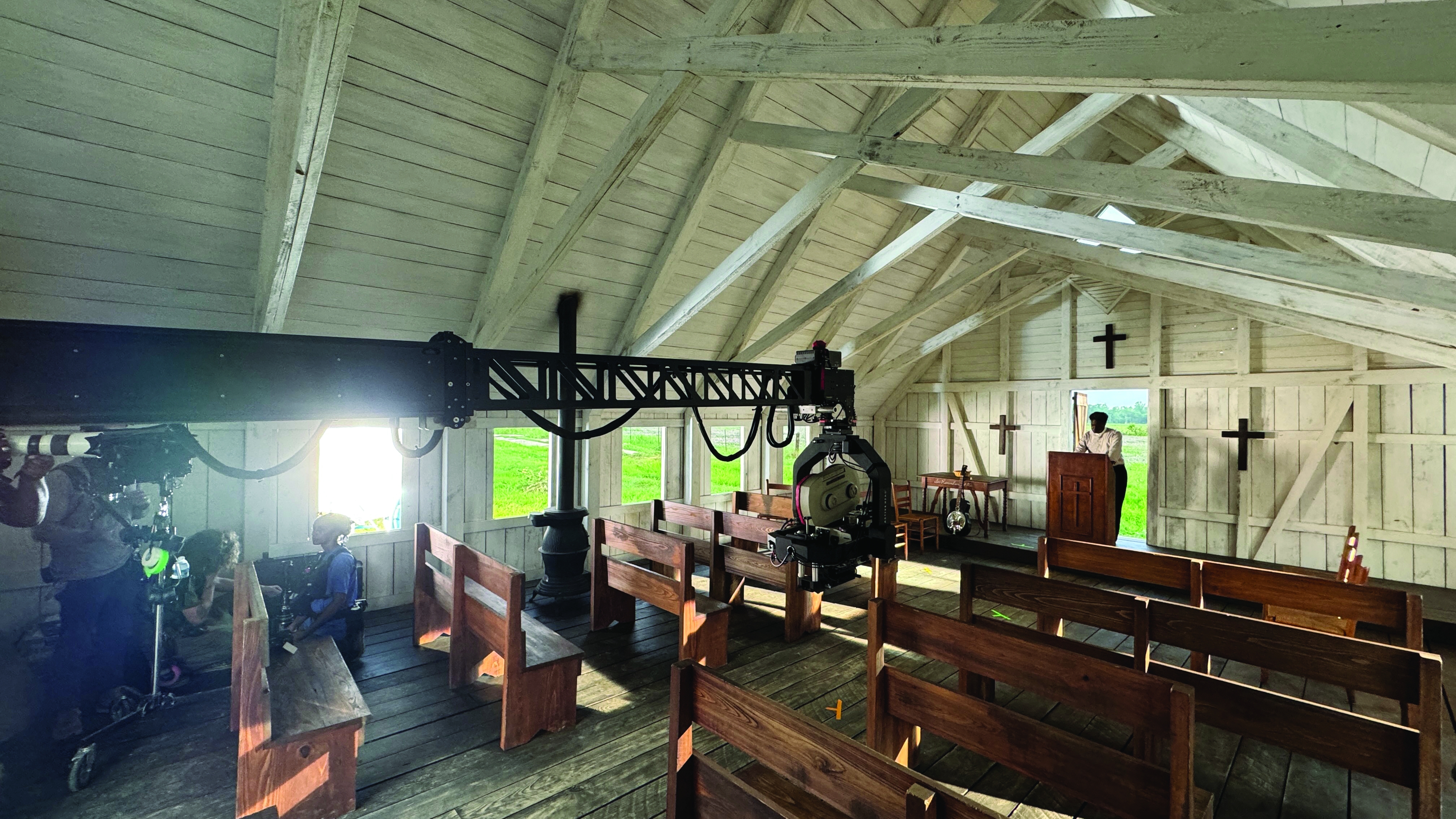
During two months of prep at Second Line Stages in New Orleans, color was the focus of discussions and testing involving Durald, production designer Hannah Beachler and costume designer Ruth E. Carter. The overall palette is somewhat saturated, with a preponderance of blacks, browns and blues contrasting with the white of the cotton fields and the church where Sammie’s father preaches. A warm, golden glow is often in the mix.
“Ruth is storytelling with costume and texture, and with Hannah, who built many sets for this, there’s so much storytelling in the way a structure was made and which way it faces, as well as the treatment of the wood,” the cinematographer says. “I wanted to make sure we were highlighting those intricacies and allowing their work to shine.”
She adds, “To have three Black women as heads of departments on a big movie is rare, so I don’t take that lightly. It’s important for us to make sure these types of stories are being told properly, and that we give our ancestors something to be proud of.”
Watch: Autumn Durald Arkapaw, ASC and Ryan Coogler on Sinners (Interviewed by Lol Crawley, ASC, BSC)
Durald notes that about 65 percent of the film was shot on stage, while about 35 percent was captured on location. The crew shot location work in Donaldsonville, Thibodaux and Braithwaite. At times, these days were fraught with challenges, including triple-digit temperatures and the need to haul tons of cables and equipment for miles amid unfriendly wildlife. (Key rigging grip Domenic Pacino and rigging gaffer Jason Fitzgerald organized that effort.) In addition, unpredictably severe springtime weather caused delays and destroyed some sets.
The movie opens with an Imax sequence showing Sammie, wounded and in shock, driving to his father’s church, and then flashes back to the previous day. (Imax scenes are not restricted to horror and action; they also include respective sequences featuring a reunion between Smoke and his lover, and a cameo by real-life blues legend Buddy Guy.)
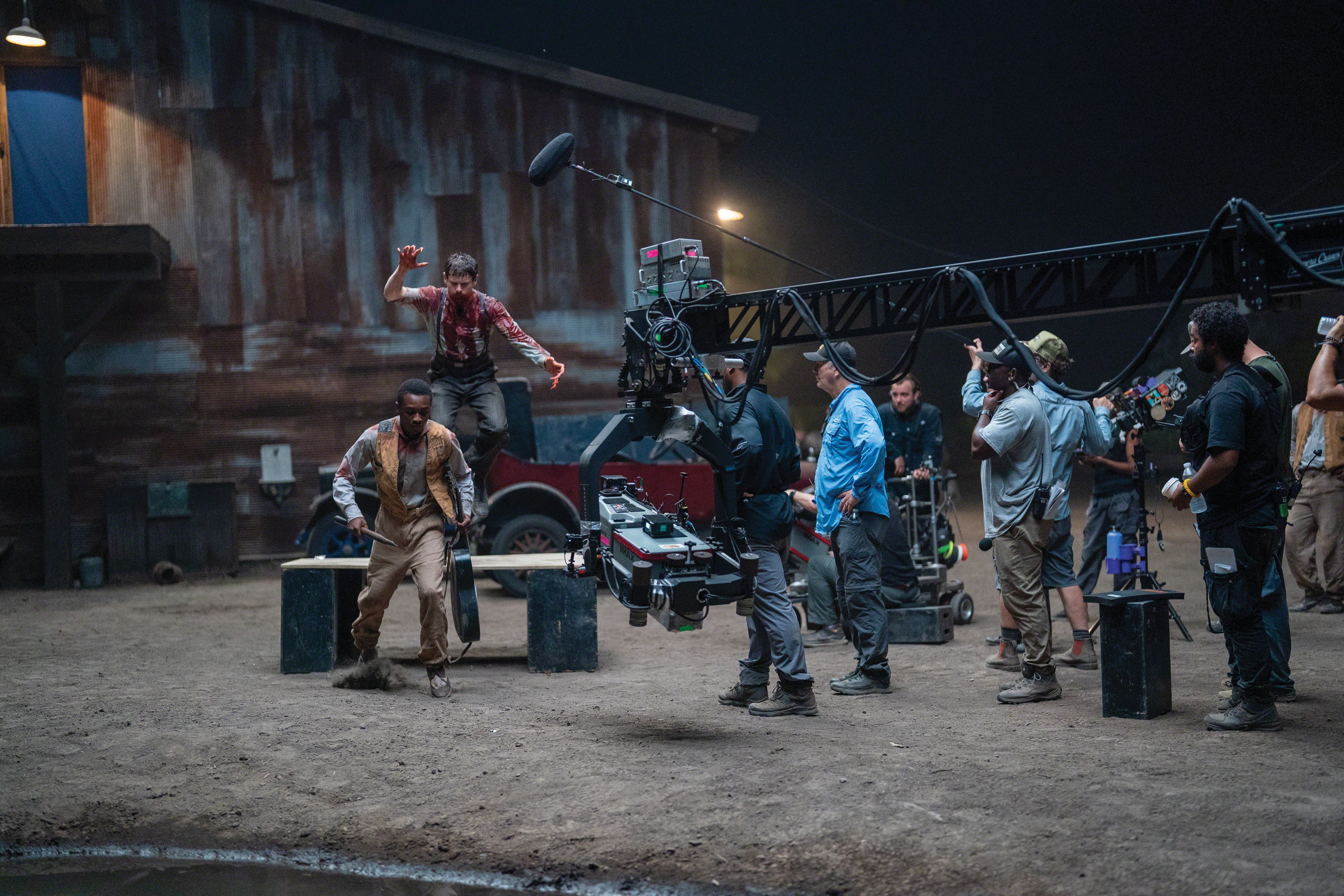
An Imax MKIV mounted on a MovieBird MB50XL crane was used for high-frame-rate work, shooting 40 fps for a sequence in which Smoke approaches the camera firing his Tommy gun at a group of Ku Klux Klan members. Durald also shot high-speed on a fiery battle between Sammie and head vampire Remmick (Jack O’Connell).
Ultra Panavision Oner
Coogler appreciates oners, and Sinners features a notable example early on. In the scene, Smoke goes to the local grocery store to request some signage for the juke joint, which sends Lisa (Helena Hu) across the street to retrieve her mother (Li Jun Li), who then walks back to the grocery store with her.
The filmmakers initially planned to shoot this dialogue-heavy sequence on the System 65 Studio, but the rickshaw/remote head rig they devised for the camera proved too unstable on the location’s bumpy dirt road, so they went with the lighter System 65 High Speed on a Steadicam.
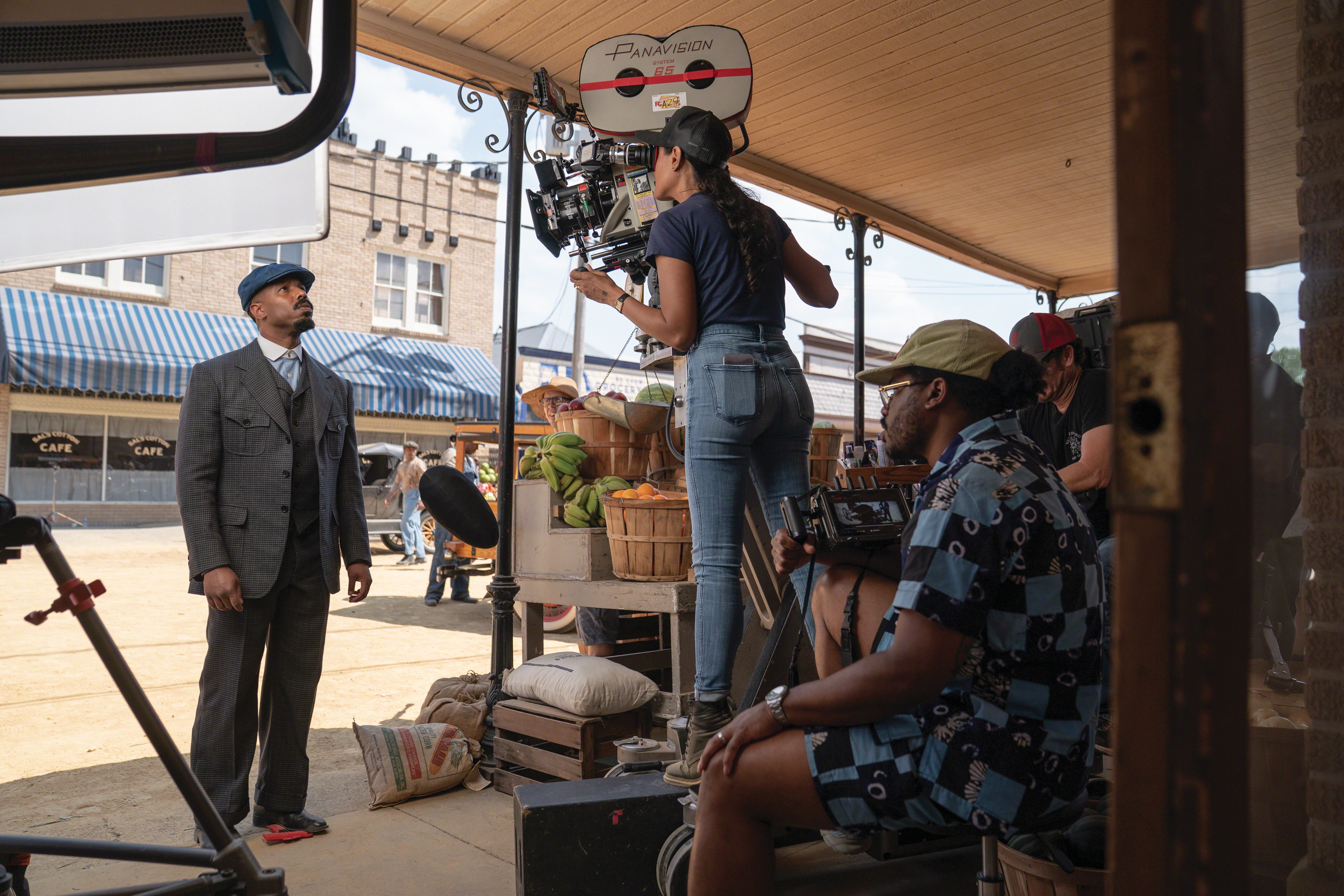
Durald tapped Steadicam operator Renard Cheren, with whom she had worked on commercials, for the heavy lifting. “They have to carry much more weight in this format, but also keep the camera very smooth and frame perfectly,” she notes. “It was Renard’s first time flying those cameras. He practiced in prep and did a beautiful job on many sequences.”
There was scant margin for error in maintaining focus on the shot. “I had a little monitor that allowed me to follow and see the shot,” says 1st AC Ethan McDonald. “As I was tracking with them, it became a question of, ‘Are we with the daughter? Are we with the mom? When do we trade?’ We were all moving and trying to keep ourselves and our shadows out of the shot.”
Durald and gaffer Brian Bartolini lit the grocery shops with overhead soft boxes containing LiteGear LiteTile LEDs through Full Grid. “Shooting from inside-looking-out windows is always the hardest thing for key grip Miguel Benavides and me, because we need to bring up the ambient indoor light level to match the exterior ambient level,” says Bartolini. “Most DPs and directors want to face looking outside because there’s more depth in that direction. So, the set ceiling is the only place to put the lights, and you have to hope the camera never sees them.”
Moving back and forth from interior to exterior also required Durald, at a monitor, to execute iris pulls while McDonald chased after the actors. The effort the shot required was worth it, she says. “It gets the movie’s energy up and helps create excitement as [the brothers] get the juke ready for its opening, and also gives the viewer a good sense of the town. Achieving that shot was very important to Ryan.”
The Juke Joint
Then there is a 3-minute-20-second sequence — five shots stitched together — at the juke party. As Sammie sings the blues, the Imax MSM 9802 moves around the room on Steadicam, capturing the patrons, but also, in a surreal twist, musical figures from the past, present and future — Sammie can apparently conjure such spirits, and they include a hip-hop dancer, a Bootsy Collins-type player and a DJ at a turntable. The camera then goes to Sammie and tilts up to reveal a burning roof — the house is figuratively on fire, a CG effect created using a fiery Imax plate as reference. The sequence ends with an exterior dolly pull-out showing the revelers dancing in the imaginary ruins of the burning mill.
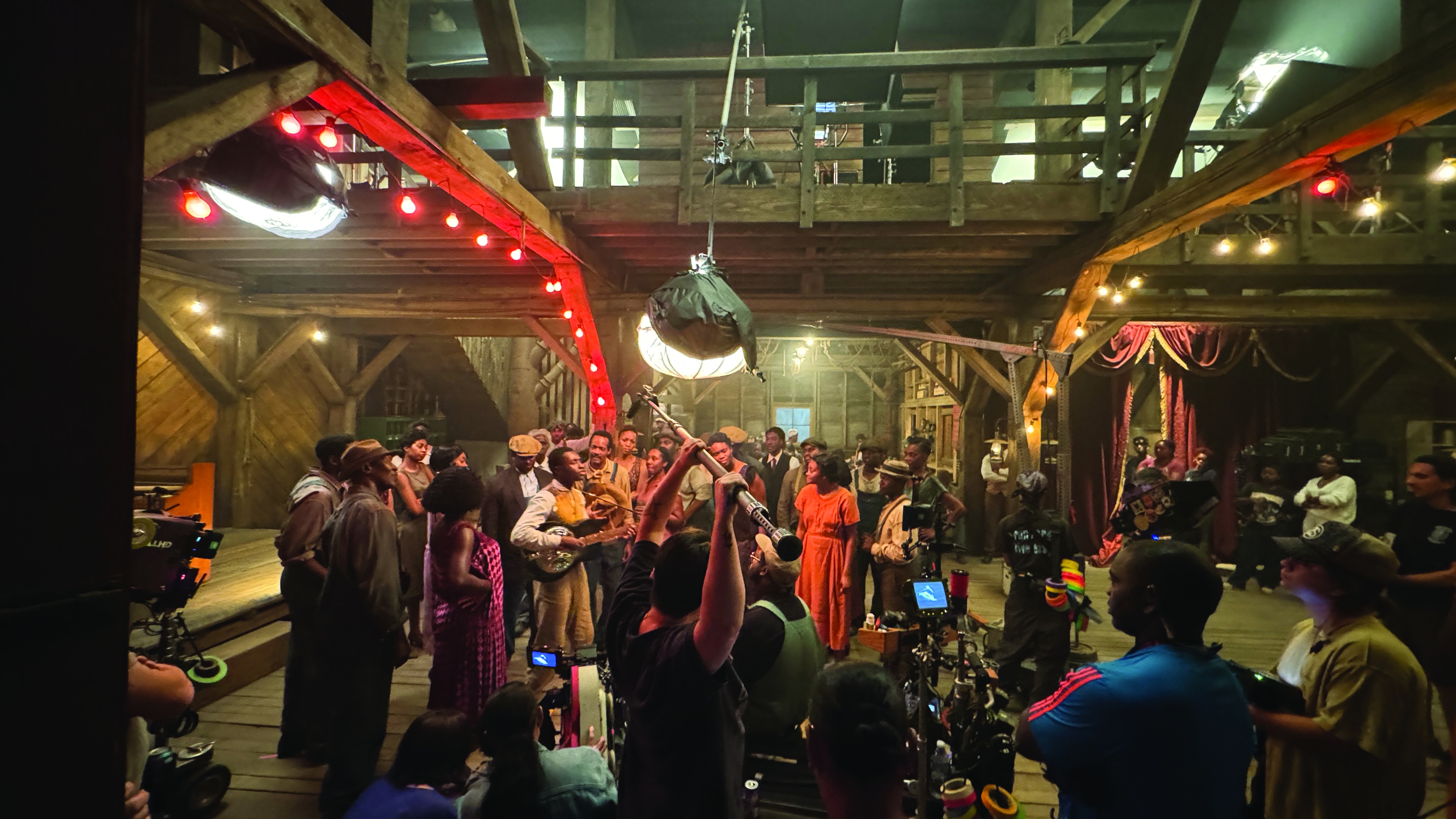
To capture all of the action, the floor of the juke had to be clear except for the performers, Cheren and a spotter who helped him navigate the crowd. McDonald pulled focus from up on a catwalk. He notes, “That shot has many moving pieces that never move the same way twice, so as I watched it unfold, I couldn’t be too rigid. I had to think of what the viewer would want to see, because Imax has a very selective focal plane. In one of my favorite moments in the entire sequence, we circle the crowd and come to a clearing. Depending on the timing, we might have a clear shot of Sammie or one of the dancers. If I decided to focus on Sammie in the mid-ground, I might have missed the ballerina that blasts into frame camera left — but if I held focus in the foreground too long on an empty frame, it might have felt like a mistake. After conversations with Autumn and Ryan, we decided to let the ballerina bring us back to Sammie, where the journey all began. The result is a much stronger shot that ties all of the elements together.” McDonald also had to reload the camera after each 75-second take. “I’d run down the stairs, and the camera threads from the top, so I’d climb up a ladder to get my hands in before lacing it up for another take. It was such an adrenaline rush!”
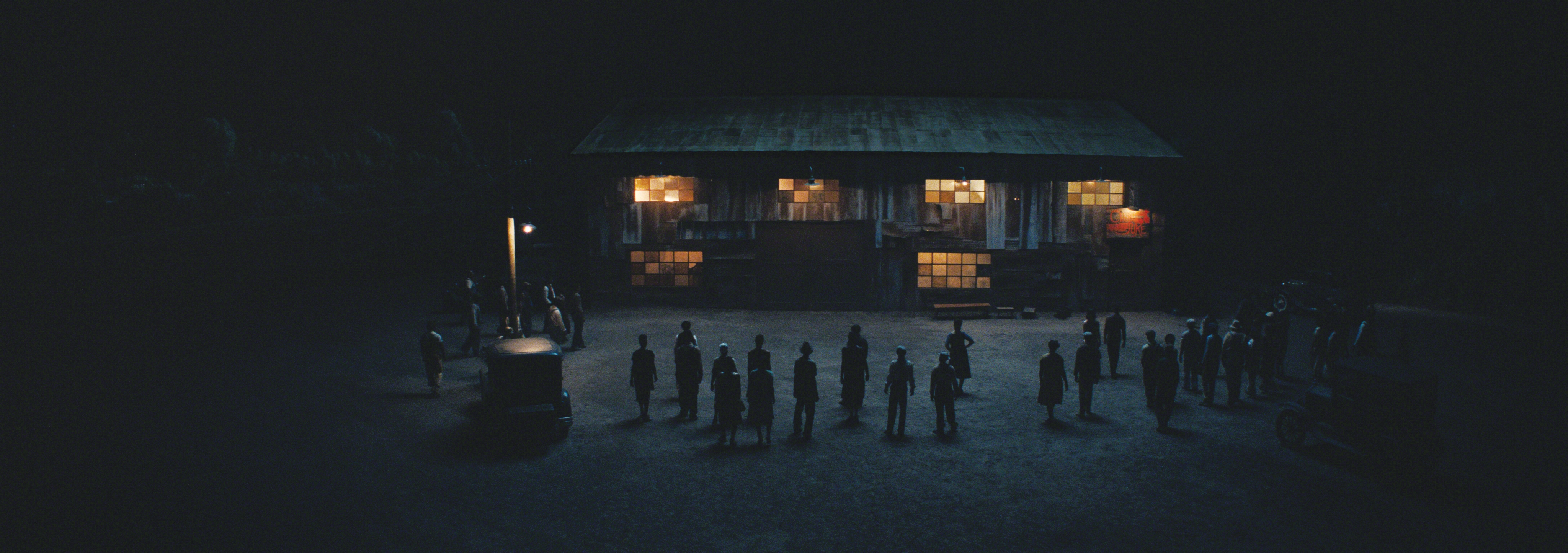
The juke is where the latter half of the story unfolds, and eventually, Smoke and others have to barricade themselves in to avoid the vampires. The exterior was a three-walled set built on a former golf course. The interior, built at Second Line, was the production’s largest set and where the last few weeks of shooting transpired.
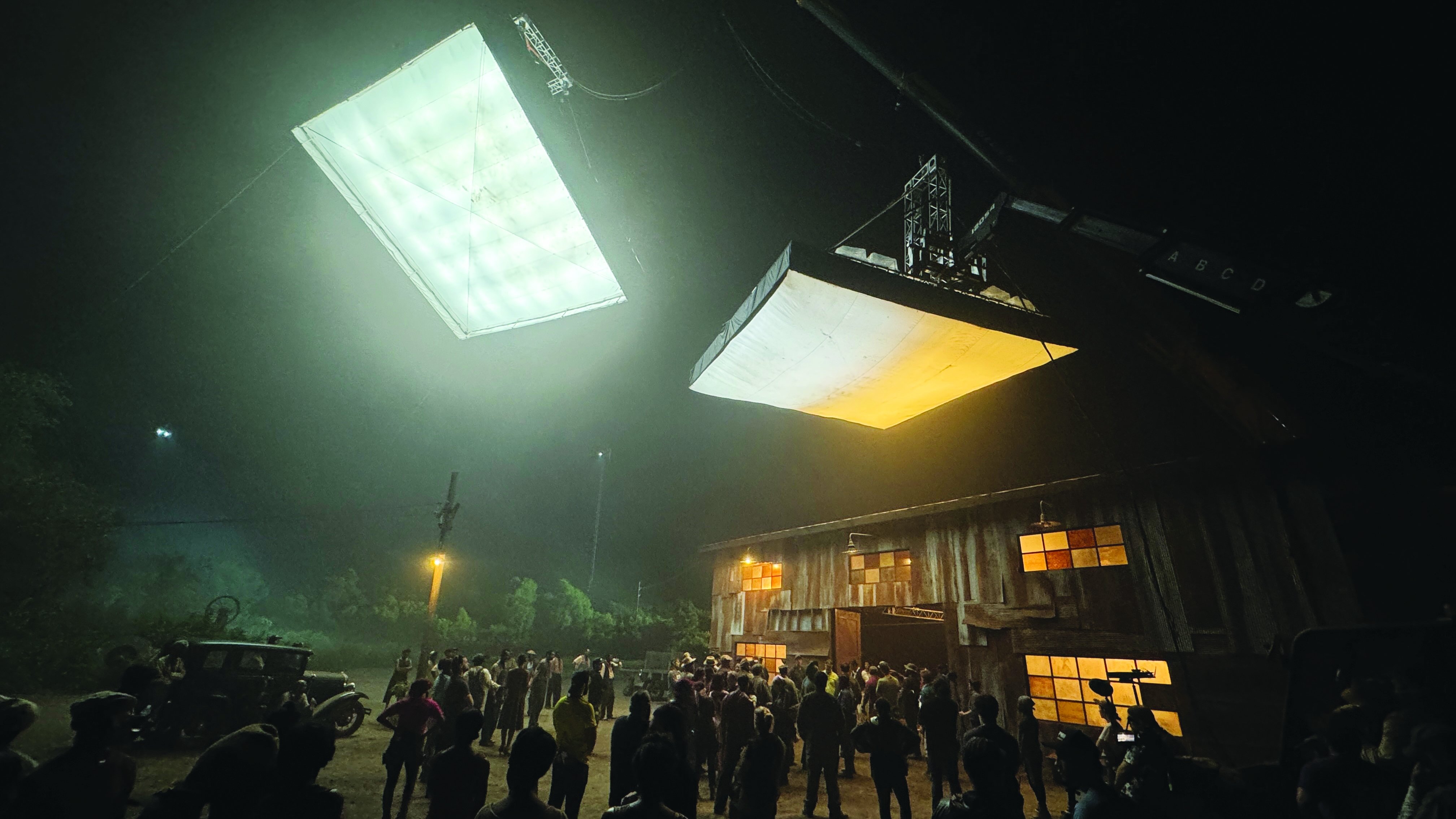
The interior lighting was a combination of toplight and practicals. “It was important for everything to feel real, not lit,” says Durald. “In the real space, there would be practicals above you or sitting on tables, so toplight felt right. In 1930s Mississippi, not everyone had electricity, so we have a scene [showing them] tapping into the electric line, which allowed them to string some incandescent bulbs in the juke.”
Durald and Bartolini determined the best sources to match those practical bulbs and lanterns were 19", 22" and 30" Jem Balls double-diffused with unbleached muslin, which were hung throughout the set and controlled with Variac dimmers.
“We used motivated firelight inside the juke joint from wall sconces and hanging kerosene and oil lamps,” Bartolini adds. “But our main motivated light came from the hanging incandescent string lights, or the can lights on the stage. The toplight gave Ryan and Autumn freedom to turn the camera in any direction.”
Ambience was provided by Arri T12 Fresnels bounced off unbleached muslin in the ceiling. The lights were gelled with 1/2 CTO to obtain a 2,300K hue. Above the ceiling were 70 Arri SkyPanel S60-Cs set at a moonlight 4,700K temperature.
“Making the Best Shot”
When Steadicam was not called for, Durald operated the A camera. “It’s important for me to light from camera and look through the eyepiece to get an instant view of the actors’ performance,” she says. “Ryan likes to sit right next to me, and when we cut, we discuss the take.” B-camera operator Josh Medak also captured the action. Noting Coogler’s preference for running a second camera, Durald says, “There are so many amazing performances not to miss. But it’s important where you put the B camera not only for performance and storytelling, but also for lighting. We like to get the right amount of shots to cover the scene, but we’re thoughtful about them.”
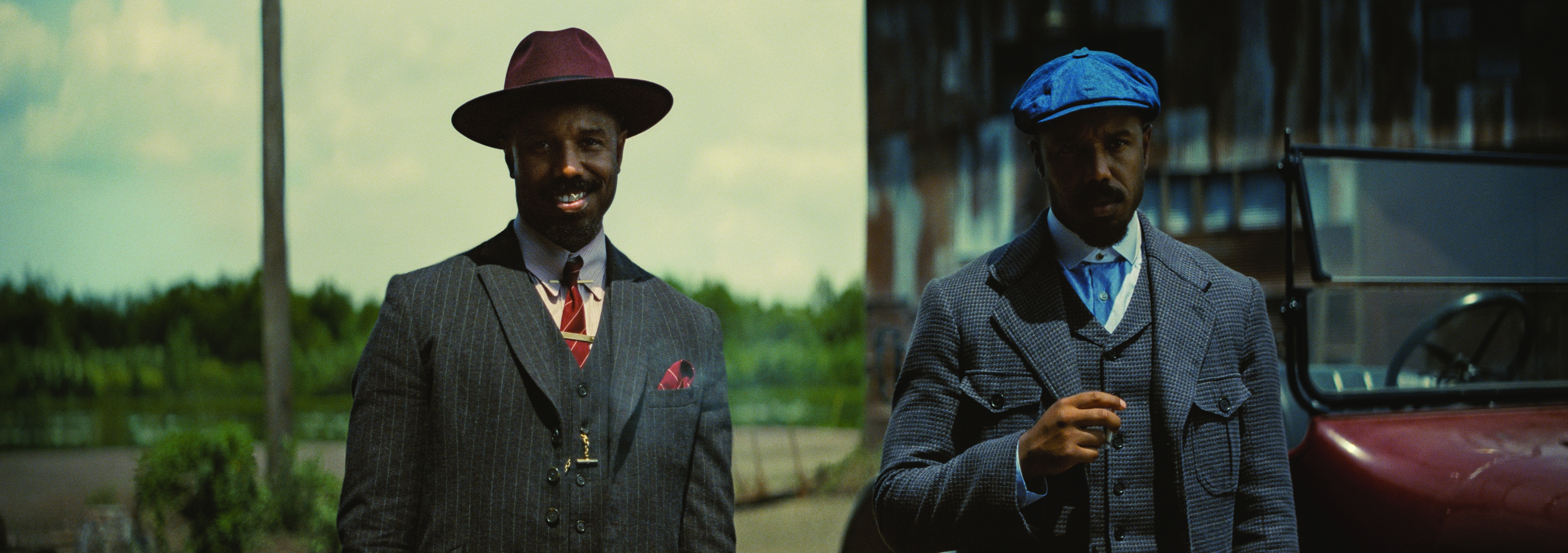
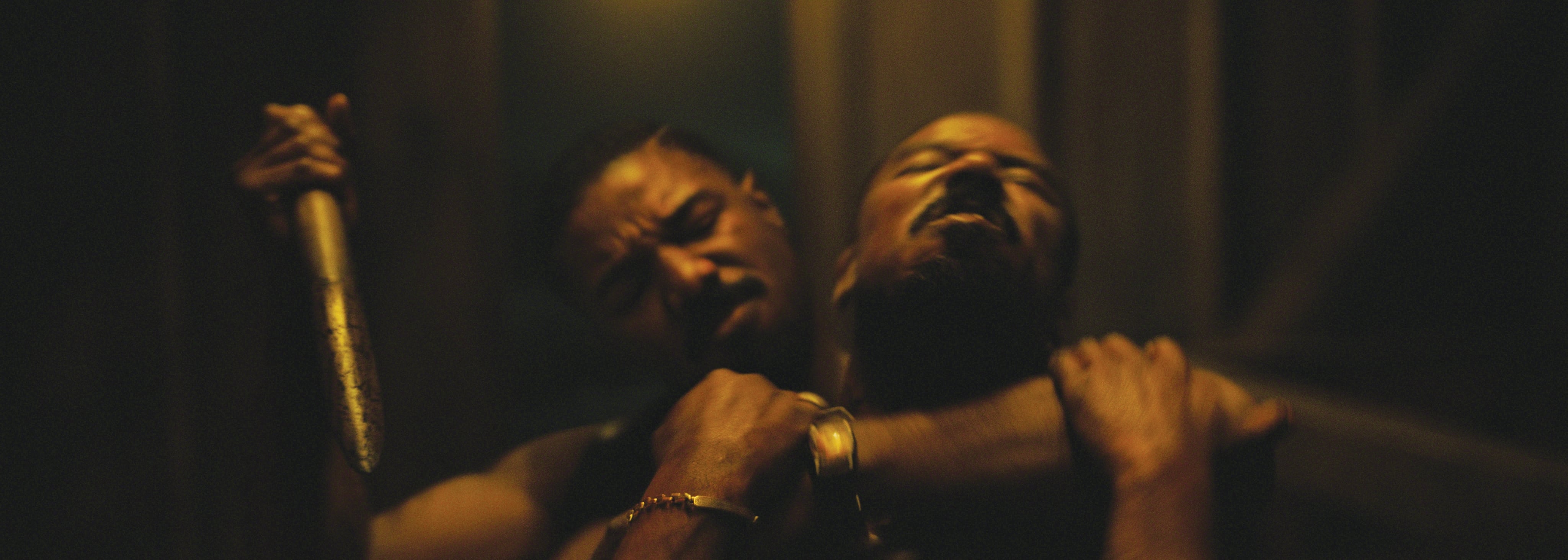
Twinning Jordan was accomplished with a combination of split-screens, body doubles, motion control and a custom HaloRig for complex interactions. A 25' TechnoDolly enabled repeatable moves for dual shots of Jordan, which were composited in post. “Our HaloRig’s 12-camera circular body rig captured 360-degree head-performance reference data,” says Durald. “This footage was then used to help seamlessly replace the head of a carefully matched body double with his performance. All shots were supervised by visual-effects supervisor Michael Ralla, who prioritized natural blocking and minimal constraints. Coordination between all departments was essential, especially on our demanding twinning days.”
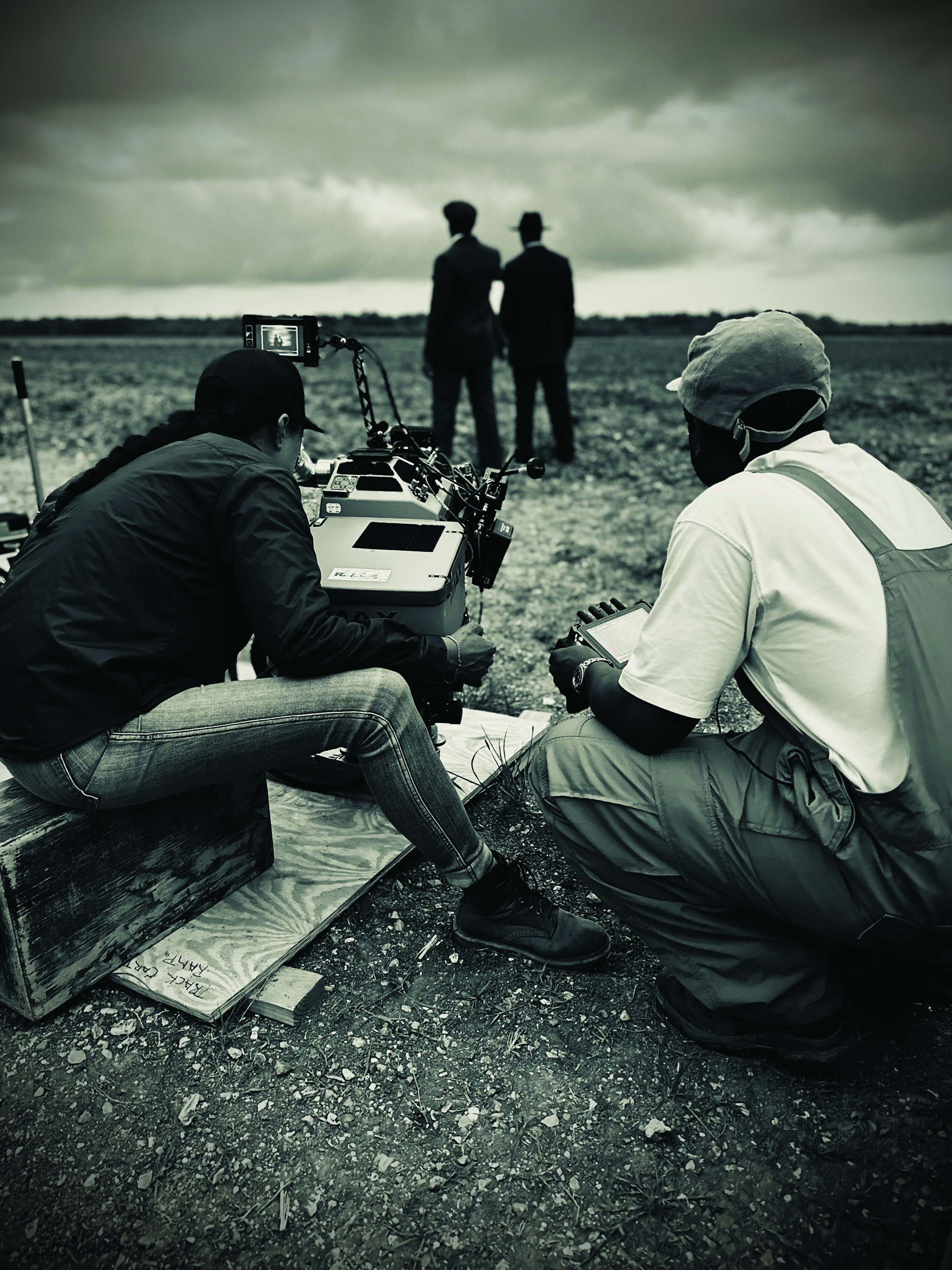
Despite the project’s technical complexity, the filmmakers embraced every challenge it posed. “Whether it was Steadicam or crane work, we didn’t let the format and the large cameras weigh us down,” Durald says. “We were really just concerned about making the best shot. Ryan is a fantastic leader and was game for anything. To be able to think like that, you have to be brave, inspired, and have an amazing team. I don’t feel this story could have been told in any other format. It was meant to be.”
Unit stills by Eli Adé, SMPSP. Images courtesy of Warner Bros. Pictures.
Tech Specs
2.76:1, 1.43:1, 1.90:1
5-perf 65mm, 15-perf 65mm
Cameras | Panavision System 65 Studio, System 65 High Speed; Imax MSM 9802, MKIV
Lenses | Panavision Ultra Panatar, custom optics; Canon EF
Film Stocks | Kodak Vision3 500T 5219, Ektachrome 100D 5294
Arresting Images: Ryan Coogler on Sinners
American Cinematographer: You initially wanted to shoot this movie on Super 16mm. How did that evolve into such a different approach?
Ryan Coogler: When I wrote the script, I knew I wanted to shoot on film, and I knew I wanted Autumn to shoot it. She was working with Gia Coppola on The Last Showgirl when I hit her up. I told her I had just bought a Super 16mm camera and wanted to shoot with that. She said, “Great, I’m shooting 16 right now, and I love it. Let’s go!”
Then I had a phone call with Sean Durkin, who had just directed episodes of Dead Ringers, which also deals with twins, and I asked him how he had worked it. I also talked with his VFX supervisor, who told me he would not recommend Super 16 for Sinners because the gate is so small that the image would not be stable enough for the visual-effects compositing of shots of twins — we’d need at least 4-perf 35mm. So, I told Autumn it would be 35mm.
Then I started researching. This story is set in a unique physical environment — expansive, with buildings few and far between. It’s just horizon and crops as far as the eye can see. You can almost see the Earth curve. It’s an epic landscape. And for our story, [a larger format] started to make sense — the feeling that if something was to happen to you, nobody’s coming to help. It’s the paranoia that isolation can bring. How do I translate this? I talked to Autumn about visual isolation, the stark nature of the horizon, and this wide frame.
Then I got a call from Jesse Ehrman [president of production and development] at Warner Bros., who asked, “Have you considered large format?” He was talking more from the business side of it — the theatrical presentation — because we have to do what we have to do to motivate people to leave their houses to watch something on the big screen.
The bells really went off in my head at the American premiere of Oppenheimer. I had never seen anything like that and felt such an impact from the Imax image. I realized that our epic scale [was suited to that]. Also, we wanted to photograph these Mississippi people from a forgotten time in history clear-eyed, showing the conditions and the reality of that time and place.
I told Autumn we should test for 65mm, and she sent me this email in which she referred to 65mm as bananas. She said, “We could do this scene and that scene on Imax and that would be pretty crazy, and then here, we can go full banana” — Ultra Panavision 70, combining that with Imax. It had never been done before, but the equipment was there for us.
When we went to FotoKem for a screening of large-format prints, I realized 65mm had the texture I had always been after. Seeing footage captured on 65mm and projected on 70mm equipment — specifically Ultra Panavision 70 de-squeezed — was exactly what I was looking for. I told Autumn we had to test all the equipment somewhere flat to test my horizon theory, and she got a crew together and an actor to stand in. We developed that film stock, and man, I was done.
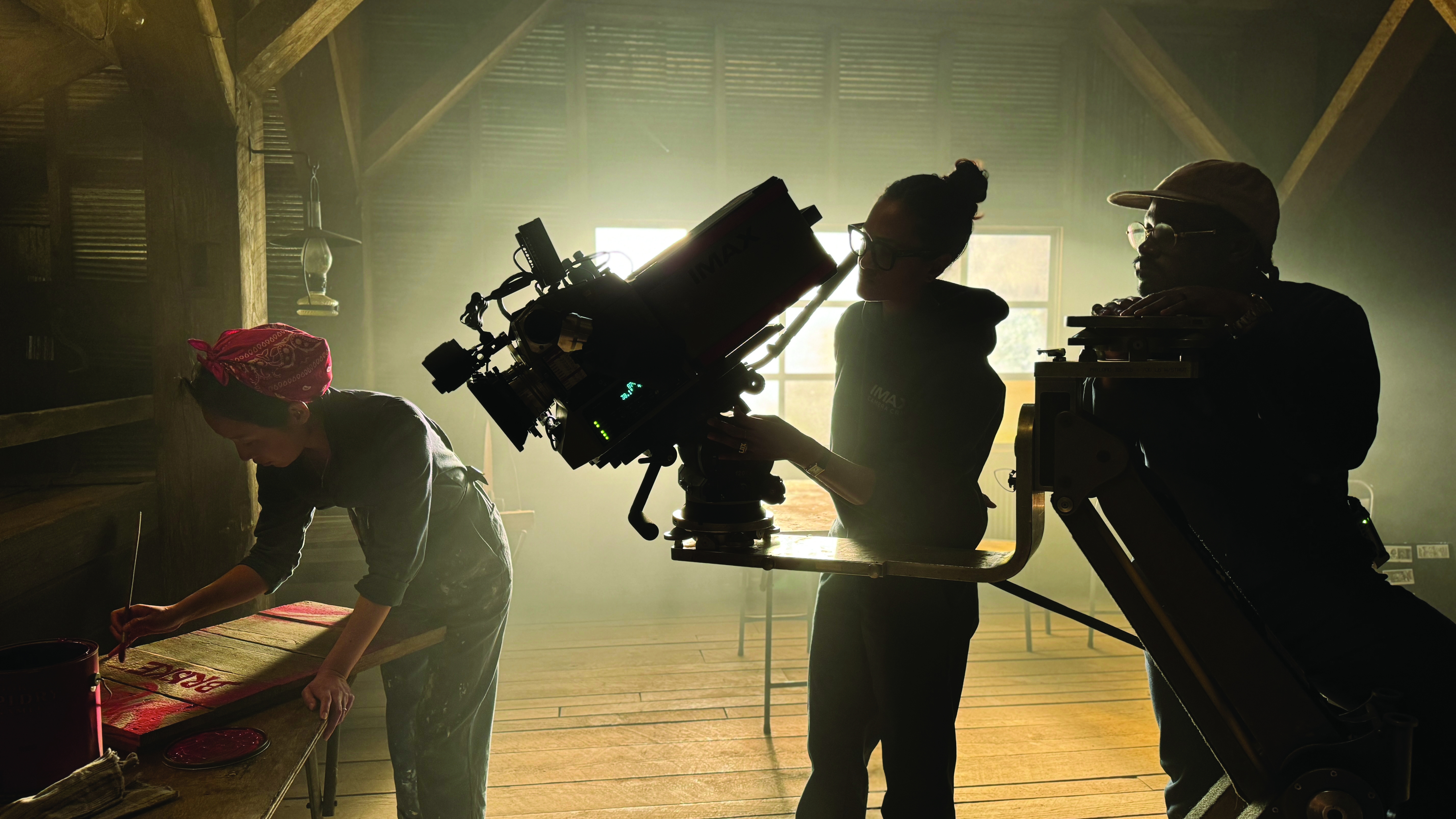
This was your second feature with Autumn. What do you think makes this partnership work so well?
We spent a lot of time on Wakanda Forever getting to know each other. I went into that movie with an open mind. I had never shot anamorphic before, and I was open to it. When I made that movie, I was very vulnerable because of the reality of our situation [with the death of star Chadwick Boseman], and Autumn took good care of the film and good care of me. We talk about images in the same way: from an emotional place. And she’s very ambitious. She wants every image to be great. She’s honest and passionate.
On this movie, it was very cool with her operating the film cameras. I’ve worked with some of the best operators in the business. When you shoot digitally, you’ve got the DIT, multiple cameras and operators, and it can get impersonal and distancing. But here, it was fantastic having her on the camera right there with me and the actors. And her use of underexposure is so unique. She makes an arresting image. She sees things in a way that can be unimaginably beautiful. Sometimes she’ll call things out that I can’t see yet. She’ll say, “That shot we just did, make sure you use it.” And I’ve learned to trust that.
— Mark Dillon