The State of Shooting on Film — Part I
Is shooting on film an art about to die? In this first installment of a two-part story, we speak with artists, technicians, engineers and advocates working to secure the medium's future.
For the first 100 years of filmmaking, almost every image that appeared on a film screen was etched with light on celluloid strips coated with a photochemical emulsion. Hollywood’s adoption of digital cinema cameras in the early 2000s completed the paradigm shift that started with television. Now, the majority of films being produced are electronically captured.
For all of the truly marvelous gains of this advancement — new sensors, new techniques, new workflows, new ideas — filmmakers have feared there is something essential to their art that will be lost as labs shutter, film stock producers cease production, and existing film cameras break down, all of which contribute to analog film's new status as the exception, rather than the rule. (Arguably, it's an upgrade.)
Paradigm shifts and technological leaps are nothing new for the motion picture industry: synchronized sound, color photography, larger formats, smaller formats, widescreen, 3D, and faster film stocks are just the tip of the iceberg. Even now, as the film industry grapples with the promises and perils of artificial intelligence, many artists, technicians, engineers and advocates are diligently working to secure a future for shooting on film.
VINCENT TERLIZZI
Executive Director
THOMAS ASCHENBACH
President
Colorlab
Founded in 1972 by Ernest Aschenbach & Russ Suniewick, Colorlab began offering 16mm film services for the Washington, D.C. motion picture community. Since then, hundreds of millions of feet of film have passed through their facility in Rockville, MD, and the business has expanded into a global full-service laboratory committed to the acquisition, presentation and preservation of motion-picture film.
“The future of film is whatever people make of it.”
Having weathered the ups and downs of the digital cinema revolution — film was “dead,” and now it’s “back” — how’s business now?
Thomas Aschenbach: We used to do a lot of 16mm work, because it was the format for documentary, industrial, and corporate films, especially before video became so prevalent. One of the reasons we are still here is our focus on preservation. A lot of our business is preserving 16mm films and making new prints from older elements. 16mm will still be used for things where it makes sense cost-wise — music videos, commercials, and some independent feature films — but it’s definitely dropped off from where it used to be.
Vincent Terlizzi: I’ve been at Colorlab for almost 11 years now, and the pivot to preservation and our proximity to the Library of Congress, Smithsonian, and National Archives definitely helped us make that switch from running a three-shifts-a-day lab. We still make theatrical prints, and there are plenty of experimental filmmakers who still do the full photochemical workflow, cutting A/B rolls and creating 16mm prints for exhibition, but the most popular stuff at the lab now are probably filmouts and scanbacks. So, if you’re shooting digital, recording to film, then scanning back to digital, 16mm is a cheaper option than 35mm, and it’s been very popular.
Aschenbach: Some clients want to do a strictly photochemical process — wet gate contact prints and everything — with no digital intervention at all. Some clients want to scan their work for digital restoration, like dust busting or scratch removal, but they still want to exhibit on 16mm and preserve it on 16mm.
What’s your process for that?
Aschenbach: We record to duplicate negatives like 3242 and 3234, which are the color and black-and-white negative stocks, with a custom 16mm film recorder built at Colorlab. The difference in stocks now compared to some of the older stocks, particularly in 16mm, is where it matters. Recording to the intermediate negative in 16mm gives a good grain structure, relative to how maybe a 35mm camera negative would have looked in a prior-generation series stock.
What about Super 8 and 35mm lab services?
Terlizzi: The Super 8 we see at Colorlab tends to be used for a lot of commercial and fashion work. You’ll see montages with overscanned perfs on the left.
Aschenbach: Super 8 is kind of separate from 16mm or 35mm. You could make a feature film on Super 16 right now and it would look great. As for 35mm, it’s really expensive. So, that’s being pushed to major studio films, music videos and commercials. People either shoot a little bit or a million feet.
Do you see a lot of two-perf or three-perf 35mm?
Aschenbach: Three-perf is just as common as two-perf, if not more common than four-perf at this point, because in the digital world, for presentation, everything is 1.78:1 or wider now. The Netflix standard is 2:1 or 1.9:1, which makes flat four-perf 35mm quite a waste of film. Shooting scope four-perf or two- and three-perf spherical is definitely more ideal.
Is support for photochemical lab equipment getting harder to come by?
Aschenbach: We’ve been in that situation for a long time. Besides our film scanners, none of the equipment manufacturers — Bell & Howell/Philips, Lipsner — still exist, nor do they service the equipment. So, with all our printers, processors, and cleaners, we have to service them ourselves and make parts. I actually service the National Archives’ and the Library of Congress’s film printers and processors because there’s no one else to do it. We do things like that for other facilities, and that’s where the infrastructure for the lab end does exist. You can buy a processor from Photomec or a scanner from Lasergraphics, but you can’t easily get a new rewind, sound recorder, or any of the lab basics anymore. Even film leader, while easy to come by, is priced very high. So, before we get rid of any machine, we strip it down for parts that we know we’ll need later. I do foresee the camera thing becoming a problem in the future, especially at the high-end professional level with cameras like the Arri 416, but our 50-year-old Bell & Howell Filmo that’s never been serviced runs just fine.
Last year, Kodak came out with a new Vision3 stock that incorporates an anti-halation undercoat, replacing the carbon-based remjet backing. Has that impacted your lab services?
Aschenbach: About half the film we process now doesn’t have remjet on it. But we still do Fuji Eterna and expired stocks, so we’ll continue to do the whole backing-removal process.
Terlizzi: A good portion of hobbyists and indie filmmakers buy expired stock every day. For us to not process that anymore would be a real problem, but the future of 16mm is a Kodak question, and everybody else is working to support it.
Thomas, where did you learn how to repair and service the equipment that you have? Are you training other people to do the same thing?
Aschenbach: I have a degree in computer science, and my father was one of the founders of Colorlab, so I’ve worked here since grade school. When I was young, you’d call Bell & Howell for a replacement board, and they’d send it, you’d put it in, and that was it. Now, it’s about repairing old stuff and figuring out how to make things more future-proof, but I’m not training anyone to read the schematics of 1970s electronics because I don't know if it would be a worthwhile effort.
If you quit Colorlab tomorrow, is there anyone there who can do what you do?
Aschenbach: Maybe. That’s what I mean about future-proofing. Instead of just working from old schematics and buying new components, I try to show people how a machine works and explain its more abstract functions, because that’s the harder part to grasp. For example, in any film printer, you have a light valve, so there are a million ways to modulate the amount of light coming through.
Terlizzi: Colorlab has just under 30 employees, and I would say a good 10 to 20 percent of us have been here for decades. We get some of our interns from American University — I'm an adjunct there — and we’re training those interns and new hires in the basics. Not how to fix a printer, but how to use an ultrasonic splicer and how to tell the difference between an internegative and an interpositive. There are certainly people in this world who know how to do it, but you’re going to need a group of people to do it. So much of it requires knowledge not only of mechanical and electrical engineering, but also of specific camera operations and post techniques.
And you have the benefit of being able to do all of this in-house.
Aschenbach: We can do the entire post-process from end-to-end, including processing camera negatives, film timing and printing, and soundtrack recording, which requires D97 black-and-white processing. We also have 16mm and 35mm optical sound recorders, so both 16mm and 35mm negatives, soundtracks, and prints are all done in house within a day or so. For 16mm color prints, you have to applicate the track, which means retaining the silver for the soundtrack area to develop. Each of these steps is an essential part of our lab workflow.
Do you also have your own machine shop?
Aschenbach: We’re able to do a lot of development and fabrication in-house. We have a machine shop, a CNC lathe and mill, and 3D printers. People want to see their footage right away, so when a machine goes down, have to get it back up and running immediately. We can’t say, “We need to order a part, and it’ll be here in two weeks.”
What do you think the future of film is?
Terlizzi: The future of film is whatever people make of it. If people keep buying it like they are currently, I would assume Kodak will keep making it. Every week, the shelves at Colorlab are full.
Aschenbach: I think the future is promising. The most interesting thing that affects 16mm film production is that for first-run print distribution this past year, there are more 70mm prints going out than 35mm prints, which is kind of crazy. 65mm is pure, high-quality image capture, and if you want it to look not digital, I see 16mm and Super 16 as having the look that people think of when they think of film. 35mm can seem almost too clean.
It’s better that all these options are available. If you have the budget for 65mm, you can shoot it. If you can afford 16mm, you can shoot 16mm. It’s just another tool in the toolbox.
Terlizzi: There’s a lot of film that currently exists in the world, regardless of new production. And Colorlab is close enough to all the major libraries and archives to keep us busy with a third shift, digitizing hundreds of thousands of feet a month. I don’t know the future of original camera negative in 100 years, but in 100 years, people are still going to be digitizing film.
VANESSA BENDETTI
Vice President of Kodak
Head of Motion Picture
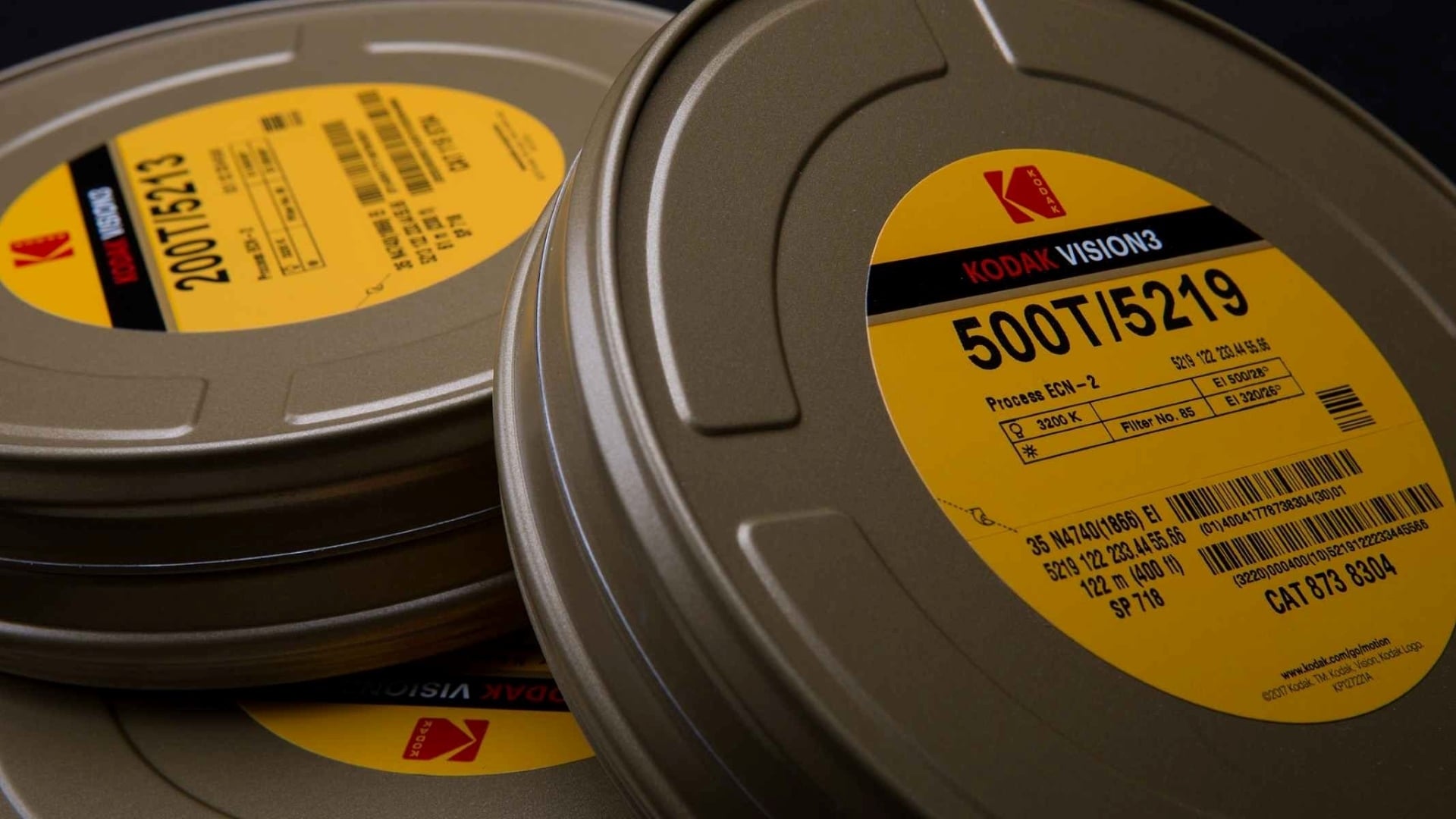
When George Eastman marketed the first commercial transparent roll film in 1889, it enabled inventor Thomas Edison to develop the first motion picture camera in 1891. By 1896, Kodak was marketing film specially coated for motion-picture use. Even with today’s digital technology advancements, filmmakers continue to originate and distribute their images on Kodak Motion Picture Film.
“The film image is still definitively the gold standard...”
How would you describe the state of shooting film?
Vanessa Bendetti: Last year, Kodak sold more motion-picture film than we have since 2014, so film is definitely growing. In 2025, we also doubled our 65mm finishing capacity to meet the increased demand for large-format film, especially with [the new Imax film cameras coming to market]. So, when people talk about the future of film, I’m not worried about Kodak’s capacity to produce it. Our 35mm sales are stable and strong, and 16mm has grown exponentially for years. And one of the most exciting things happening now is the at the base of the pyramid: We’re less reliant on big studio features and television shows because there’s so much growth within the emerging-filmmaker demographic, from student films to music videos to commercials to small indie features.
What’s important to us now is sustaining the skillset to shoot film and showing our partners in the ecosystem there’s value in investing in film infrastructure. New labs are opening around the world and it’s important the camera manufacturers and rental houses maintain their current fleets of film cameras, but also invest in new film cameras. We, of course, brought [our own Super 8 camera] to market, and Imax has shown it’s possible in this day and age, so there’s still intelligence amongst the community to do it.
I think there’s a real thirst for a traditional approach to creating images and the disciplined process shooting on film drives. The film image is still definitively the gold standard, and as good as digital systems are getting at emulating film, it’s pretty hard to match what you get with, for example, a 65mm camera negative. There are inherent, organic qualities to film that no matter how much digital tries to emulate, it’ll never be able to duplicate. I also think there’s something to be said about what’s happening with AI, and the fact that you can authenticate an original image on a camera negative. Then, from an archival perspective, with film you know you can go back to the original camera negative and rescan to whatever the current delivery requirement is.
You mentioned wanting to foster a certain skillset. Where does Kodak stand now, in terms of that initiative?
We’re really just starting to reinvigorate that part of our strategy and find ways to offer more education to filmmakers. We’re a small team now, and for the first five or six years I was here — I’ve been at Kodak for almost 10 years, now — our focus was really just getting our feet back under us. After Kodak’s bankruptcy and the threat of the factory being closed, there wasn’t yet a clear path forward for film, even when they decided to keep it running. I don’t think anybody knew exactly what that looked like, or how long it would last. So, there was a lot of effort just to make sure we could sustain manufacturing and continue to meet demand. Then there was a pandemic, so just in the last few years are we able to really focus again on how we can support the medium into the future, above and beyond providing film.
Education is a part of that. We want to create an online resource on the Kodak website, like our lab locator, where students can see which universities, local community colleges, and other programs are offering an “on-film” education. In addition to that, we have initiatives with Arri Rental, including 16mm loading classes at the B&H Bild Expo. We partner with Panavision on their New Filmmaker Program, and we’re working on a “teach film in a box” program, where people in areas that don’t have dedicated Kodak sales staff or resources can put on a workshop with materials provided by Kodak. There’s the reinvigorated Kodak Camera Club, which has been around for more than 100 years, with the goal to bring people together to expand their on-film understanding, and we have the new Kodak House location in Hollywood, where we’re offering filmmaker Q&As and other educational programming. We also recently partnered with Filmmakers Academy to support their new comprehensive course on analog filmmaking.
In terms of the manufacturing and the development of new film stocks beyond the new Vision 3 stock, is there any plan to introduce newer stocks, faster stocks, or bring older stocks back?
Now that we’ve got the new AHU film structure for Vision3 under our belt, I think there will be an opportunity to work on other film products. We get asked all the time to bring back older stocks, but it’s more complicated than people might think. We can’t just pull a formula off the shelf and recreate it. Most of the components that were used for previous iterations of Vision — and even before that — are no longer available, so it would take an entirely new formulation to try to achieve the same sensitometry of those older film stocks. I promised the film-design team I would leave them alone until we got through our conversion to the new Vision3 structure, and now I think there might be an opportunity to explore new products more aggressively.
You mentioned potentially working with companies like Arri on future generations of film cameras. What would that look like?
There’s opportunity to support current efforts to resurrect older camera systems and/or build new cameras by very capable individual filmmakers and engineers who are passionate about film and excited by its growth in the market. With some prowess from Kodak and one of the larger camera manufacturers, we could help to refine and expand their efforts. For example, we’ve been working with Imax to support all of the testing required for their new film cameras, and there’s a constant collaboration between our companies to make this work. I envision something similar for the other formats.
What has producing your own Super 8 camera done for the Kodak brand?
The Super 8 camera program survived because we wanted to show our community of analog filmmakers that Kodak was going to make good on its word. It hasn’t been a financially successful endeavor for Kodak, but that wasn’t its purpose. Its purpose was to offer an accessible tool to people who have never used film. Super 8 is so consumer-friendly, and there's so much interest from young creators, many of whom are making a living with their creations. We wanted to make sure there was an offering for those types of filmmakers and also to bring the format into the current age. A lot of productions are using it for BTS and principal photography, where they’re mixing it with other film formats and even digital photography.
It’s also a gateway to the larger formats.
Yes, for example, not everyone realizes Super 8 500T film comes from the same wide roll as the Kodak 65mm 500T utilized in Imax camera systems. It’s important that filmmakers understand this because they can get comfortable with the various formulations and film speeds in a smaller format. Once you’re familiar with our camera films in Super 8, 65mm doesn’t seem so daunting.
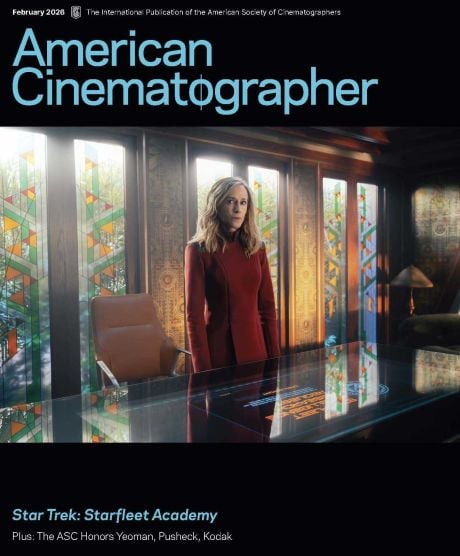
The Eastman Kodak Co. will be honored with the Society's Curtis Clark ASC Technical Achievement Award on March 8. Read here for a profile of the company and its achievements. An expanded version of the story appears in the February 2026 issue of American Cinematographer. Order your copy today at the ASC Store.
ANDY SHIPSIDES
President, North America
ANDREA LEONARD
Director of Business Development
Arri Rental, New York
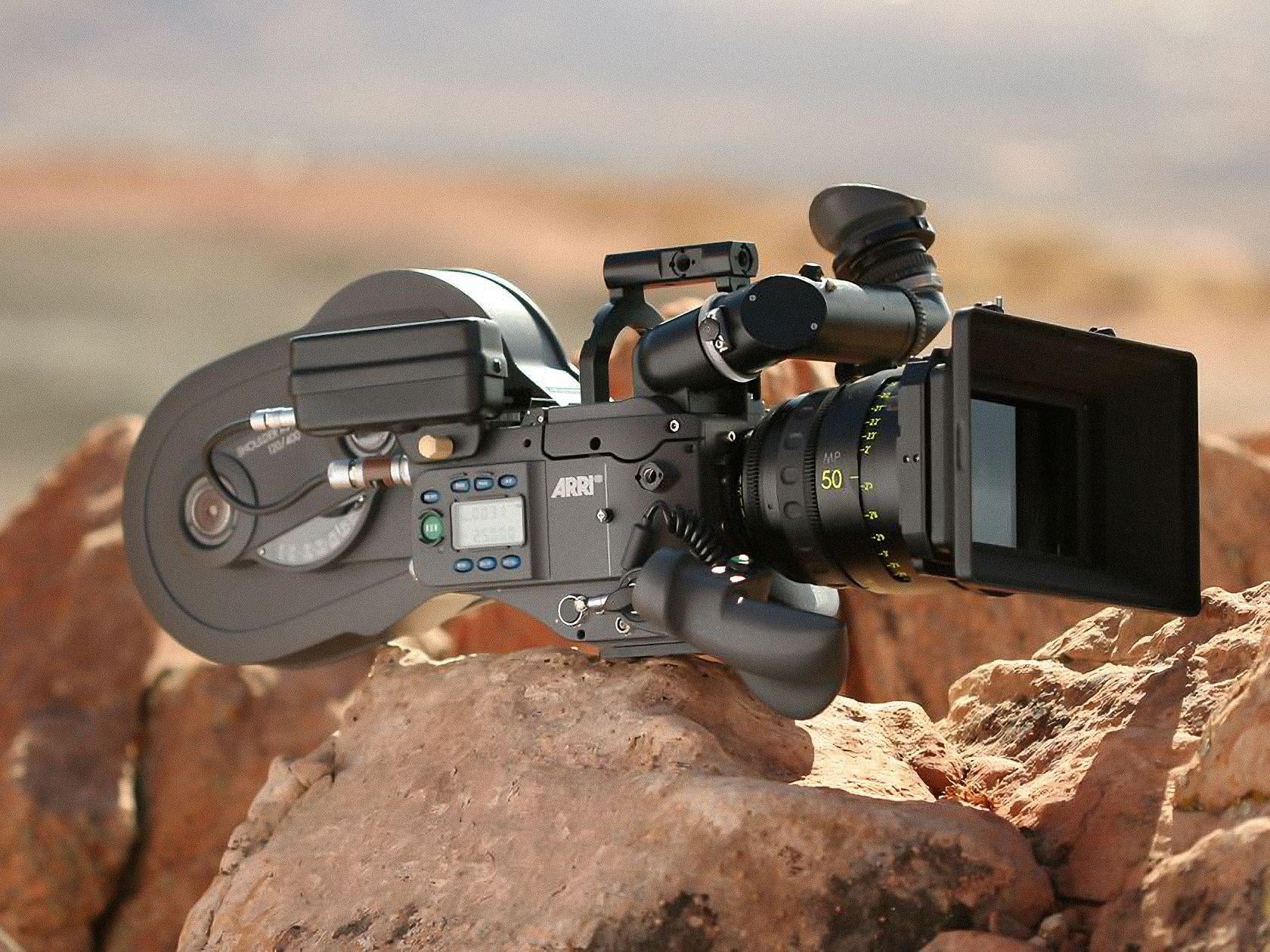
The Arri Group was founded in 1917, as a producer and supplier of professional 35mm and 16mm cameras, later expanding into rental services focused on providing camera, lens, lighting, and grip equipment to the movie, television, advertising, and events markets through a network of rental facilities across North America, Europe and the UK.
“...there’s still a need for film cameras...”
What was the last film camera Arri manufactured?
Andy Shipsides: The Arri 416. It was released in 2005, making it a 20-year-old camera. But since it was the last film camera Arri manufactured, I would argue it’s the most evolved.
Has it been a popular camera?
Shipsides: Absolutely. The demand is really high, especially recently.
Andrea Leonard: I’ve been here almost two years, and they’re constantly going out.
Shipsides: There was one week last year where the whole floor was just 416 packages. We were very, very full and very busy. I think the applications tend to still be for independent movies, music videos, and student films; they’re not generally going for studio feature work, with the exception of something like The Smashing Machine [serviced by Panavision Vancouver], but there’s definitely a resurgence.
Do you have an impression of what’s driving this resurgence?
Leonard: People want to shoot film and they’re trying to find a way to do it with the budgets available. So, maybe some of it is budgetary, but then some of it is them choosing the 16mm format for the look.
Shipsides: It’s interesting, though. I think we’ve seen a lot of two-perf 35mm cameras go out recently, and I think that’s also a budget-driven choice. Every foot of film you’re processing matters for the price you’re paying. So, on some level, it is a budget call. The two-perf thing, to me, represents a step-up from when 16mm wasn’t considered good enough, and a filmmaker would go to two-perf because they couldn’t afford three-perf or four-perf.
Can you talk a little bit about the legacy cameras in terms of support?
Shipsides: The rental division of Arri provides that support. Obviously, the film cameras aren’t for sale anymore, and at least in the U.S., we’re the main service provider for Arri analog cameras. This happens because we have the technicians to do it. It’s mostly just pilfering from one for the other, like with vintage cars. If you want to get an SR repaired, the parts aren’t readily available, so you’ll need another SR to pull from. Sometimes we’re using parts that we’ve literally recovered from dumpsters to keep these cameras alive.
When you say SR, you mean…
Shipsides: Usually the III. There are other vendors that provide repair services for older cameras. Visual Products in Ohio is one of our main go-tos from a collector standpoint. In Los Angeles, there’s Andree Martin, who was Clairmont Camera’s main Arri repair guy before they closed. Now he’s got his own shop, called AM Camera [see Part II of this story].
The thing about digital technology is that old hardware is often forced into obsolescence, even if it still works, because there’s usually something to take its place. But if people want to keep shooting film, they have to keep using older cameras — like the 416, or the Aaton XTR — because there are no other options, which brings us back to the problem of finding parts and support.
Shipsides: There was a point in time when virtually the whole industry believed that film was history, and digital was the future. For economic reasons alone, Arri decided they couldn’t do both and focused all of their research and development on digital. So, the only thing that really continues the film legacy is service, and Arri has held onto service parts for these 20-plus-year-old cameras for a long time — but we're not making more. We’ve looked into recovering and making new parts, but it’s not economically viable because the analog film community is still too niche for that to be a reasonable investment.
Do you think that will ever change?
Shipsides: There are definitely those kinds of conversations happening. Arri is always exploring what filmmakers do with their products. They’re not blind to the fact that there’s still a need for film cameras in the market. The question is, how we can evolve and support that? We’d love to keep the legacy alive, but the economics make it very hard. Arri 35mm cameras cost a quarter-million dollars to buy in the 1980s, and they were selling by the hundreds.
Leonard: We preserve our negatives, so there should be some kind of institutional backing for the preservation of the capture platform. I think it would be great if there was some angel investor or a consortium of cinephiles with money who could subsidize it. That would be amazing, because it could make it economically viable to invest in innovation.
Shipsides: It seems like most of the innovation we see now comes from third-parties building for their own internal development. They’re adapting modern pieces better video taps and updated bracketry. For example, there's a company in the UK called DCS that makes an overlay box you can plug into your camera, and it sends all the camera and lens data along with the tap feed to a monitor. We’re trying to keep our cameras evolving this way so they have some modern amenities.
What kinds of film-camera parts does Arri still produce?
Shipsides: We can make simple things like screws and plates, but electronic boards, mirrors, shutters, and movements, those things are not being reproduced.
Do you think there will be a new Arri camera in the future?
Shipsides: There used to be a market for a brand new half-million-dollar 35mm camera — which is what it would probably cost now — but everyone is buying cheaper cameras. This market push down in price essentially prevents it. It doesn’t mean you couldn’t make a niche, unique product again, but selling even a couple hundred of them would be a stretch.
Imax made a new 65mm camera recently. That’s the first new film camera in a long time. They have a closed-loop audience and they know their market. They’re not making them to sell, but they don’t have to recoup their costs in the way a mass-production company would. We’ve had a similar story with our digital 65mm camera. Imax can make money because they control the whole ecosystem, including distribution. That money can go right back to research and development, which I think is helping the industry a lot.
But if you’re ever going to get to the point where you can shoot with an Imax camera, you’re probably going to start with 16mm or Super 8. The aim of this story is to figure out if there’s a future for that trajectory.
Shipsides: Arri will continue to try to service their film camera fleet indefinitely. There's no plan to stop supporting at least the last generation. At some point, you have to back away from a product because there’s no demand. But for the major legacy products, like the 435, LT, and 416, there’s definitely no plan to stop supporting them on a service level.
The opinions expressed in this article are solely those of the author and interviewees and do not necessarily reflect the views or positions of American Cinematographer, the American Society of Cinematographers, their advertisers, or sponsors.