The Chair Company: Shooting the First Episode's Conspiratorial Climax
The cinematographer on the absurdist paranoid-thriller satire series details her approach to the first episode's final scene.
My pitch to Andrew DeYoung, director of the pilot for The Chair Company, was simple and clear: The aesthetic of the show had to take itself as seriously as Ron Trosper (played by Tim Robinson, who co-created the series with Zach Kanin) takes exposing the ills of the company he’s investigating. When shooting comedy, it’s easy to sacrifice visual rigor for a more traditional and flexible way of covering scenes, but we aimed to design shots that would be dynamic and propulsive. Our visual references were deeply rooted in genre. In prep, we watched Michael Clayton, Seven and Punch-Drunk Love. Also, Andrew and I share a love of Network and all of William Friedkin’s movies. Our visual approach always centered on energetically matching Ron’s emotional state.

The pilot needed to set up Ron’s world and establish what he’s willing to risk to feed his obsession. Contrasting the warm glow of his scenes with his family against the mundanity of his office space helped us set up his routine. But the end of the episode had to convey darkness and mystery, with every dolly zoom leading to the final, harrowing, absurd moment — a perfect invitation to join Ron for the rest of the season.
Lighting For a Classic-Thriller Feel
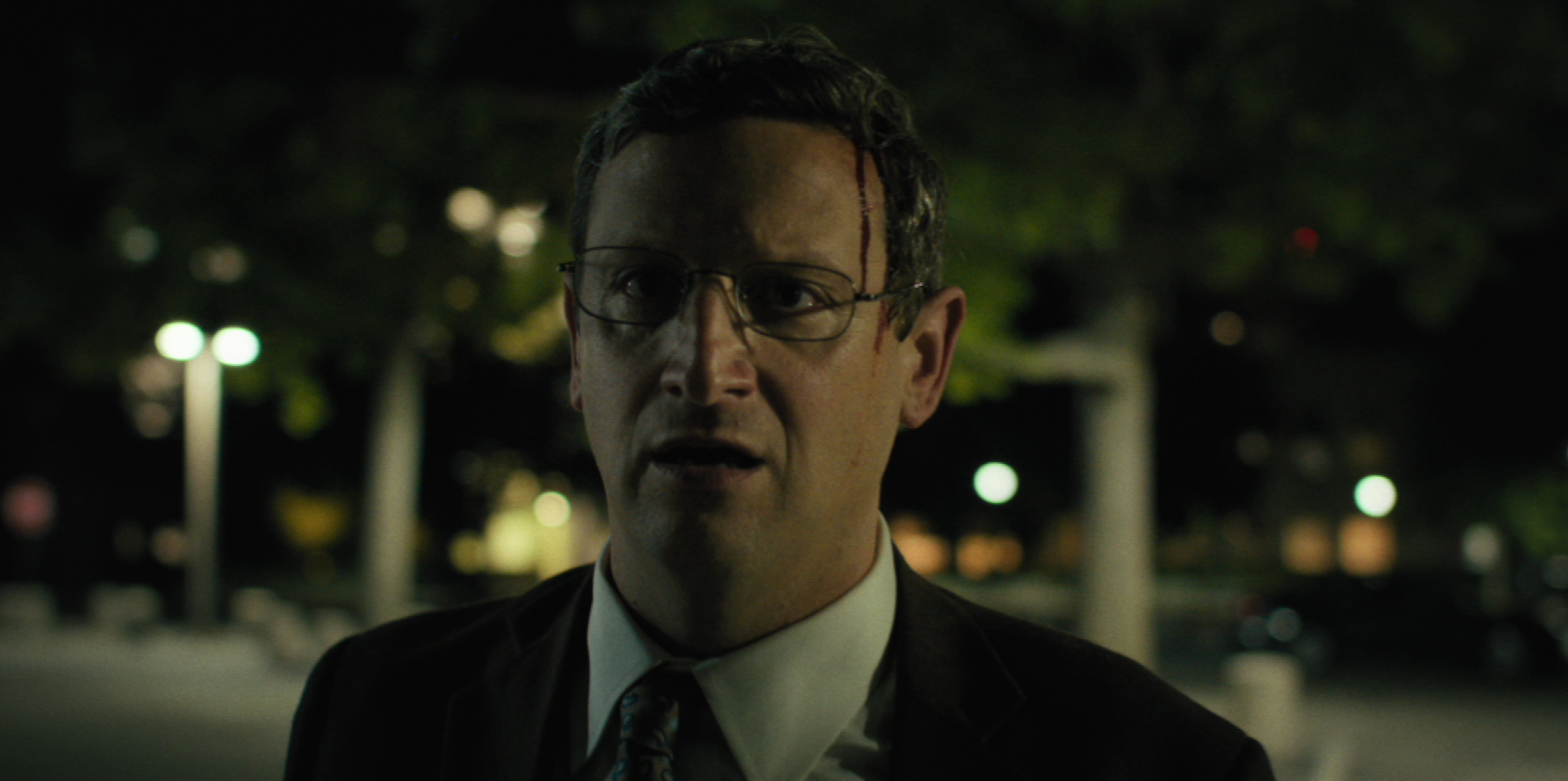
There was a bit of a mantra on set: Let it cook. I kept this phrase close whenever I was designing sequences. For the final scene of the pilot, we wanted the audience to feel a little relief as Ron decides to stop investigating the chair company, to feel a moment of safety before we kick the door open again. Andy and I wanted to lean into genre whenever we could, and this sequence is a perfect example; we wanted the classi-thriller moment of seeing a dark figure emerge behind Ron, and to keep the tension running throughout the whole sequence. It’s a moment where violence is introduced and the stakes get raised — so, we wanted to play into the uncertainty he is feeling.
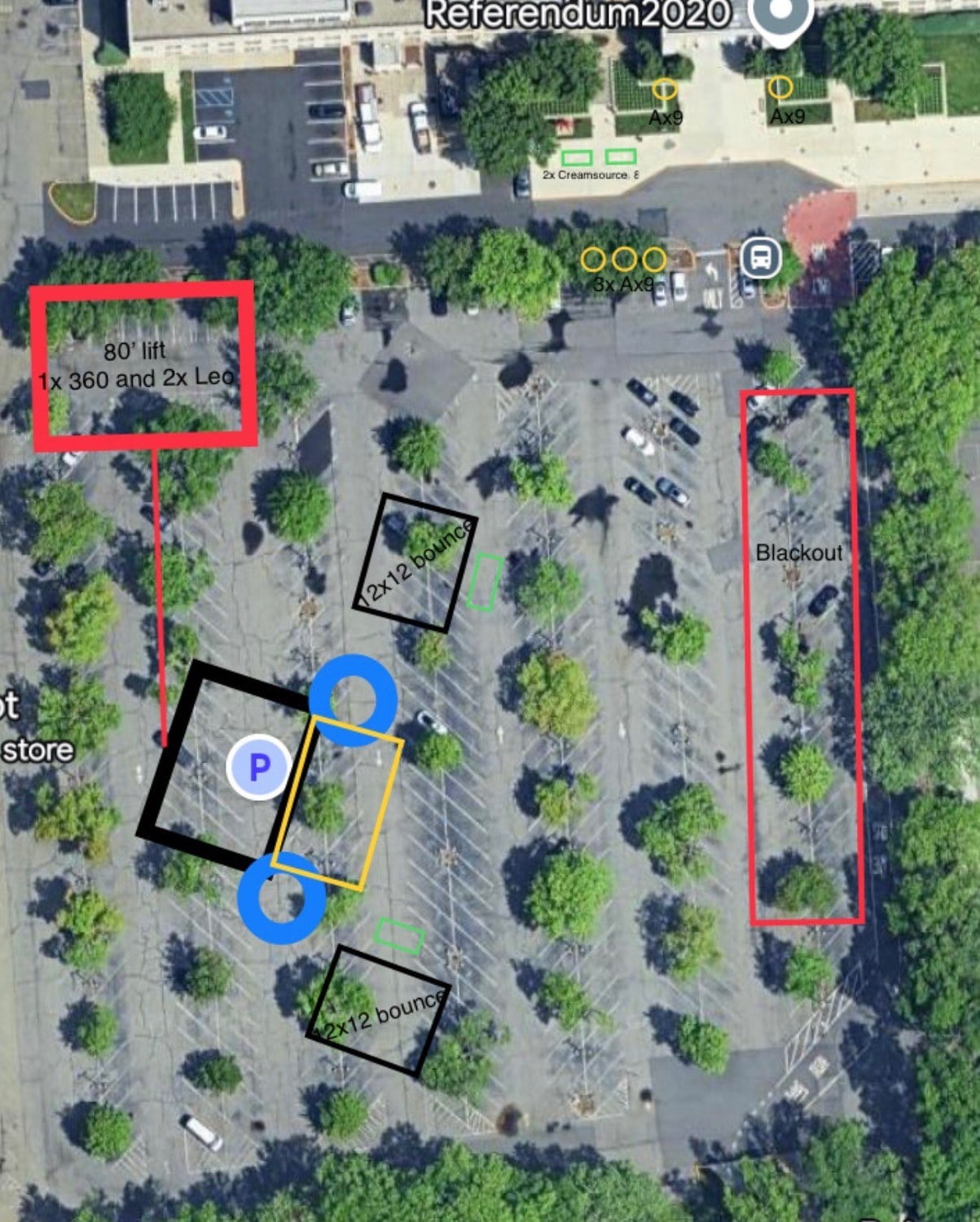
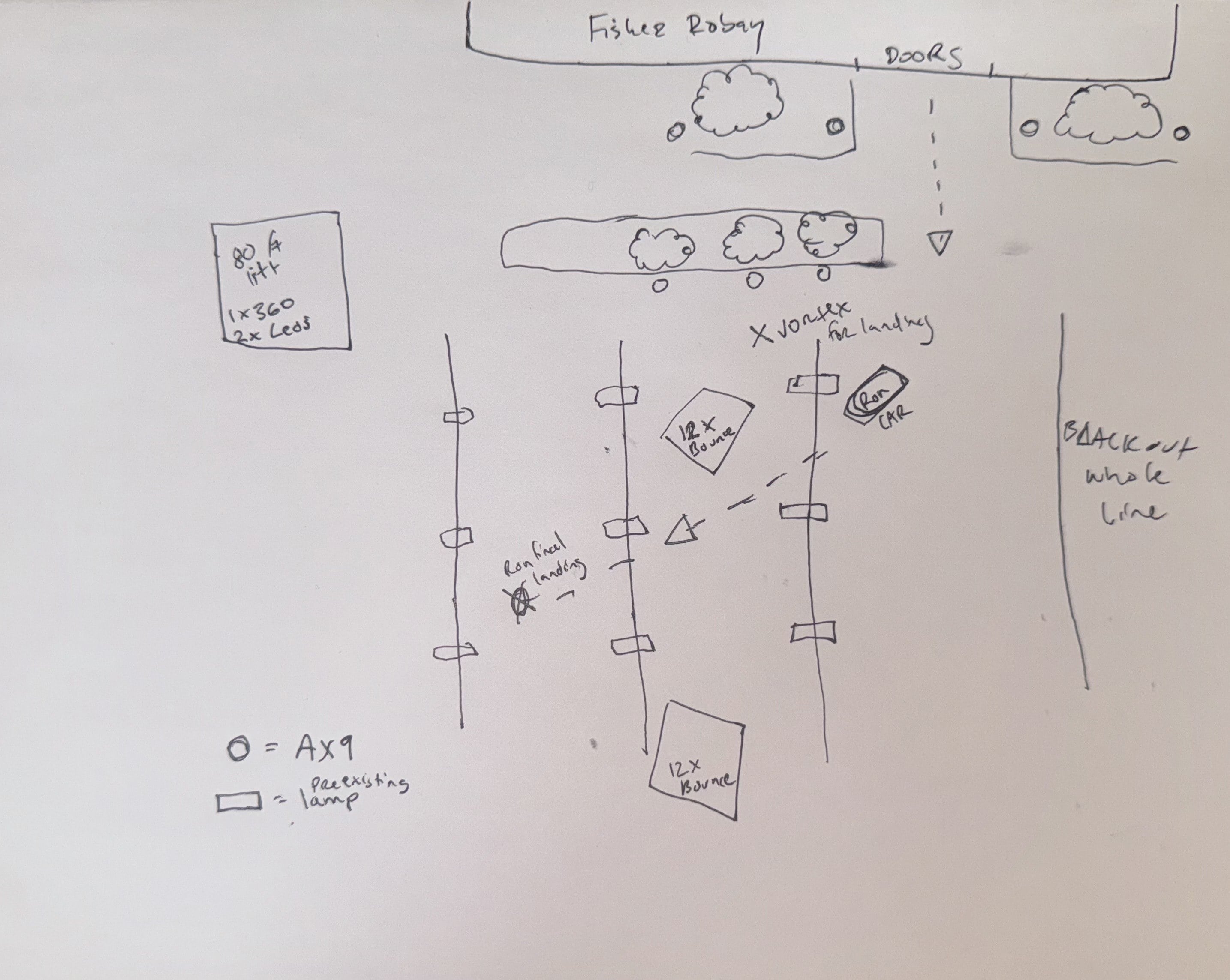
I always view budgetary restrictions as a way to embrace more creative freedom, and we were a small show with a lot of ambition. I had very few opportunities to fly units, but we were shooting a chase sequence in a large parking lot, so we successfully fought for a lift that night and put an Arri SkyPanel S360-C and a few Astera Leos on it. The parking lot at our location had a lot of preexisting lighting, so we designed the sequence around what was available and used our lift to help give some depth to the backgrounds and back edging to our main characters. The process became about using every bit of negative rag we had on the truck to help control areas we wanted darker. (See our lighting plan in the diagrams below.)
"Stop Looking Into the Chair Company" — Establishing the Series' Absurdist World
There are moments when I read a script and assume some obscure detail might not be important, but what I love so much about Tim and Zach’s writing is that they never include something they don’t find integral to the world they’re building. I always joke that people throw around the term “Lynchian” and comparisons to Twin Peaks far too freely; to me, David Lynch is sacred. I won’t claim we can own those comparisons, but I can draw similarities in the uniqueness of the worlds Lynch created and the ones Tim and Zach create. It’s not about being “weird” or strange, it’s more that the internal rules of the world you’re making line up, and that world feels honest to itself.
For me, that meant that we had to create a sincere environment in which all our characters could exist and feel real. In this case, the script for the pilot described a final chase sequence, and this scene also included a moment of action in which the man Ron is chasing unbuttons his shirt, Ron grabs it, and the man doffs it in a very specific, arms-back sort of way — as if he’s a runner crossing a finish line.
I remember thinking, “Okay, so he’ll run, and Ron will rip the shirt off his back." But after discussing the scene with Tim and Zach, we realized this detail was the moment, and this helped me lock more into their process. I learned from this part of the production to investigate the small details of a scene. Tim and Zach’s vision for the scene was so clear in their heads, and I wanted to honor that as much as possible.
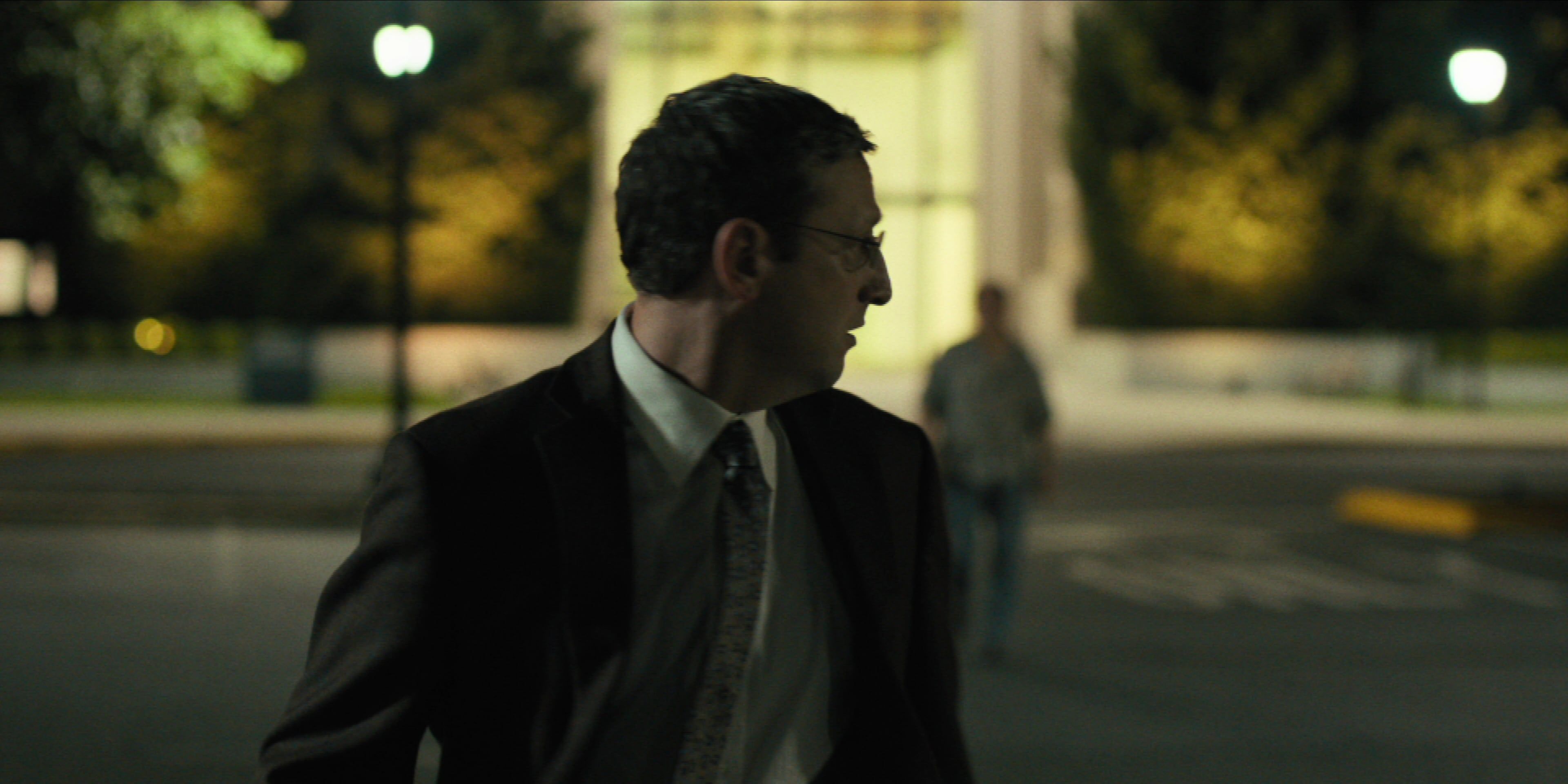
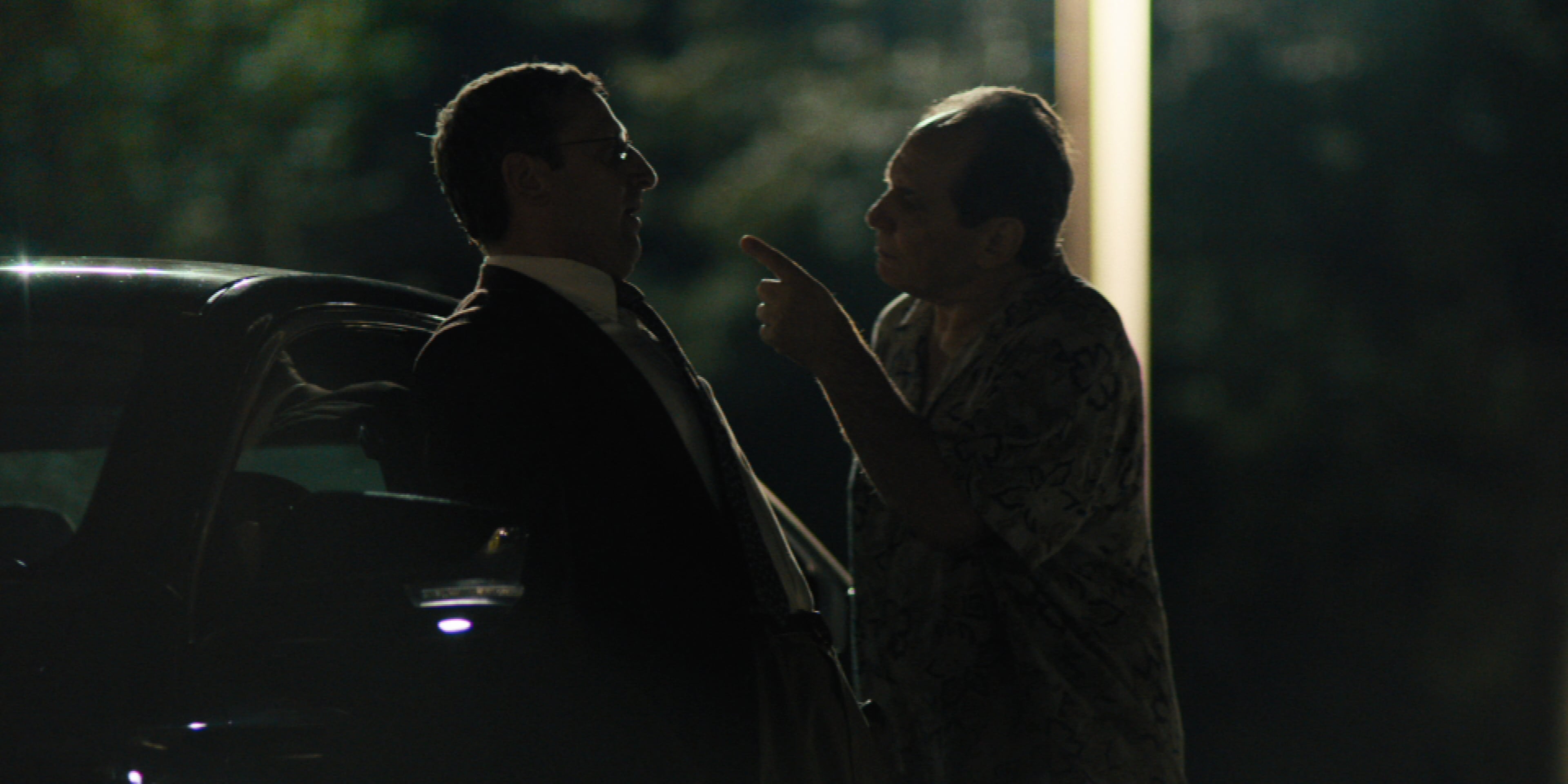
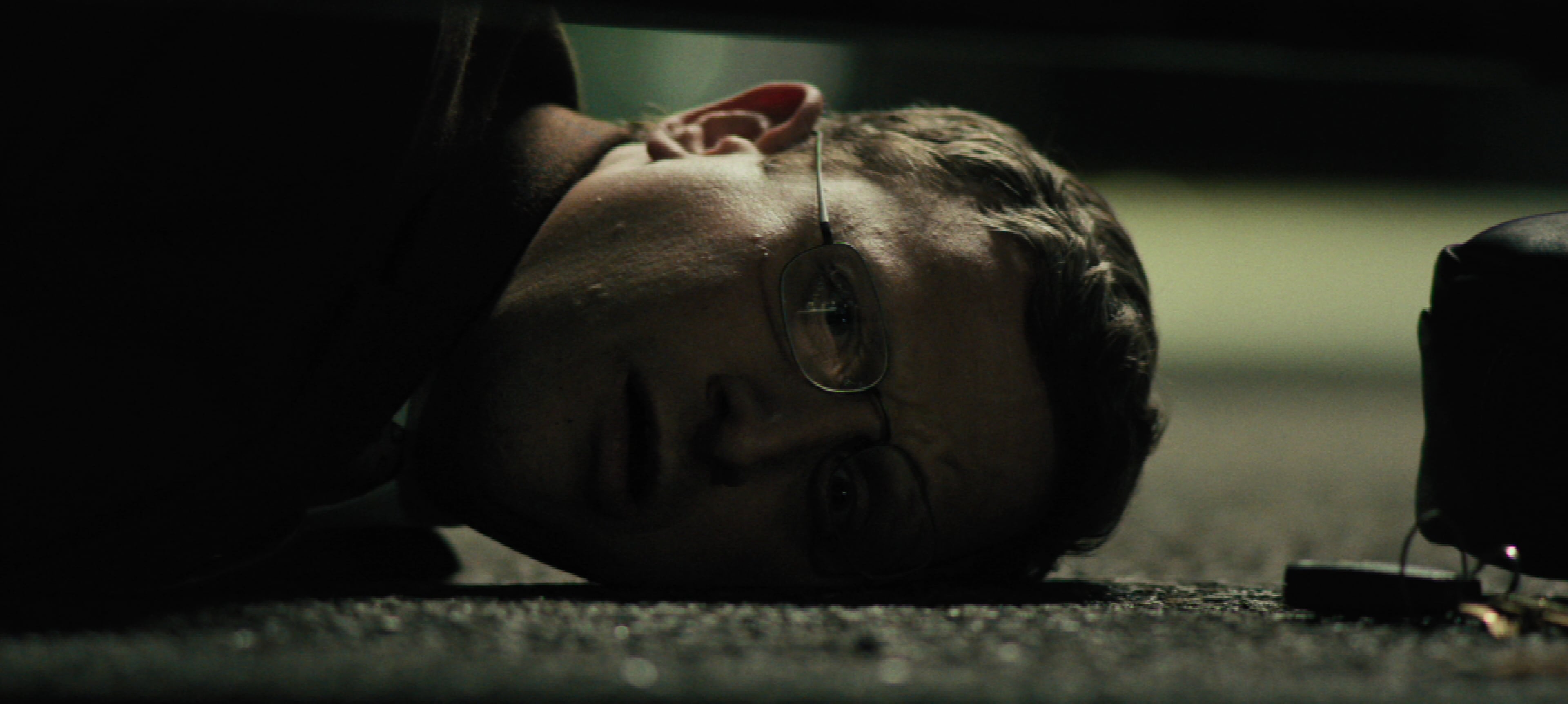
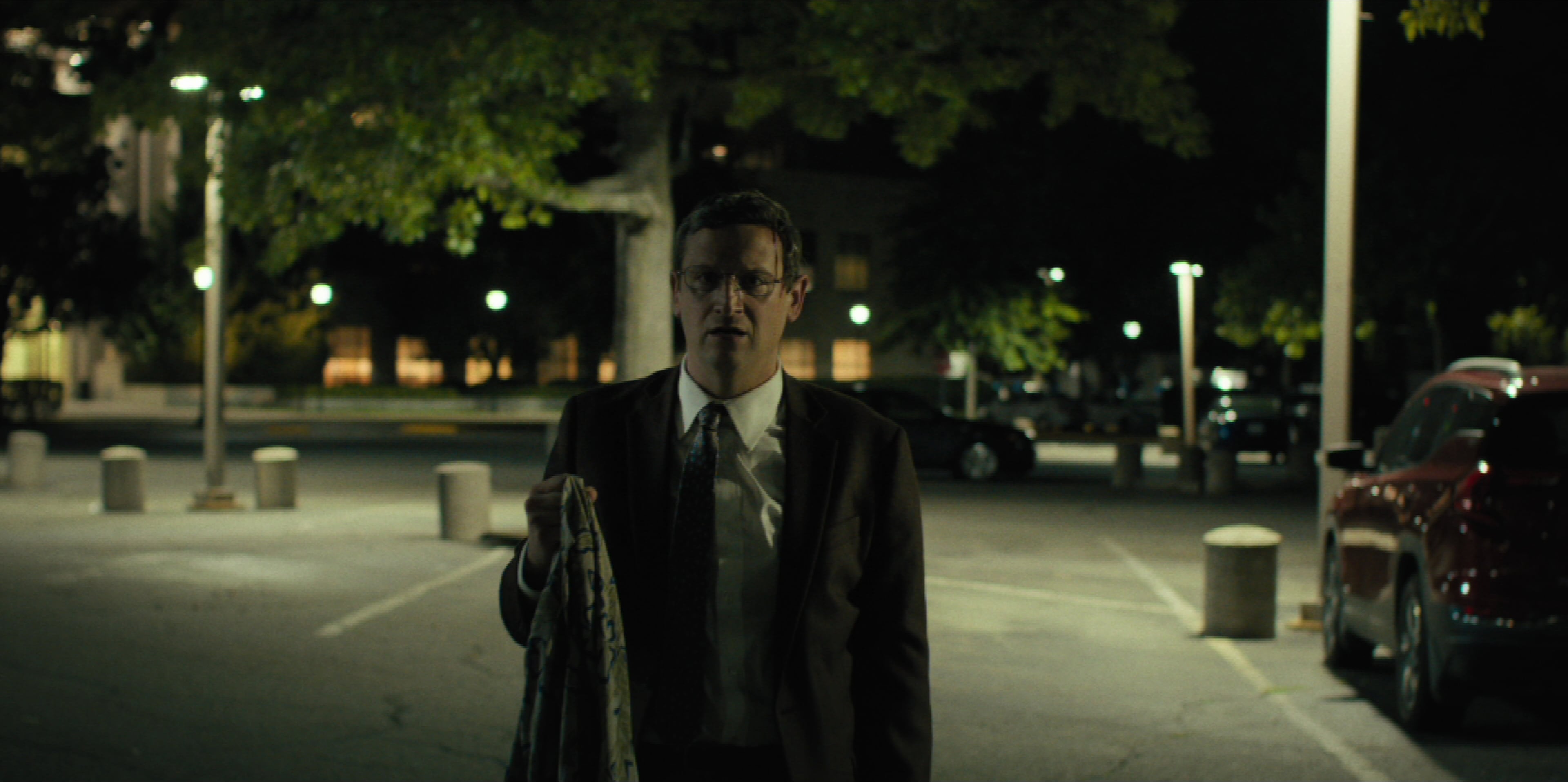
We used an ETV car from Action Cameras, rigged with a Libra head, for the chase. We shot the whole series on an Arri Alexa 35 with built-in texture, using K35 lenses, as well as a Cooke Cinetal 25-250 zoom for added character. We aimed to limit the amount of takes so our actors didn’t have to run too many times, so we kept the zoom on the E-car the whole night — all while running out of shooting time, which made for a very difficult situation. We fought hard and pushed for the details of the shirt, and I think it’s those details that make the show so special. All these disparate images add up to create a unique world.
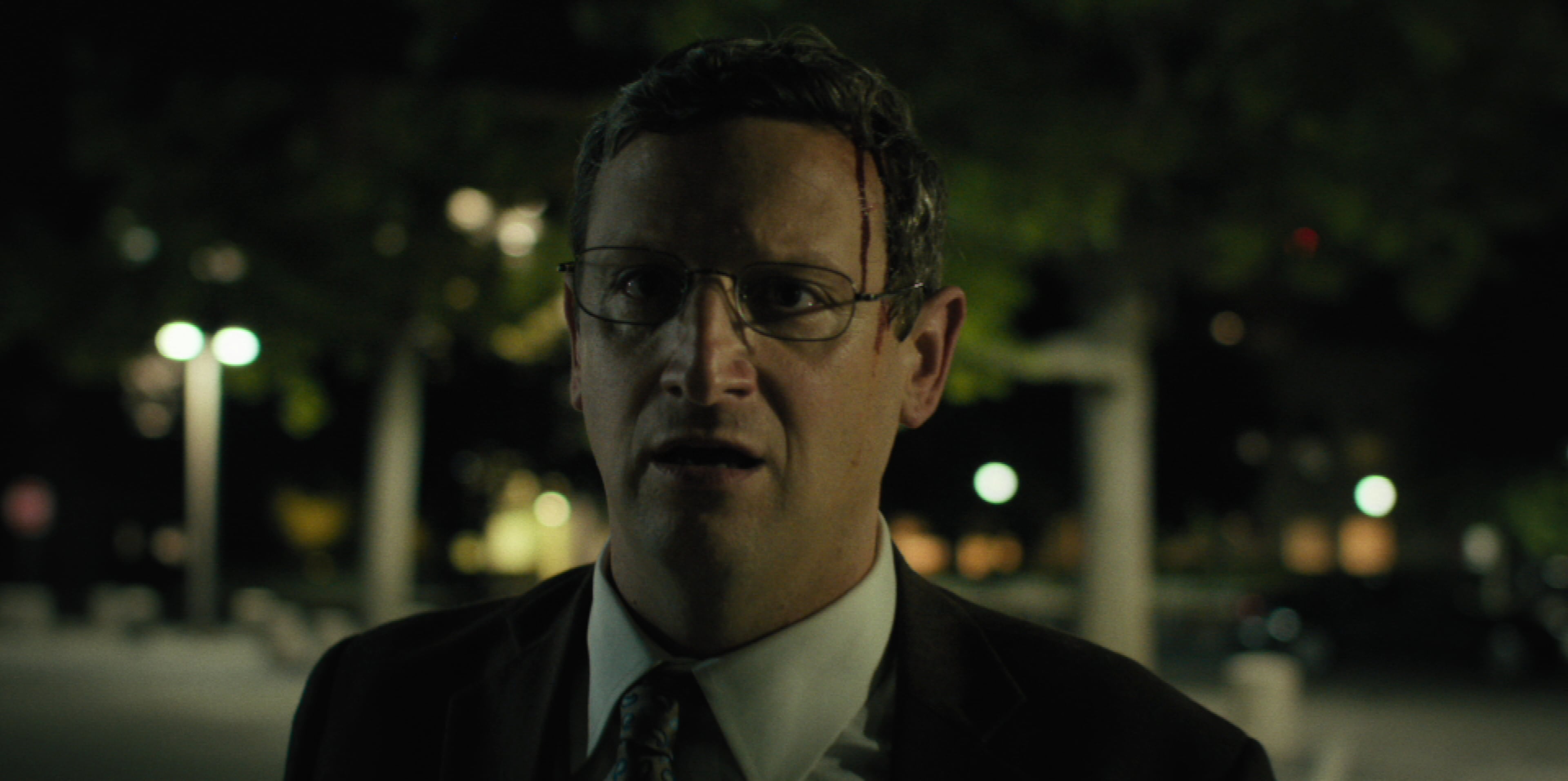
The final shot of the pilot has an uncanny feel, and I think it perfectly sets up the destabilizing world Ron is about to enter.
Images courtesy of HBO and the filmmakers.