The Secret Agent: Exploring a Vibrant, Yet Violent Brazil
Cinematographer Evgenia Alexandrova, AFC creates a warm and vivid palette for director Kleber Mendonça Filho's film, which journeys into the dark heart of 1970s Recife during the week of Carnival.
The Secret Agent, Brazil's Oscar entry for Best International Feature Film, is a visually subversive political thriller. The film was shot on location in Brazil using bright, saturated colors by cinematographer Evgenia Alexandrova, AFC as a counterpoint to the dark, terrifying subject matter, proceeding as a slow burn.
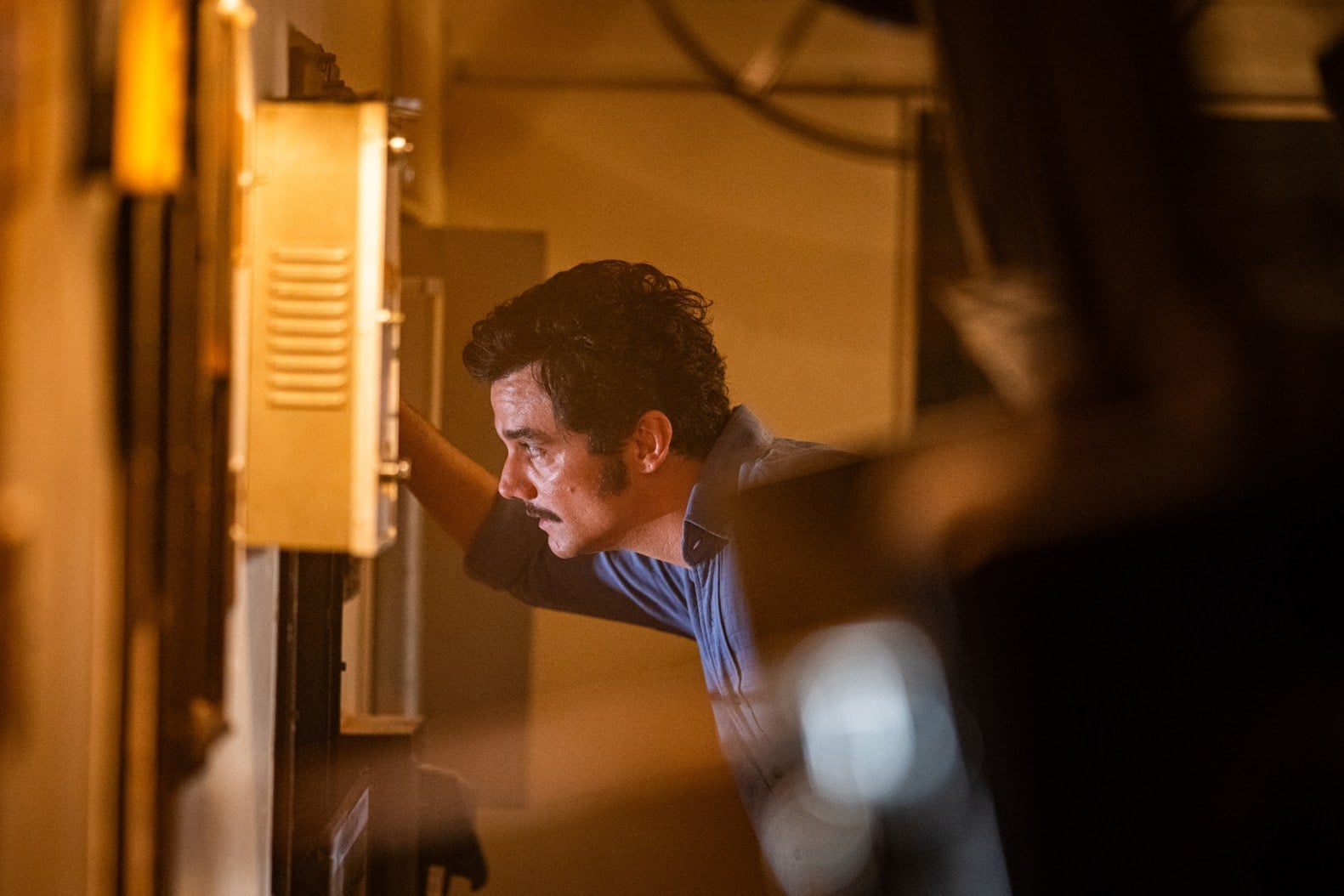
Set in 1977, during the final years of Brazil's military dictatorship, The Secret Agent follows Marcelo (Wagner Moura), a former teacher and tech expert, on the run in Recife during Carnival week. Hoping to reunite with his son, Marcelo is targeted as a political dissident and forced into hiding while confronting his secret past.
Capturing a Brazil of Contradictions
"The film is about Brazil's dichotomous, yet multilayered culture," says Alexandrova, who was born in USSR, grew up in Russia and previously shot the Brazilian film Heartless. "Brazil is such an internally conflicted country, but has such a wild mixture of very different people who are forced to live together and somehow create their own identity. It's a very joyful, colorful, musical, rhythmic, tasty, warm country, but there's another side to it, which is all of this misery, wealth discrepancy and banditry. We tend to believe that misery happens to others — that it's some other people who suffer or die. But the bell can ring for any of us every day.
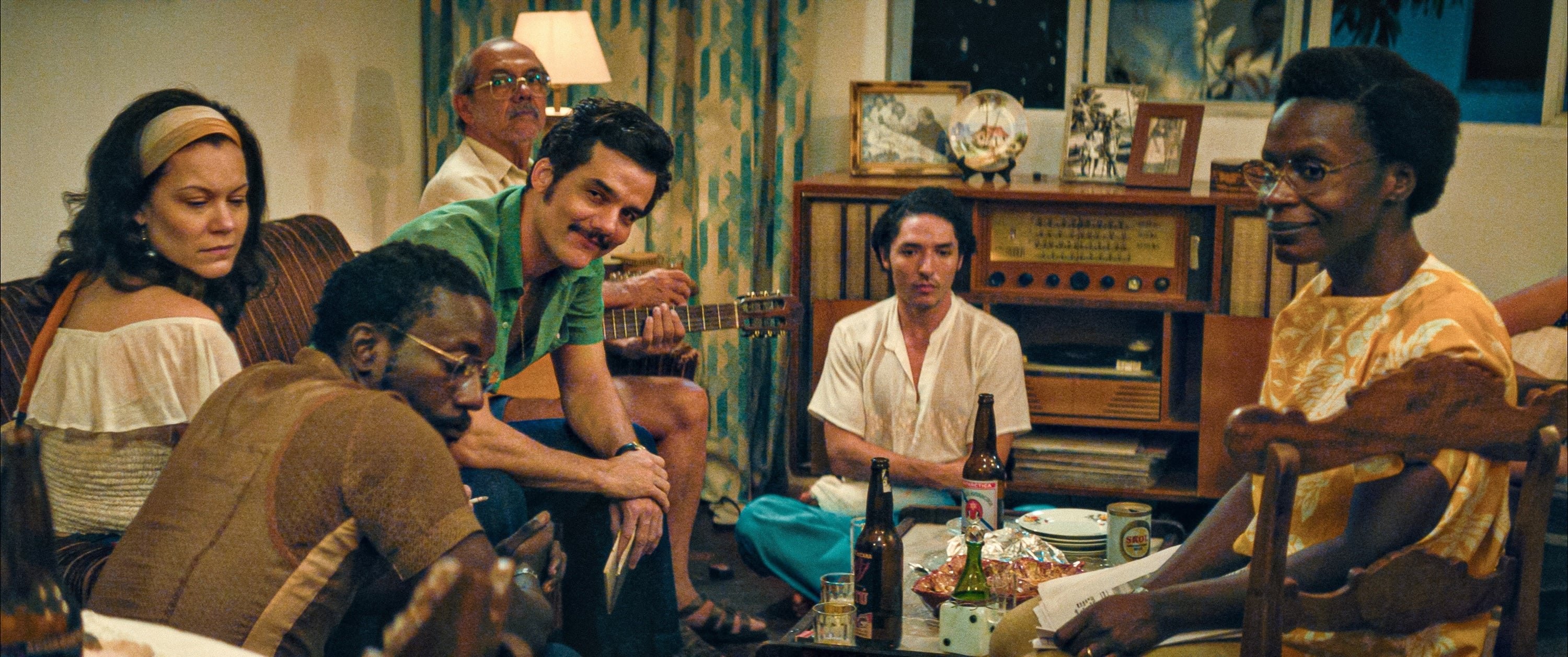
"I really wanted to capture this contradiction in my imagery," the cinematographer continues. "I also found it rich that there are some extra scenes that do not move us forward in the storyline, but serve to create the world in which the film exists.”
Camera, Lenses and LUTs
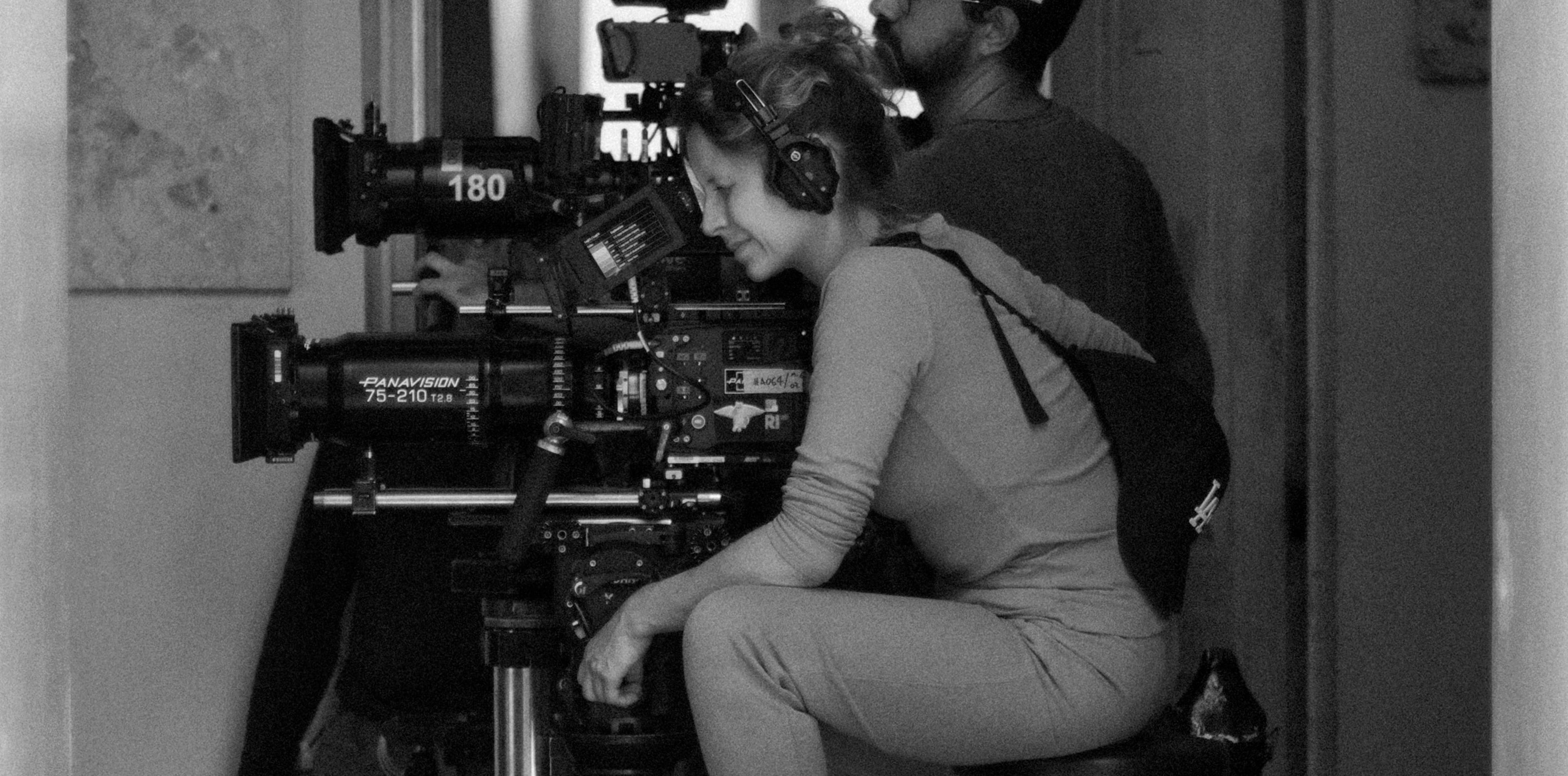
Alexandrova shot The Secret Agent with Arri's Alexa 35 — predominantly paired with vintage Panavision B Series anamorphic lenses — to help capture the setting's eye-popping colors and highlights. Serving as her own camera operator, she shot at nearly 360 degrees during much of the production.
“I like images that are dynamic and contain a lot of character, with some slightly overexposed and underexposed parts,” she says. “And [our lenses] offered a lot of character in the sense that they're imperfect; they have a lot of aberrations, so if I had blown-up windows in the frame, they would create a really big halo and a really big flare. We also used Panavision zooms where there is a contour line that has aberrations. It was something that Kleber and I found charming.”
When Alexandrova prepared her LUTs, she noticed that there was a reddish undertone to most of the Brazilian photographs that she referenced, especially in the shadows — which, she thought, would help in achieving her desired look. However, when she arrived for the color grading at the lab in Berlin, she noticed that the entire image was overtaken by red and had an unwanted sepia tone. “I wanted to have more color separation, to give more contrast to the whole entire reddish picture,” she adds. “And we also worked on the halations to soften our look a little bit. I didn't filter anything on set. I like to work with the texture in color grading.”
Gas Station Interrogation — Shooting the Opening Scene
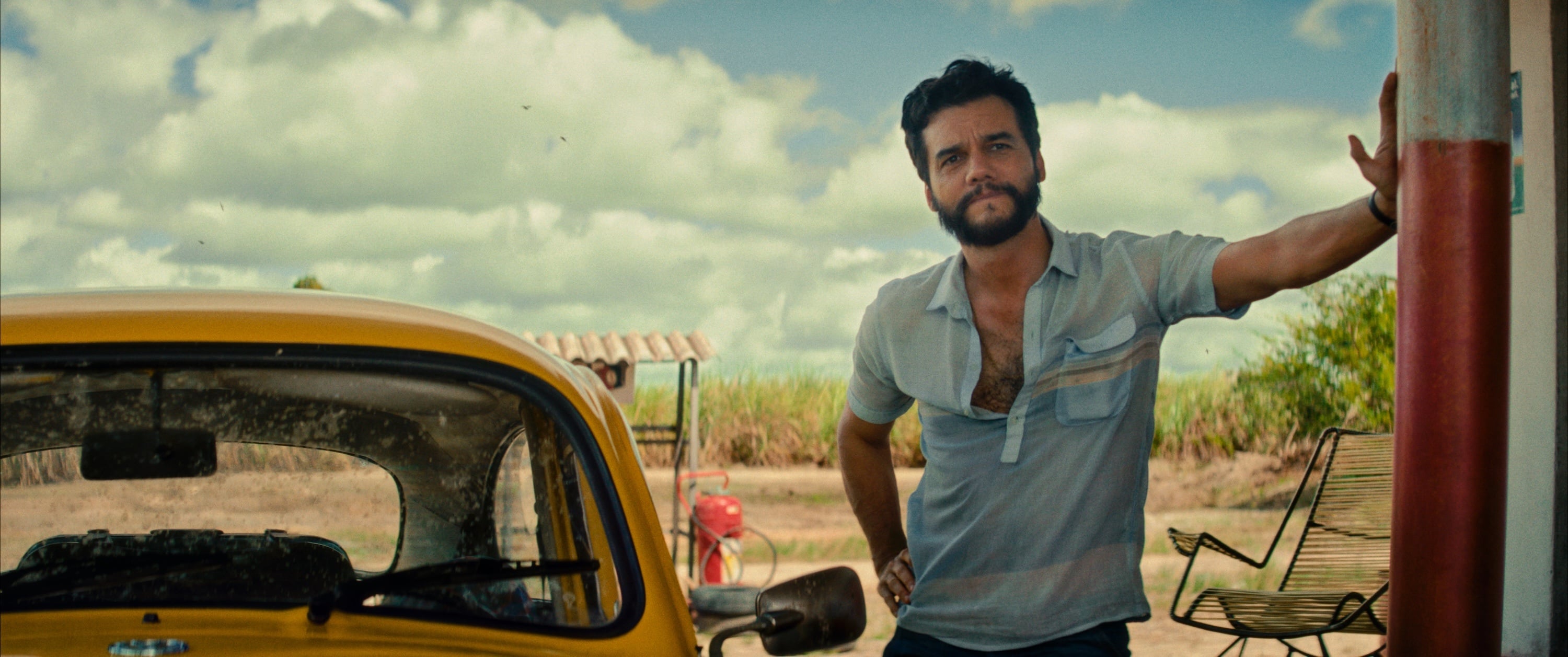
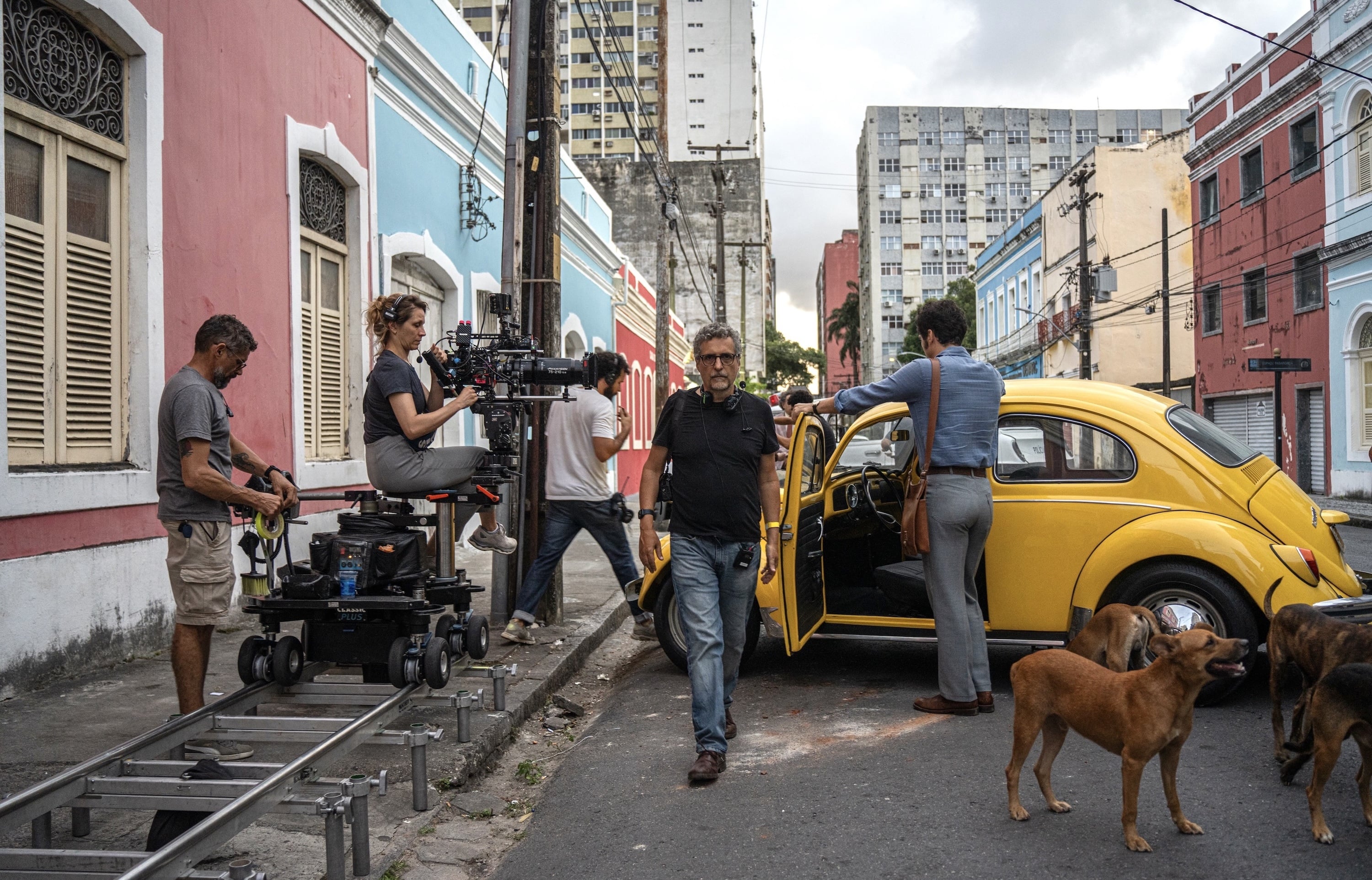
The film's protracted opening sequence, during which Marcelo pulls into an Esso gas station on the outskirts of town in his striking yellow Volkswagen bug, draws the viewer in immediately and establishes a slow, deliberate pace. Shot with two cameras, the scene's compositions are sharp, with great depth of field, highlighted by the field in the background. Marcelo and the attendant discuss the nearby corpse covered by a cardboard box, but before he can leave, two police officers arrive to interrogate him and inspect his car. The encounter is long and drawn out, but Marcelo outwits them and drives off.
“The opening is a film in and of itself," Alexandrova says. "There are so many situations going on,” Alexandrova suggests. "But the handling of the image wasn't easy because we shot the scene over two weeks. We had five and a half hours of shooting per day, because the set was very far from where we were — in Recife, in the middle of nowhere. And it was during the rainy season. So, for some of the shots that face the interior station, we shot while it was raining behind the camera. We used 12K Dino Lights, bounced to warm up the reflections on the skin, as well as the in-camera white balance, and then the color grading helped to harmonize the whole scene."
Staging a Dance With Death
Another standout sequence occurs when Marcelo, who's being stalked by a hitman, leaves a movie theater screening The Omen (an apt film-within-a-film metaphor), and stops to join the Carnival celebration outside. He just can't help dancing as well; he might as well enjoy the catharsis at night, since he might die the following day.
“The São Luiz cinema was restored just before we shot the scene — we were there when it was just finished,” Alexandrova recalls. “The camera's movement out of the theater leads to a powerful moment with Marcelo entering Carnival. Initially, we thought of the scene as just one shot, but it was cut into two. It took all of the lights from all of our trucks to light the inside and outside of the cinema simultaneously. We used [Arri] SkyPanels for screen-light and flicker simulation (we didn't project the real movie, but integrated it onto the screen, inspired by Roma); small lights to support the warm practicals inside; a cold balloon to simulate the night; and some tungstens to simulate street light. The scene was also partially lit by a Coca-Cola sign — and other store signage, all provided by production design — to help convey a 1970s vibe.
“Another thing that helped this scene was that it was mostly half-shot with the counter light,” Alexandrova continues. “And all of the flour that the Carnival dancers are throwing is dispersed, which makes the shot very textured. It was beautiful. Once the camera goes up and elevates over the crowd, at some point, I just lost Wagner in the crowd. It was Kleber who had to tell me on the intercom where he was: 'Just follow on the right side, keep going there.' It was such a nice collaboration. There were a lot of people, and because the music of Carnival was so loud, it was a challenge to communicate properly. But it was such a celebration of life to shoot this scene, and to convey the meaning behind it.”
Unit stills by Victor Juca. Images courtesy of Neon.