Scout’s Honor: Robert Yeoman Talks Moonrise Kingdom
Cinematographer Robert Yeoman, ASC, discusses his sixth collaboration with director Wes Anderson for 2012's Moonrise Kingdom.
This interview with Robert Yeoman, ASC on the making of Moonrise Kingdom originally appeared in American Cinematographer's June 2012 issue. For full access to our archive, which includes more than 105 years of essential motion-picture production coverage, become a subscriber today.
Yeoman was honored with the ASC Lifetime Achievement at the 40th ASC Awards in March. Read our profile on the cinematographer's career here, and watch the Awards ceremony here.
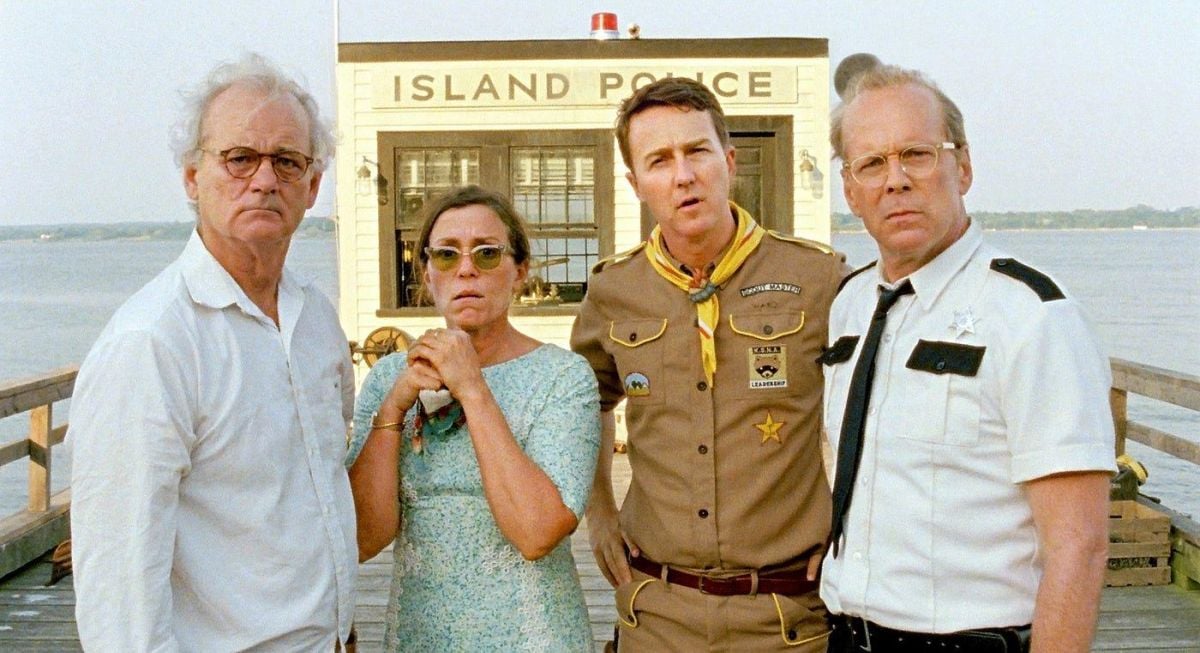
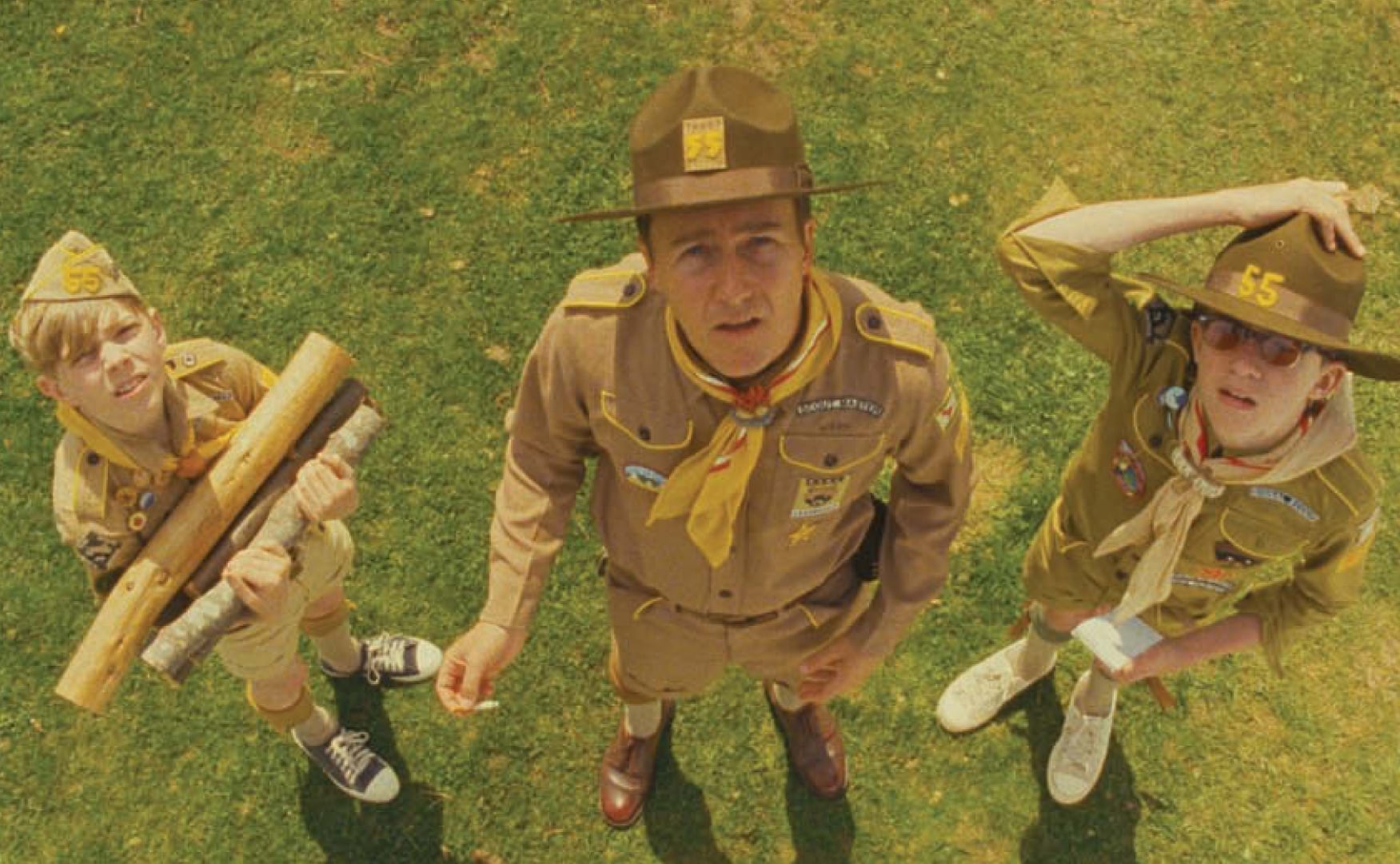
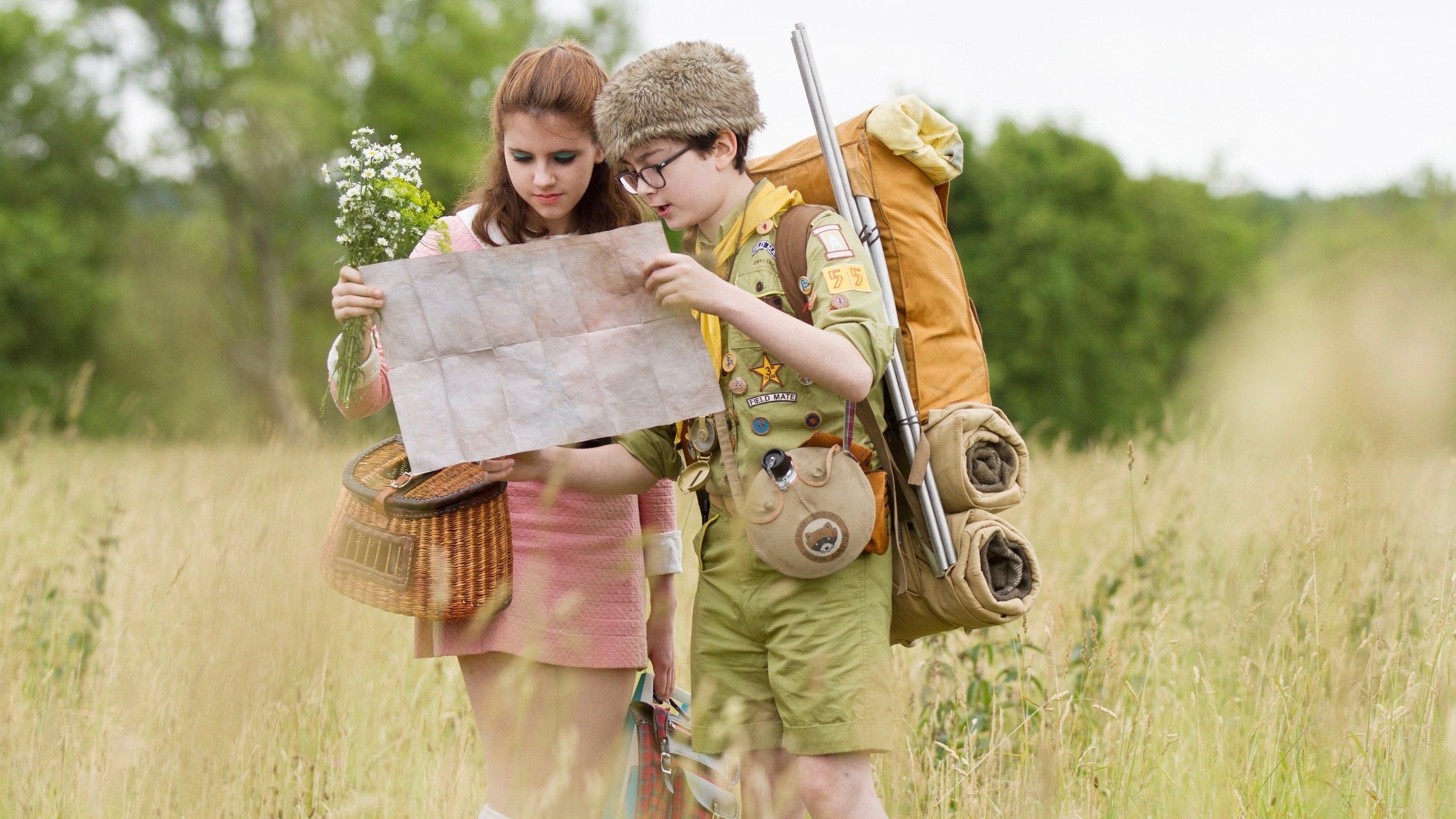
Moonrise Kingdom teams Robert Yeoman, ASC with director Wes Anderson for the sixth time. Incorporating the arch humor of previous collaborations like Rushmore and The Royal Tenenbaums (AC Jan. ’02), their latest outing concerns Sam (Jared Gilman), a precocious orphan who schemes to elope with his pre-teen crush, Suzy (Kara Hayward). Letting true love dictate their course, the two run away from Suzy’s family and Sam’s Khaki Scout troop, sparking a riotous pursuit by an overmatched posse of adults that includes a local cop (Bruce Willis), a scoutmaster (Ed Norton) and Suzy’s parents (Bill Murray and Frances McDormand).
While the movie includes many of the visual tropes that define Anderson’s style — symmetrical compositions, swish pans, snap zooms, and speed changes to emphasize key moments — the filmmakers’ use of the Super 16mm format is a departure from their previous outings, most of which were shot in anamorphic 35mm. Yeoman recently spoke to AC about his work on the picture.
American Cinematographer: Why do you enjoy working with Wes?
Robert Yeoman, ASC: Our first film together was Bottle Rocket. We started referencing different movies in our prep period and we found we were on the same plane visually. I often can anticipate how Wes will want to shoot a scene.
One thing I really appreciate about Wes is that he has a very clear vision of every element that will end up onscreen. If you ask him any question, his response is never, ‘I don’t know.’ He always has an answer, and it’s always very specific. It’s very refreshing to work with a director like that and I feel that this is one reason his films have such a cohesive, singular vision.
He appears to have an affinity for films from the 1960s and ’70s.
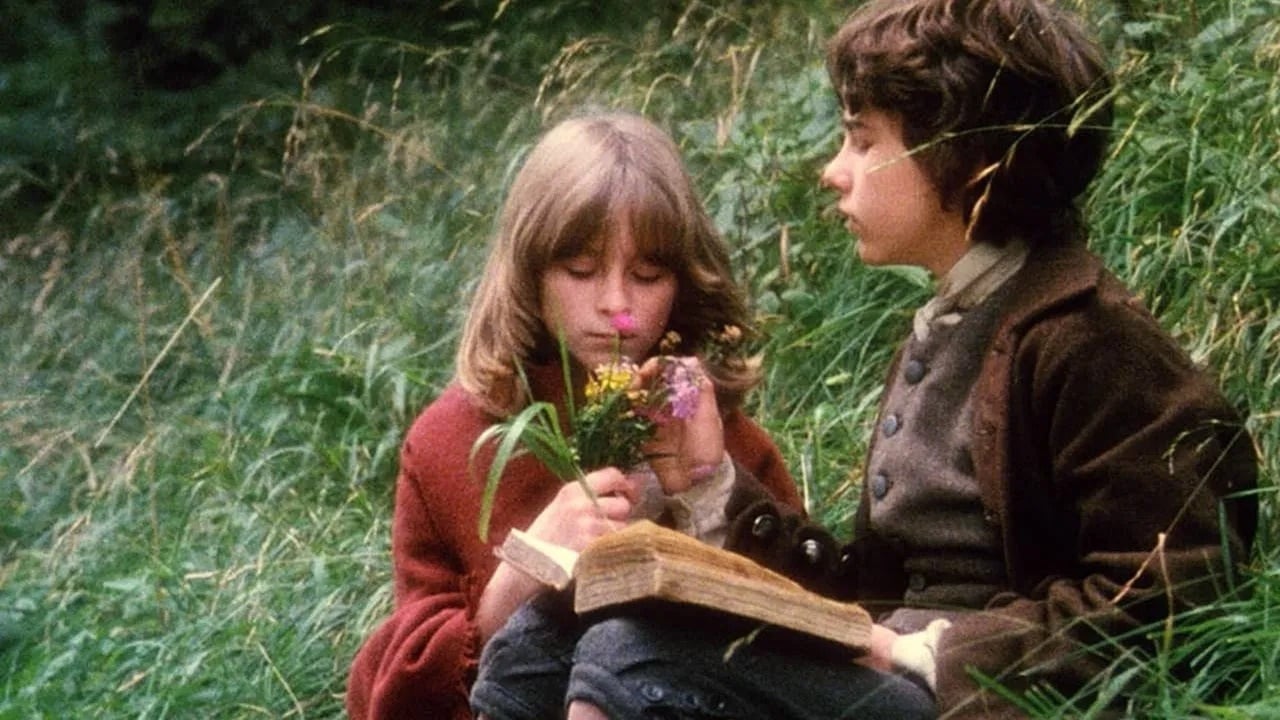
He has many different influences and he’s particularly fond of the French New Wave. On Moonrise Kingdom, he set up a screening for the cast and crew of an English movie called Black Jack [1979], directed by Ken Loach. We screened it during preproduction in Newport [R.I.]. Wes really liked the visual tone of that movie, which was beautifully shot in a natural style by Chris Menges, ASC, BSC.
What kind of prep did you do?
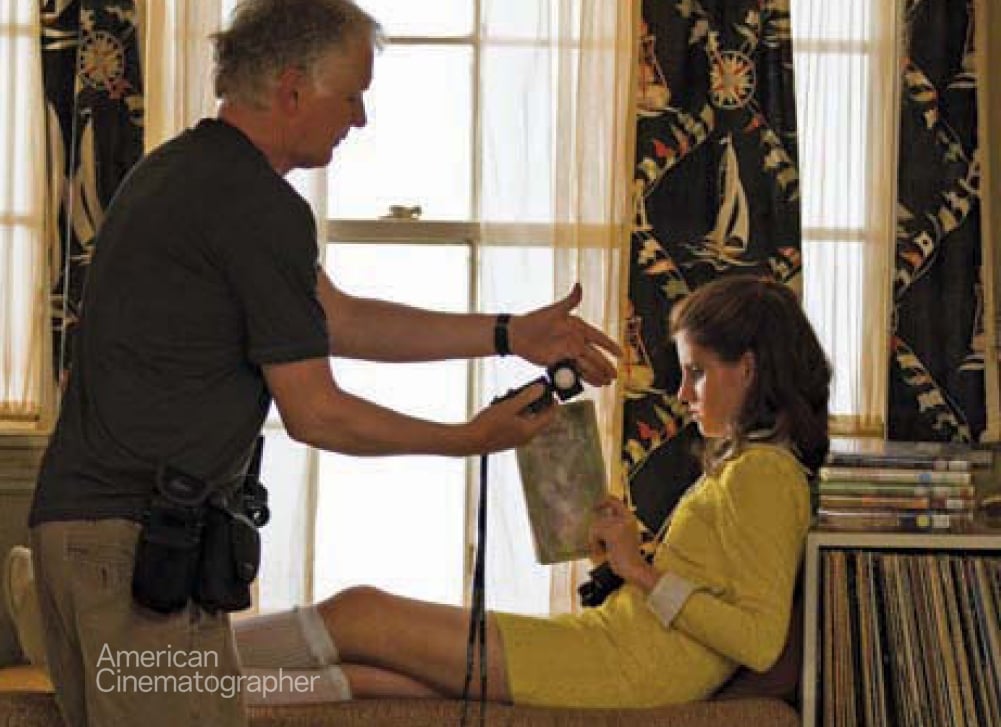
We spend a lot of our prep time going to the actual locations. We take a viewfinder and a digital still camera with us and we block out scenes just to get ideas. Because we were planning to shoot on Super 16, I also had a 16mm camera with us most of the time so we could see how the blocking and locations would appear on film. Our A.D., producers, production designer and everyone else accompanying us would stand in for the actors; in a sense, it was a pre-shoot. We were able to make the necessary adjustments during the actual filming of the movie.
Why did you opt for Super 16?
Wes actually brought up the idea of shooting 16mm, so I started shooting tests at Panavision Hollywood, comparing different stocks in both 35mm and 16mm. Later I went to New York, where Wes was living, and shot extensive tests on 16mm, using both an Arri 416 and Aaton cameras. Wes was very pleased with the results of the Super 16, so we went with it.
In our tests we found that the faster stocks from both Kodak and Fuji — the 500 tungsten stocks — were grainier than we wanted. We really liked the look of Kodak [Vision3 200T] 7213 and decided to shoot every frame of the movie on that stock. Its ASA of 200 presented a bit of a challenge when we were doing our night scenes, but I wanted to keep the look as consistent as I could, and Wes supported that decision.
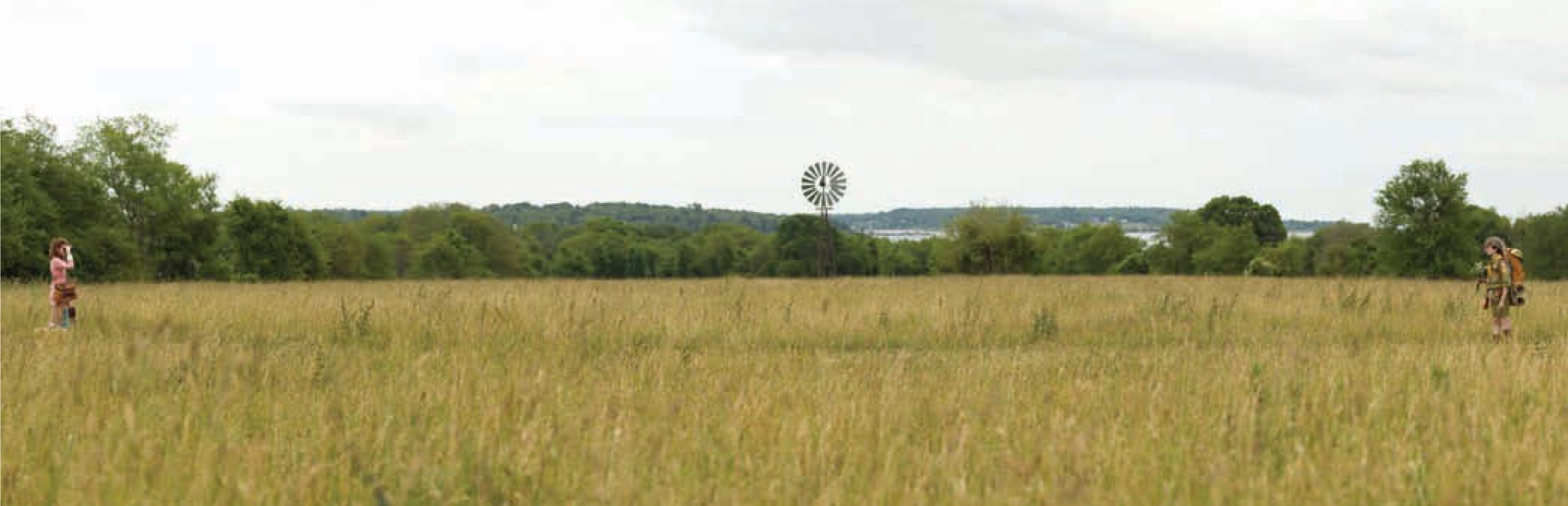
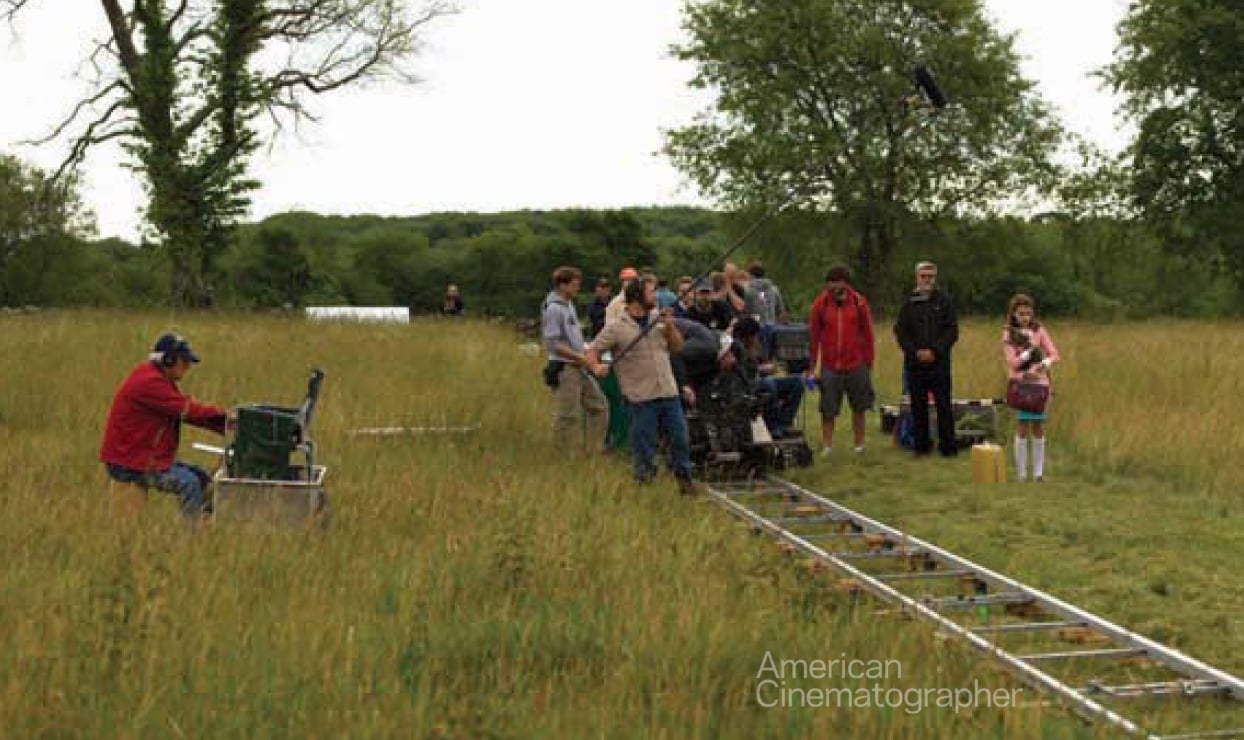
We also knew we’d be shooting in the fairly rugged terrain of Rhode Island and that we’d often be climbing to some very remote places. If we’d opted for 35mm, we’d have been carrying a great deal more equipment. We wanted everything to be more mobile so we could more easily pick up the cameras and run with them.
Wes favored the 1.85:1 aspect ratio because he felt that the story’s locations — like the house the Bishop family lives in — would be better served by that format.
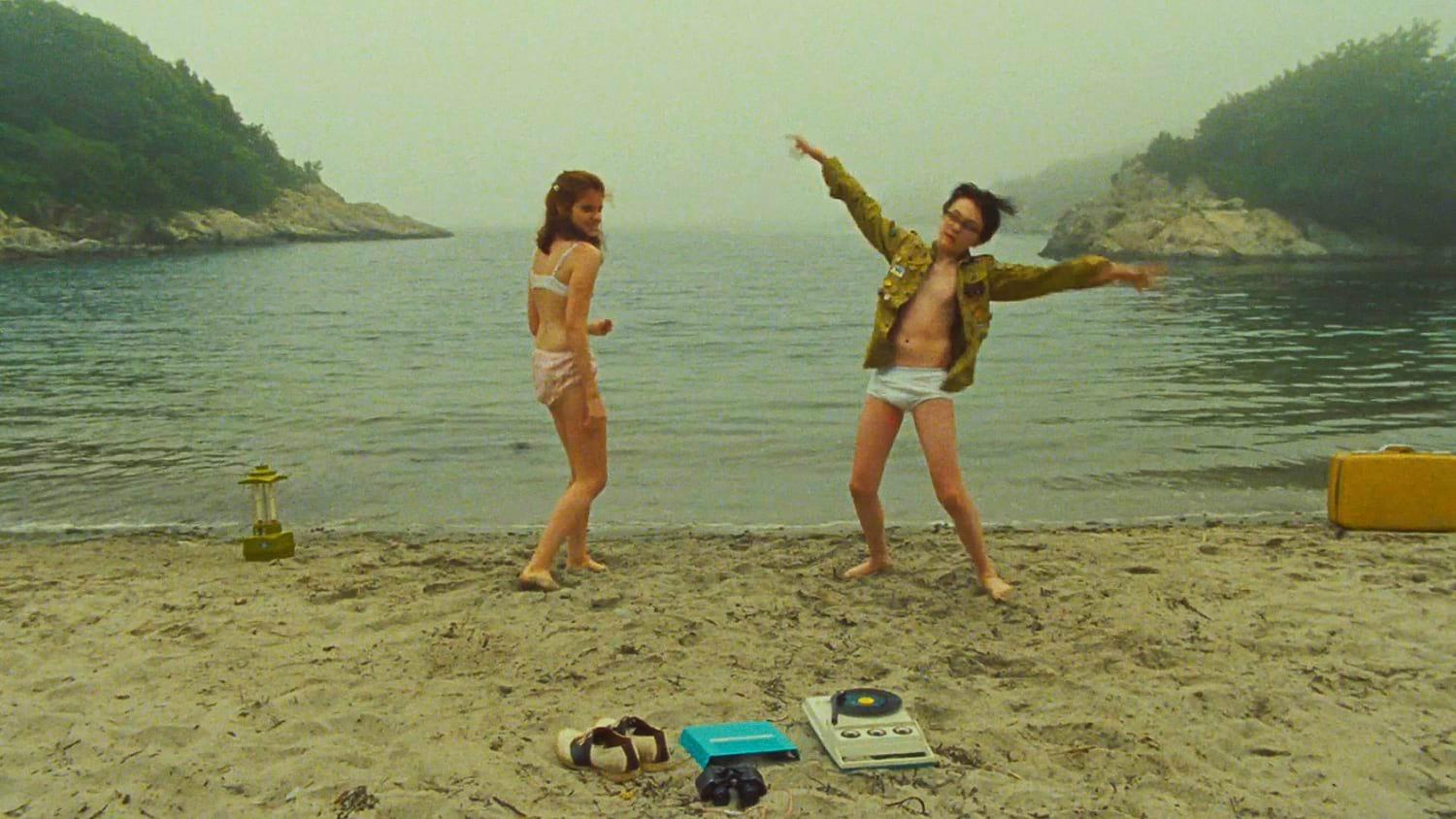
Our main camera was the Aaton XTerà. It suited us perfectly and was great for handheld. It also can film at speeds up to 75 fps and we used this on several occasions throughout the film to accentuate a moment. We also used the Aaton A-Minimas, which are very small cameras that allowed us to get camera moves we couldn’t have achieved any other way. We had a few issues with the A-Minimas; they occasionally jammed, and we got some edge fog after loading our daylight spools in the woods. The cameras aren’t perfect, but they’re effective, and they allowed us to be very flexible. They were so small I could easily run through the woods holding one, and we used them for the scene where Sam and Suzy are dancing on the beach so we could move around them very quickly. We were shooting at dusk and our window of light was small. I added a small onboard video monitor on the A Minima because the camera has a fixed eyepiece that doesn’t really allow you to see through the lens if you hold it low or high.
Were you using any special rigs for other kinds of shots?
Wes wanted to stay low-tech, and I remembered that on Chinatown, the crew had mounted the camera on two pipes to create a kind of poor man’s Steadicam. We made one of those rigs, positioned a person on each end of it, and had them walk backwards down various paths in the woods. Fortunately, we had an excellent first focus puller, Stanley Hernandez, and second AC, Braden Belmonte, who both did a great job under very difficult conditions.
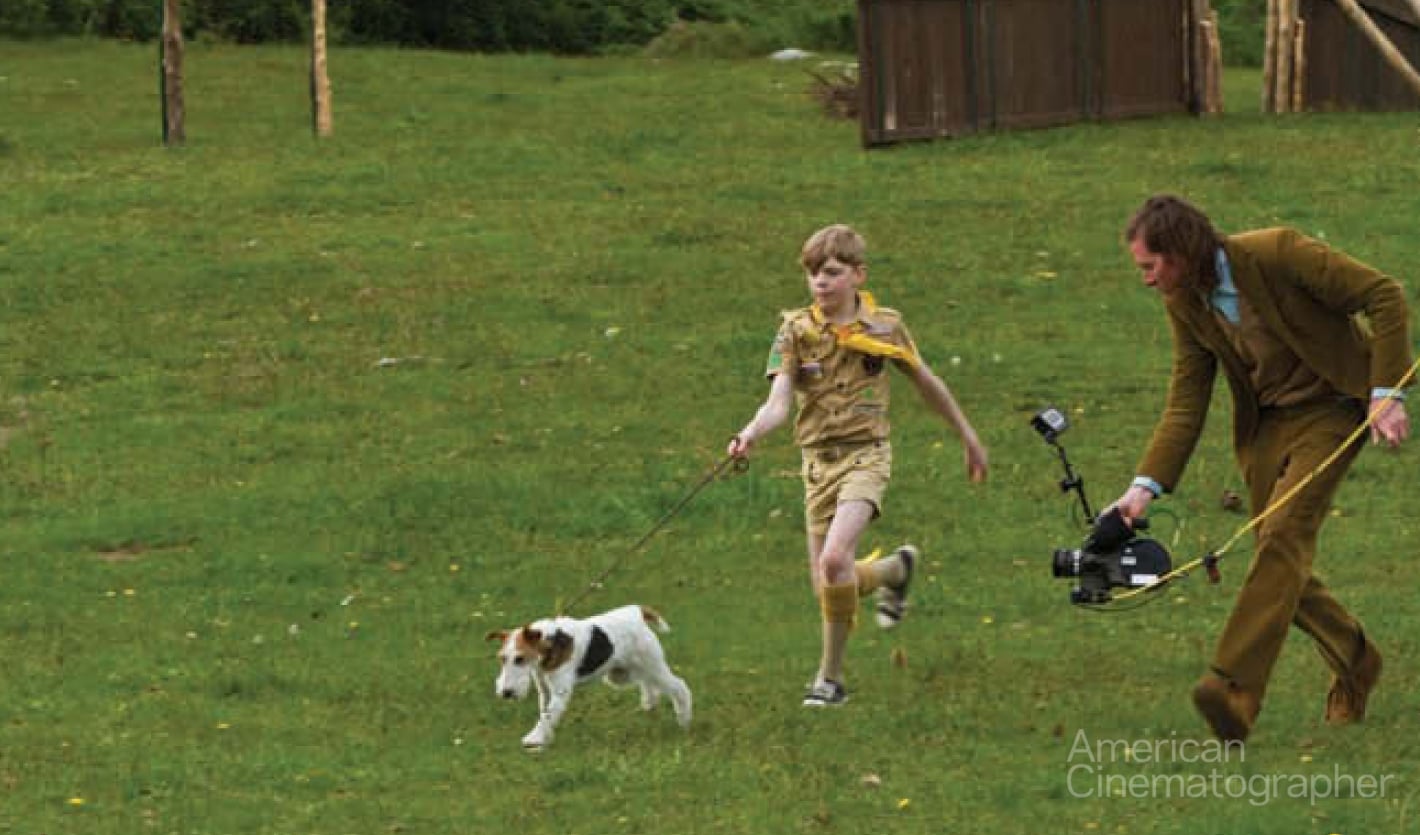
For shots of Sam traveling down the river in a canoe, we traveled alongside him in another canoe handholding the A-Minima, or we sat in the canoe with him to do closeups. To get a very low shot of a dog running through a field, I employed a homemade rig that was like a little Pogocam with the A-Minima mounted on the bottom of it. Wes and I took turns running with it or handholding the camera to get the shot.
We did use a Technocrane for the scene in which Suzy runs up the steps inside her house. This interior was a set, and the camera starts on the first floor and cranes all the way up to the third floor. There were other ideas about how to accomplish this, but I feel that the Technocrane was the most effective choice. We also used a Steadicam for one exterior shot of Bob Balaban as he walks through a field, but that was it for conventional camera rigs. Our key grip, Sanjay Sami, was very adept in the design of our low-tech approach. To achieve the shots that establish the house interior at the beginning of the film, we laid a dolly track and I would swish-pan the camera at the preset marks.
Why did you choose Rhode Island as the primary location?
Wes did a lot of scouting up and down the East Coast, and in most of his movies he doesn’t specifically identify the locations — he prefers them to seem like these magical places in the world that he has created. Rhode Island has a very rugged landscape that worked beautifully for the story. The exterior of the Bishop house existed there as a real location, and Wes was very much in love with that place as a setting for the central characters. There were also many beautiful wooded areas. I believe that Rhode Island’s proximity to New York City was also a big factor for equipment, crew, film labs, etc., along with the tax incentives we received for shooting there.
How did you build up your stop for the occasional night exteriors and the climactic storm sequence?
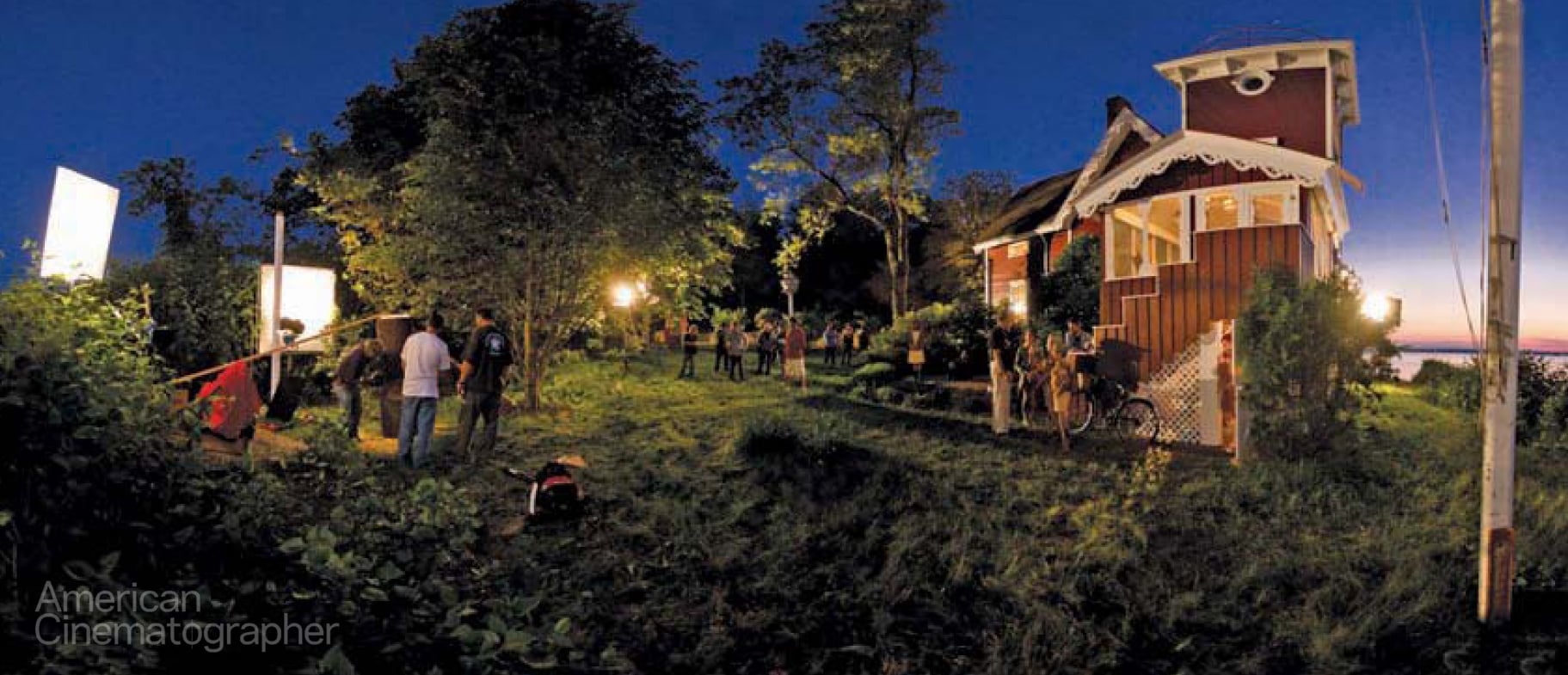
For the scenes where Suzy is reading by the campfire, we started shooting maybe a half-hour before dark and just kept shooting all the way into night. Sometimes I would add one small fill light. I was always amazed when we got our dailies; I thought some of the night scenes would be too dark, but it was surprising how much the film saw.
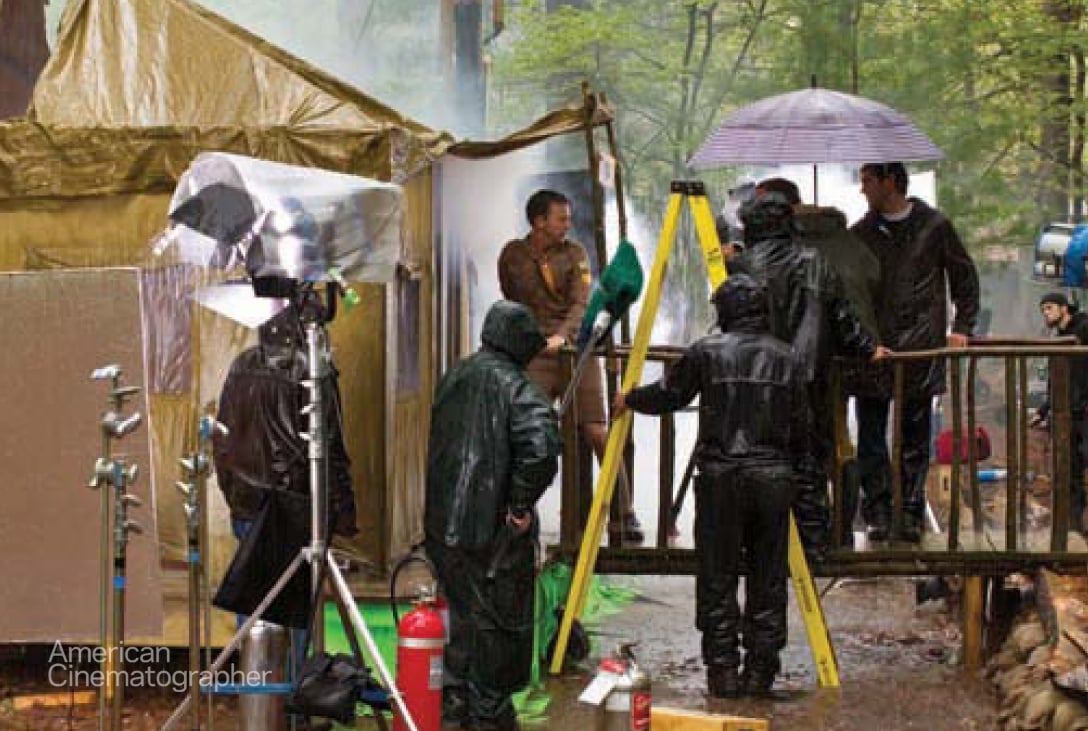
For the portions of the storm that took place at the exteriors of the scout camp, we used a couple of Lightning Strikes units, giant Ritter fans, rain bars and rain towers. We placed two 18Ks on towers to backlight the rain and often incorporated them into the shot. We lit the subsequent scene inside the church with traditional movie lighting — tungsten lights, Kino Flos, and two balloon lights floated overhead to provide a very soft base ambience. Our gaffer, Frans Wetterings, was a wonderful collaborator on all of these ambitious lighting setups. To create the storm effects outside the church, we used our Lightning Strikes units gelled with ½ CTO to make them less blue. The shots of the kids climbing the church steeple were done on a stage with a black background, with tungsten units backlighting the water and the rain. We used real rain for those shots, but for the church windows, Wes wanted us to create the rain effect with lighting rather than traditional rain bars. We experimented with some theatrical-lighting units and found a system called Gam SX4 that could project different rotating patterns placed in front of Lekos; we just defocused them a bit to create the feeling of rain on the windowpanes. Sometimes we even projected those patterns onto the interior so it looked as if rain was coming from the windows.
The compositions in your widescreen films with Wes are always very striking, and this movie also has a lot of centered framing and very symmetrical blocking. How did the format affect those aesthetics?
I love anamorphic — it’s my favorite format — and there was certainly some tradeoff involved in losing that 2.40:1 frame. Nevertheless, the ease of Super 16 was a good call. In terms of the compositions, that’s just the way Wes sees his world, and it’s the visual style he’s drawn to. When we set up shots, they frequently end up with that framing. He has always had a love of theater, and he likes very formal compositions. He’s also a big Kubrick fan, so maybe those films have influenced some of his style.
A lot of Sixties- and Seventies- style snap zooms are sprinkled through out the film. Which lenses were you using?
We carried a set of Zeiss Super Speeds: 8mm, 9.5mm, 12mm, 16mm, 25mm and 50mm. We favored the 12mm quite a bit, but we bounced around more in terms of our focal lengths than we have on our other films. The zoom was a Canon 11-165mm. It wasn’t as sharp or as contrasty as the Zeiss lenses, but everyone seemed to love it when we watched our dailies. I tried to stop it down as much as I could while shooting the exteriors in the woods. It was dark and rainy when we were doing the shot of Sam and Suzy crossing the river; I remember shooting that wide open, but the sequence wound up having a very nice quality.
How much of the movie’s color palette was created in the DI? There’s a distinctive yellow hue that really enhances the period feel.
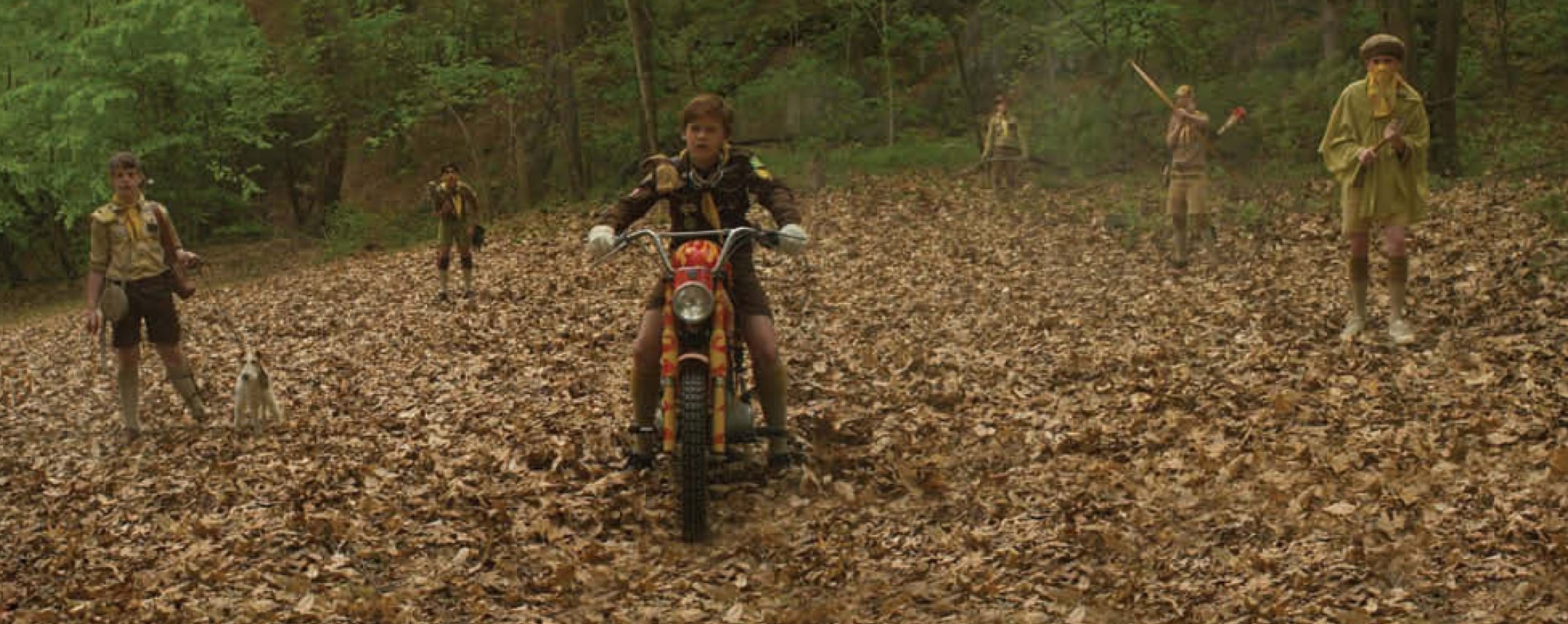
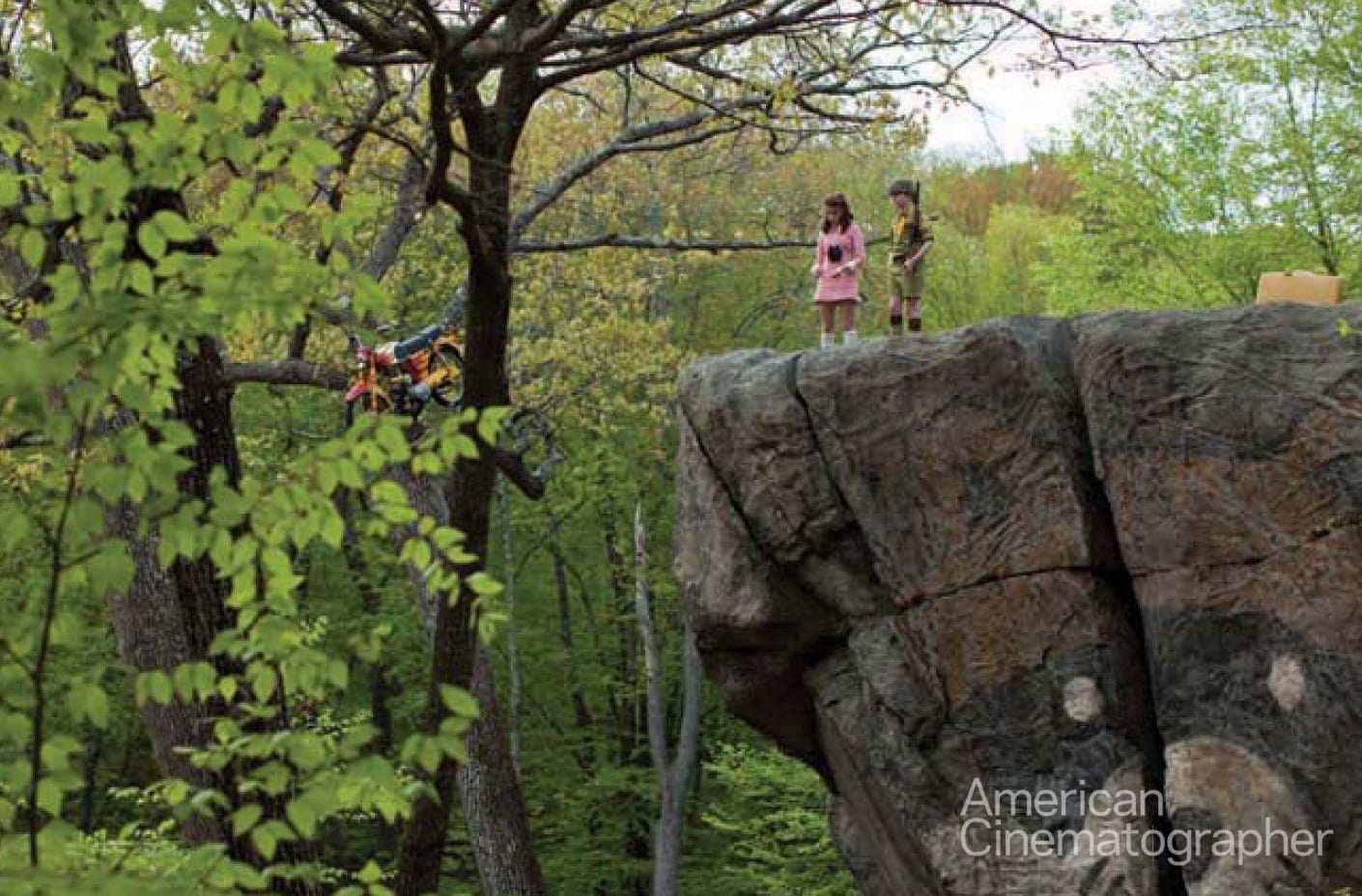
Wes is very specific about every color we photograph. Every hue in the wardrobe, sets, props, etc. is very carefully chosen. In the DI, he tends to take the look a bit warmer than what we shot, and he generally likes to push the color saturation. We didn’t use any filtration on this shoot, not even an 85 filter, but we definitely pushed the look with our colorist, Tim Stipan at Technicolor New York, who did an amazing job.
How did you view your dailies?
We watched our dailies in the editing room, on a giant flat screen off an Avid. I haven’t watched film dailies in about five years, but because we were eventually going to a DI this representation of our work seemed acceptable. I will say that I miss the ritual of dailies, where department heads get together to watch the film and discuss what they have seen. I find that it tends to energize the crew and brings excitement to seeing their hard work realized onscreen. The times, they are a changin’.
Unit stills by Niko Tavernise. Images courtesy of Focus Features.
Tech Specs
- 1.85:1
- Super 16mm
- Aaton A-Minima, XTerá
- Zeiss Super Speed, Canon
- Kodak Vision3 200T 7213
- Digital Intermediate