Crouching Tiger, Hidden Dragon Delivers High-Flying Adventure
Director of photography Peter Pau, HKSC lends a soaring, poetic grandeur to Crouching Tiger, Hidden Dragon, a mythic and wildly romantic martial-arts epic.
This in-depth look at the making of Crouching Tiger, Hidden Dragon first appeared in American Cinematographer's January 2001 issue. For full access to our archive, which includes more than 105 years of essential motion-picture production coverage, become a subscriber today.
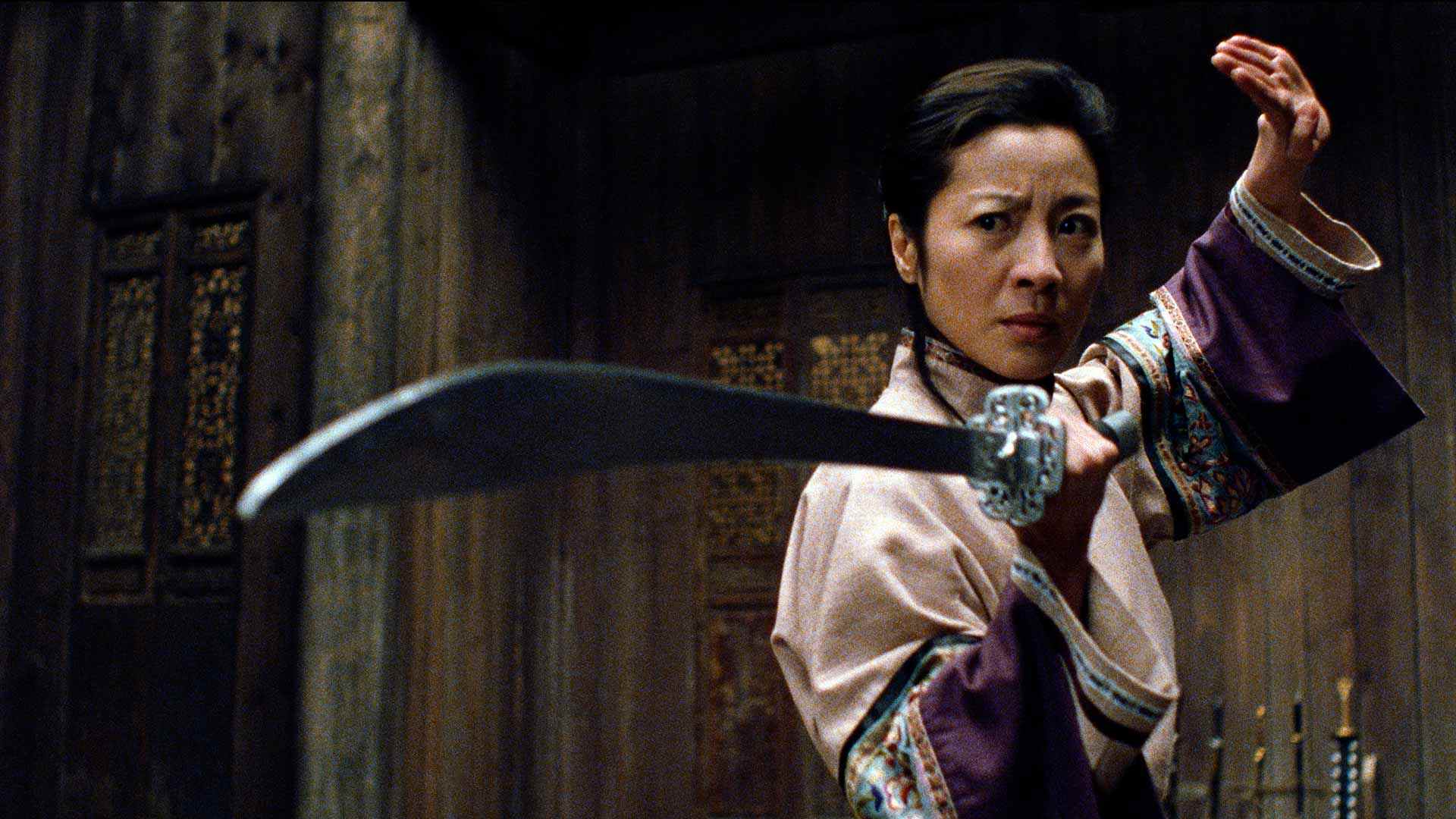
A smash hit at the Cannes and Toronto film festivals last year, Crouching Tiger, Hidden Dragon is as wonderfully deceptive as its title suggests. Set in the 19th century, the film presents a complex romantic drama enlivened by the trappings of a Hong Kong-style, period martial-arts epic. The plot is laced with intrigue: legendary warrior Li Mu Bai (Chow Yun Fat) entrusts his jade sword, the Green Destiny, to his beloved, Yu Shu Lien (Michelle Yeoh). When the weapon is stolen by a mysterious and elusive figure, blazing action ensues as the duo attempt to recover the relic and unveil the nefarious forces behind its theft. Meanwhile, both try to share their wisdom with Jen Yu (Zhang Ziyi), a young, headstrong noblewoman who becomes entangled in the crime. Jen is torn between two desires: whether to live the giang hu (martial-arts life) of her mentors, or return to the arms of her true love, a long-haired bandit named Lo (Chang Chen).
Director Ang Lee has described making this $15 million film, which was shot on location in China, as a “boyhood fantasy come true.” To bring his poetic vision to life, he enlisted some of Hong Kong’s most talented artists, including director of photography Peter Pau, HKSC, whose life boasts its own share of intrigue. When he was a young man, the Hong Kong native traveled to study in Canton, China, in the mid-1960s. “My father sent me there for the discipline,” Pau explains with a laugh, “but the following year, the Cultural Revolution began and I could not leave.” In fact, 12 years would pass before he was able to return home. At age 27, Pau determined that filmmaking was his calling, and with his family’s support, he enrolled in film school at the San Francisco Art Institute, where he earned a bachelor’s degree.
After returning to Hong Kong, Pau directed and photographed his first feature, Temptation of Dance (1984). “That gained me a lot of attention from other directors, who wanted me to work with them as a director of photography,” Pau recalls. Since then, he has photographed (or co-photographed) more than two dozen pictures, including The Greatest Lover, Savior of the Soul, The Killer, To Be Number One, Swordsman, Misty (which he also directed) and Anna Magdalena. “I’ve been lucky to practice [my craft] often,” Pau submits. “The Hong Kong film industry grew up with limited budgets and limited amounts of production time, so we had to learn how to work with great precision. It was good training.”
Pau’s work has earned him numerous accolades, including three Hong Kong Film Awards for Best Cinematography and nine more nominations. One of these prizes was for The Bride With White Hair (1993), an epic period fantasy concerning a noble swordsman who romances a beautiful assassin. Opulently photographed in contrasting hues, the picture was directed by Ronny Yu, with whom Pau would later work on The Phantom Lover and Warriors of Virtue. The duo would also make their Hollywood debut together with the comedic horror pic Bride of Chucky (AC Oct. ’98). Recently, Pau further established himself in the U.S. market by photographing Dracula 2000.
During his first meeting with Lee about Crouching Tiger, Hidden Dragon, Pau asked the director to name some of the Hong Kong-style action films that had impressed him visually. “Ang told me, ‘None of them,”’ the cameraman recalls, laughing. “He was serious! Naturally, I became concerned, because he had never done an action movie like this before, and he also didn’t have any references from action movies that he liked.” The filmmakers soon began building a visual approach of their own.
Interestingly, Pau did not apply his expertise with elaborate, richly colored lighting — a key device he has used on other many other action-oriented fantasy films — to Crouching Tiger. He explains why: “We make a lot of period action films in Hong Kong, and we generally use hard light and a full range of colors. We control them very carefully, often using extreme blacks and pure whites and mixing deep reds and blues with lots of fog and smoke effects. We also use a lot of filter effects. But that dynamic approach did not work for Crouching Tiger, because the storytelling approach was very dramatic; using those techniques would have overdramatized the film and taken the audience out of the story and away from the characters. Instead, we wanted a look that was realistic and comfortable, so the first thing I discussed with Ang was using a low-contrast visual approach with desaturated colors.”
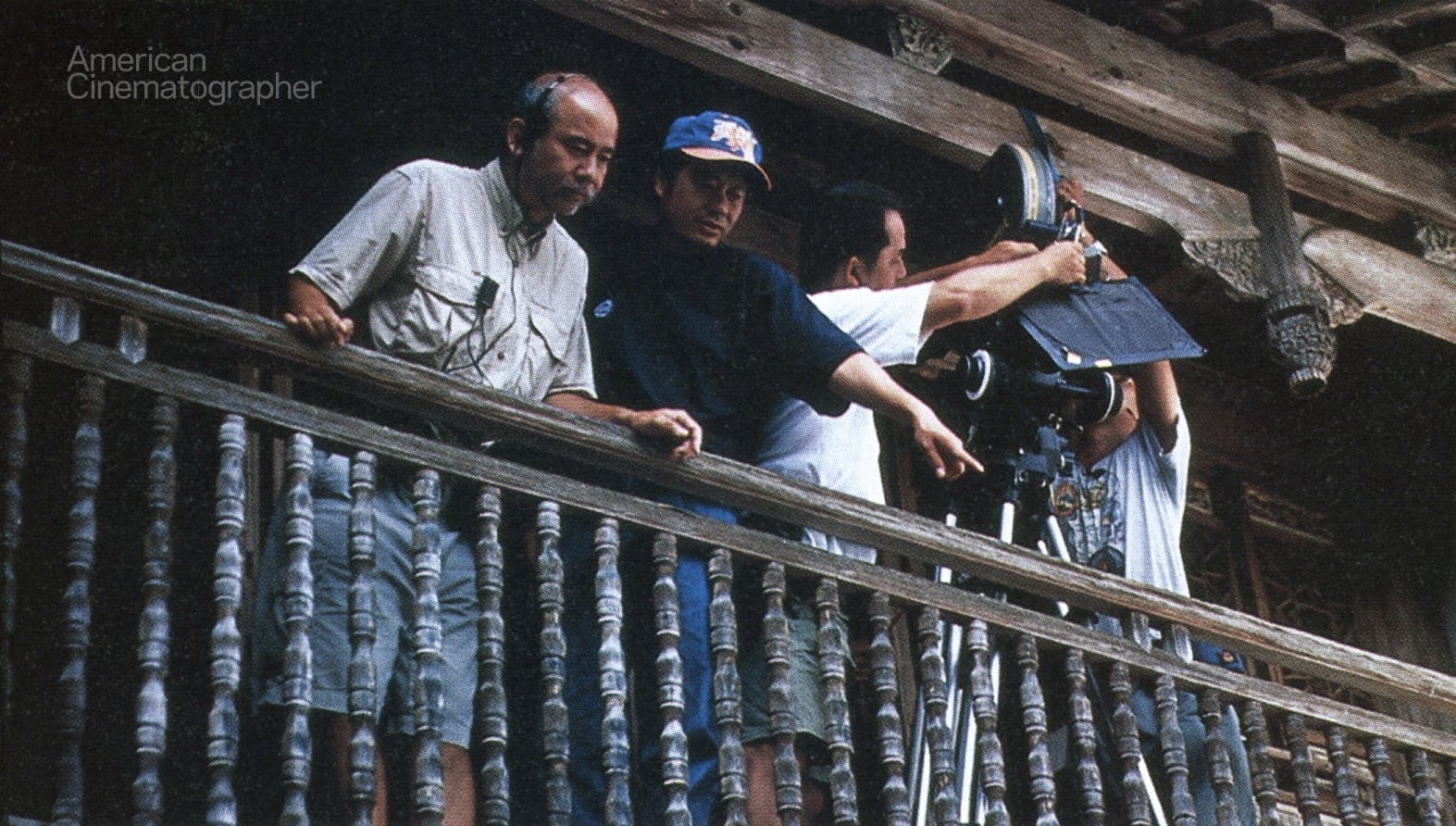
Lee, Pau and Tim Yip, the film’s production/costume designer, followed this “Chinese watercolor” aesthetic throughout the film, avoiding extreme hues and contrasts. The filmmakers also devised a subtle, three-act color scheme designed to mirror the narrative’s ebbs and flows.
“For nearly the first half of the film, we created a normal look that was slightly more yellow and less magenta, in conjunction with a mild, cool moonlight,” Pau explains. “We then made an abrupt change to a golden red-yellow for a long flashback sequence set in the desert, where we see Jen’s adventures with her lover. The colors are so strong because her memories of the love she has there are the most passionate thing in her life. Finally, we infused the final third of the film with a moody green hue to dramatize the southern part of China, where some of the action takes place within a bamboo forest. The ending is a confusion of green as things become more tragic. [That effect was created] via production design and color timing.”
Exceptions to these rules occur during scenes set in and around the Forbidden City, a location that generally features “vibrant reds, green greens and blue blues. We decided to restrain the color and remove the blues, which I felt seemed too modern. We also made the reds more creamy and more like burgundy.”
Pau also broke from his general approach during a scene in which two aging noblemen unsheathe the Green Destiny sword, allowing the audience to see the jade weapon for the first time. As the cool moonlight hits its ornately inscribed surface, an emerald-green glow is reflected in the men’s eyes, suggesting the blade’s magical power. “We did that with a small daylight-balanced Kino Flo unit that had one green spiked tube in it,” Pau says. “By just having one green tube among the blue ones, the green light was subtle enough to not be too obvious. Ang wanted the Green Destiny to have a magical quality because we needed a touch of magic, and our entire drama involves a chase around [the sword]. This effect was only done in one scene.”
Abandoning his usual hard-light style, Pau used only the softest illumination on his performers. His fixtures were usually aimed through layers of Rosco 3030 full grid cloth “to get the softest light possible, particularly in scenes between Michelle Yeoh and Zhang Ziyi, because their beauty was so important to the drama in many scenes.”
Also, contrary to the established aesthetics of martial-arts movies, Lee and Pau determined that Crouching Tiger should be framed in 2.35:1 widescreen; most films in the genre are shot in 1.85:1 in order to frame the performers’ full bodies, allowing the audience the best view of the action. Lee had had a positive experience with the anamorphic format on his previous film, Ride With the Devil (see AC Nov. ’99), and he and Pau felt that Crouching Tiger's dramatic scenes, including the flashback sequence to be filmed in the China-Xinjiang Desert, would be best served in widescreen.
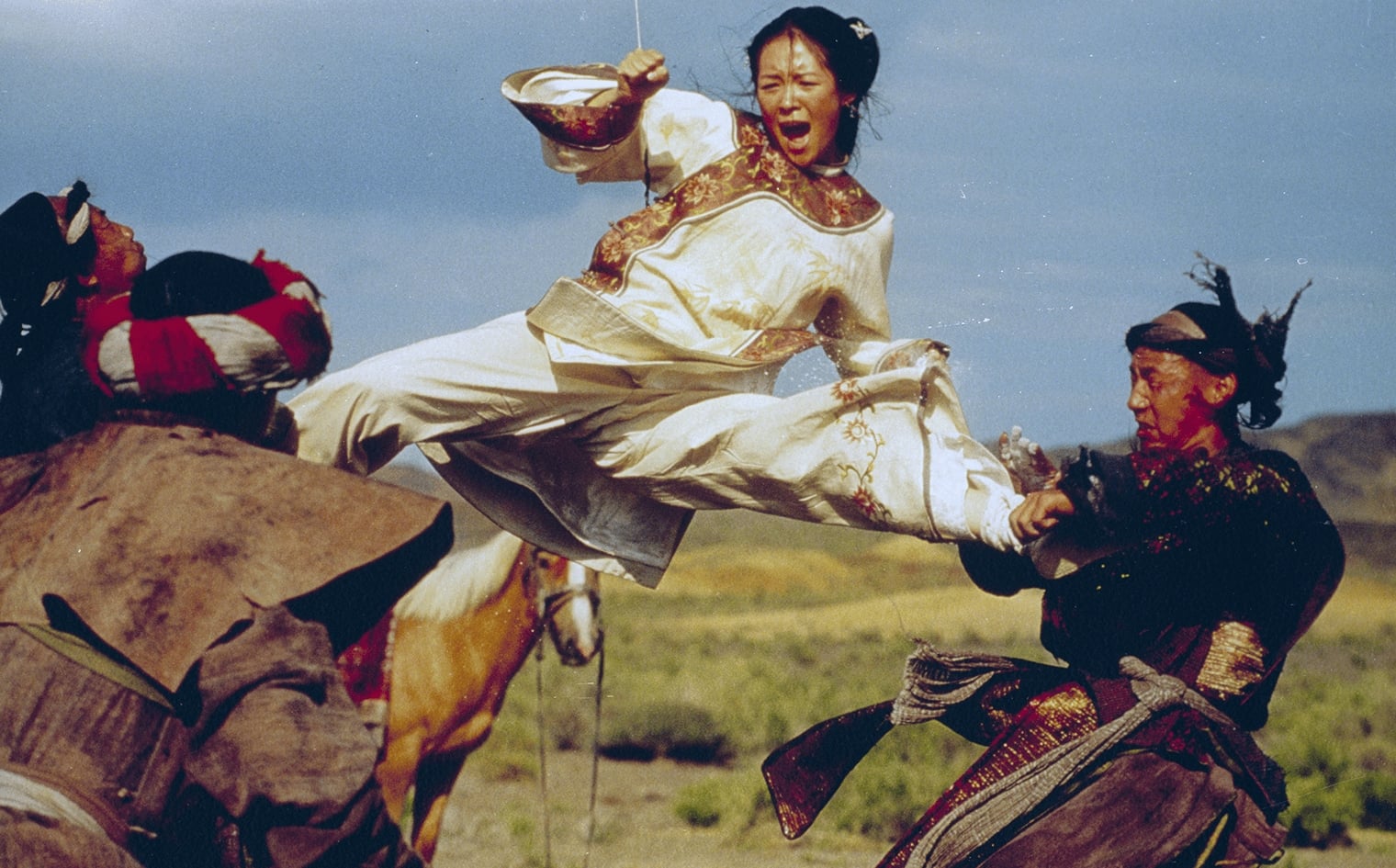
According to Pau, Lee adjusted his vision of the fight sequences to fit the wide frame. “While talking about the style of fighting he wanted, Ang was interested in trying to get closer to the action,” the cameraman recalls. “Light choreographers always want wider shots from high and low angles because they help sell the action, but Ang said he wanted the audience to feel as if they could join in with the action. He wanted [viewers] to be watching from an arm’s length.”
Pau stresses that the geography of the film’s landscapes — mountains, forests and desert — was important to the drama. “While anamorphic is beautiful in wide shots, as soon as you move into medium shots or close-ups, the scenery and environment disappear because of the lack of depth of field. Only Super 35 could give us both the wide frame and the depth we needed for the geography as well as the fight scenes, because it would have been difficult to carry the focus for many of them, especially since most take place at night.”
To soften the picture’s overall palette, Pau selected Kodak Vision 320T 5277 as his primary film stock. “I rated it at 250 ASA, giving it a slight overexposure in order to be on the safe side when we did our Super 35 blowup,” he explains. “I didn’t want the grain to be too pronounced. Continuing with that idea, we shot our daylight scenes with 50 ASA EXR 5245, which has the finest grain possible and can capture extreme details — that quality was useful for our desert sequences. If we were dealing with low light or shadow conditions, we used Vision 250D 5246 in conjunction with the 5245.” To increase his depth of field, Pau tried to shoot everything at a stop of at least T4, which demanded a considerable amount of light because he was working with slow- and medium-speed stocks.
All of the footage was processed normally in the lab — Technicolor New York — since “pushing means adding grain and contrast,” Pau notes. The cinematographer chose Technicolor because he wanted to do the film’s post work in New York and had enjoyed a great experience with the company’s Rome branch while shooting the action film Double Team in Italy. “Unfortunately, I was unable to visit Technicolor in New York before we began shooting. I just did a preliminary test in Hong Kong, we discussed what I was looking for, I sent footage to them for processing, and everything seemed okay. But when we got our first dailies, they were all wrong — green, yellow, warm and daylight-feeling. I called and told them I wanted the look to be much cooler, but the situation never quite worked out.”
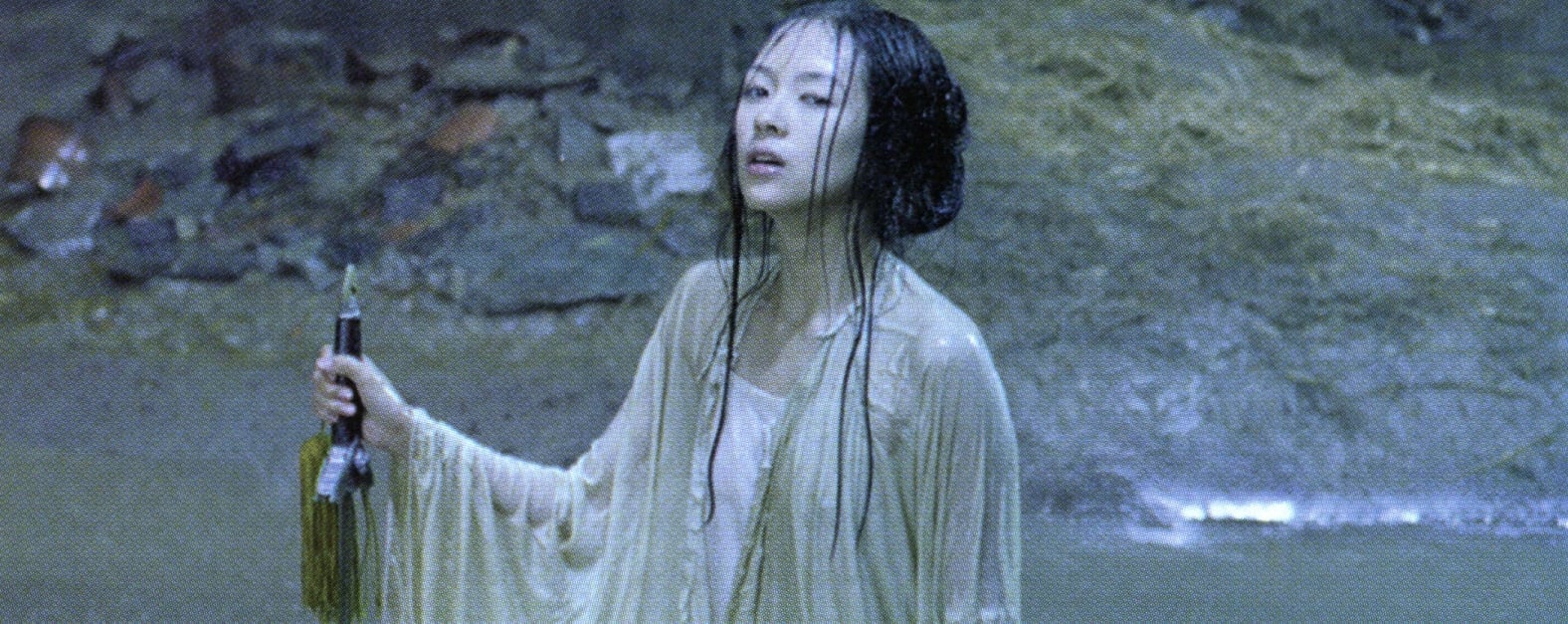
Pau had only used Super 35 once before. “Of course, the blowup is critical, and I’ve seen no better Super 35 work than that in James Cameron’s films,” he says. “We had CFI in Los Angeles do our blowup because of their work on Titanic [see AC Dec. ’97]. They do a fantastic job of retaining sharpness and not losing details. The flesh tones remained accurate, but you still lose about 10 percent of your color saturation due to the optical Super 35 blowup, which is why I see using a digital blowup as being the future of the format.” (Pau did some tests with this process by shooting in Super 35, scanning the footage and recording out an anamorphic negative with favorable results, but he had neither the time nor the budget to pursue it.)
While the combatants in Crouching Tiger demonstrate an array of fighting techniques in diverse locations, a few ground rules had to be laid out before shooting began. “We had to determine what kind of combat we would be using — fighting with flying stunts or just fist-fighting,” Pau recalls. “Ang wanted flying; he dreamed of it. That approach requires a tremendous amount of wire work, and in classical Hong Kong films, we traditionally use smoke effects and hard light for those kinds of scenes to help us hide the wires. But those techniques weren’t right for Crouching Tiger, so we instead relied upon digital wire removal.”
To Hollywood veterans, this might sound like a standard solution, but Crouching Tiger was not a Hollywood film, and the production’s tight budget at first seemed to prohibit such an easy out. Fortunately, though, Pau’s plan of staying true to the film’s style — along with a few favors and the generosity of those who appreciated the film’s merits — helped the filmmakers accomplish their goals.
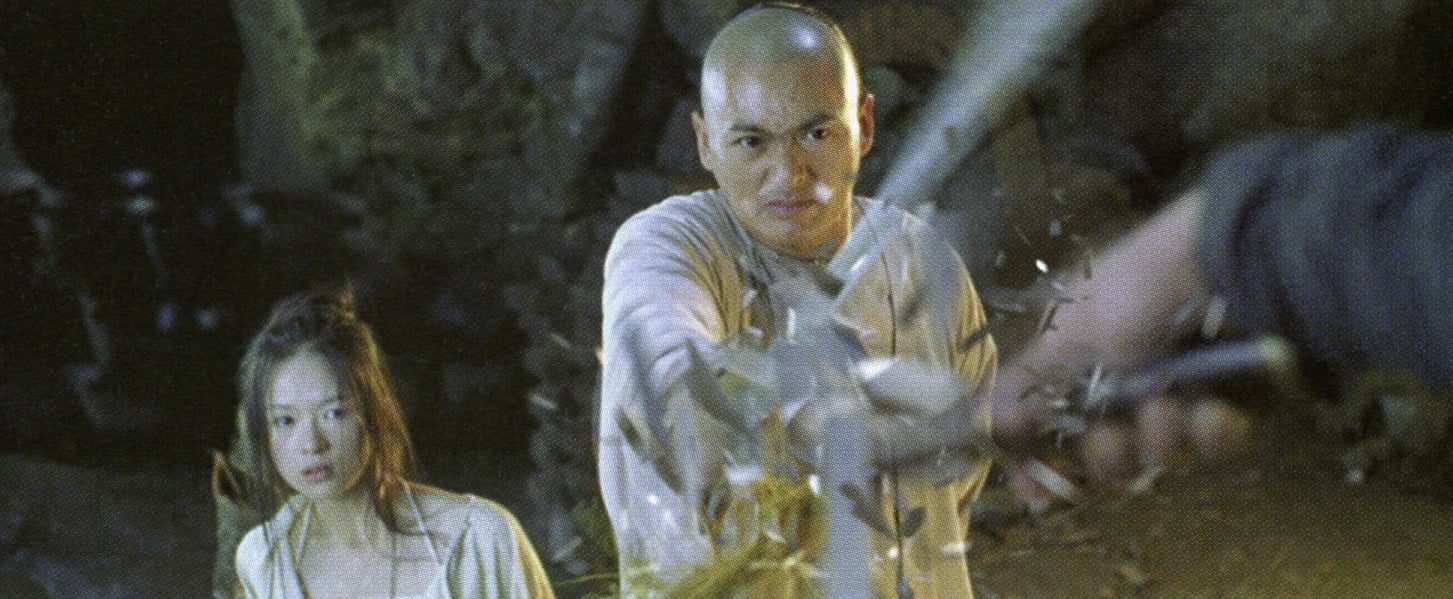
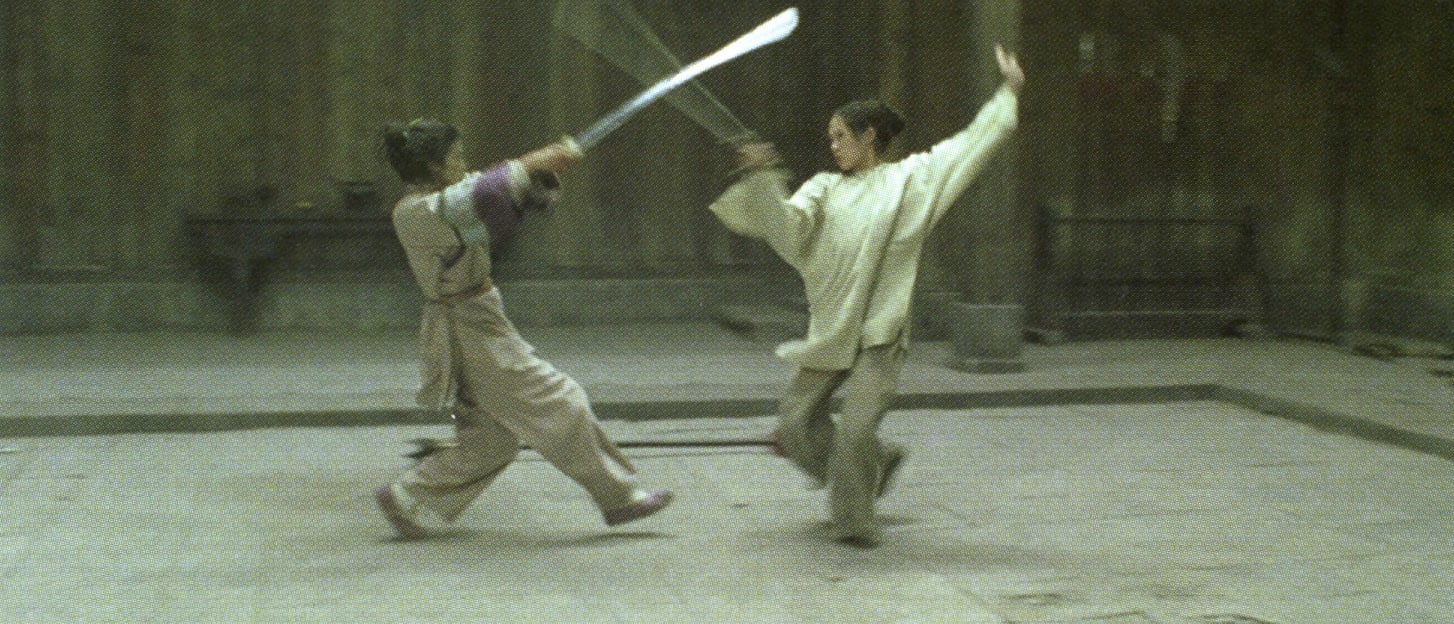
Lee had little experience with visual-effects work, but Pau had gained some while shooting Double Team, Warriors of Virtue and Bride of Chucky, and through his own experiments with the digital retouching and enhancement of still photographs. Since the production didn’t have the budget to hire a visual-effects supervisor, the cameraman took on those duties throughout the shoot and during post-production. Pau explains, “Most of our digital work was done by my friend Leo Lo at Asia Cine Digital, which has one of the only Kodak Cineon scanners in Hong Kong. Leo did more than 300 shots, which included wire-rig removal and sky replacements. I supervised the work, which also included a lot of color-correction.”
To fulfill the film’s more ambitious effects needs, Pau steered the production to Manex L.A., the Los Angeles branch of the Oscar-winning house that was largely responsible for the groundbreaking effects seen in The Matrix. “They were excited about the project and did about 60 shots for us on an incredibly small budget,” Pau says.
The five-month Crouching Tiger shoot began in August 1999, with two weeks of work in the scorching 100°F sands of the China Xinjiang desert. In flashback scenes shot there, Jen first meets Lo, the leader of an outlaw band that attacks the caravan which is taking her family to Beijing. The tempestuous girl chases Lo on horseback, and the duo eventually fall in love. Pau’s 18-member crew from Hong Kong — which included Pau’s longtime gaffer, Lee Tak Shing, along with focus puller Kenny Lam, camera team operator Louis Jong, crane operator Jimmy Fok, best boy Shuan Ching Chuen, second-unit cameraman Choi Sung Fai and second-unit gaffer Lam Chun Wan — worked in the “English” crew system, with Pau operating the A-camera himself. Virtually all of their camera, grip and electrical gear was supplied by Salon Films, Ltd. of Hong Kong.
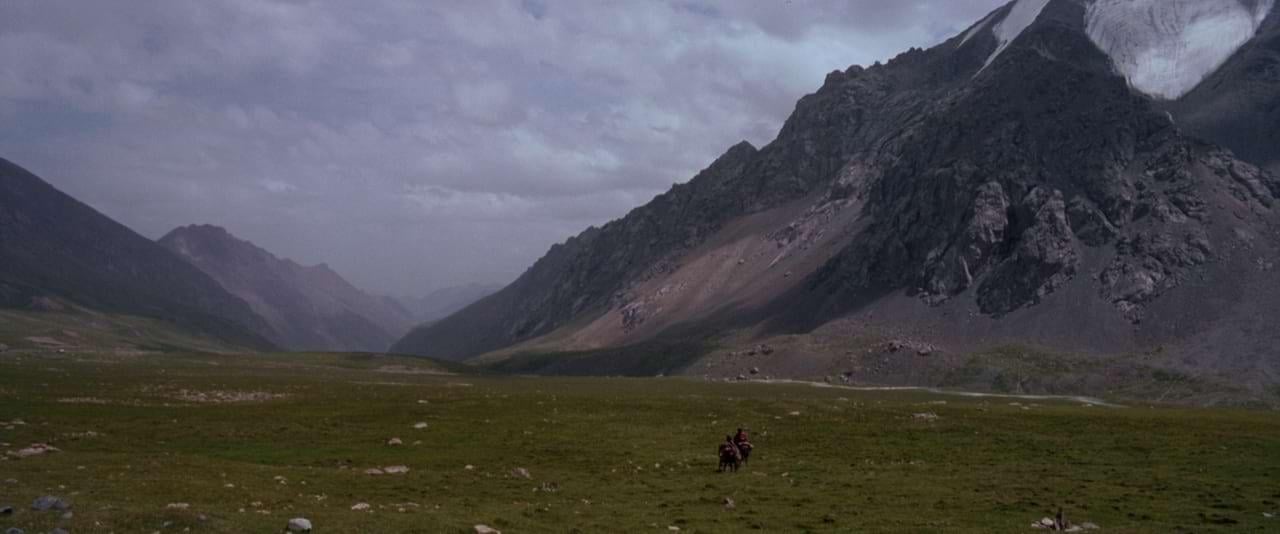
The cinematographer explains that the film’s desert exteriors were handled normally, with the crew using reflectors and bounce cards to help control the harsh sunlight. He notes, however, that the desert’s rich, high-contrast look helps distinguish it from the rest of the film’s scenes, making Jen’s memory of the setting seem more dreamlike and distant.
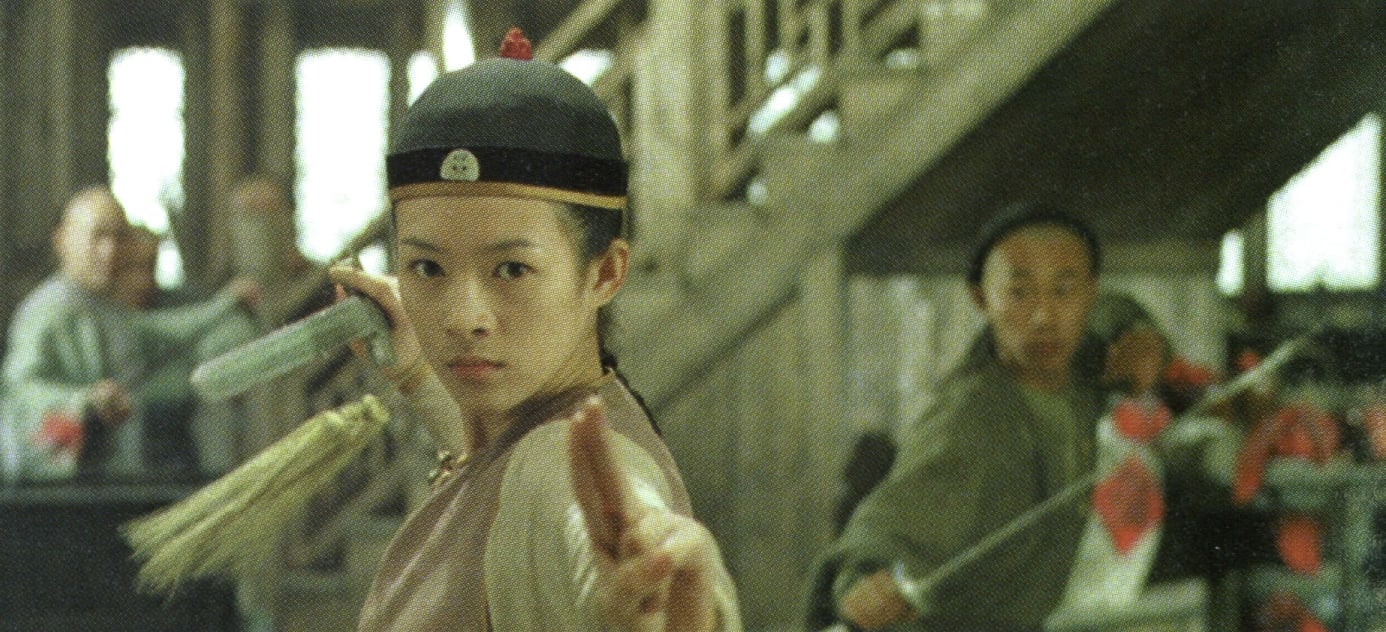
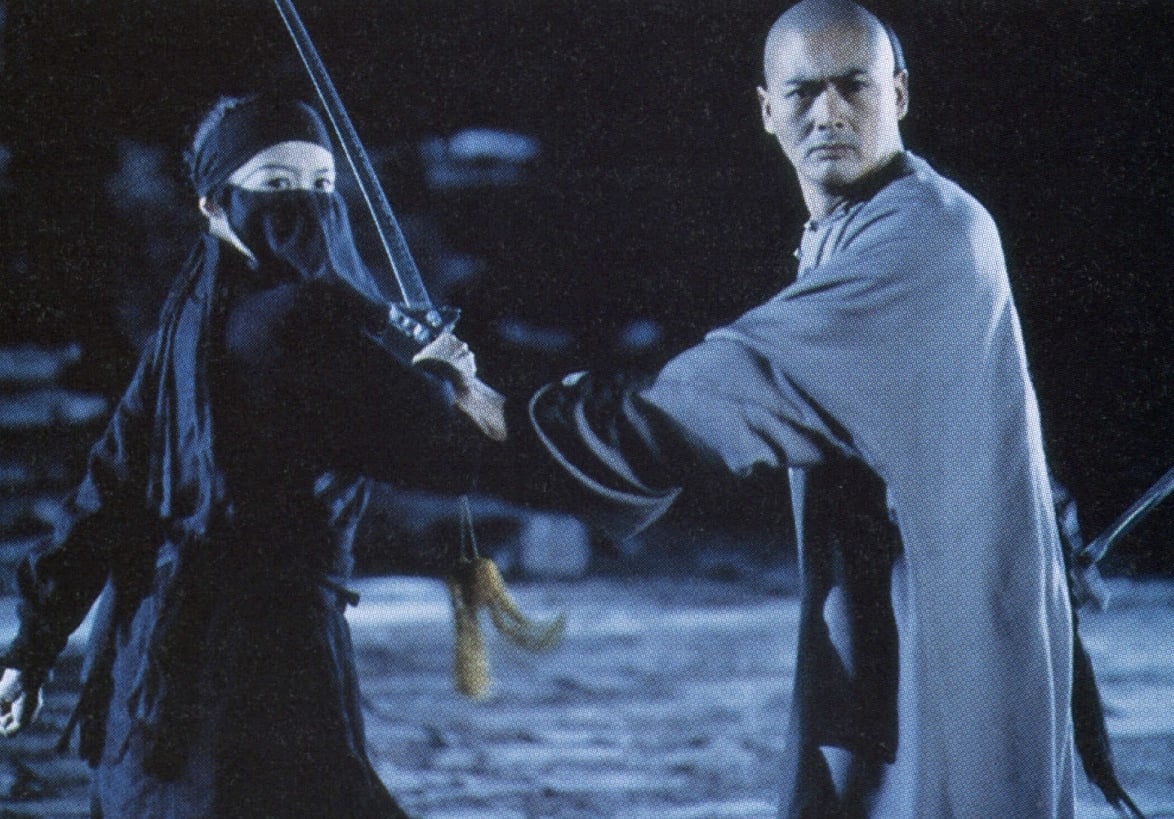
In one of the first major fight scenes tackled by the Crouching Tiger crew on location in Beijing, two men face off with the hooded thief in a dark graveyard. The villain wields the Green Destiny, and the sword empowers him with miraculous abilities. The other combatants are armed with unique bladed weapons as well, and all slash and stab furiously until Li Mu Bai arrives on the scene. His spectacular entry — a fantastic descent from a towering tree — has him literally flying into the fray. “Our biggest problem was that many of our action sequences took place at night in large exterior spaces,” Pau offers. “The graveyard scene was perhaps the most difficult. We’d scheduled it for eight shooting days, but it went on for about 16.”
The most time-consuming aspect of these preparations involved rigging the intricate wire-work stunts devised for the film by legendary action choreographer Yuen Wo-Ping, who earned well-deserved fame with his extensive work on The Matrix. The trickiness of these setups was compounded by Lee’s unwillingness to predetermine how the fights should be photographed; he preferred to tackle them with an organic, shot-by-shot approach. “Wo-Ping certainly knows how to do his work,” Pau asserts, “but each shot could sometimes take a very long time to set up. While Ang’s approach was good in theory, it could then take ages and ages to get things done. When you are doing this kind of work, you should let people know exactly what you want in advance so they can prepare.”
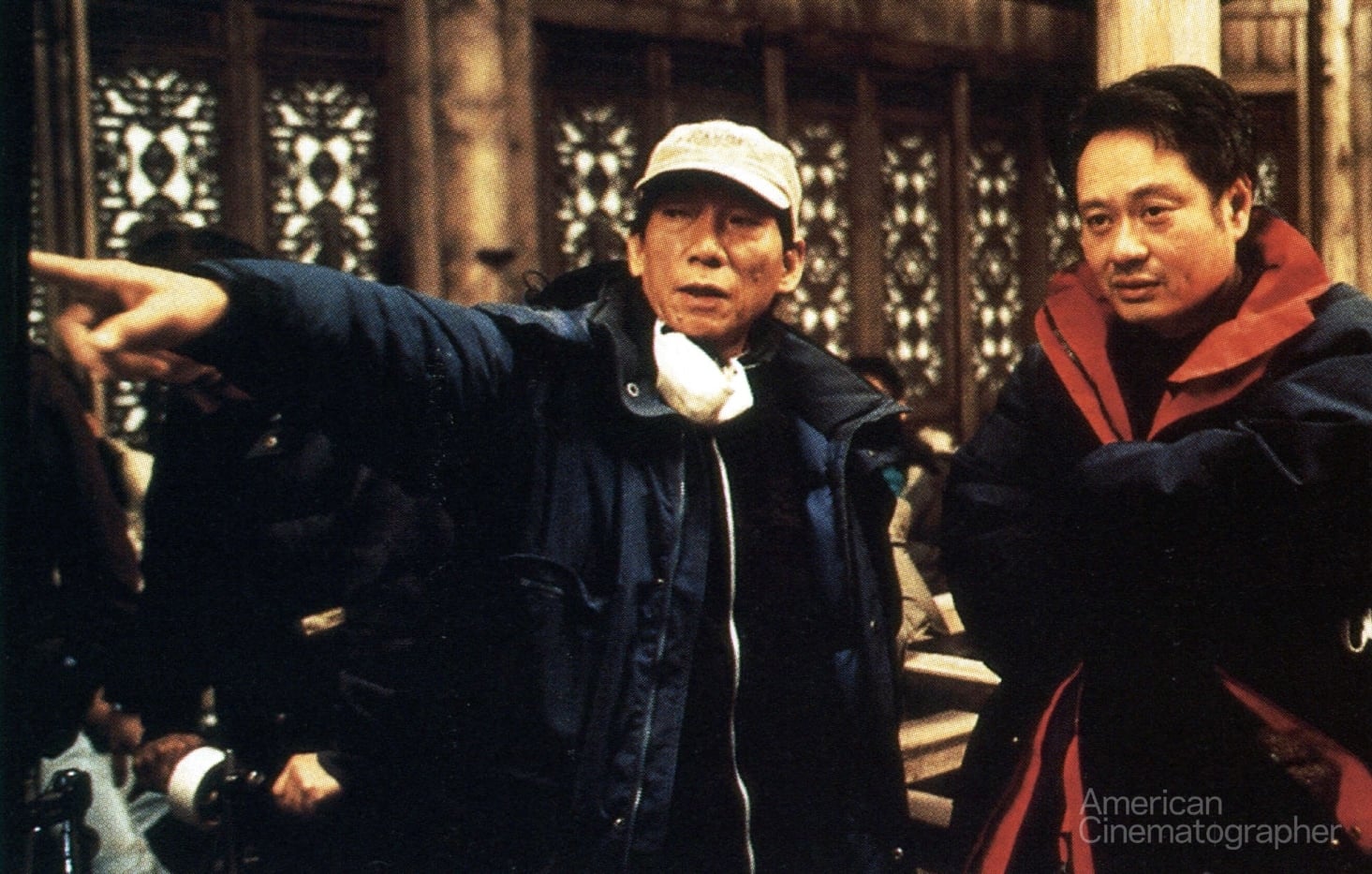
Pau had worked with Chow on three previous films, but the performer had never done wire work before, which further complicated the graveyard scene: “This was his first night on the shoot, and our first shot was to be his leap, in which he flies down about 20 feet while flinging the sheath from his sword. Ang had him do it 18 times. Each take was a meticulous refinement of the performance, designed to help Chow deliver the tempo and drama Ang sought.”
Whereas most films featuring such difficult-to-replicate action would generally be shot with many cameras running simultaneously from various angles, Pau carried only two units on Crouching Tiger: a Moviecam Compact as his A-camera and an Arri 435ES for high-speed and visual-effects work, both fitted with Zeiss prime lenses.
This two-camera limit was imposed as much for budgetary reasons as it was for the choreography, which was generally designed to work from only one angle. In addition, Lee’s quest to place the camera within the action often negated the possibility of using multiple units, while demanding complex interaction between the camera and the performers. This compelled Pau to cover much of his action with his Power Pod rig, because “handheld work wasn’t steady enough. This film is about gracefulness, so we instead worked out this sort of tai chi dance between the camera and the actors, allowing us to move around them and search for details within the fights.”
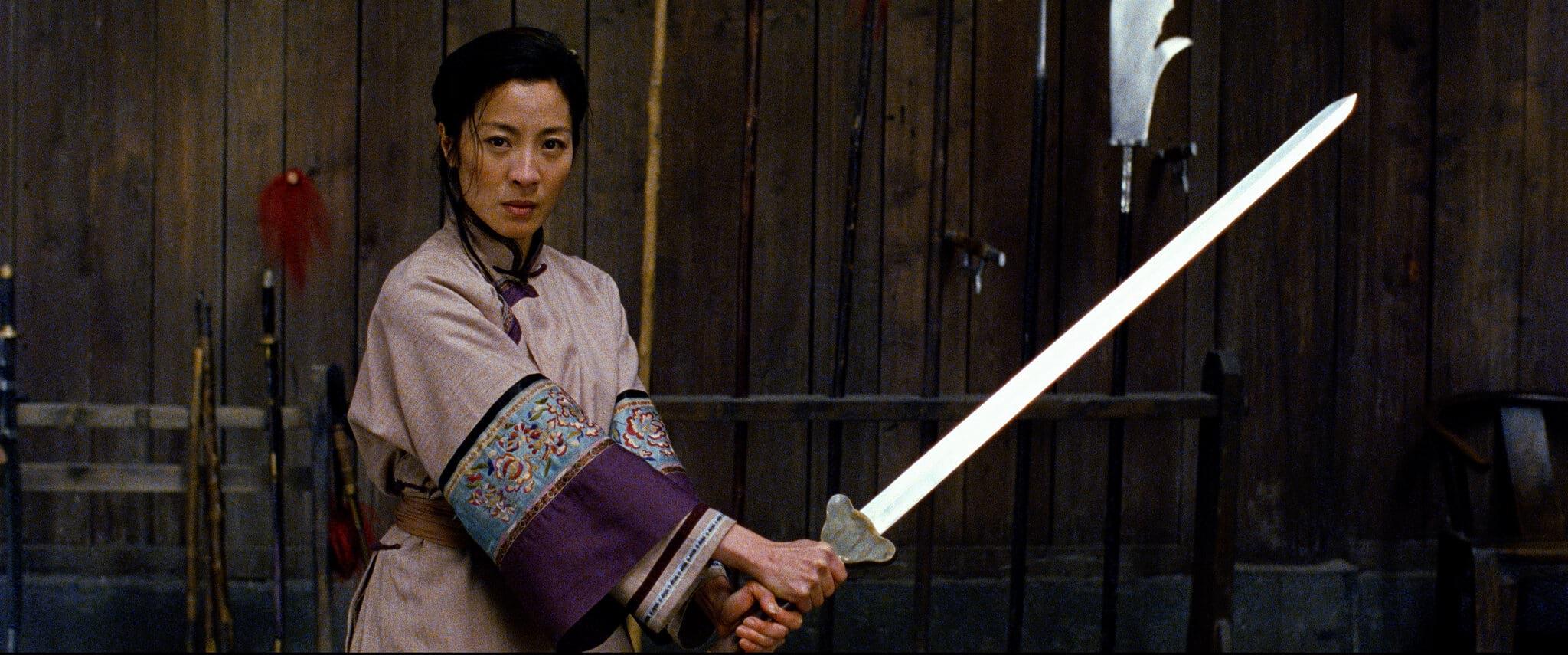
While no dedicated lighting was used to highlight the bladed weapons used throughout the scene, Pau notes that “the big soft sources we were using worked well to create dramatic reflections; if we hit the angle of the source and kicked it into the lens, the entire blade would shine. I had used this technique a lot on The Bride With White Hair to enhance the sword fights in that film.”
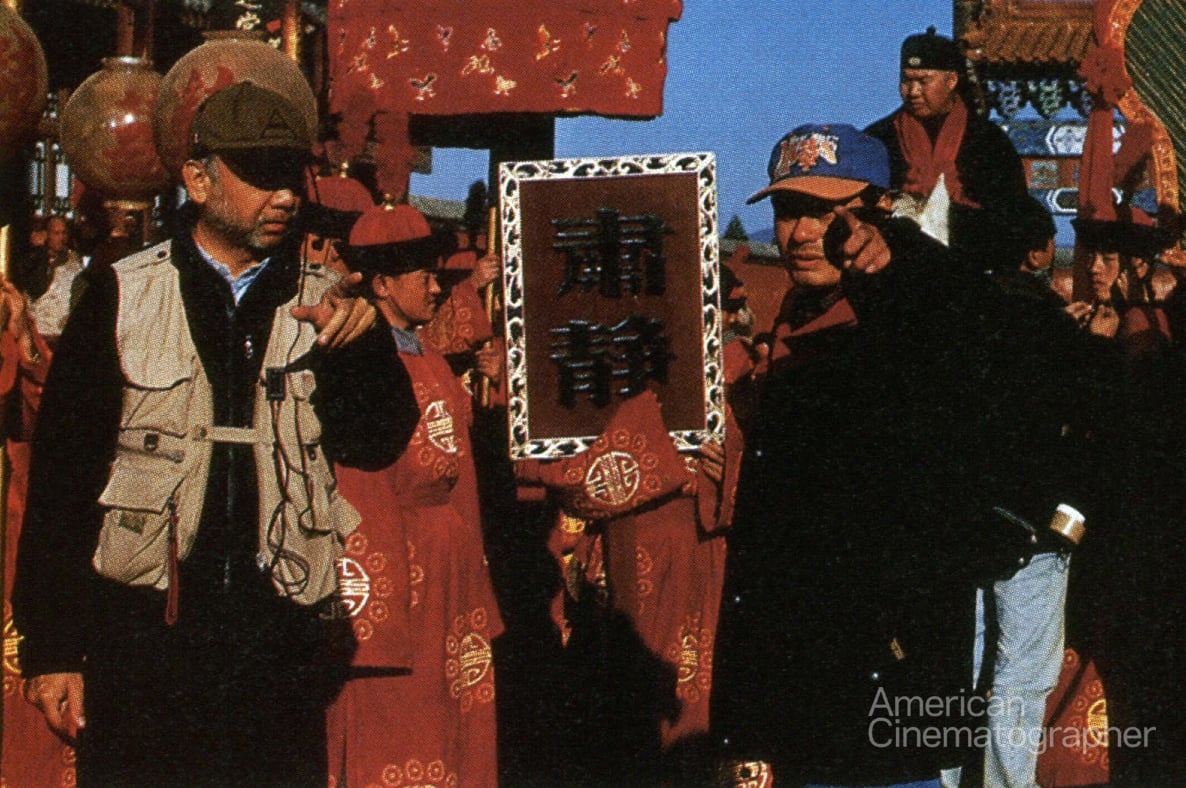
The lessons that the crew learned while filming the graveyard battle were put to the test during production of the film’s first jaw-dropping action sequence, in which Yu Shu Lien attempts to chase down the thief who has stolen the Green Destiny. Beginning in the streets and alleys outside the Forbidden City, the moonlit pursuit suddenly takes a turn into the fantastic when the thief defies gravity and leaps up to run across a building’s rooftop. Yu Shu Lien follows, and the adversaries are soon springing from roof to roof, with their feet covering yards with each step. Throughout much of the chase, the camera seemingly flies over the action, trailing the two figures from above as they bound across the city. “Ang explained that he wanted a poetic, balletic tone for that scene,” Pau recalls. “He had a dream of the camera flying over the action, seeing the two people like fish swim¬ ming through water.”
The extraordinary chase was done entirely with wires after digital techniques proved too expensive. The camera was flown very close to the two performers with the use of a 34' crane/Power Pod combination mounted atop a 10’ platform, which gave Pau exceptional flexibility to float over the 12'-high rooftops and still give the actors plenty of clearance under the lens. The duo were then suspended from a much taller construction crane that “flew” the pair over the cityscape in a wide arc while Pau and his camera gave chase.
“To shoot the sequence, we had to light up almost one square mile of the city,” Pau reports, smiling with disbelief. “We had two industrial cranes, each supporting two 18Ks, and another crane equipped with a 12K. Our lighting had to allow us to backlight the action from two directions because we didn’t know exactly where we’d be going. It was such a large area to cover, especially with a single-source moonlight effect. We could only pre-plan very small sections of the action, one day at a time. It was frustrating!”
Undercranking the camera in such scenes was important not only to add apparent speed, but also extra drama. “My experience with action movies told me that we not only had to cover scenes at various speeds, but [we also had] to do speed changes within certain shots to accentuate the emotion of specific movements,” Pau offers. “Human beings cannot make the kinds of movements that would often look best. In this scene, for example, the two performers were trying to make long strides across the rooftops, but they could not physically make the steps fast enough. Therefore, we often did manual speed changes between each step to quicken their movements, enhancing the action without it feeling obvious.”
For these types of scenes, Pau also experimented with digital speed changes in post. After dropping frames, he created mini-morphs between the remaining images to alleviate any resulting jerkiness. “That adds just a bit of motion blur, which makes the effect work. But if you are designing a shot for a digital speed change, it’s also important to shoot it at the slowest frame rate at which your subject should appear — 50 fps, 100 fps, whatever is necessary.
You can always speed the action by skipping whatever you do not want, but it’s difficult to slow action down without extensive effects work.” Because of Pau’s need to employ alternating camera speeds, the use of flicker-free lighting was essential. He also needed the ability to easily augment his lighting to work at anywhere from 21 fps to 100 fps.
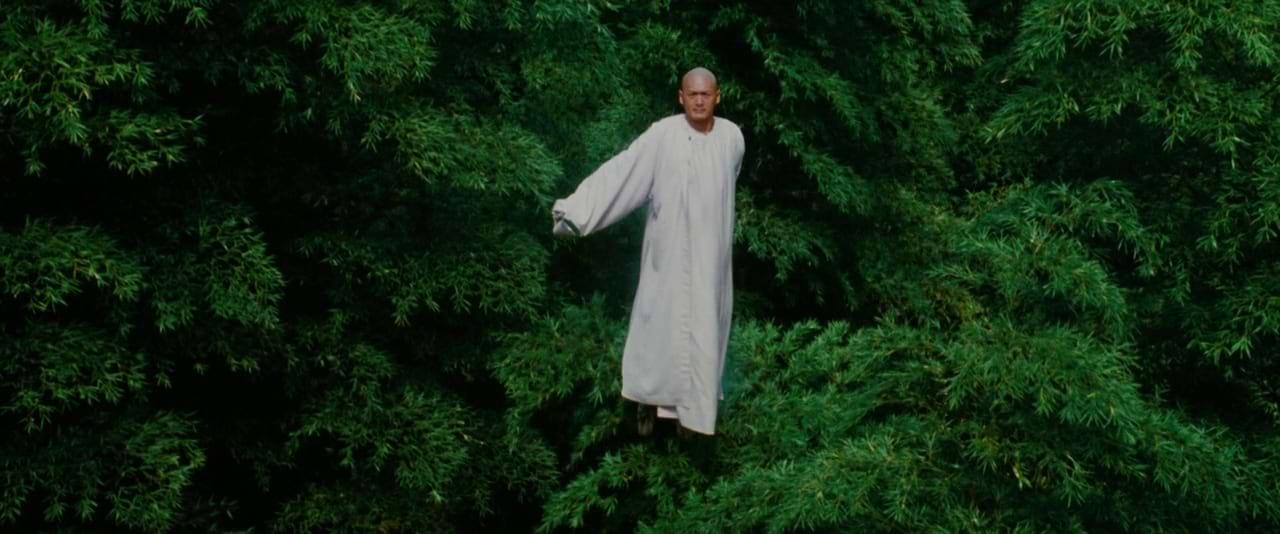
Some of the film’s most lyrical action occurs within the bamboo forest — or, more accurately, on the very tips of the bamboo trees. As the drama unfolds, Li Mu Bai challenges Jen Yu to give up her illegitimate ways and become his pupil, while chasing her into the towering forest. Finally, the pair face off and trade blows while balancing on a bowed bamboo stalk some 100' off the ground. Lee wanted the scene to have a cloudy, mystical feel, but the production encountered varying weather — cloudy, sunny and rainy — throughout this 12-day portion of the shoot. Shooting proceeded, with Chow and Ziyi securely wired to help them perform their high-flying feats, while Pau and his crew again relied on their crane/Power Pod assembly, this time with the rig mounted to the top of an industrial crane.
“Ang explained this scene in terms of the relationship growing between Li Mu Bai and Jen,” Pau says. “He has feelings for the girl but is holding them back. He chases her into the bamboo, hiding within the leaves and then revealing himself. At the same time, she is confused because she cannot decide if she trusts him.
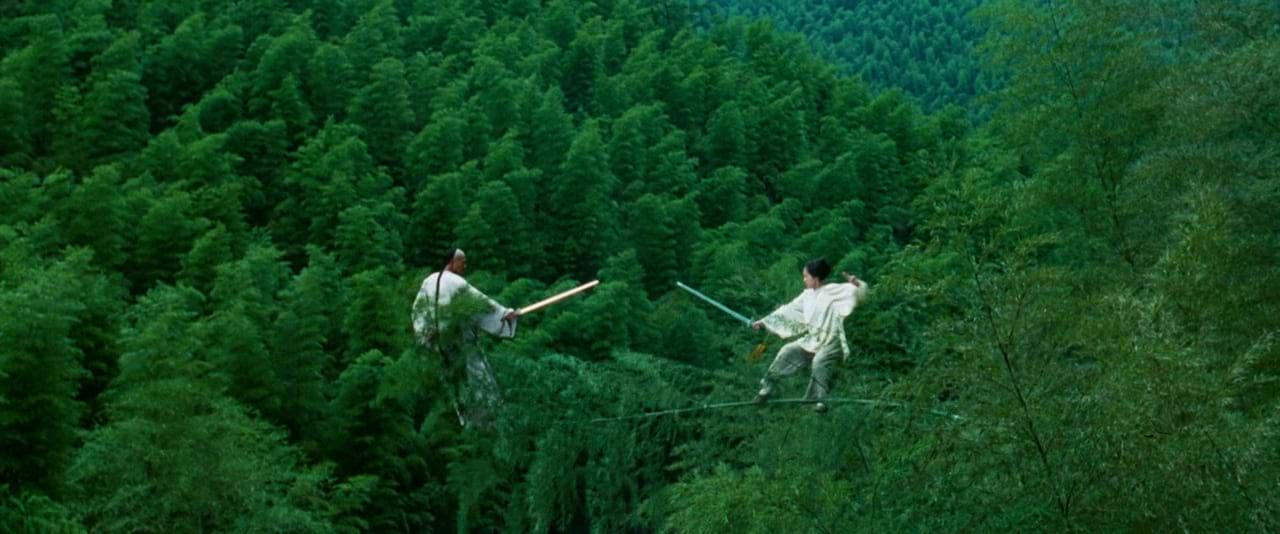
“Well, this theory of the drama was interesting, but we then had to figure out what we were going to shoot for the next 12 days!” Pau continues. “There was no description of the action in the script! As we shot, though, the scene became something else: a demonstration of Mu Bai’s composure, his coolness as the girl tries to fight him. That quality comes through very well in the finished sequence. This approach was to Ang’s credit, because while Chow is not an expert swordsman, he is very good at being cool. This sense of composure allows him to defeat the girl easily and convincingly [without needing to demonstrate any technical expertise].”
Though some of the scene’s close-ups could be accomplished under more controlled circumstances, atop a special platform dressed with bamboo, the changing weather caused the contrast levels to fluctuate wildly from shot to shot. This required Pau to spend extensive time on the sequence at Asia Cine Digital, doing shot-by-shot digital color timing and contrast correction. “Success does not come from heaven,” he offers. “You have to struggle in order to be good.”
The final two months of the Crouching Tiger shoot took place at the Beijing Film Studios, where all interiors and some exteriors were handled. One of Pau’s subtlest lighting efforts there was the creation of a stately home and courtyard, where Li Mu Bai and Yu Shu Lien meet after the theft of the Green Destiny. As they obliquely discuss their feelings for each other, a strong sense of unrequited love bubbles to the surface. To begin creating the daylight look needed for the scene, Pau had the crew hang 80 custom 5K lanterns evenly over the set to provide an overall ambience. (He had originally built the lanterns, each of which contains 10 500-watt bulbs, while shooting Warriors of Virtue at the studio in 1996.) The cinematographer then used a total of twenty 10Ks and 5Ks for interior fill within the massive estate, and employed two 16K Maxi-Brute-type fixtures fitted with narrow-spot bulbs to create punchy daylight shafts. This gave Pau his desired stop of T4 while using 5277 rated at 250 ASA.
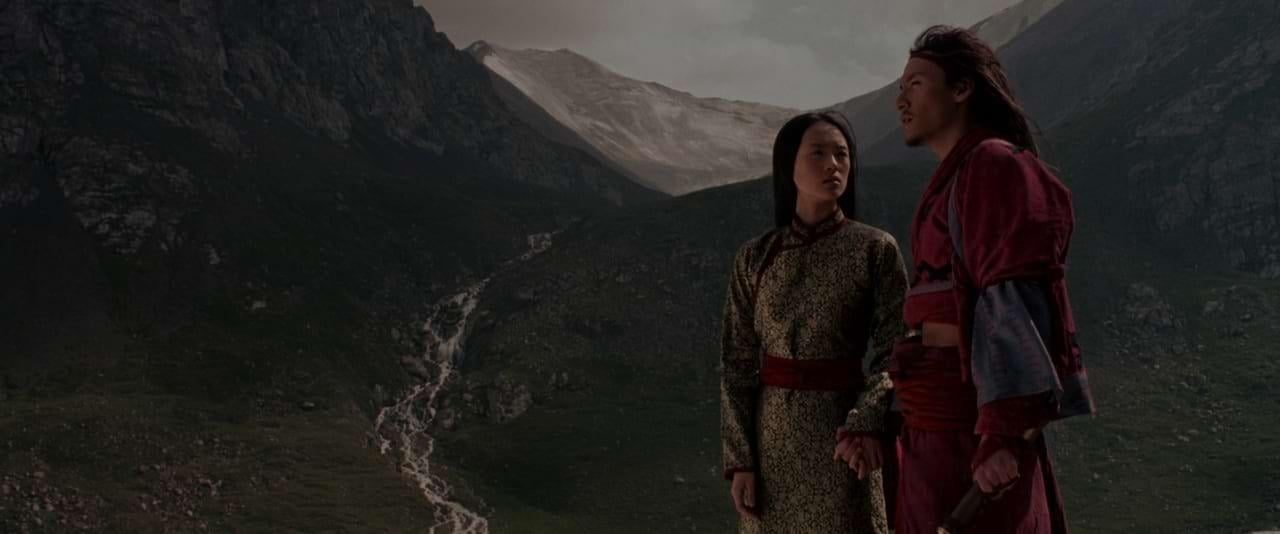
“The framing of these dramatic scenes and others is quite different from the action scenes,” Pau points out. “We use a lot of negative space, which relates back to the Chinese-watercolor look we sought. We also use long takes shot with a static camera, which allows the audience to focus on the dialogue and the subtle emotions of the characters — and also to rest a bit after the martial-arts scenes! The lighting went along with this idea, in that we didn’t want to use too many sources or to make it too complex. [We wanted the lighting to] be pleasing to the eye and almost relaxing, which makes those scenes unlike any others I’ve done.” In order to meet last year’s deadline for Cannes, Pau and Lee had to curtail their timing sessions at Technicolor New York, and neither filmmaker was happy with the result — though the film was a tremendous success with audiences. Another person unhappy with the Cannes print was Tom Bernard, the president of Sony Pictures Classics (SPC), which is the film’s U.S. distributor. According to Pau, SPC insisted that the film should be completely retimed, and worked to involve Pau in that process. Toward that end, the Crouching Tiger anamorphic internegative created at CFI was sent to Deluxe Laboratories in Toronto, where Pau was finishing Dracula 2000. “I was happy with what Deluxe was doing for me there, and my color timer, Leslie D’Brass, and I spent two weeks working on [Crouching Tiger] to improve the color and the black densities,” Pau relates. “When we were on our fifth print, Tom Bernard arrived to see for himself what we had accomplished, and he was happy. I’m just thankful that we had this second chance to work on the film.”
Pau adds that because the blowup done at CFI left the blacks a bit thin, his timing was optimized to be printed on Kodak’s Vision Premiere stock. “That held the blacks very well,” the cinematographer says. “It’s a clean black, and you can still see details. Because this film will only be on about 800 screens, Sony is trying to have every print made on that stock. They want the picture to look good, and I certainly appreciate that.”
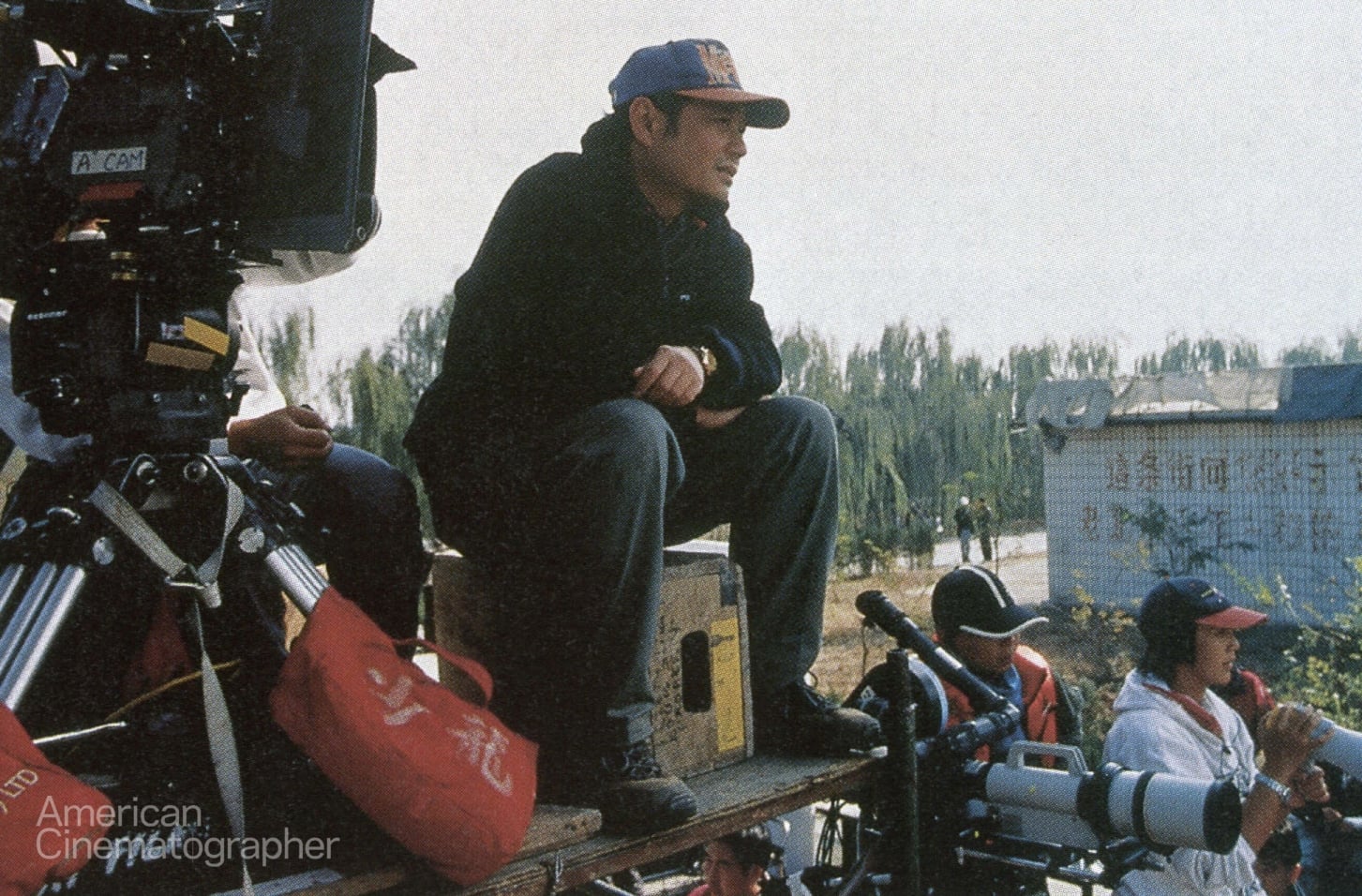
Unit photography by Chan Kam Chuen.